
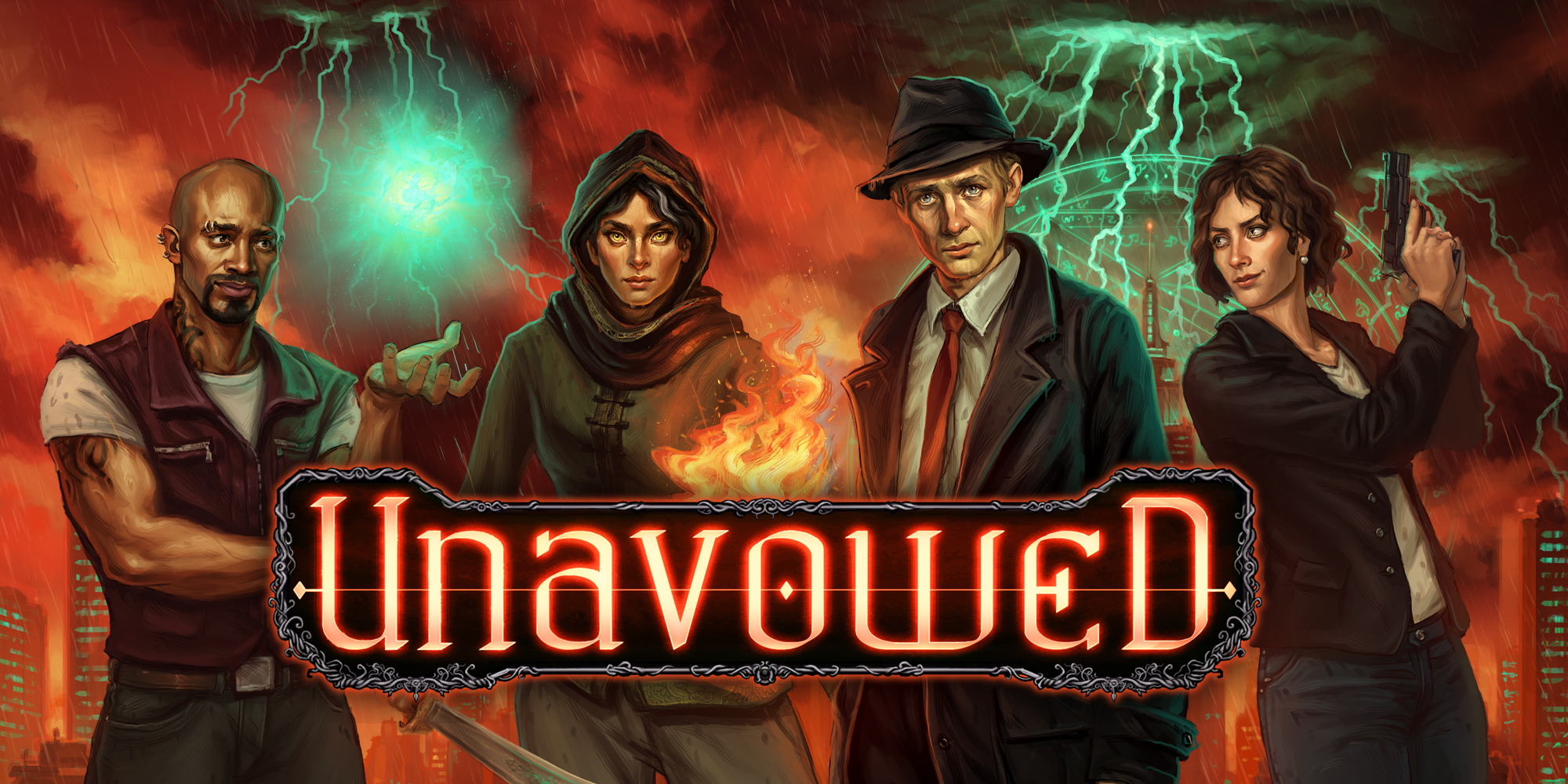
About Unavowed
After a year of demonic possession, a New York resident joins the Unavowed, an ancient society that confronts supernatural threats. This point-and-click adventure follows their investigation through conversations, scene puzzles and branching cases. The player chooses the protagonist’s background and selects companions whose distinct abilities and perspectives can change how each mission unfolds.
Unavowed begins after a year of demonic possession has ended, leaving the player character free but implicated in a trail of violence across New York City. On a rain-soaked rooftop, members of the Unavowed, an old society that confronts supernatural threats, offer a way to face what happened. The investigation asks how the possession unfolded and what it has set in motion, while the protagonist joins the group’s work in a city where hidden magic sits beside ordinary neighbourhood life. It is a point-and-click adventure built around conversations, scene inspection, puzzles and decisions. Character creation gives the protagonist a name, gender and one of three backgrounds, while the companions who accompany them shape how individual cases can be approached. The plot follows a central mystery through self-contained missions and branching exchanges, with consequences that can change later scenes and the relationships within the team. Its supernatural cases use recognisable New York spaces as the setting for encounters with people and beings outside everyday experience. The story keeps the focus on the protagonist’s responsibility and the society they have joined, without requiring knowledge of another game.
Much of the play takes place in illustrated locations across New York’s boroughs. The player moves between scenes, examines points of interest, talks with residents and follows clues that connect a local problem to the wider story. Dialogue is an active tool: questions and responses can reveal a lead, clarify a character’s motives or open a path that was previously unavailable. The format keeps its attention on readable scenes and interactions rather than on free-roaming city navigation. Each mission gives the team a specific supernatural situation to investigate, so the player learns a place by speaking to its inhabitants and noticing what is out of place. The city is neither a generic backdrop nor a tour of famous landmarks. It is a lived-in setting of streets, buildings and boroughs where an old hidden order has worked for generations. The ordinary and uncanny share these spaces: a familiar urban environment can contain a threat or history that most residents do not see. Conversations therefore serve two purposes, advancing a case while making the people and communities around it part of the investigation.
Before missions, the player selects two companions from four available members of the Unavowed. Each brings a distinct skill set and perspective, and their presence can alter how an obstacle is handled. A companion may offer a useful observation, enable a different interaction or suggest a solution that would not be available with another pair. Choosing the team is therefore part of the puzzle design rather than a simple combat party selection. The companions also comment on the places and people they encounter, giving the player more context and showing how the group’s members relate to one another. Because the same mission can be approached with different pairings, party choice affects both practical options and the dialogue encountered along the way. This structure makes a case feel less like a fixed checklist: the player decides who is best placed to help before arriving, then uses their abilities and knowledge while examining the scene. The protagonist’s own selected background adds another layer, giving particular conversations or story passages a different angle according to whether they were a bartender, actor or police officer before the possession.
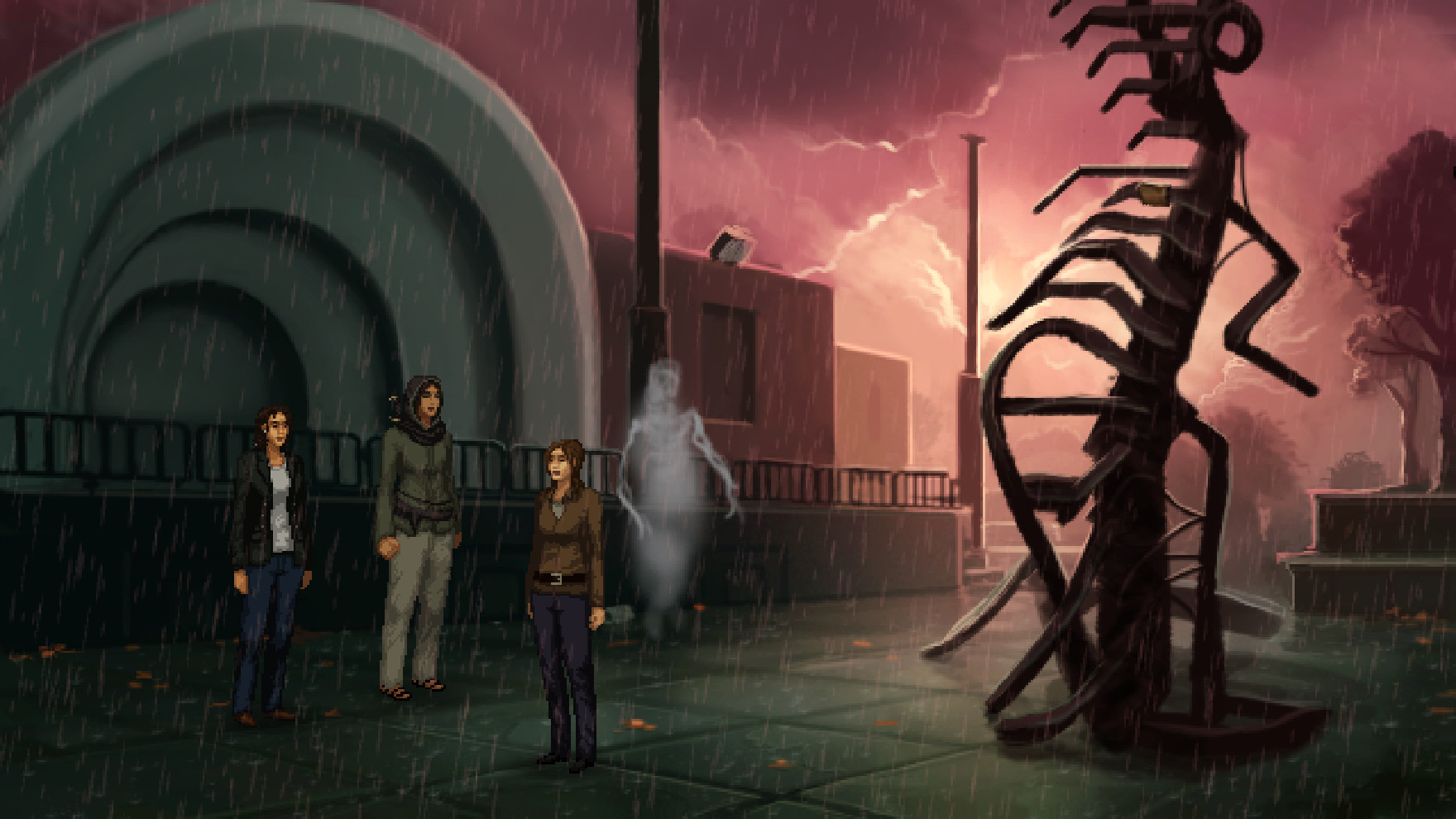
Puzzles grow out of the people and supernatural circumstances in each case. The player combines observations, dialogue and information from the environment to work out what action makes sense. Inventory is present, but the central emphasis is on character knowledge and context rather than trying every object on every hotspot. Companions can function as guides as well as sources of distinct solutions, making their abilities part of the investigation. The protagonist’s background also matters beyond initial character flavour: it can change how they engage with certain people and provide unique material in parts of the story. Choices in conversations and during missions give the narrative its branching structure. Some decisions affect immediate relationships or the outcome of a case, while the broader sequence builds on the particular version of the protagonist the player has shaped. There is no need to treat these systems as a conventional skill tree; progression is conveyed through new information, access to scenes, changing relationships and the consequences of decisions. Revisiting the game with another origin or a different selection of companions can reveal alternate exchanges and solutions, while the central mystery remains the guide through the missions.
The Unavowed’s cases combine investigation with difficult judgments about how to respond to the people involved. The player is not simply collecting clues toward a single mechanical answer: they decide what questions to ask, which companions to bring and how to resolve situations when the evidence points in more than one direction. The result is a subtly branching storyline in which decisions may echo later. These choices are framed through the protagonist’s limited perspective and the team’s differing reactions, rather than through a visible morality meter or numeric reputation score. The story also draws on the protagonist’s past to make dialogue choices feel connected to a particular identity. Their background can make some interactions easier or expose additional material, helping distinguish one version of the character from another. Across the missions, the Unavowed act as both a practical group of investigators and a continuing cast whose opinions and histories matter. The episodic case structure keeps each location’s immediate problem legible while recurring characters and consequences connect the episodes to the larger question of what the possession meant and what the protagonist will do with their second chance.
Visually, Unavowed uses detailed pixel art at a higher resolution than the studio’s earlier games, with scenes that shift between grounded urban locations and supernatural imagery. The presentation helps place magical events within a recognisable city instead of separating them into an abstract fantasy realm. Fully voiced dialogue, original music and the option of developer commentary support the narrative focus; Steam lists English audio and subtitles. Character portraits and scene composition give conversations a prominent role, while environmental details provide the cues needed to investigate. The game’s tone combines mystery and dark fantasy with varied character interactions, moving between tense cases and quieter exchanges among the group. Because much of its identity comes through written choices, voiced conversations and carefully arranged locations, the interface remains centered on reading, inspecting and selecting responses. The art also distinguishes the hidden supernatural world from the ordinary city without making the two feel disconnected. New York functions as a network of local settings where the society’s work unfolds, and the visual language shifts to mark the unusual forces encountered in each case.
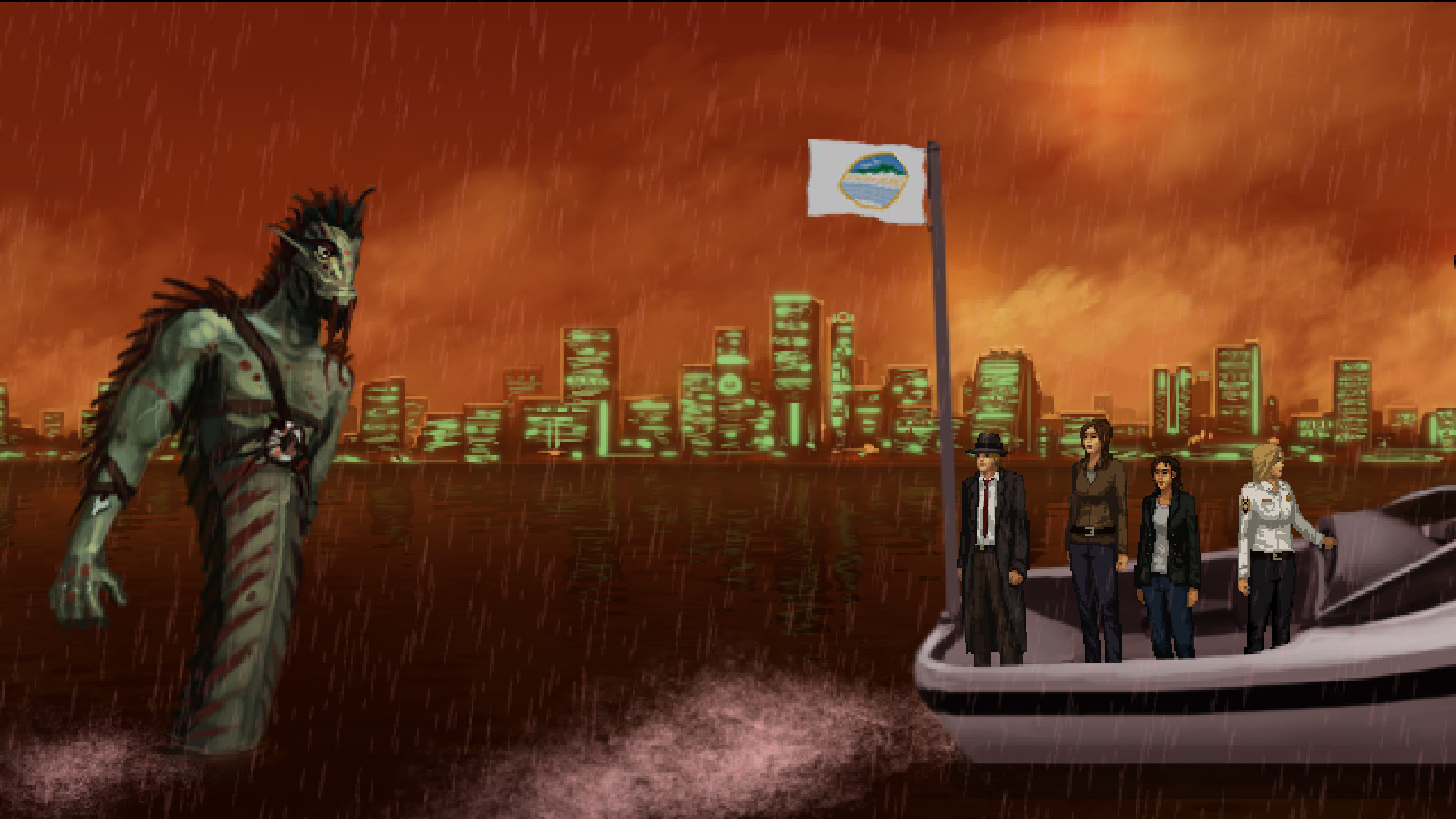
The possessions that begin the story leave the protagonist with almost nothing of their former life: no home, no friends and a city that regards them as a suspect. Joining the Unavowed is therefore both a practical way to confront further threats and a chance to decide what a second life might mean. The chosen origin continues to matter because it gives that loss a different shape. A bartender, an actor and a police officer bring different histories into the same group, and those histories can surface in dialogue and case work. Taking only two companions on a mission also means leaving other voices behind. A return with a different pair can change the questions asked, the abilities available and the way a local problem is understood. Across PC, Mac and Nintendo Switch, this is the shared appeal of the adventure: each case fits into a larger mystery, but the people brought into it and the judgments made along the way give the journey its particular character.
- Developer
- Wadjet Eye Games
- Genre
- Point-and-click supernatural narrative adventure