
About UFO 50
UFO 50 is a collection of 50 complete games presented as a library from a fictional 1980s computer company. Browse platformers, shooters, puzzle games, strategy titles and RPGs, play solo or locally with others, and move between the collection’s different worlds and styles. All 50 games are available from the start.
UFO 50 presents itself as a recovered library from an alternate history of home computing. Its fifty entries are attributed to a fictional 1980s company, giving the collection a shared frame while letting each game establish its own premise, rules and visual identity. The games use a common 32-colour palette and an 8-bit-inspired look, but the collection does not treat that style as a limit on scale or genre. Some entries are compact arcade challenges; others are open-world adventures or a long-form role-playing game. The result is a catalogue of distinct experiences held together by the idea that these titles were once part of the same company’s output.
The library is open from the beginning: all 50 games can be selected without completing one title to unlock the next. That structure makes browsing part of play. You can enter a game, learn its controls and central idea, then return to the collection and try something with a very different pace. The entries are described as complete games, with their own opening screens and endings, rather than short rounds inside one overarching minigame. Their sizes vary considerably, so the collection can shift between a brief arcade session and a longer campaign. Some characters and titles connect across games, adding continuity for players who explore more of the catalogue.
The range moves across familiar video-game forms and combinations. Platformers and shoot ’em ups sit alongside puzzle games, roguelites, strategy titles and an RPG. Individual entries take those starting points in different directions: Seaside Drive turns a shooter into a car-based game, Pingolf blends golf with pinball obstacles, and Quibble Race makes wagering and bluffing the centre of a turn-based contest. These are not simply alternate skins on one shared control scheme. Each title introduces its own objective and asks the player to understand a separate set of actions, timing or tactical choices.
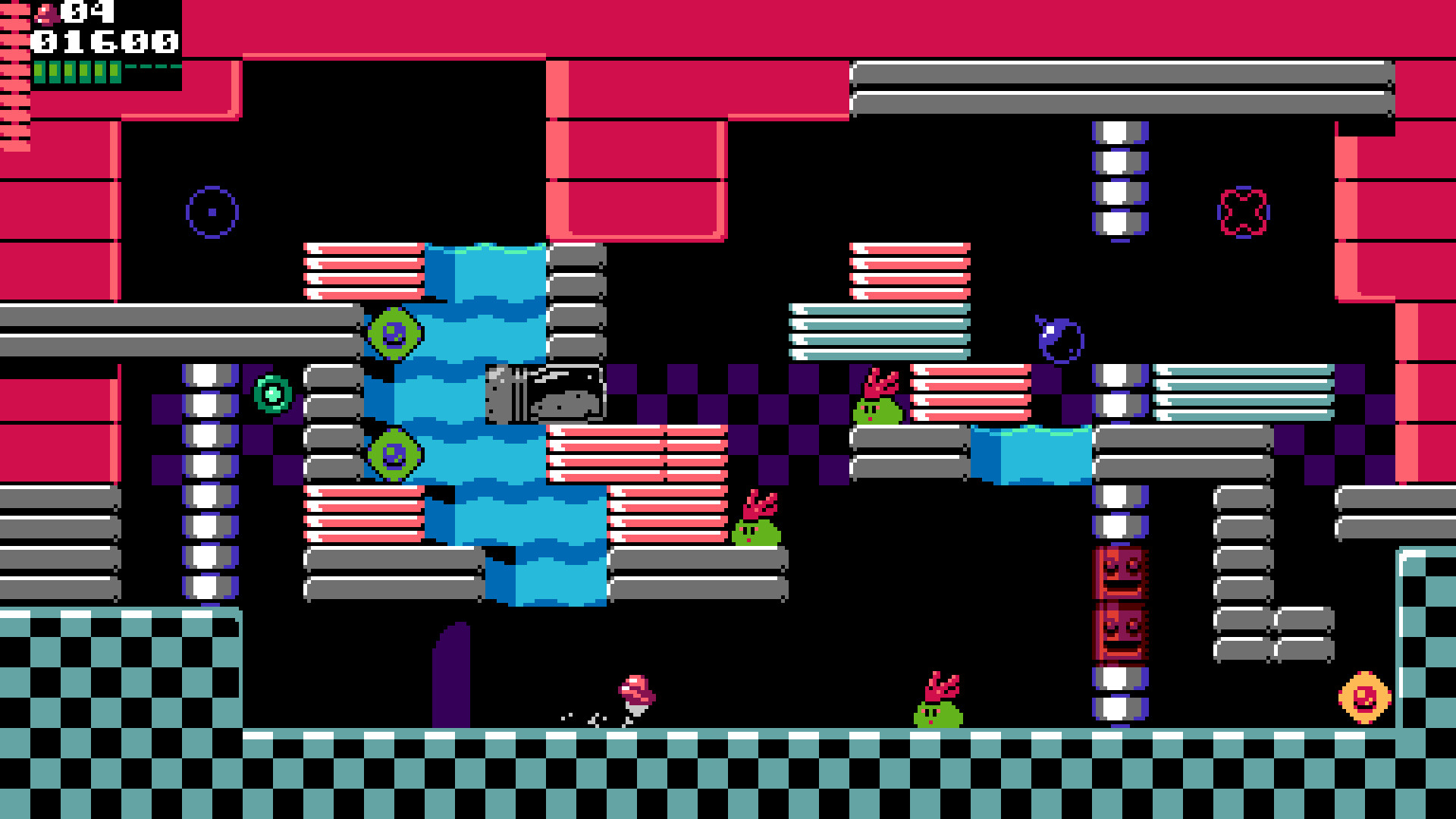
Campanella 2 shows how one entry can combine several kinds of play. It is a procedurally generated adventure in which Isabell travels in a UFO, explores levels and can leave the craft to enter shops or dangerous caves. That creates a loop of movement and exploration with changes in risk and activity as the player moves between flying and on-foot sections. The game is also a sequel to Campanella, another title in the collection. Its place in the larger library lets the two games share context, while Campanella 2 remains a separate adventure with its own generated routes and situations.
Other entries build their challenge around reading systems and anticipating consequences. In Quibble Race, up to three players compete in a fictional sci-fi horse race by trying to finish with more money than their opponents. Betting is only one part of the contest: players may hire thugs to interfere with a race or sponsor a quibble to earn extra credits, while rivals can take actions of their own. Because these choices can disrupt one another, success depends on predicting what other players might do. The game turns a race into a social strategy problem in which money, interference and bluffing all affect the result.
Pingolf takes an 18-hole course and fills it with pinball-like hazards, including bumpers and trampolines. Players guide the ball through each hole, using the obstacles as part of the route toward the goal; a dot-matrix display reacts along the bottom of the screen. Seaside Drive, by contrast, uses a car as the player’s vehicle in a side-scrolling shoot ’em up. Its defining action is drifting across the screen to power up the gun, linking movement to attack strength. The two examples show how the collection changes the familiar rules of sports and arcade action through one central mechanical idea.
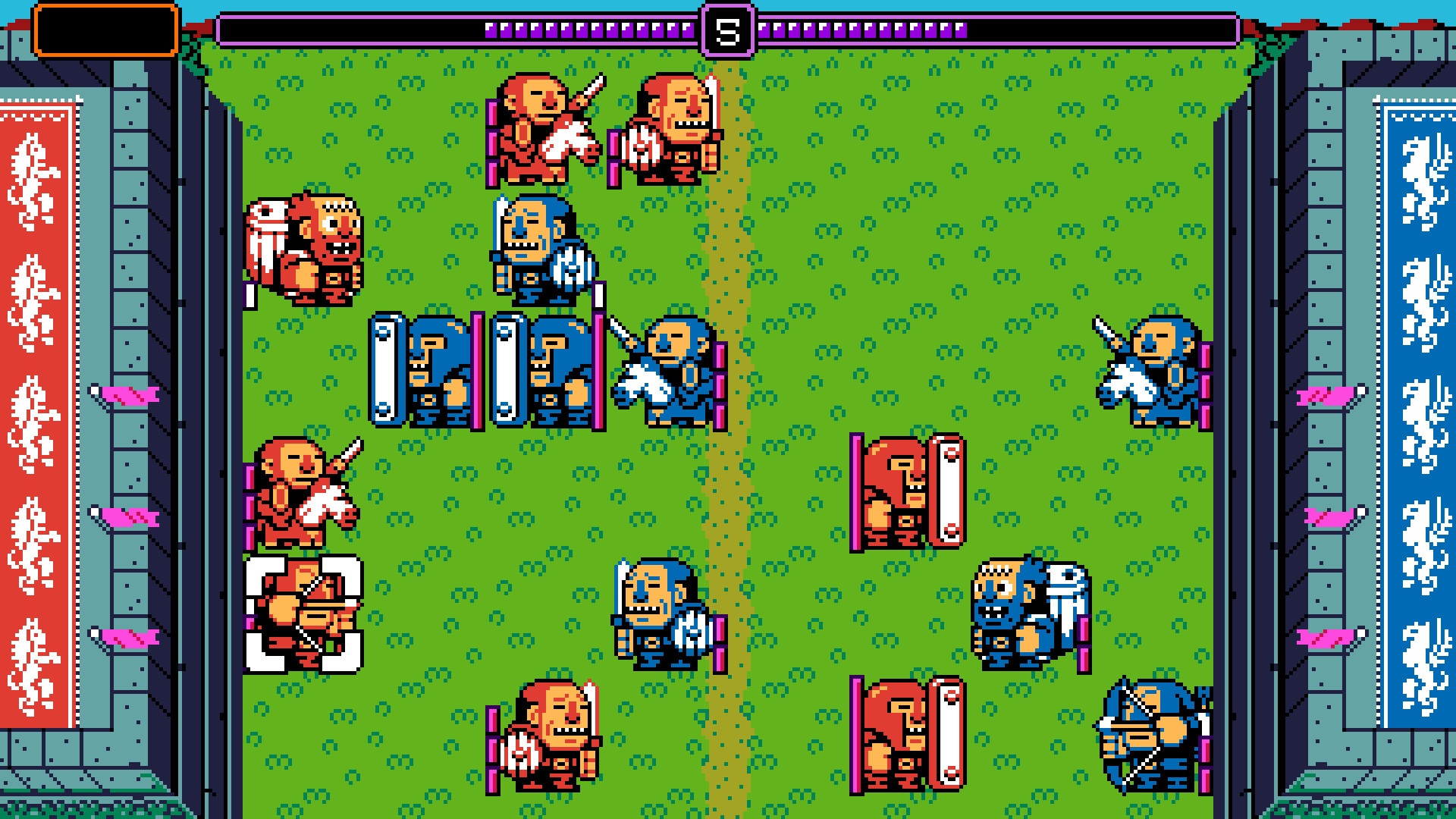
Grimstone is the collection’s larger role-playing adventure, set in an American Wild West swallowed by Hell. The party is formed from the remains of a burned-down saloon, and its journey seeks answers about what happened to the land. Its structure draws on 8-bit console RPG conventions, while the battle system adds a skill-based component to encounters. Overworld encounters can also be avoided strategically, making movement through the world part of how the player manages danger. These systems give the game a longer journey and party-based progression distinct from the collection’s shorter arcade entries.
Local multiplayer appears across half of the collection, with both cooperative and versus games. That includes titles built for direct competition, such as the turn-based decisions of Quibble Race, as well as games where players can work together through an arcade-style challenge. The mode depends on the individual entry, so multiplayer is one facet of the library rather than a single ruleset shared by all fifty games. Across solo and local play, the common activity is choosing a title and adapting to its particular goals. The retro presentation and fictional publisher provide a setting for that variety, while each game supplies its own complete loop.
- Developer
- Mossmouth
- Genre
- Collection of 50 games across action, adventure, puzzle, roguelite, role-playing, strategy, shooter, sports and other genres; Steam's broad store categories are Action, Adventure, Indie, RPG and Strategy.