
About TUNIC
A small fox wakes on an unfamiliar shore and explores a ruined land of forests, temples and buried places. TUNIC combines isometric action combat with a gradually recovered instruction manual whose maps, illustrations and cryptic writing turn navigation, mechanics and the world’s history into connected mysteries.
TUNIC begins with a small fox washed up on a beach, alone in a land of ancient ruins and hostile creatures. With no named quest giver explaining the situation, the fox moves through an interconnected world of forests, ruined settlements, catacombs and stranger places, following paths, landmarks and clues. A distant beacon, sealed routes and traces of an older civilization suggest that the landscape has a history, but the game lets its meaning emerge through exploration. The player’s immediate aims are practical: find a way forward, learn how the world works, and survive encounters with the beings that guard it.
A major part of that learning comes from the Instruction Manual, a book rebuilt from pages found during the adventure. Its illustrations, maps, diagrams and handwritten notes explain controls, items and routes, yet much of the text uses a fictional alphabet that is not translated for the player. A page can clarify a combat move while another reveals a path or hints at a larger secret. Because pages are discovered out of order, the manual behaves less like a linear tutorial and more like a collection of evidence: a symbol seen in the world may become legible only after a later diagram changes how it is understood.
Exploration rewards attention to the shape of the environment. The isometric camera can hide stairways, ledges and entrances behind foreground objects, while shortcuts reconnect areas that first seemed separate. Finding a new weapon or tool can make a previously blocked route usable, and the manual’s maps help establish bearings through drawings, landmarks and visual repetition instead of readable signs. Some passages are easy to miss from the chosen viewpoint, so inspecting a suspicious wall or an apparent dead end can uncover a route.
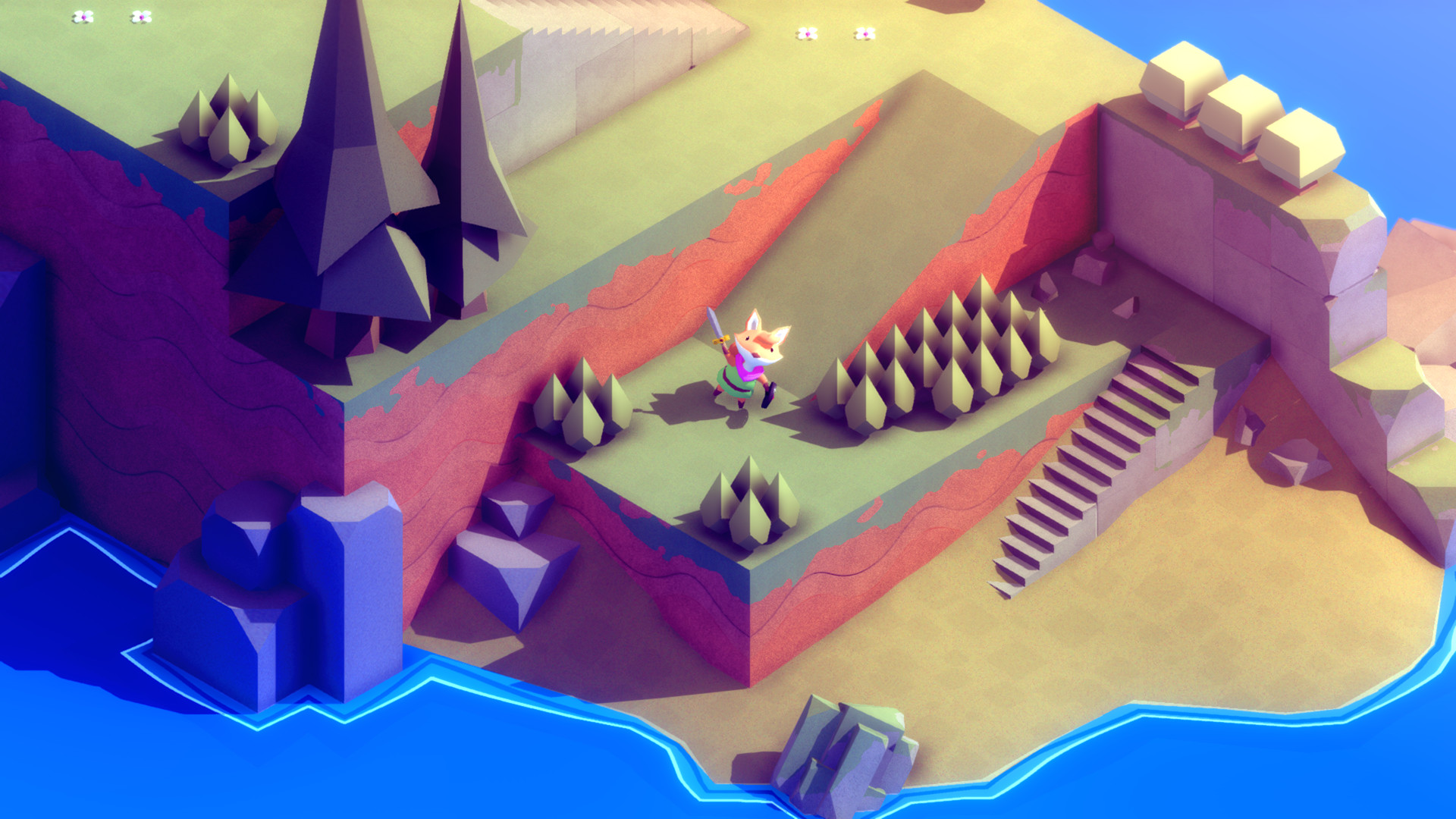
Combat is built around deliberate positioning and stamina. The fox can strike with a sword, raise a shield, dodge and use other discovered equipment, while enemies telegraph attacks through their movement. Blocking can preserve health but consumes stamina; spending that resource carelessly can leave the fox exposed when an enemy presses an attack. Dodging creates distance or avoids a blow, while choosing when to commit to a strike matters against groups and larger foes. Checkpoints restore the fox after defeat and also provide a place to regroup, so encounters ask the player to read patterns and manage limited capacity rather than simply trade hits. Stamina also governs other demanding actions, and reaching zero weakens the fox’s ability to respond effectively, making a short retreat or pause a meaningful part of combat rather than wasted time. Death also leaves a spectral echo at the place where the fox fell. Returning to it recovers the dropped portion of currency, but another death before recovery loses that previous drop. A newly opened shortcut can therefore make the return journey safer by avoiding a dangerous stretch of enemies.
Scattered treasures support character growth and tactical preparation. Offerings can be taken to a checkpoint to improve attributes such as attack, defence, health, stamina, magic or potion effectiveness, with currency also part of the exchange. Coins have another use at wishing wells, where repeated offerings open additional slots for ability cards. These cards alter the fox’s capabilities or combat conditions, letting players tailor a loadout around the challenge ahead. Consumable items provide further options, from direct attacks to effects that change an encounter’s rhythm. The result is a progression loop based on finding objects, deciding how to spend resources and adjusting equipment as new threats appear.
The game’s puzzles grow from the same habit of observation. Some are environmental problems, asking the player to notice a hidden route or infer how an object connects to a mechanism; others depend on details in the manual and on patterns that recur across the world. Pages preserve hints in diagrams and marginal notes, but the game also leaves room for discoveries whose solution is not spelled out in ordinary language. The Golden Path is one of the larger examples of this design: clues distributed across the book and environment can be assembled into a single insight. These mysteries tie progress to interpretation, so learning to inspect the page itself becomes as important as learning how to fight.
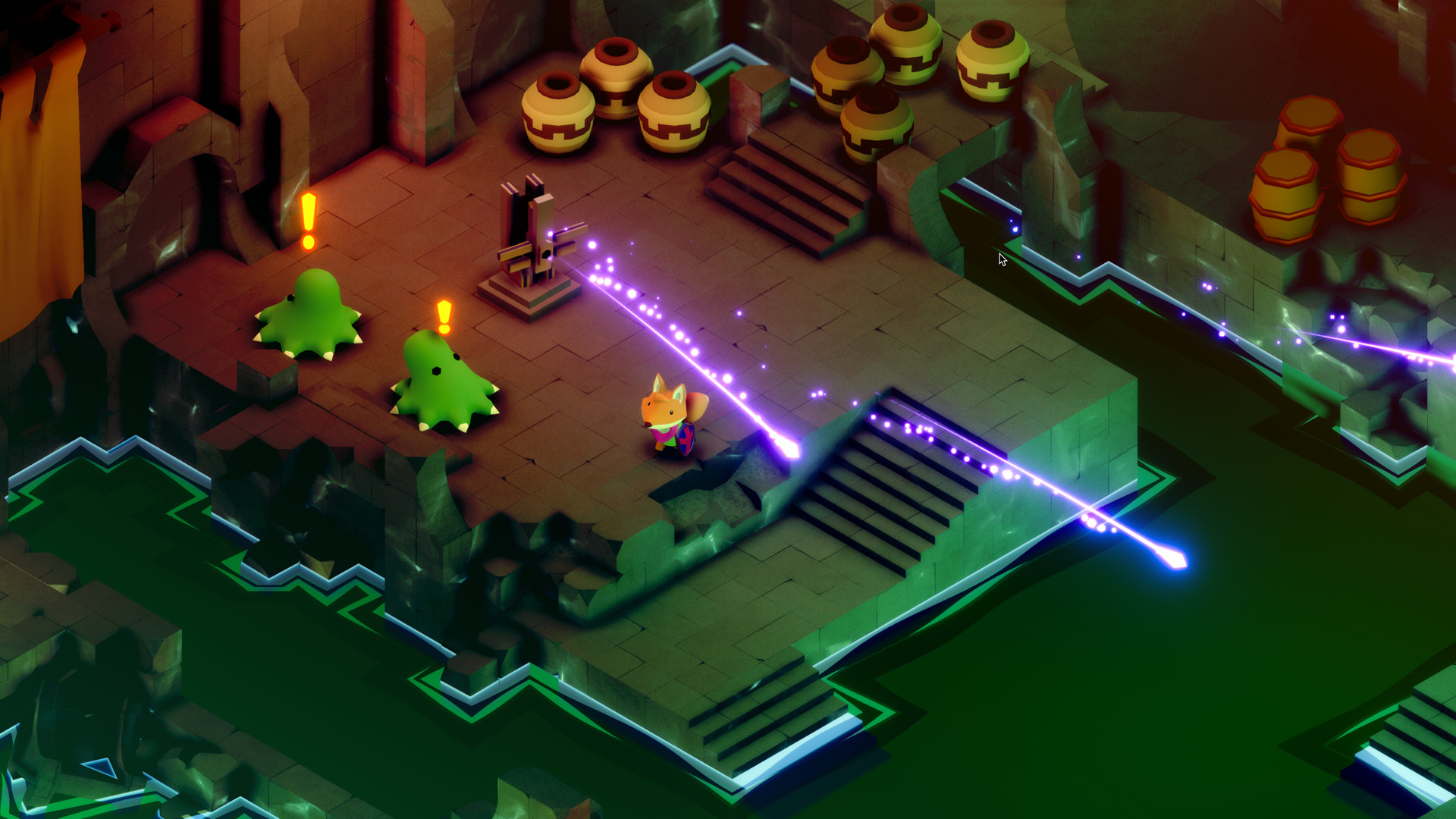
TUNIC includes two optional accessibility settings that change the combat challenge while leaving the exploration systems available. No Fail Mode prevents the fox from dying in fights, allowing players to concentrate on reaching new areas or interpreting puzzles without combat ending a run. No Stamina Restrictions provides unlimited stamina, so repeated dodges no longer require the same resource management. Both settings can be switched off again at any time. They address different pressures: one removes death from encounters, while the other preserves enemy threats but loosens the limit on evasive movement. The fox can therefore continue learning enemy patterns and testing routes with a chosen level of combat demand.
- Developer
- TUNIC Team (Steam listing); Andrew Shouldice is identified as lead developer in his developer-authored PlayStation Blog article
- Genre
- Isometric action-adventure