
About Trials of Mana
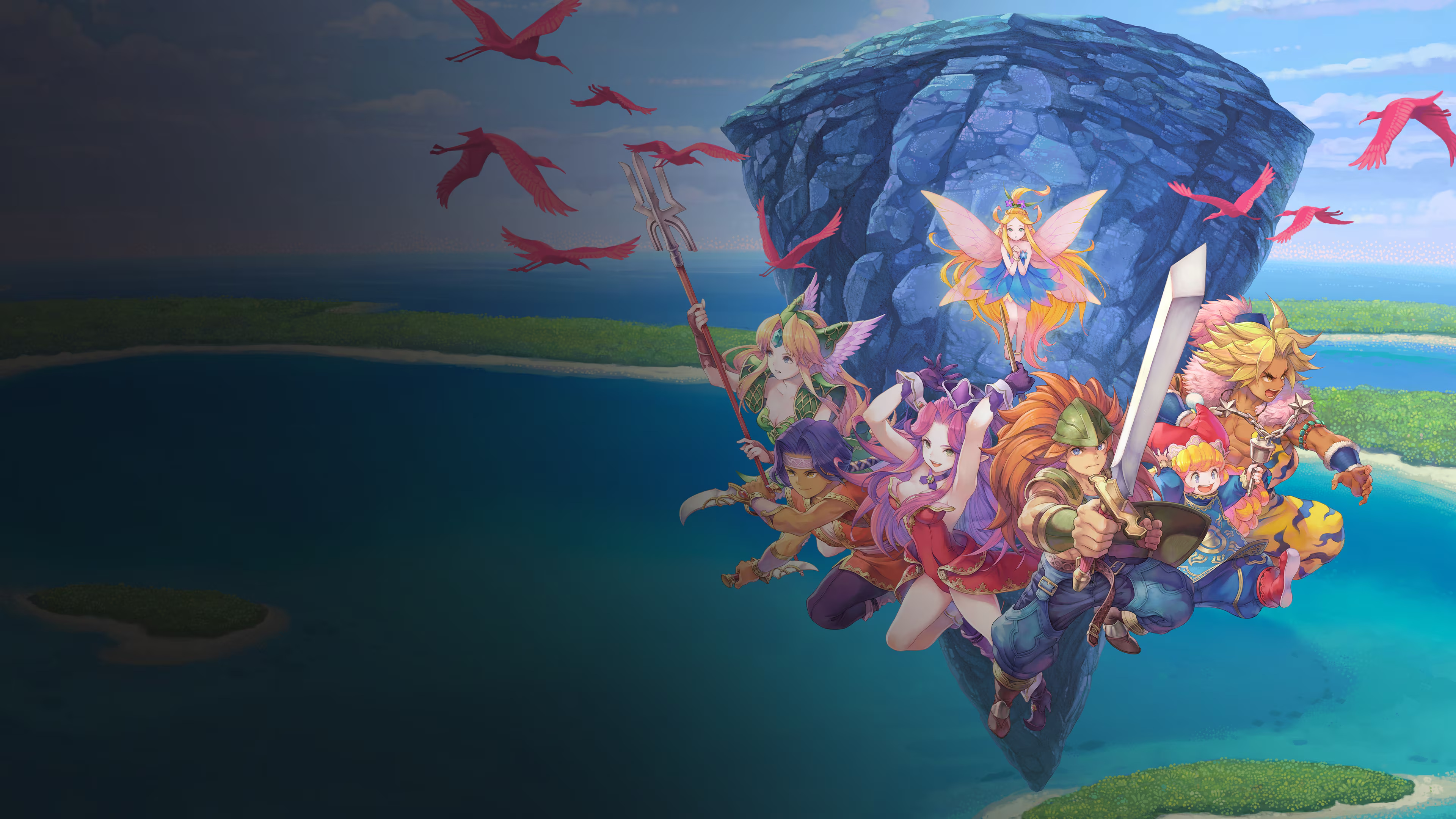
When Mana fades and the Mana Tree withers, six young heroes from different kingdoms are drawn into a struggle over the eight sealed Benevodons. Choose one protagonist and two companions, then travel through a 3D fantasy world, fight in real time, and develop each hero through abilities and branching classes.
Mana underpins the world’s survival, and the crisis begins when the Mana Tree starts to wither. In the distant past, the Goddess of Mana wielded the Sword of Mana against eight Benevodons, monsters of destruction, and sealed each inside a Mana Stone. After restoring the realm, she changed into the tree and fell asleep. Now, competing forces wage war and seek the stones to free the Benevodons. As Mana disappears, the old barrier between the world and those sealed threats weakens. The story follows six young people whose lives intersect this struggle, but the selected protagonist determines which personal conflict and enemy faction take the lead. That framing gives the adventure a shared objective without making every campaign identical: the party confronts a world-wide danger through one of several character-centered beginnings, then pursues the means to stop the seals from being broken. The central tension is not simply defeating monsters encountered on the road; it is preventing a political contest for power from undoing the Goddess’s protection and threatening the source that sustains life.
The six protagonists come from markedly different places and responsibilities. Duran is a skilled young soldier of Valsena, Kingdom of the Plains, who admires the Hero King and carries the memory of his father Loki, the Golden Knight. Angela is Altena’s princess; she loves her mother, the True Queen, despite having grown up with little of her attention, and struggles with the kingdom’s expected art of magic. Kevin, heir to Ferolia’s beastman throne, was raised as a fighter and finds human conversation difficult; his friendship with the wolf pup Karl softened his isolation. Charlotte is the granddaughter of Wendel’s Priest of Light, a temple-raised half-elf whose curiosity sits alongside superstition and fearfulness. Hawkeye grew up in Nevarl, a desert fortress and thieves’ guild, as Flamekhan’s ward with Eagle and Jessica. Riesz is Laurent’s princess and captain of its Amazon guard, focused on her father, younger brother Elliot and kingdom after losing her mother. Choosing a lead and two companions determines whose opening drives the journey and which characters form the party; the six are not all present as playable companions in one campaign.
The setting is introduced through the homelands and institutions that shape those heroes: the plains kingdom of Valsena, magical and snow-covered Altena, beastman-ruled Ferolia, Wendel’s temple, Nevarl’s desert stronghold and mountainous Laurent. These are more than labels attached to a roster, because each protagonist’s loyalties and family ties grow from a different social world. A soldier tied to Valsena’s king, a princess of a kingdom of magicians, an heir raised in Ferolia’s martial court and a captain responsible for Laurent’s guard approach the fading of Mana from different positions. Wendel and Nevarl likewise represent a religious center and a thieves’ guild rather than another royal household. The adventure gathers these separate backgrounds into one crisis around the Mana Stones and the weakening tree. Its world is therefore organized around distinct kingdoms, rulers and groups, with the player’s choice deciding which personal thread introduces those places and the threat they face. Together, these places give the Mana crisis a political and cultural geography: royal courts, a temple and a guild of thieves all sit within the same endangered world.
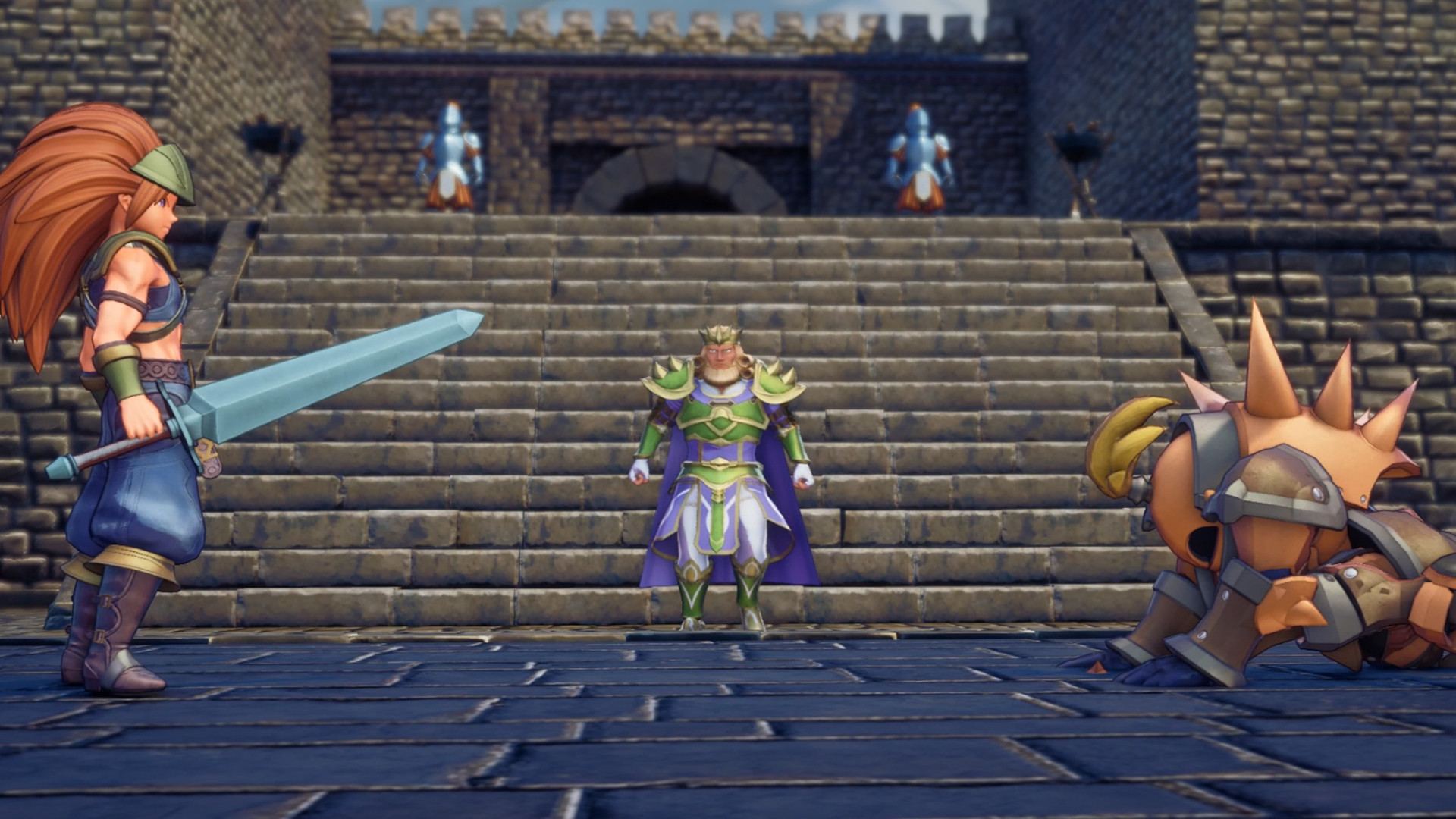
Combat is action-based and remains in real time. The player directly operates one of the three selected heroes while the other two are controlled by the game, so choosing a party also chooses which skills are available through companion behavior. A fighter can chain Weak and Power attacks; the order changes the finisher, with combinations that can strike an area or knock enemies back. Class 2 and Class 3 unlock longer combo sequences, giving class advancement a direct effect on the timing and reach of ordinary melee strings. Jumping and evasive movement let the controlled character respond to enemy attacks. A separate Class Strike gauge builds as attacks produce collectible particles, and certain urns also contain them. These particles contribute to the party’s gauges, not only the active fighter’s, creating a shared payoff from continued pressure. A character can spend stored charge on a class-specific strike once its threshold is met; later class tiers expand the gauge and allow more expensive strikes. Spells and other moves use MP, so players balance immediate physical attacks with limited magical actions and recovery. The fight loop connects combo execution, positioning, party composition and resource use without pausing the encounter for turn selection. The gauge also creates a timing choice against armored foes: a multi-hit Class Strike can strip armor during its opening hits, but a single-hit strike removes armor before dealing damage. An enemy that leaves the arena while a strike is winding up can make it miss, so stored energy does not guarantee a hit. The gauge reward from combat and the opening an enemy creates both matter when deciding when to spend it.
Development gives each hero several layers of specialization. Experience raises levels, while Training Points are invested in character-specific training branches to unlock moves; many moves consume MP when used. Class changes add a larger role choice: protagonists advance through Light or Dark branches, gaining class-specific magic, techniques and visual designs. Duran offers a clear example of how that choice changes a party’s options. His Light Liege class can equip a shield and use healing magic, while the Dark Duelist emphasizes attack power. The branches therefore affect whether he contributes more to protection and recovery or direct offense. Equippable abilities add another layer alongside learned moves: some come from training investment, while others are acquired through events and interactions, occasionally depending on which character is present. Players can shape an individual fighter through both class direction and ability selection, while the three-person party determines how those roles complement one another. This progression system connects what a character can do in battle to decisions made over the course of the journey, without requiring every improvement to come from class changes alone. Class tiers also increase the number of ability slots available, so new classes expand the space for passive bonuses as well as granting a new move set. This makes a class change a broad revision to a character's function rather than one isolated skill unlock. Party-sensitive abilities add a further reason to consider the trio: some rewards depend on interacting with events or people while a particular hero is present.
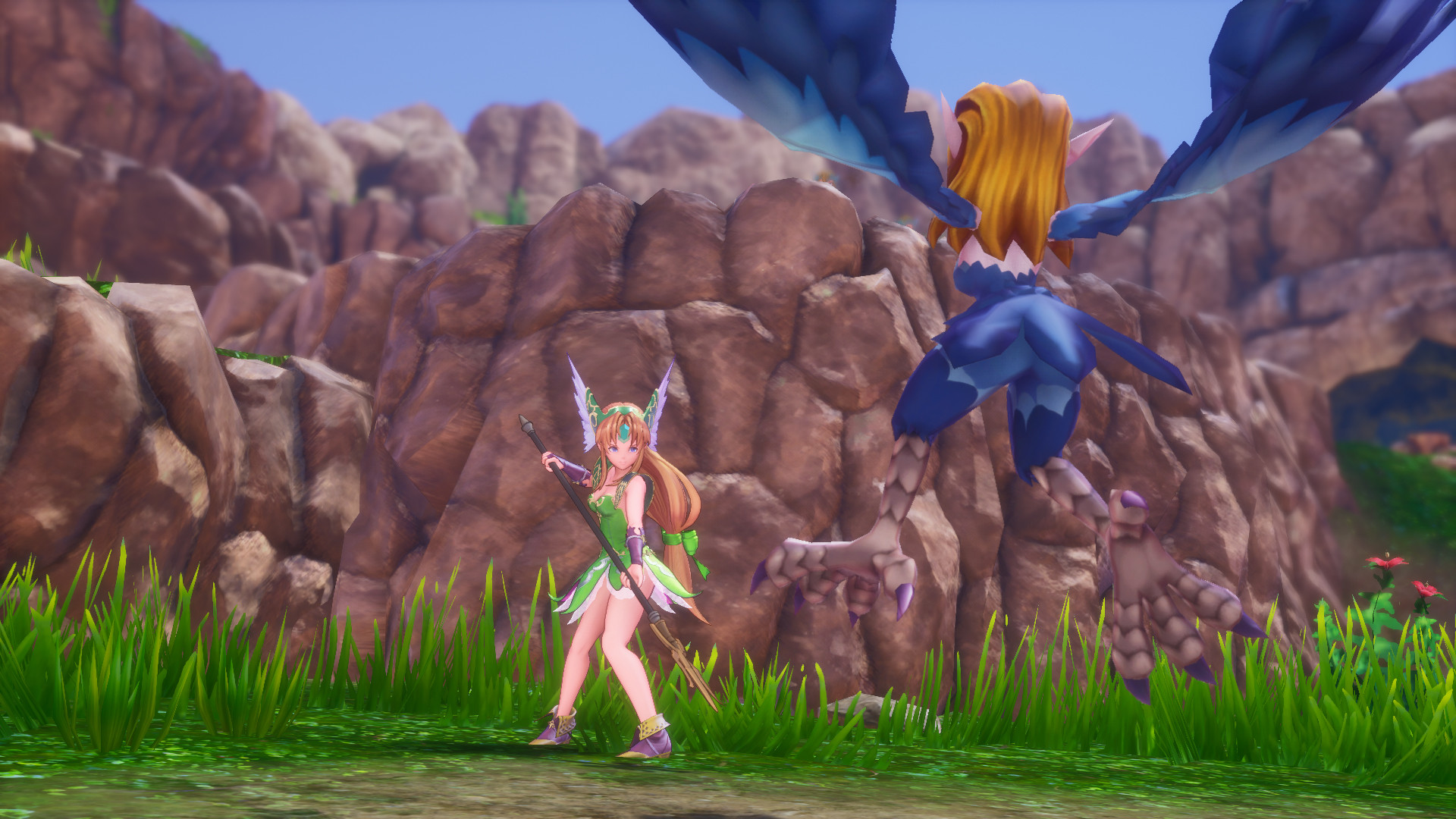
The remake presents Seiken Densetsu 3 as a fully 3D role-playing game with voiced characters, revised graphics and a remastered soundtrack. The score contains 60 new arrangements overseen by original composer Hiroki Kikuta, and the player can switch between those arrangements and the original music. Class advancement changes the heroes’ appearance as well as their combat abilities: the new 3D models reinterpret class designs first created for pixel art, with each branch represented through distinct clothing and equipment. The full game also has an additional episode after the main ending, where the fourth class becomes part of the extended progression. Steam’s edition of the remake is listed as single-player; Square Enix also lists releases on PlayStation, Nintendo Switch, Xbox, Windows, Apple and Android, with platform-specific features depending on the edition. The 2020 remake is distinct from the 1995 original and the separate Collection of Mana release. Its expanded action combat, voiced presentation, class additions and post-ending episode describe this remake’s scope, while the selectable soundtrack links its updated audio presentation to the earlier game. The added episode begins after the ending, then returns to events near the end of the adventure. In the Valsena library, the heroes find a message that reveals the existence of Class 4; pursuing that advancement sends each character to a place connected to their own past. The fourth class gives each hero a unique weapon and special attack, adding a distinct post-story objective to the remake instead of extending the campaign with an unrelated mode. That structure makes the selected cast relevant again: the extra chapter follows the chosen party and develops their class paths after the main threat has been resolved.
- Developer
- Square Enix
- Genre
- Action role-playing game