
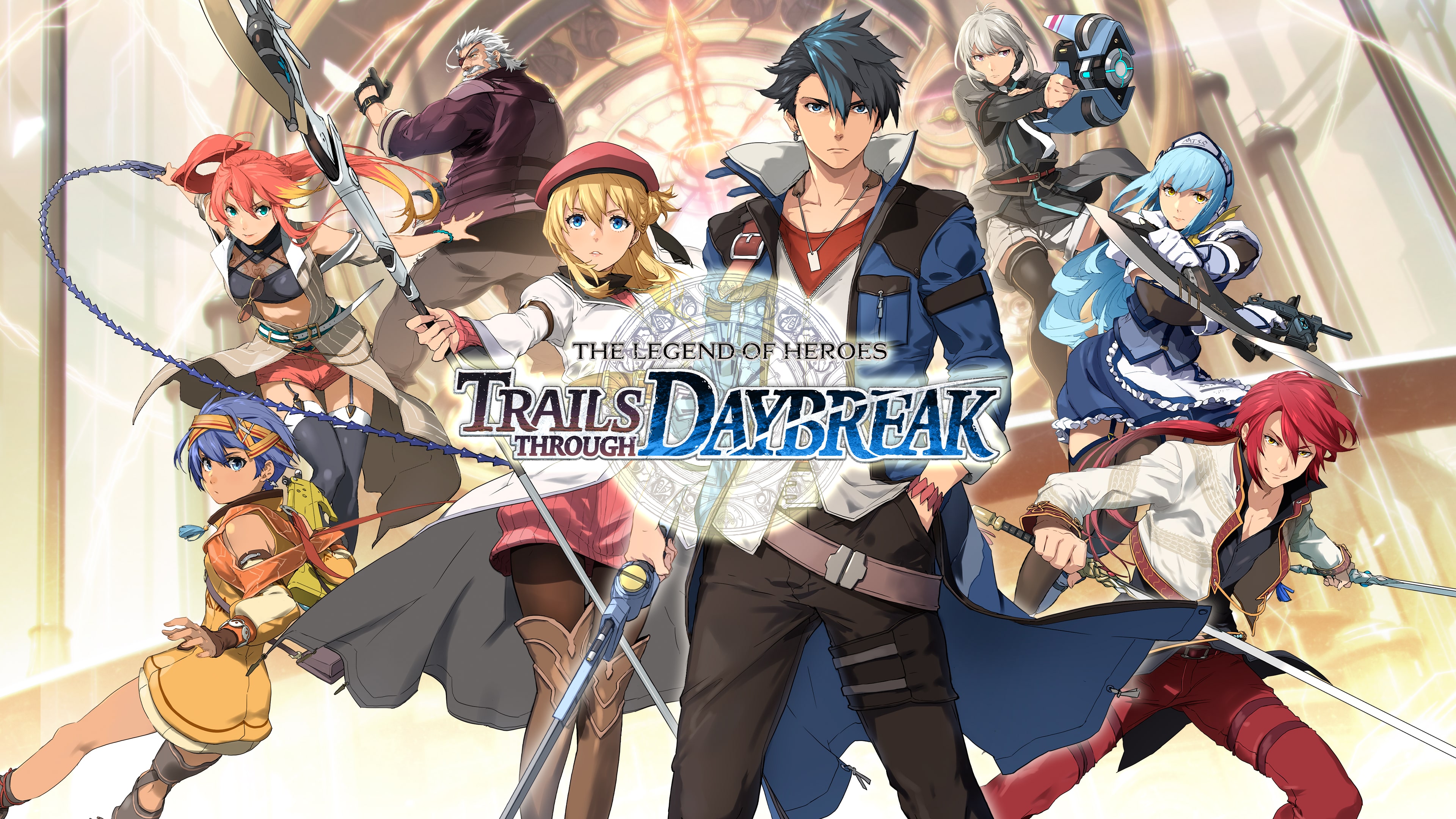
About The Legend of Heroes: Trails through Daybreak
In the Calvard Republic, fixer Van Arkride takes on a request from student Agnès Claudel that draws Arkride Solutions into a search for mysterious Genesis devices. Investigate cities and side jobs, make choices that shape Van’s alignments, and switch between real-time field fights and tactical command battles.
The Calvard Republic is enjoying a surge of economic growth after a brief war and reparations from Erebonia, yet immigration and political reforms are making the public uneasy. Against this backdrop, Van Arkride works as a spriggan: a flexible fixer who may act as detective, negotiator or bounty hunter, taking commissions that police or other legitimate services cannot handle. His office, Arkride Solutions, attracts a young academy student named Agnès Claudel, whose request seems at first to concern a strange orbment. The job soon grows into a far wider investigation, placing Van and Agnès amid forces that reach across the republic. The story’s tone follows Van’s willingness to work in moral gray areas. A case can involve an ordinary client, an institution that cannot publicly intervene or people from the underworld, and Van has to decide how far his own rules allow him to go. The result is a new Calvard-centered chapter in the larger Trails setting, with its own cast and political landscape while remaining connected to a continuing world. The mystery moves beyond the initial strange orbment toward a search for the Genesis devices, placing the office at the center of an investigation that reaches beyond a single client.
Van’s profession gives the story an episodic structure. Arkride Solutions receives requests with different levels of legitimacy, from work that authorities cannot pursue openly to jobs that brush against criminal networks. The office becomes a meeting point for a group of allies who accompany Van and Agnès through the investigation. Rather than making the protagonist a student or soldier operating within a single institution, the spriggan role lets the party cross social boundaries: a client, contact or witness can be connected to government, commerce, law enforcement or the underground. Those relationships make Calvard’s competing interests part of the day-to-day work. The party is not simply travelling to battle a succession of monsters; it listens, gathers context and decides which commissions to accept or how to respond when a case puts people with different loyalties in conflict. The story also presents a republic undergoing rapid technological change, where prosperity and reform coexist with anxiety about who benefits and what may be lost. That national situation gives Van’s individual jobs a larger political frame.
The investigation ranges from Edith, the capital, to communities across Calvard, including the rustic town of Creil, technology-focused Basel and the desert oasis of Tharbad. Each location gives the casework a different setting: busy city streets and neighborhoods contrast with smaller settlements and the infrastructure of a technological hub. Calvard’s modernized orbal technology appears in household devices, vehicles and communication tools, giving the country a more contemporary feel than some earlier regions of Zemuria. Exploring these hubs means talking with residents and following leads while also taking on side requests that expand the context around the main case. Social activities extend beyond the investigation: the game lets Van collect movies and watch them with party members, building platonic relationships through shared viewing. Cooking also connects exploration with progression. Recipes found during the adventure can be tried to earn Gourmet Points; raising the Gourmet Rank improves the party’s food buffs, giving collected dishes a role in preparation. The Topics system collects conversation topics through interactions with characters around town, giving the city’s residents a distinct place in Van’s investigative work. The main exploration rhythm links investigation with movement through towns and field locations. The city visits also let the player gather context through residents’ conversations, the household devices and transport visible in its streets, and the different environments around each town.
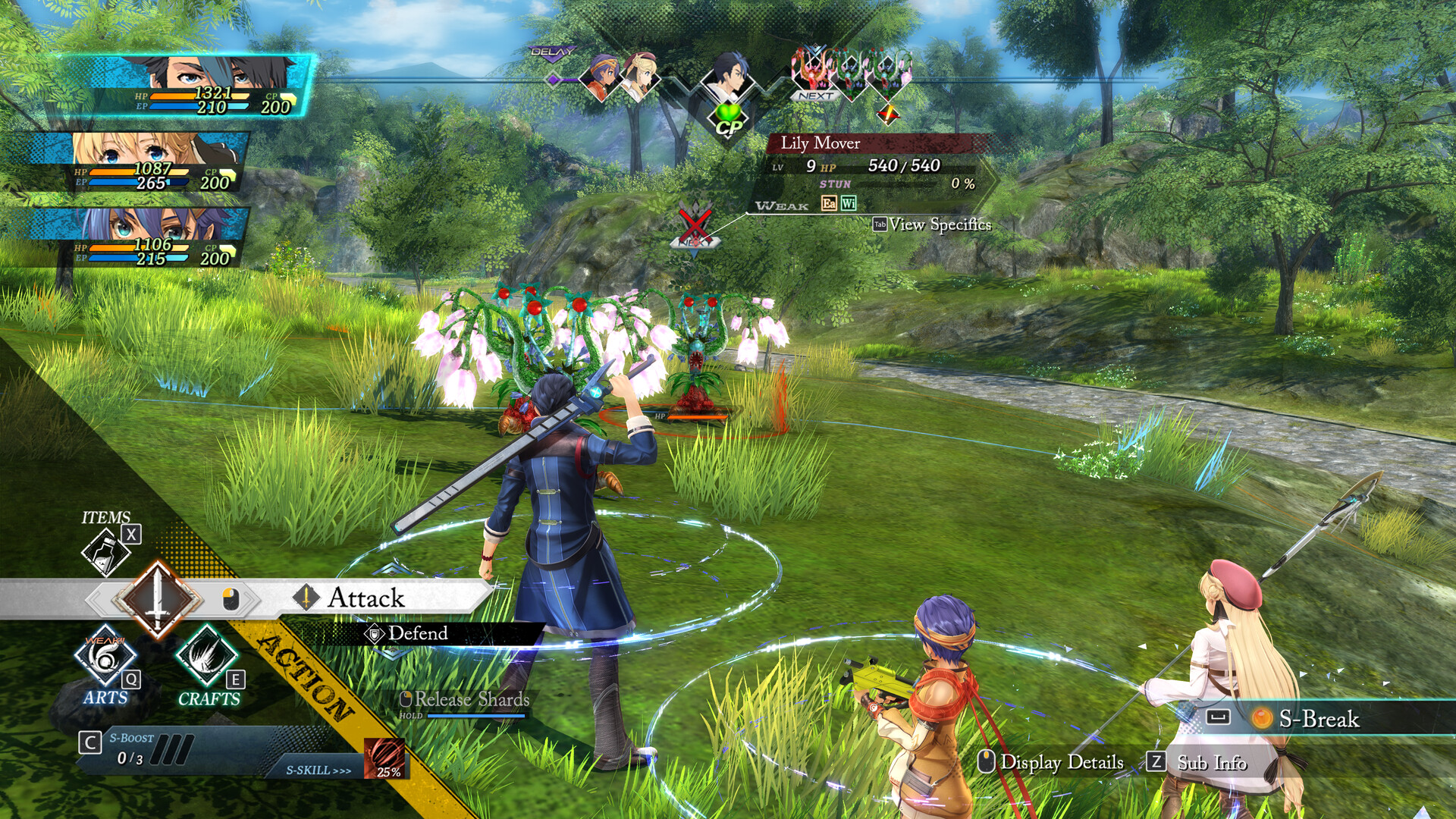
Battles build on that exploration through two linked modes. Field Battles let Van and his allies attack, dodge and fight in real time, providing a direct way to handle weaker enemies or establish an opening. At any time, the player can switch into Command Battle, the series’ turn-based format, where attacks, Crafts, Arts and items are selected as orders. A one-button touch system assigns commands directly to buttons, and Crafts and Orbal Arts form much of the damage-dealing toolkit. The two modes serve different situations: real-time control can move a skirmish along, while command combat gives room to consider turn order, elemental Arts and character-specific techniques. The system allows players to enter a command battle immediately or use a field attack to weaken or stun an enemy first. Boss encounters rely on command combat, putting the tactical layer at the center of major fights. In turn-based encounters, characters can reposition freely before acting, so distance and location relative to foes and allies matter. Staying close to a companion can enable linked follow-up attacks through SCLM, while spreading out may reduce exposure to attacks that cover an area. The shift from field action to command tactics lets the player choose how to approach many ordinary encounters.
Van’s Xipha tactical orbment organizes much of the party’s combat customization. Its installed holo-core sets a character’s foundational qualities and S-Boost property; Arts Drivers provide a selected group of magical Arts; quartz placements contribute elemental values that unlock passive shard skills. Those skills may add effects to attacks or support the party, while the orbment itself can assist nearby allies with follow-ups or increase the effectiveness of Arts. Since elemental values are tallied along separate quartz lines, changing a single piece of equipment can alter which shard skills a character can access. Arts Drivers separate the available spells from that passive skill calculation, and can be adjusted with plug-ins for further customization. The S-Boost gauge adds another choice during battles: activating it strengthens the relevant shard effects and ties into the use of S-Crafts. The gauge builds during combat, so deciding when to spend it becomes part of managing a fight rather than a one-time equipment decision. This is a progression system with several layers, since equipment choices influence both the spells a character can cast and the passive behavior that may trigger in combat. The exact available skills depend on the quartz and orbment setup, so the party can be tuned toward different roles rather than every character relying on the same actions. Holo-core settings further distinguish characters by influencing their base Arts power, EP and S-Boost effect. Using Arts, Crafts, positional links and shard effects together creates the tactical texture of Command Battles; the system’s resources and equipment make preparation consequential. The setup separates a character’s magical toolkit from passive skill access: an Arts Driver selects the former, while quartz lines and the holo-core shape the latter and the S-Boost effect.
Choices also shape how Van is perceived and what relationships or forces enter the story. The Alignment system tracks Law, Gray and Chaos values as Van handles requests and makes decisions. These values can affect his combat attributes as well as later plot points and which groups may stand with or against Arkride Solutions. That connection means Van’s treatment of commissions can alter his combat profile and the political forces around Arkride Solutions. Presentation reinforces Calvard’s shift into a new technological era through city environments and modern devices, while the story’s focus on a spriggan gives the cast a range of perspectives shaped by their work and affiliations. The Windows base game is distinct from Deluxe and Ultimate bundles, which add cosmetic, voice and item packs. Its premise and setting begin a new regional arc, while the game remains part of the wider Trails continuity.
- Developer
- Nihon Falcom
- Genre
- Action-adventure role-playing game