
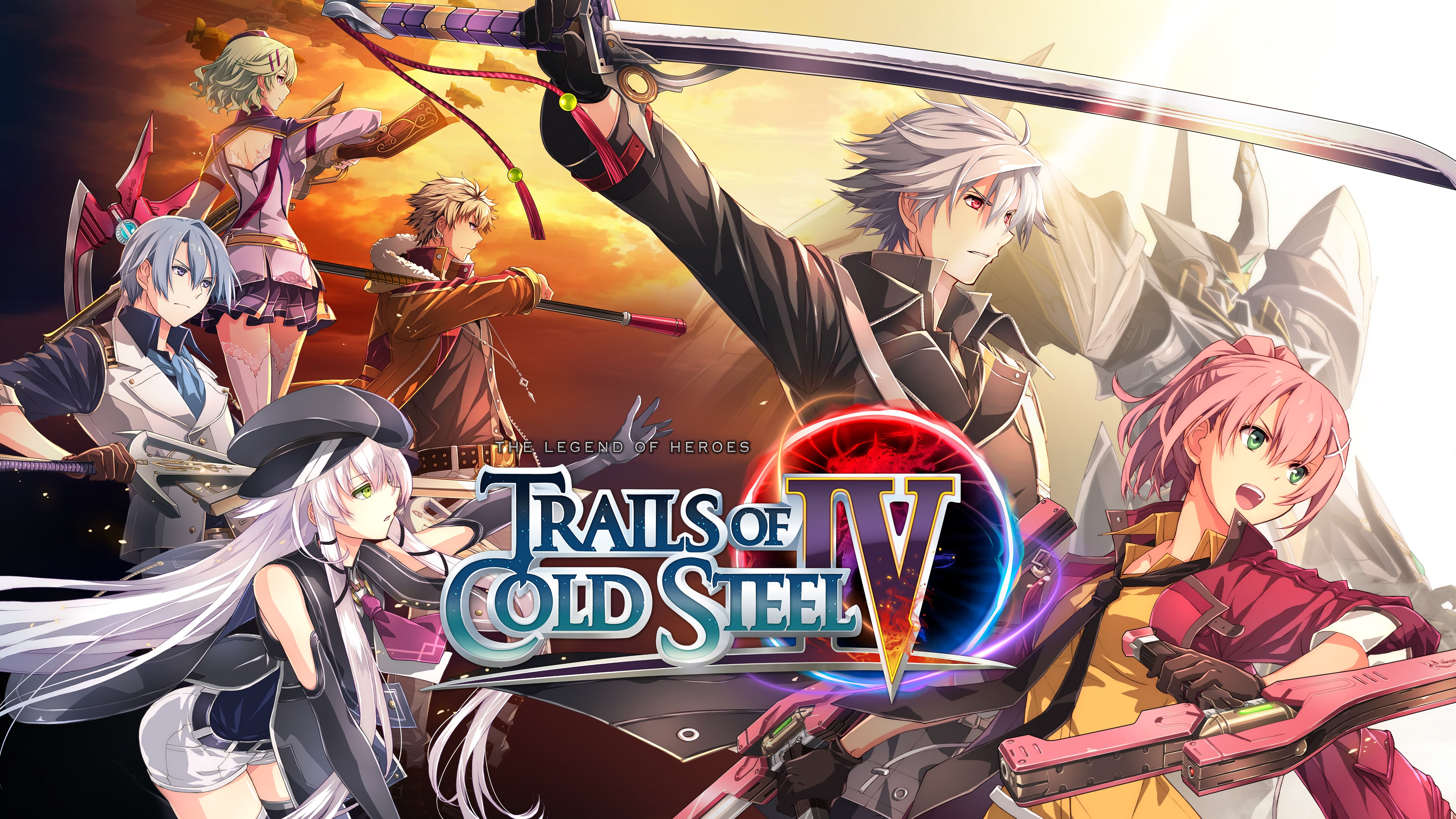
About The Legend of Heroes: Trails of Cold Steel IV
Erebonia is moving toward a continent-wide war and Rean Schwarzer is missing. The old and new students of Class VII gather allies from Crossbell and Liberl to stop the Empire's advance. Trails of Cold Steel IV continues their connected story through quests, turn-based party battles, giant-mech support, Lost Arts and a remarkable range of diversions between major events.
Trails of Cold Steel IV begins at a point where a familiar group can no longer look to its instructor for direction. Rean Schwarzer is missing after the events of Cold Steel III, and the Erebonian Empire is preparing an invasion on a scale that threatens the rest of the continent. Operation Jormungandr is more than a distant name for a campaign: it gives the old and new members of Class VII a reason to gather people who do not all share Erebonia's interests or history. Juna Crawford, who grew up in Crossbell before coming to Thors' branch campus, knows what imperial power looks like from a territory that lost its independence. Kurt Vander carries the discipline of a family of sword masters; Altina Orion's time among her classmates has changed how she understands her own place beside them. These students must act while the person who taught them is absent. The game's opening thus turns the usual mentor-and-party arrangement around. The immediate problem is to find a way forward together, even as the political crisis surrounding them makes waiting for help increasingly dangerous.
The reunion extends far beyond one class photo. Former Class VII members, the newer branch-campus group and allies from elsewhere in the series enter a conflict that also touches Crossbell's Special Support Section and the heroes of Liberl. Those connections are meaningful because this is the closing game of a long-running Erebonian arc, not an unrelated adventure that happens to reuse a few names. A player can understand the starting stakes—Rean is gone, war approaches, and his students need allies—without every past revelation being restated at once. Still, relationships established in earlier games give much of the cast its weight. The story places personal loyalties beside national ones: Juna's hope for a future shared by Crossbellans and Erebonians, for instance, exists within a campaign that might make such cooperation impossible. Other characters arrive with their own ties to the Empire, Thors or lands beyond it. Their presence expands the question from how one teacher is saved to what these groups can achieve together before Erebonia's military preparations become irreversible.
That large-scale threat is not confined to a sequence of briefing rooms. As the main story develops, quests appear across Erebonia and Crossbell, connecting the group to citizens, soldiers, nobles and people with smaller immediate concerns. The publisher's examples include exploring a shrine whose ruins recall an earlier visit to Bryonia Island and helping a Crossbell News Service reporter survey the public about Erebonia's National Mobilization Law. One task reaches back into the party's history; the other tests what ordinary people think of a political measure changing their lives. This is why optional work can deepen the setting rather than merely interrupt the main objective. A continent moving toward war is experienced through specific places and residents, not only through the decisions of its leaders. The journey's stops provide opportunities to see how a broad conflict is understood on the ground, while a return to familiar regions lets long-running characters confront consequences that did not end when a previous game's credits rolled.
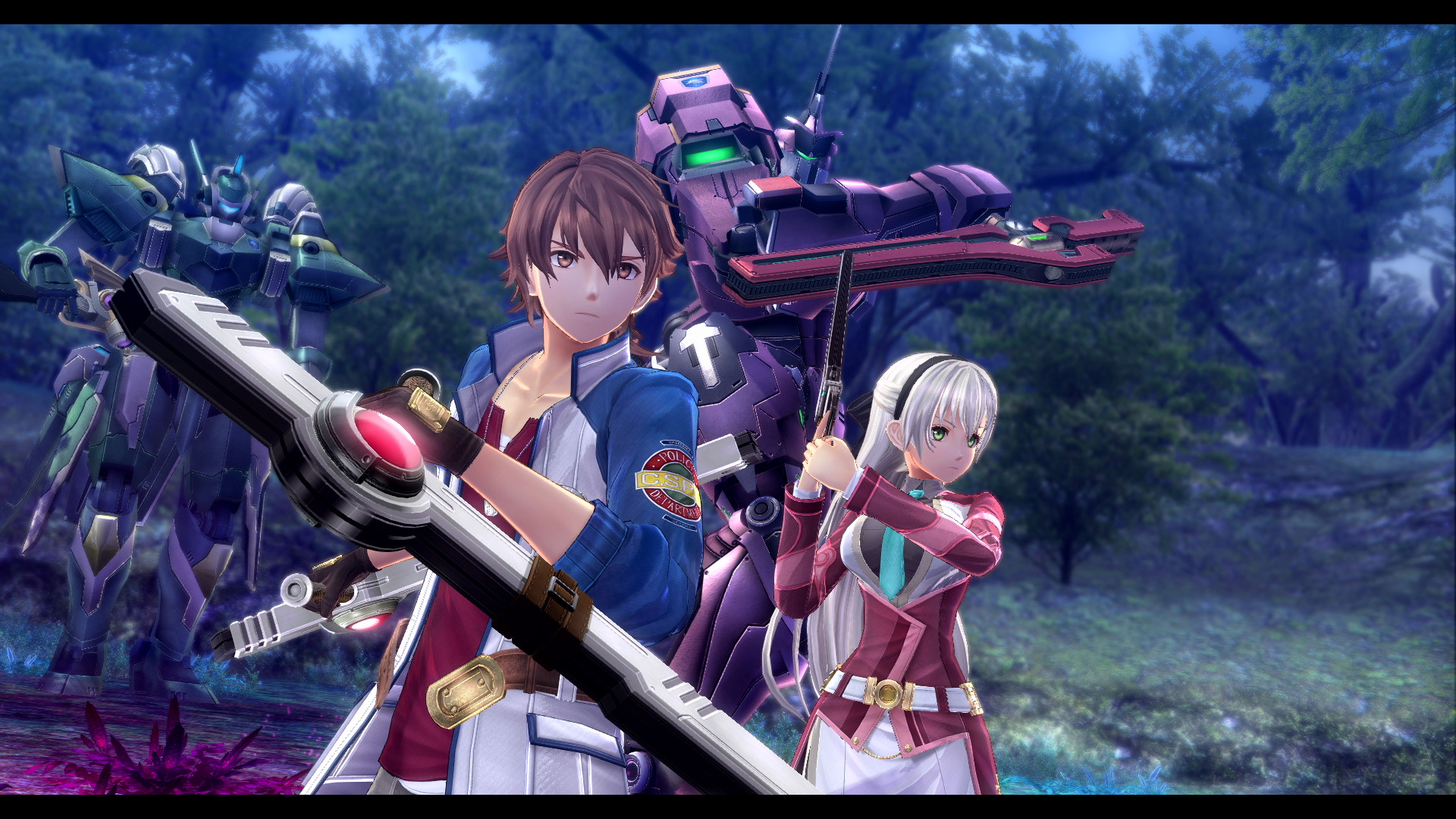
Combat remains party-based and turn-driven, with individual characters contributing distinct attacks, Arts and Crafts. Craft Points build as a fighter attacks and takes damage; reaching the required amount makes an S-Craft available. These powerful character-specific techniques can produce a burst of offense or another decisive effect, but using one is a choice about timing as well as spectacle. Juna's Valiant Charge begins with high-speed electrical shots from her gunbreakers before she rushes in, while Kurt's Gemini Judgment turns the dual-blade style he inherited into an explosive strike. Altina's Solaris Bringer uses her combat shell Claiomh Solais in a different kind of assault. Their moves connect the person visible in a story scene with a particular set of possibilities in battle. The larger cast means there are more such possibilities to consider as allies join the cause. Auto Battle is available for quicker routine encounters, but the significant fights still revolve around deciding who should act, what resource to spend and when a major technique will have the greatest effect.
The fourth game adds options that make the party's resources feel especially consequential. Members of New Class VII can call their mechs into ordinary battles for powerful attacks, even when they do not personally possess a Divine Knight. Lost Arts return as extremely strong multi-element Orbal magic. A character can cast one only once in a battle and must spend all of their EP to do so, so the opportunity is substantial but not free. Prominence Nova combines Fire, Wind and Space in an attack that can also strip enemy buffs and inflict Burn; Leanan's Kiss uses Fire, Mirage and Water to charm foes and raise allied statistics. Those examples show why a Lost Art is a response to a particular battlefield state, not simply the next spell to cast whenever it appears in a list. Mech support, S-Crafts and Lost Arts offer different ways to turn a difficult exchange, and each has its own cost or condition. Choosing among them gives the turn-based system a sense of escalation that matches the scale of the surrounding conflict.
The game also gives Class VII time to spend together away from the immediate pressure of war. Vantage Masters returns as a card battle in which creature and spell cards support a Master; additional cards and Masters widen the available decks. Crossbell's Pom! Pom! Party! asks players to clear falling colored poms in groups of three or more, building Craft Points that can be spent on offensive or defensive S-Crafts against an opponent. Poker and Blackjack appear in Barca, the casino in Crossbell's Entertainment District, with medals exchangeable for items and accessories. Mishelam Wonderland's Horror Coaster turns a ride into a shooting gallery where sustained accuracy builds a score chain. These activities differ in form, yet they all place recognizable people and places around the main party. They show how Crossbell and Erebonia continue to hold social spaces while political events threaten them, and they let a long story breathe without pretending the wider stakes have vanished.
The official character introductions also show how much of the conflict lies inside Class VII itself. Ash Carbide grew up in Raquel's slums and joined the branch campus from another class; the events that follow him into this game's opening leave his whereabouts uncertain. Musse Egret came to Thors from St. Astraia Girls' School, but her connection to Erebonia's nobility gives her access to a political world far beyond campus life. Juna Crawford's Crossbell upbringing sets her apart in a different way: she had hoped to join its police before circumstances took her to the branch campus. The Special Support Section was the example she wanted to follow, making her place in an Erebonian school a particularly uneasy one. Musse, meanwhile, has organized the Weissland Army against Chancellor Osborne, so her student identity and political responsibilities cannot be neatly separated. Their positions are not interchangeable, even when they are called the same class. One student carries the consequences of an imperial crisis, another has ties to resistance among the nobility, and another wants a future in which her occupied home and Erebonia can coexist. Bringing them together without Rean asks the player to consider what a shared cause can mean to people shaped by such different parts of the Empire's reach.
- Developer
- Nihon Falcom; PC listing also credits Engine Software BV and PH3 GmbH
- Genre
- Turn-based role-playing game