

About The Legend of Heroes: Trails of Cold Steel III
A year and a half after Erebonia’s civil war, Rean Schwarzer becomes an instructor at Thors’ new branch campus. He leads a small Class VII of Juna Crawford, Kurt Vander and Altina Orion on field exercises as the Empire expands and the secret society Ouroboros resumes its plans. Their school assignments unfold amid political tension and turn-based battles.
The story begins in spring 1206, a year and a half after Erebonia’s civil war. The Empire has grown through the annexation of Crossbell and North Ambria, while Chancellor Giliath Osborne’s government centralizes power and the old noble regions adjust to a diminished position. In this uneasy period, Rean Schwarzer arrives in the town of Leeves as an instructor at Thors Military Academy’s newly established branch campus. He is already known as the Ashen Chevalier, a young hero whose role in recent conflicts made him a public figure, but his new responsibility is smaller and more immediate: teach a class whose members come from different corners of a changing Empire. The secret society Ouroboros is also moving again, with plans involving jaegers and Calvard. The game sets these developments alongside the routines of a school year, so a lesson, journey or encounter can sit within a wider contest over who directs Erebonia’s future. Its opening stays before the major later revelations, focusing on the branch campus and the tensions its students inherit.
Rean’s homeroom is Class VII: Special Operations, a three-student class tasked with small-scale squad missions. Juna Crawford comes from Crossbell, a major trade city that has been forcibly annexed and placed under an imperial governor; she therefore attends an academy representing the power that now governs her home. Kurt Vander is a disciplined swordsman from a family associated with the Vander school, while Altina Orion is a quiet student whose background links her to the Empire’s military and political machinery. Their differences make the new class more than a collection of combat roles. Juna carries an outsider’s view of imperial expansion, Kurt brings a measured sense of duty, and Altina must negotiate how she relates to classmates after years of being treated as an instrument. The branch campus itself gathers foreigners, troublemakers and nobles who have become politically inconvenient. Its principal, Aurelia Le Guin, is a former general of the defeated Noble Alliance, and its other departments include Combat Tactics and Military Finance. Class VIII and Class IX, faculty, and the students of the main campus add more points of contact than Rean’s small homeroom alone. As the roster grows, the old Class VII returns as allies, connecting the new assignments to the relationships formed earlier in the series.
Field exercises turn the school’s mission into a way of seeing Erebonia beyond its capital. Rean and the students travel to regional locations, encounter local residents and organizations, and respond to problems that arise around each assignment. The setting includes places with distinct political histories: Crossbell is recovering economically while rumors of resistance persist, and Leeves is a rural town whose residents hold mixed feelings about a military academy after losing people in the civil war. This changing landscape gives the class’s work a practical purpose. Their tasks can put them near jaeger corps or Ouroboros, but their presence also brings them into contact with citizens and officials affected by the Empire’s expansion. At the branch campus, Professor G. Schmidt’s Einhel Keep serves as a configurable training and weapons-testing facility; its orbal machinery can alter the interior for exercises. That controlled environment contrasts with field assignments where terrain, local circumstances and enemy positions are not arranged as a classroom test. The plot uses these two kinds of learning—formal practice and travel through contested regions—to show Rean’s students gradually taking on responsibilities connected to the wider Empire.
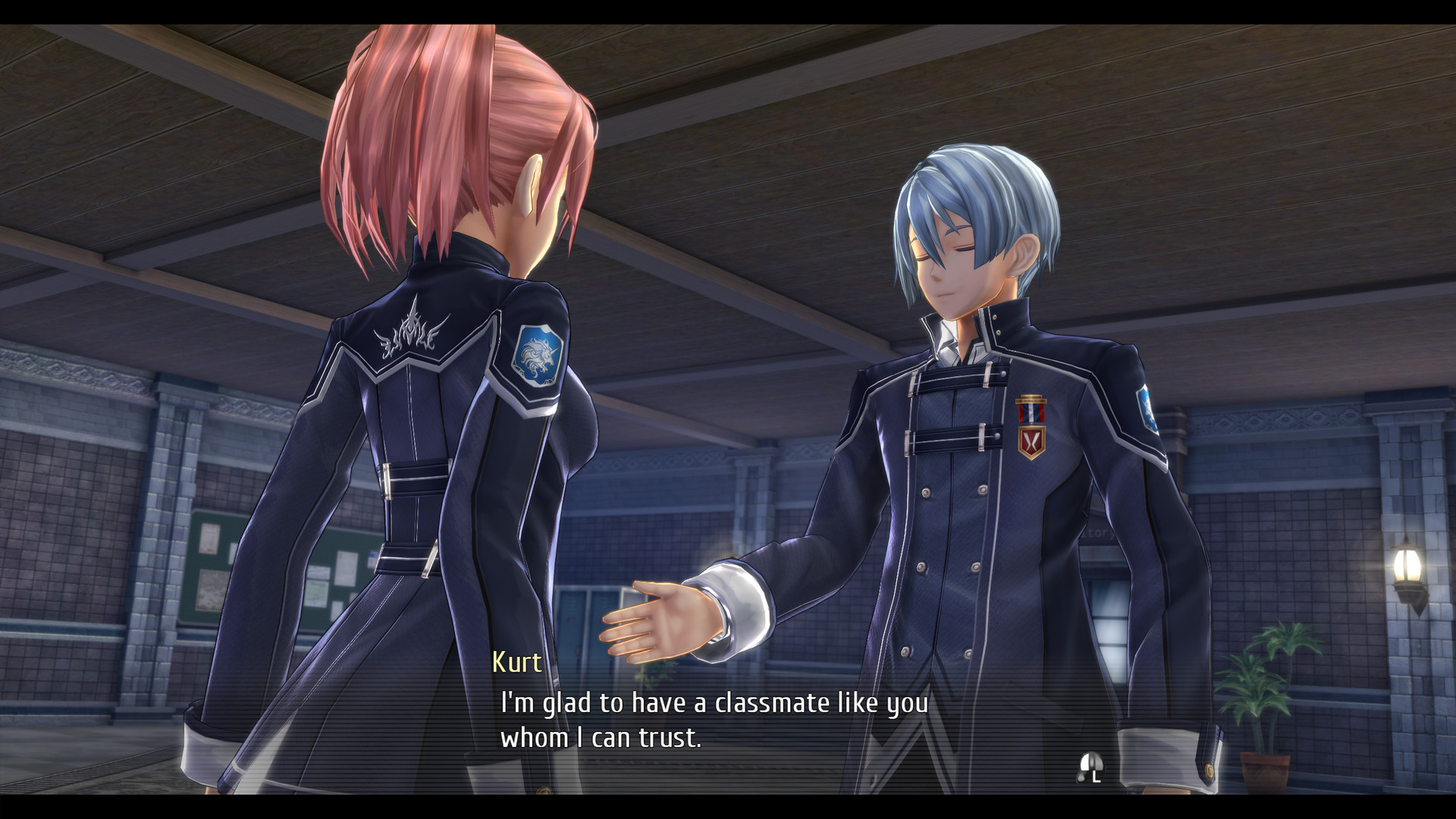
Movement through areas also feeds directly into the encounter system. The party can strike foes on the field before combat begins; catching an enemy from behind briefly stuns it and improves the party’s opening position. A stronger Assault Attack consumes accumulated Assault Points, which recharge over time or can be gained by breaking certain objects. Breaking objects may also restore party Craft Points or yield items, so the route through an area can supply resources as well as create an advantage. Some obstacles can be cleared only by characters with sufficiently heavy field attacks, including Altina or Millium, making party selection relevant to what can be opened along the way. Once combat starts, the battle remains on the same field map instead of cutting to a separate arena. Corridors and differences in elevation can shape where characters move and attack. The turn-order display shows upcoming actions, letting the player judge whether to reposition, interrupt an enemy or use a resource before a threat acts. This connection between field approach and turn planning gives exploration a tactical layer: how the party reaches an enemy affects the first exchange, and the space where the fight occurs continues to matter after the opening strike.
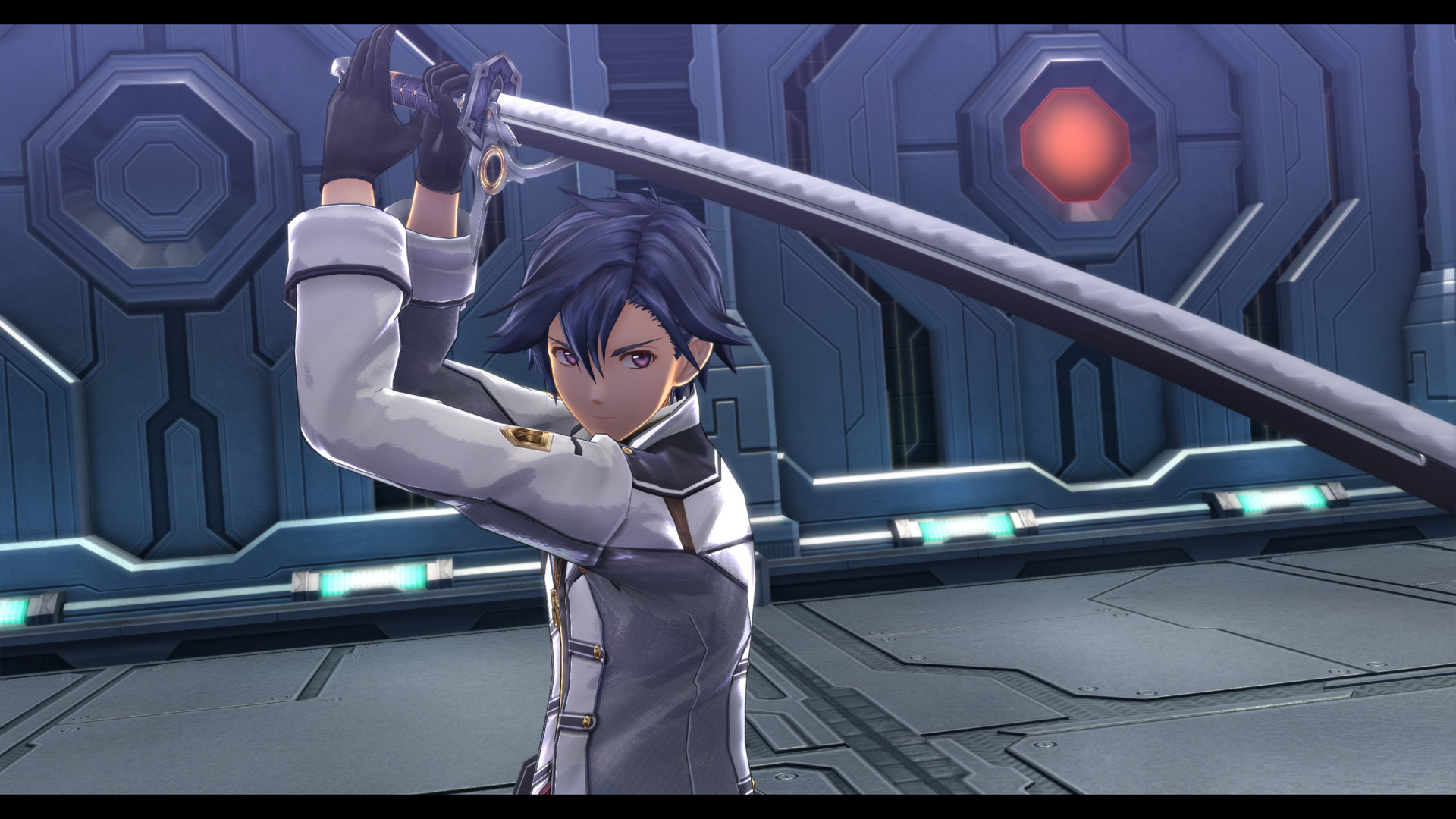
On foot, combat combines the series’ turn-based order with positioning, elemental weaknesses and character-specific actions. Juna’s gunbreaker can switch between Striker Mode, a close-range single-target style that boosts her stats, and Gunner Mode, which reaches multiple enemies at mid-range. Each character also builds Craft Points by attacking and taking damage. Spending CP activates Crafts with different purposes: Rean’s Helix is a sequence of sword slashes, Kurt’s Tempest Edge cuts across a group, and Altina’s Fragarach turns her combat shell’s arm into a blade. The ARCUS II battle orbment lets players place quartz in slots to raise stats and grant access to Orbal Arts. Arts use Energy Points and span seven elements; they can attack, heal or support, with target ranges from one foe to the whole battlefield. Matching an enemy’s elemental weakness deals more damage and reduces its Break Gauge faster. Lowering that gauge to zero puts an enemy in Break, increasing damage taken, dropping its items, removing its status buffs and making every attack unbalance it. Against an enhanced enemy—one that can hit critically, resist damage and interrupt the turn order with an S-Break—focusing attacks with high Break ratings is a way to stop its pressure. The system rewards planning around vulnerabilities rather than repeating basic attacks.
Combat Links and Brave Orders make party coordination another resource decision. A Link partner can follow up after an enemy is unbalanced; spending Brave Points allows stronger responses, from a paired Rush against nearby foes to Burst, which brings all four active party members into an attack against every enemy. Bonds between characters improve the benefits available through Links as they strengthen. Brave Orders use the same BP pool for temporary effects that apply across the party and can be issued on a character’s turn without using that turn. Rean’s Raging Fire increases damage and CP gained at a relatively modest BP cost, while Altina’s Ebon Crest costs more and briefly reflects incoming attacks. These options create a trade-off between an immediate follow-up and saving points for a defensive or offensive order that changes the whole party’s next phase. Separate from foot combat, mech battles put Rean’s Divine Knight Valimar and the students’ Panzer Soldats against large opponents. Pilots target the head, arms or body, reading enemy stance because weak points can change; a successful weak-point hit can unbalance the target for a Link Attack. Mech Break works like its foot-combat counterpart, while partner characters add Charge, Spirit and EX Arts. The modes share ideas about timing and coordination but use their own targets and commands.
The Derfflinger, the branch campus’s armored freight train, provides a distinct home base and a final layer of school life. It carries students and faculty to field-exercise regions; once there, the group establishes a camp where Class IX’s military-finance students set up shops for weapons, armor, items, supplies and battle-orbment maintenance. The train is not only transport between missions. Its cars include a briefing and guest area, a dining hall and lounge, student cabins, and freight space for Panzer Soldats. During journeys, Rean can talk with students from other classes as they share meals or relax, learning more about them and sometimes gathering information relevant to upcoming exercises. The campus’s unusual mix of military infrastructure and adolescent routine gives the party a place to regroup between assignments. Ouroboros and jaeger corps can threaten the operations, and even the camp may be unsafe, so the train’s role as a headquarters does not remove the danger around it. The Derfflinger makes that school-year structure visible in motion: the students leave Leeves as a class, maintain their own camp in each region and return to its shared spaces with a better understanding of both their companions and the communities they have visited.
- Developer
- Nihon Falcom (Steam PC listing also credits Engine Software BV and PH3 GmbH)
- Genre
- Role-playing game with turn-based party combat