
About The Legend of Heroes: Trails into Reverie
Trails into Reverie follows three linked stories after the Great Twilight: Rean Schwarzer in Erebonia, Lloyd Bannings in Crossbell, and the masked C. Trails to Walk lets you switch their routes within a chapter. Turn-based battles add United Front team actions, while the True Reverie Corridor brings characters together for dungeons, side stories and minigames.
Zemuria is still absorbing the consequences of the Great Twilight. Erebonia's empire has survived the crisis but lost the certainty that came with its military power, while Crossbell's residents are still fighting to define their own independence. Lloyd leads the reopened Special Support Section, a police unit that kept working toward Crossbell's freedom after Erebonia annexed the city. Its original members Elie MacDowell, Tio Plato and Randy Orlando are back together as the city prepares to formalize its autonomy. Their reunion gives Lloyd's route a concrete question beyond winning another battle: what does it take for a liberated city to govern itself and keep its people safe? Trails into Reverie begins in that uneasy aftermath, bringing three separate accounts into the same stretch of history. Rean Schwarzer carries the Erebonian side, Lloyd Bannings returns to Crossbell, and a masked figure known as C follows a third path whose identity is one of the story's mysteries. These are not three unrelated campaigns chosen from a menu at the start. Rean's, Lloyd's and C's groups may move through the same places at different moments, uncover different parts of an incident or narrowly miss one another. The resulting picture develops as their knowledge overlaps. Players who know the Crossbell and Cold Steel games will recognize people and political tensions that are already in motion, but the immediate structure is easy to grasp: each group has its own reason to act, and none can see the whole situation alone. The world beyond them also matters. An organization such as Ouroboros is still pursuing its plans, even while Crossbell and Erebonia contend with problems closer to home.
Trails to Walk is the device that makes those parallel accounts playable. Within a chapter, you can switch between the three routes and choose the order in which you see their events. The next chapter does not open until all three current routes are complete, so the freedom is to arrange the perspectives, not to skip one protagonist's account. That restriction gives the overlapping locations a purpose. A door, conversation or puzzle that appears from one party's position may become clearer after another party reaches the same area. The official examples even allow for near misses between groups, where timing gives a scene a different meaning without changing who the characters are. The route system also helps manage the game's very large returning cast. Rean, Lloyd and C each travel with different companions; Rixia Mao, for example, joins Lloyd's side. Rather than gathering everyone into one enormous permanent party, the main story lets those groups retain their own relationships and local stakes. Side episodes add another way to learn about people without stopping every main chapter to recount their past. The structure assumes a connected world but turns that accumulated history into scenes the player can compare as they change routes.
Battles use the series' turn-based tactical foundation, including Arts and Brave Orders, with United Fronts added as a more collective choice. A party of at least five characters can spend Assault Gauge to call a United Attack, United Art or United Heal. Reserve members can participate, and a large enough group can involve as many as ten allies. That is a different decision from simply choosing a stronger individual action: the active fighters, the people held in support and the gauge available all determine whether a group intervention is possible. Bravery Points provide another set of commands. A Rush uses two characters for an area attack, a Burst brings four against all enemies, and a Brave Order applies a special effect to the field. United Fronts can restore BP, allowing one resource to feed back into the other. A battle can therefore change course when a party uses BP to control the early turns, then calls a United Front to regain it and prepare another command. The specific choice between attack, Arts and healing also matters when a difficult encounter threatens the party's survival rather than merely its damage output. Those systems keep the numerous companions relevant in a fight even when some are waiting behind the active line.
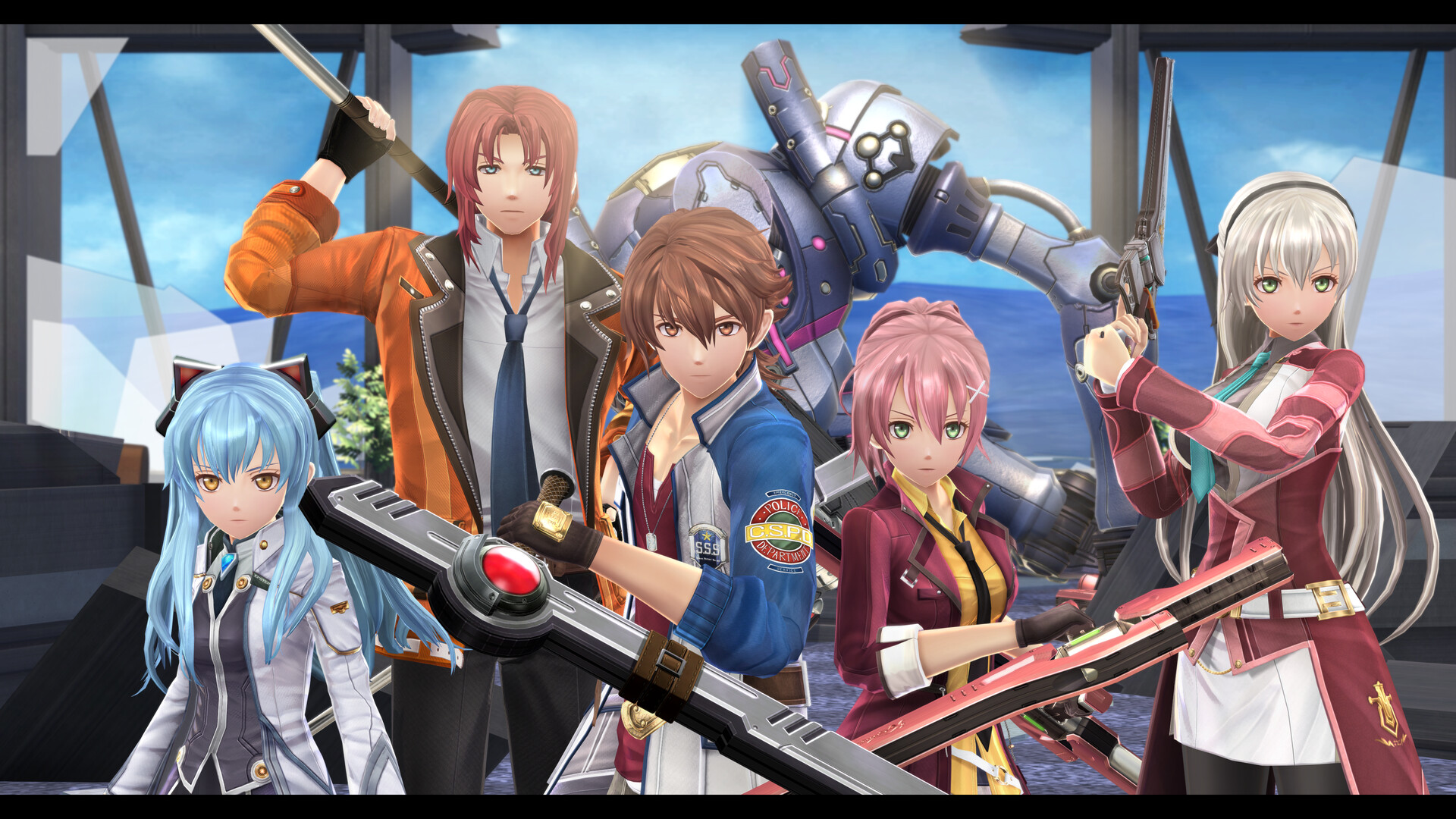
The True Reverie Corridor opens as the story advances and gives those separated parties a place to combine. Its dungeon layers are randomly generated, with challenges and rewards that sit beside the fixed events of the three routes. Characters from different groups can form combinations that the main story's immediate circumstances would not otherwise allow, and the conversations in this space acknowledge those unusual meetings. Exploring deeper earns shards that can improve the number of support characters and raise the maximum BP or Assault Gauge. Those upgrades carry back into the main story, so time spent in the Corridor changes the resources available for its next set of battles. Stronger foes can award Sealing Stones, used to open Daydreams: self-contained character stories, minigames and other side content. Some rewards can add party members or equipment to the Corridor's growing possibilities. None of this requires treating the Corridor as a fourth protagonist route. It is a separate place to experiment with the full cast, develop party capacity and learn more about characters whose main-story paths may not have room for every conversation.
The Corridor also has encounters that alter the usual party-planning routine. A chest sealed by a Void Spire can trigger a Shuffle Scuffle, which selects a team at random from characters outside the current party. Before fighting, you can equip those characters, set their quartz and arrange their combat links. That preparation turns a randomized roster into a test of how well you understand more than your favorite few allies; winning frees the chest and brings rewards such as Sealing Stones and equipment. Other gates lead to Dreamland Hills, outdoor spaces whose season and layout vary. Their monsters and materials can change with that variation, while breakable objects can yield sepith and guardians can drop stones. The side activities are varied rather than all being more dungeon battles. Magical Alisa LS is a rail shooter with assist skills, Project Tyrfing puts the player in a Panzer Soldat simulator with sword, rifle, defense and evasion, and a quiz game and beach events offer still different diversions. These are named activities with their own play styles, not claims that every character or system is available the moment the Corridor first opens.
The three-route presentation gives Trails into Reverie a particular place in the larger series. Rean and Lloyd arrive with stories already behind them, yet the game does not simply replay the endings of their earlier arcs. Crossbell's effort to remain independent, Erebonia's loss of strength and C's concealed role all create fresh questions in a post-war setting. The same cast then has a second life in Daydreams and Corridor encounters, where a small scene or an unfamiliar party can show another side of a character. The English release has English and Japanese voice options on PC, while the listed PlayStation and Switch versions carry the same central Trails to Walk and United Front features. Digital bundles and platform listings add different cosmetic or starter content, so those extras should be kept apart from the base campaign's three routes and Corridor. The game is designed around continuity, but its strongest structural idea is immediate: after seeing one event with Rean, you can turn to Lloyd or C and find out what happened elsewhere before the chapter closes. That choice of perspective is as much a part of the adventure as assembling a party for its next battle.
- Developer
- Nihon Falcom; PH3 GmbH credited on the PC release
- Genre
- Story-driven turn-based role-playing game