
About Total War: THREE KINGDOMS
In second-century China, rival warlords seek dominance amid the collapse of Han authority. Choose a faction led by figures such as Liu Bei, Sun Jian or Cao Cao, then build power through diplomacy, administration, espionage and conquest. A turn-based campaign sets the stakes for real-time battles, where generals, retinues and character relationships shape each force.
Total War: THREE KINGDOMS places its grand campaign in second-century China, during a period of fractured authority and competing warlords. You choose a faction, including those led by Liu Bei, Sun Jian or Cao Cao, and pursue a route toward becoming emperor and unifying China. The game draws on both the historical Records of the Three Kingdoms and the literary Romance of the Three Kingdoms, combining a setting grounded in the era with its celebrated characters and rivalries. The campaign is not a fixed retelling in which every alliance and battle must happen as recorded: factions pursue territory and objectives as events develop on the map. Your selected leader also shapes the campaign through faction-specific strengths and goals, giving the same broad struggle different starting priorities.
Play alternates between a turn-based campaign and real-time battles. On the campaign map, you direct armies and characters, develop settlements, manage your court, research reforms and negotiate with neighboring powers. When armies clash, you take command on a battlefield, positioning troops and issuing orders as the engagement unfolds. The two layers affect one another: battles can shift relationships between your heroes and other characters, while campaign recruitment and appointments determine who enters the next fight and what forces they lead. Territorial control is central to victory, but each warlord also has individual objectives that can provide direction and rewards. The result is a campaign in which expansion and fighting are only part of the work; political agreements, faction administration and the people serving your court also influence whether a growing power can endure.
The characters in your faction are persistent participants in its politics and armies. They have roles, satisfaction, abilities and relationships that can change over time, and the people you encounter may move between factions as their allegiances shift. Friendship, sworn brotherhood, rivalry and enmity are tracked through Guanxi, the game’s network of personal connections. These bonds can matter in battle: friends may gain benefits when fighting together, while nemeses can receive advantages when they meet as opponents. Satisfaction also affects whether characters remain in your service; a discontented general may leave and take military or economic strength to a rival. Appointing someone is therefore more than filling a vacant slot. It affects the court, the field army and the network of loyalties that binds your faction together.
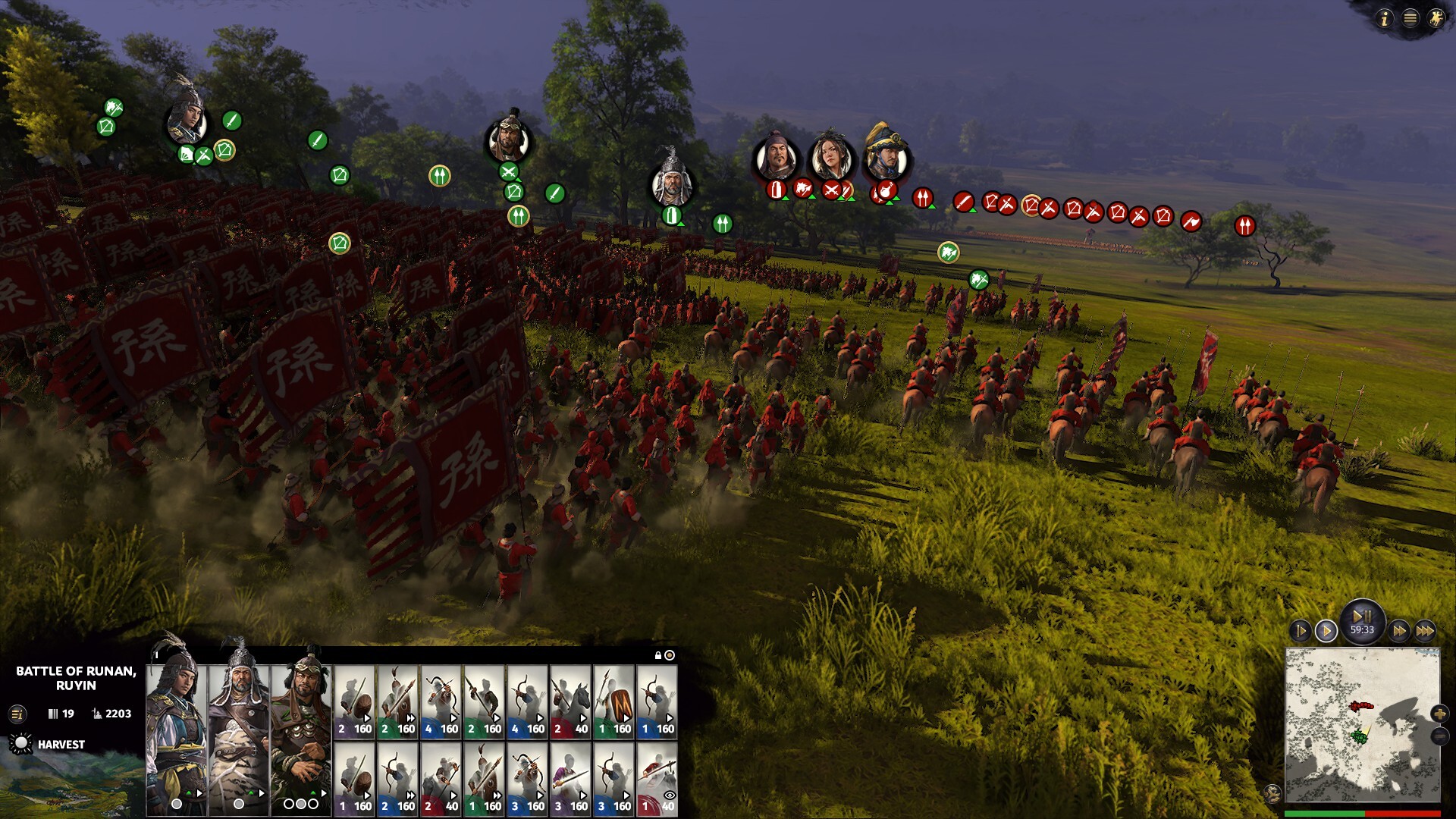
Armies are organized around their generals. An army can contain up to three generals, each commanding a retinue of as many as six units. Matching a general to units that fit their strengths helps determine what that retinue can do, so recruitment involves planning the leadership and the soldiers together. The Wu Xing system links five elements to characters, formations, units, buildings and technologies. Its interactions express advantages and dependencies: for example, water-aligned ranged units can counter fire-aligned shock cavalry, while a water strategist can support wood-aligned spear and polearm troops with defensive formations. The same elemental framework reaches into development on the campaign map, where technologies and buildings associated with a phase can support particular parts of the economy or military. These connections give generals a strategic role beyond their individual combat abilities.
Diplomacy offers a range of ways to negotiate with other factions. You can assemble a deal from exchanges and concessions, use a quick-deal option to find a workable offer, or bargain over territory. Multiple factions can form coalitions as well as binding military alliances; coalition members vote on proposed actions, so cooperation does not make every participant a subordinate. Some factions also have unique diplomatic options and resources. Cao Cao’s credibility, for example, can be spent to influence relations and encourage other powers to fight by proxy, while Sun Jian gains heroism through battles, reducing recruitment and upkeep costs and improving satisfaction among his characters. These asymmetries mean that diplomacy and campaign planning can express the personality of a chosen leader, rather than relying on one identical toolset for every faction.
Espionage uses characters sent into rival factions as undercover agents. A spy may enter the pool of characters available for recruitment and then be appointed to a position such as general, governor or heir. From inside, the agent can report information and, as their network develops, attempt acts of subterfuge such as poisoning supplies or provoking internal conflict. The system exposes your own faction to similar risks: a spy may become attached to the enemy or be discovered and returned as a double agent. Loyalty and satisfaction therefore matter alongside the intelligence an agent can provide. On the campaign map, covert work offers a way to weaken a rival’s position before a direct confrontation, but it depends on successfully placing a character and building influence within a court that may have its own shifting loyalties.
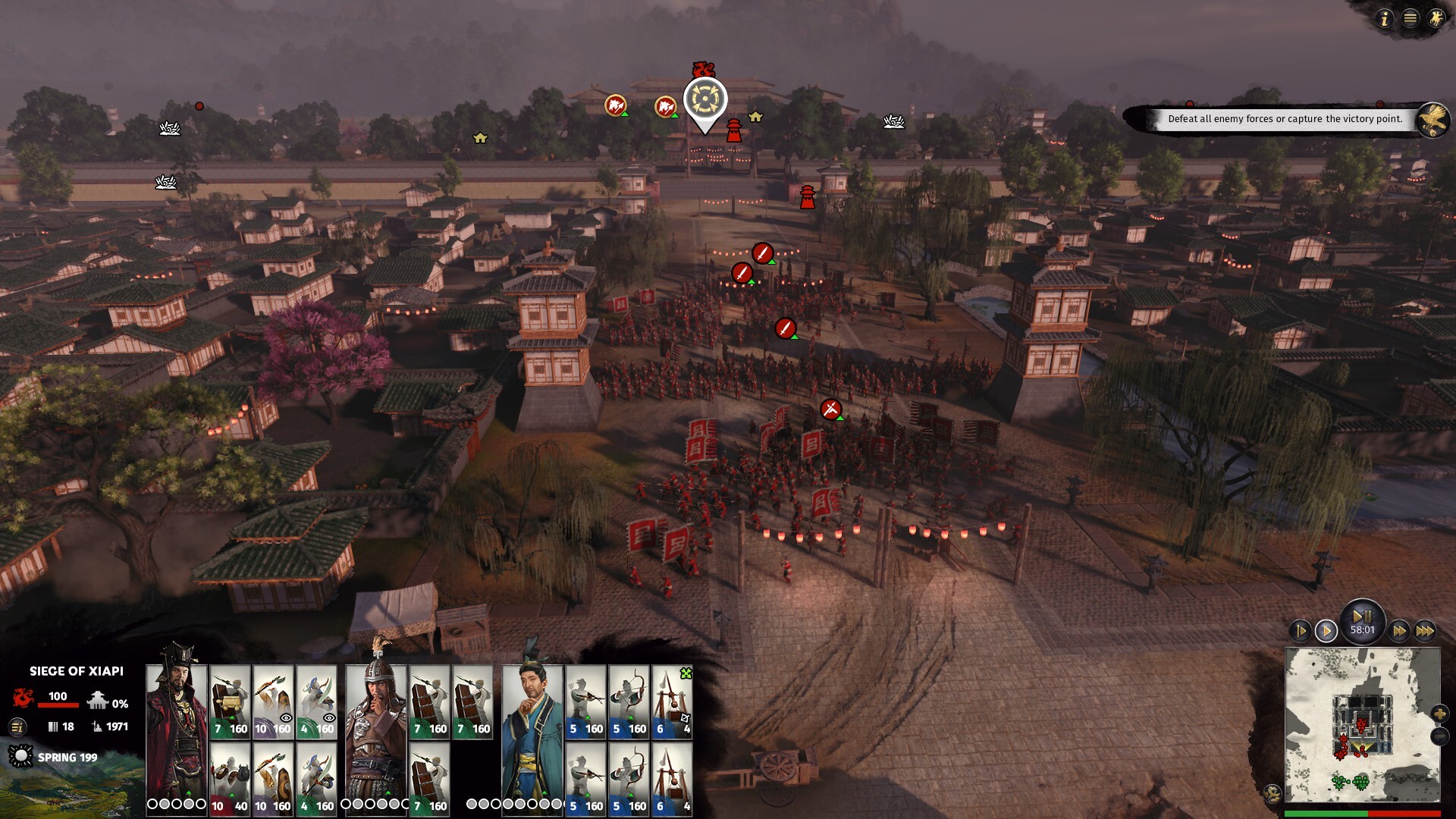
The campaign’s administrative layer ties expansion to the condition of settlements and the resources available to a faction. You construct and upgrade cities, govern growing populations, recruit armies and research civic reforms, while weighing the effects of new commitments against existing needs. Wu Xing phases connect some building and technology choices with the economic or military role they serve; wood-associated development can support farming, while fire buildings focus on war. Each character’s position and satisfaction also shape the strength available to govern or command. As territory grows, the player must decide whether to consolidate with diplomacy and administration, press an offensive, or pursue an objective unique to the selected warlord. The campaign’s changing alliances and character stories can turn those decisions into new opportunities or threats as China’s balance of power shifts.
- Developer
- Creative Assembly
- Genre
- Strategy; turn-based campaign and real-time tactics