
About Total War: SHOGUN 2
In 16th-century Japan, rival clans compete to control the country and claim the shogunate. Lead a daimyo’s family through a turn-based campaign of diplomacy, province management, recruitment and research, then command samurai armies and fleets in real-time battles. The campaign joins political decisions and military outcomes as your clan expands toward Kyoto.
Total War: SHOGUN 2 is set during the Sengoku Jidai, the age of warring states in 16th-century Japan. The central campaign places you in charge of a clan and its daimyo, with the goal of becoming shogun by overcoming the shogunate based in Kyoto and bringing rival provinces under your rule. The setting is a contest among regional powers rather than a single fixed story following one hero: the clan you choose determines your starting position, neighbors and strategic pressures. Chosokabe Motochika and his clan appear in the campaign tutorial, while the broader game offers other warlords with different positions across Japan. The historical framework gives the campaign its direction, while the player determines how conquest, alliances and clan administration unfold.
The campaign map and the battlefields are separate but connected parts of play. On the turn-based map, you move armies and agents, manage provinces, negotiate with other clans and decide where to build or recruit. When opposing forces meet, the game shifts into real time, where formations, terrain, morale and timing affect the result. Battles may also be resolved automatically from the campaign map. A decision to march on a neighboring province can therefore lead to an immediate field engagement, while a siege may require you to plan around fortified ground and defenders. Victories open routes through Japan, but armies also need money, replenishment and safe passage. The campaign repeatedly asks you to balance the next military objective against the resources and relationships needed to reach it.
Each province contributes to the clan in a different way. Provinces have specializations in particular goods or unit types, and certain resources are prerequisites for advanced buildings and forces. A castle town anchors each province: upgrading it opens additional building space, but also raises local food demand. Farms must keep pace with castle expansion or food shortages can undermine the growth those improvements were meant to support. Building choices turn territory into an economic and military network, with some locations better suited to income, recruitment or strategic resources. The finance and clan panels help track these pressures as you plan each turn. Rather than treating every captured province as interchangeable, the campaign rewards attention to what that land can produce and how its development fits the wider effort to sustain armies.
Research is presented as mastery of the arts. Only one art can be pursued at a time, and completing one can unlock units, abilities, buildings or other improvements to the clan. This makes research a parallel investment beside construction and recruitment: an army composition or economic plan may depend on which branch you develop first. Characters also grow through experience and rank. Generals can specialize in particular kinds of warfare or develop a broader set of skills, while agents use their own abilities to affect towns, armies and other characters. Agents must be recruited and their actions carry costs, so espionage and disruption compete with direct military spending. The campaign’s character systems also make leadership consequential: the daimyo’s honour affects how others regard him, while a general’s loyalty can influence whether he remains with the clan.
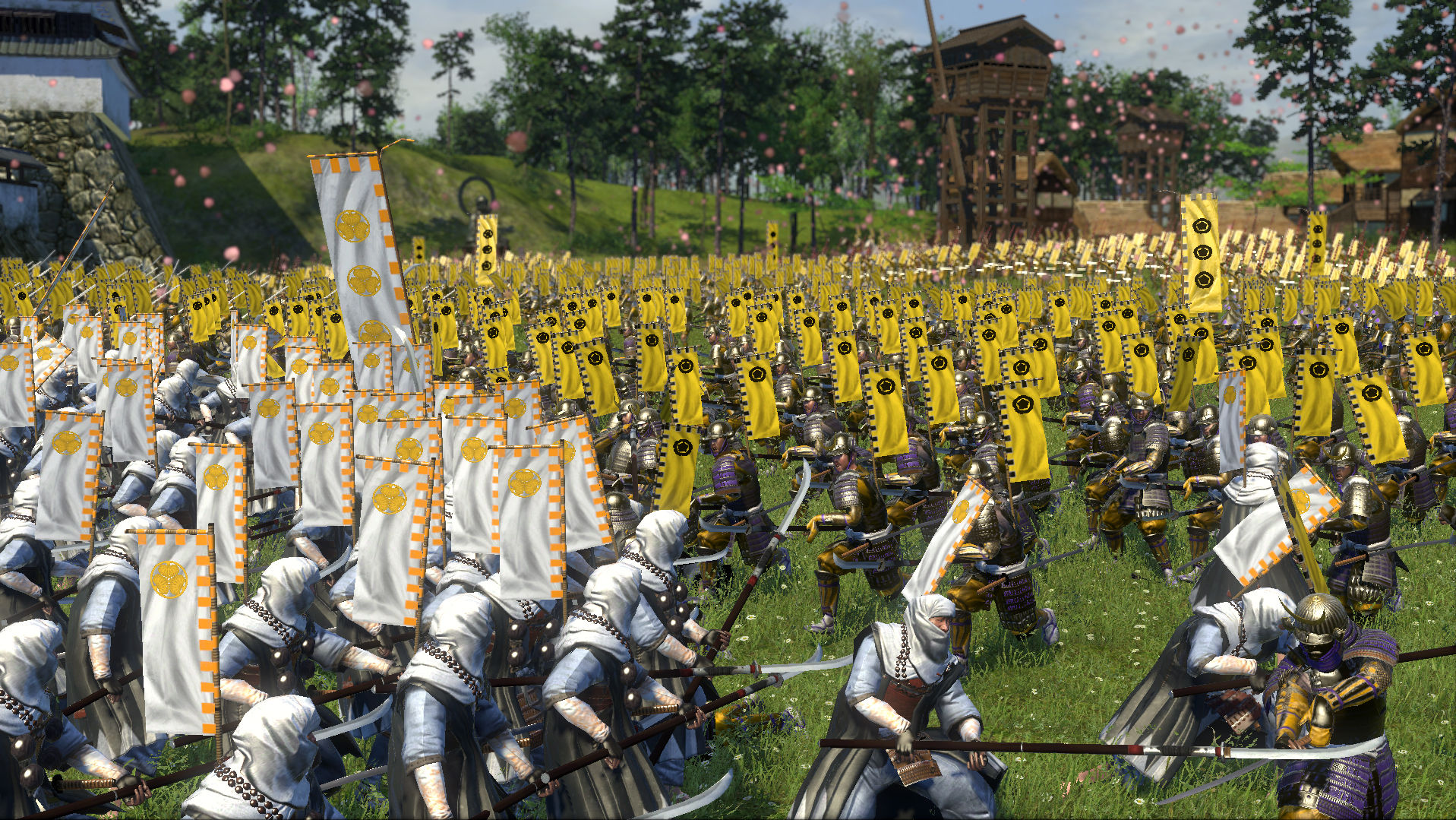
On land, you command units in real-time formations, positioning infantry, missile troops, cavalry and specialized forces as the engagement develops. Generals influence nearby troops through their presence and can rally units whose morale has broken, so their place on the field matters beyond their personal fighting ability. Army composition, approach and timing decide whether a line holds or a flank gives way. The game also includes hero units, whose battlefield impact is distinct from the larger formations around them. These battles are not isolated from the campaign: losses remove trained forces that took time and money to assemble, while a victory may clear the way for a province or leave an army weakened for the next turn. Commanding a battle means working with the force you prepared on the map, not selecting units without regard to the campaign that produced them.
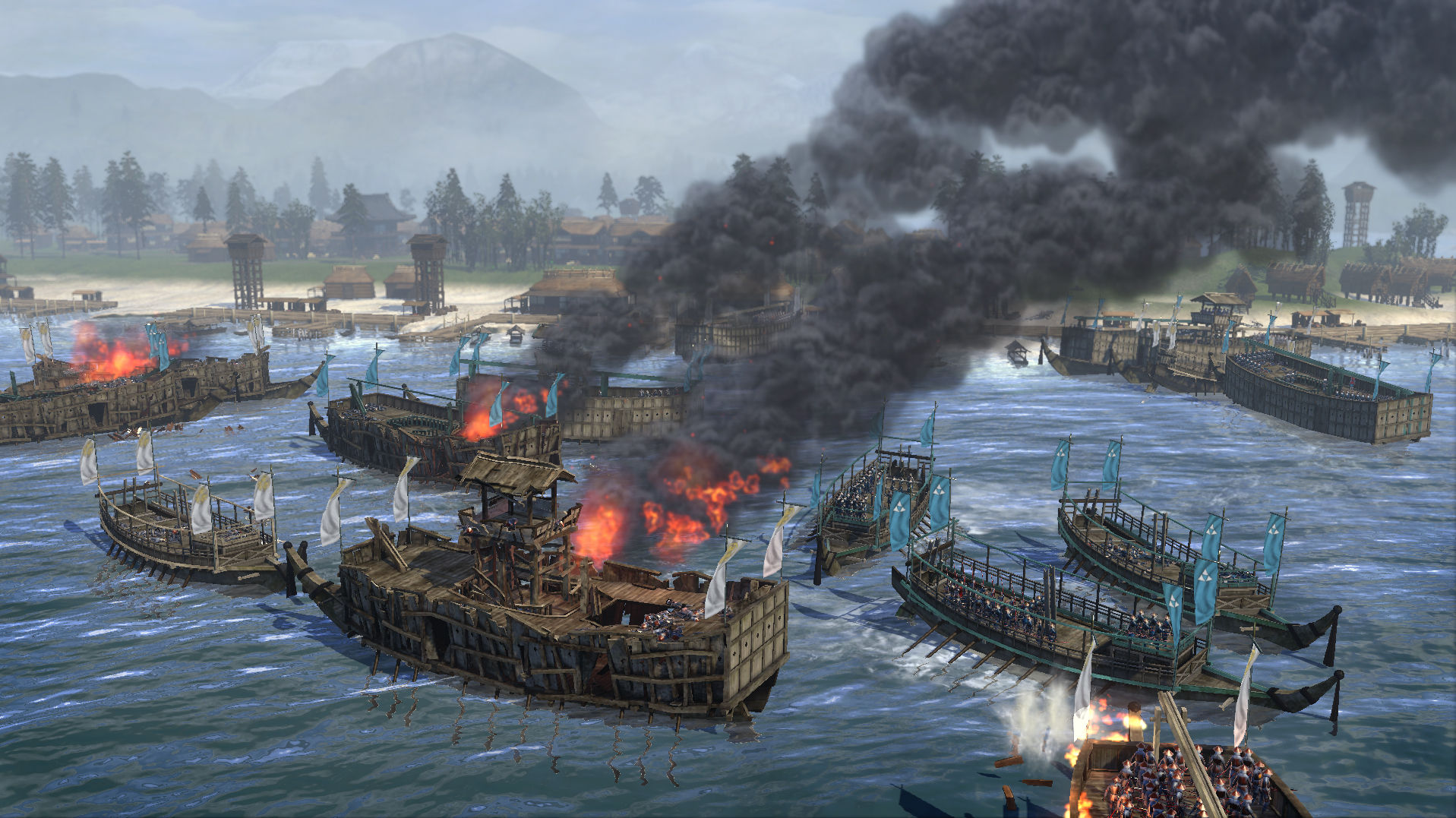
Castles make sieges a distinct form of battle. Their layered layouts create successive defensive positions, and attackers must push through those zones toward the central tower. Captured towers can turn against their former defenders, while opening gates changes how additional troops enter the compound. Archers may use incendiary arrows for a limited time to set castle structures alight, and artillery can target troops as well as walls. Because improving a castle on the campaign map makes its besieged layout more complex, construction also shapes a future battlefield. Fleets add another front: the game includes naval battles as well as land engagements, letting the clan contest sea routes and command ships. Japan’s islands and coastlines consequently matter to movement and defense, not only to the armies marching inland.
Diplomacy, family and warfare all feed into the race for the shogunate. Treaties, marriages and hostages can formalize relationships between clans, while breaking an agreement involving hostages carries severe consequences. Expansion and fame can also change the political situation: if your clan becomes powerful before moving on Kyoto, the existing shogunate may rally other clans against it. This shift means the path to victory can involve preparing for a broader struggle rather than simply capturing one more province. The game supports a two-player campaign alongside online battles and Avatar Conquest, but the single-player campaign remains centered on directing one clan’s growth across Japan. Each turn joins local choices about food, construction and agents to the wider question of how your daimyo will overcome rivals and rule the country.
- Developer
- Creative Assembly
- Genre
- Strategy; turn-based campaign and real-time tactics