
About Tomb Raider: Legend
Lara Croft follows the trail of Excalibur and Avalon across ancient ruins and modern cities, searching for answers about her mother’s disappearance. When the hunt reconnects her with Amanda Evert and a disaster from their past, Lara must face rivals, traps and ancient machinery at dangerous sites around the world.
Tomb Raider: Legend puts Lara Croft on a global search for Excalibur, a legendary weapon linked to the mythical realm of Avalon and to the mystery of her mother’s disappearance. The trail brings Lara back into contact with Amanda Evert, a former friend from an excavation in Peru, and turns an old catastrophe into the reason for their present conflict. Zip stays in touch over Lara’s headset, supplying information as she works through each site. The earlier expedition casts a long shadow over the present-day hunt, so the relic chase also becomes a personal investigation. At a Pre-Incan site near Paraíso, an unknown entity killed most of Lara and Amanda’s colleagues and the ruin flooded; Lara escaped, while Amanda was left behind. The search for the sword and the search for answers about Amelia remain closely connected.
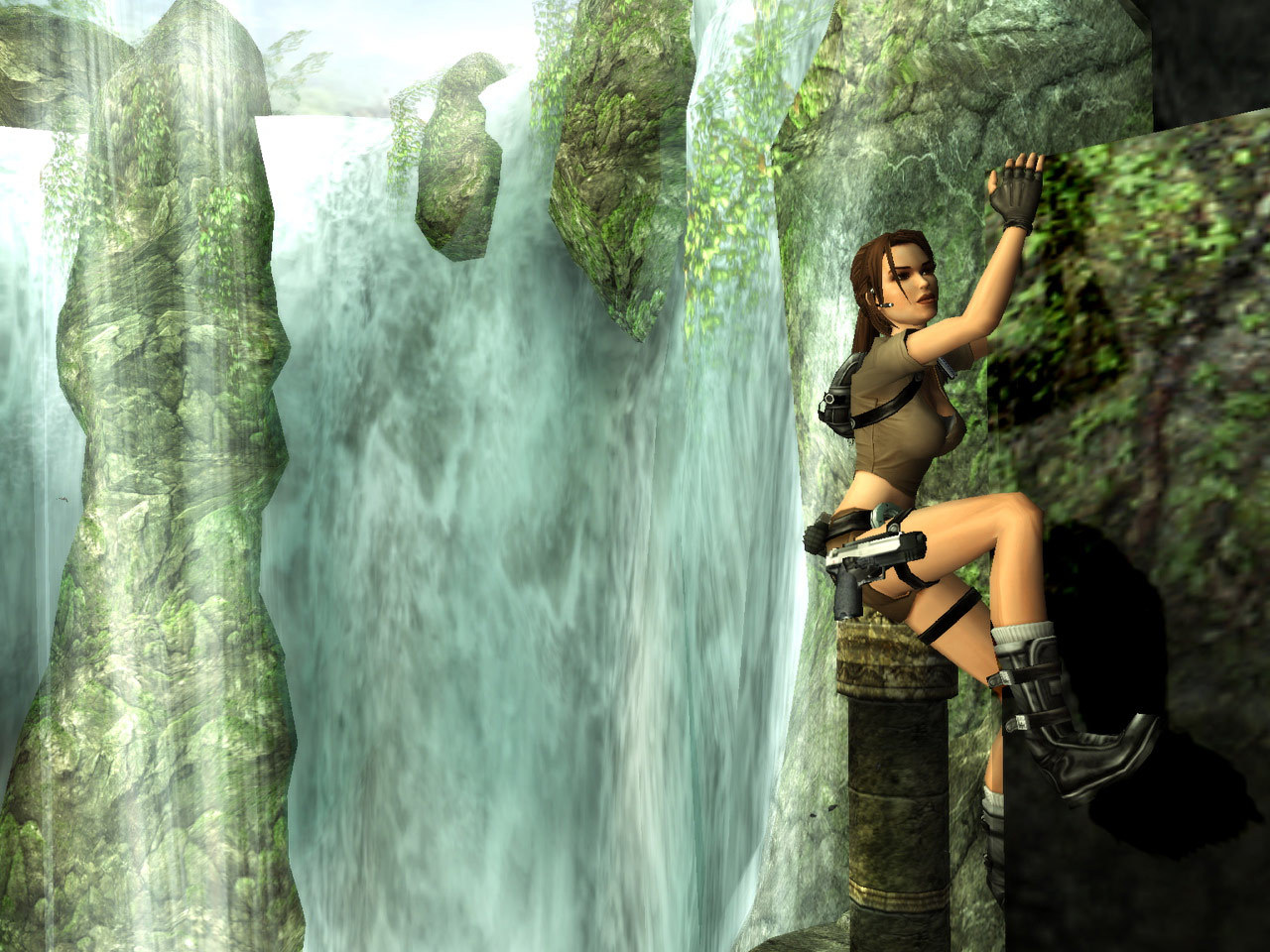
The route takes Lara between different kinds of places rather than keeping her inside one continuous ruin. Bolivia and Peru lead into ancient sites, while Ghana brings her to jungle ruins hidden behind a waterfall. Each area is built around a path through ledges, hazards, locked mechanisms and enemies. A chamber may hide a route above the floor, while a larger puzzle asks Lara to move objects, reach a high switch or use the environment to open a passage. The visual clues are part of the play: edges and rings indicate where she can climb or grapple, and machinery often makes the puzzle’s moving parts visible. Across these locations, the trail connects archaeological sites to Excalibur’s scattered pieces. Progress comes from reading the space, trying a route and combining traversal with object-based puzzles.
Lara’s movement is the main tool for crossing those spaces. She can jump, climb, shimmy along ledges, balance, roll and use acrobatic transitions to reach the next handhold. Her magnetic grapple catches on certain metal objects and lets her swing across gaps, pull on its cable or adjust the line to reach a higher or lower point. It also works with level machinery: Lara can latch onto a grapple point and tug a lever or shift an object from a distance. A Personal Light Source helps in dark passages, while the binoculars’ R.A.D. display identifies objects that can be interacted with. The game uses automatic ledge grabbing to help when a jump falls short, leaving the player to decide which ledge or route to reach next. These tools add distinct ways to read and manipulate a room, rather than replacing the need to work out how its platforms and mechanisms fit together.
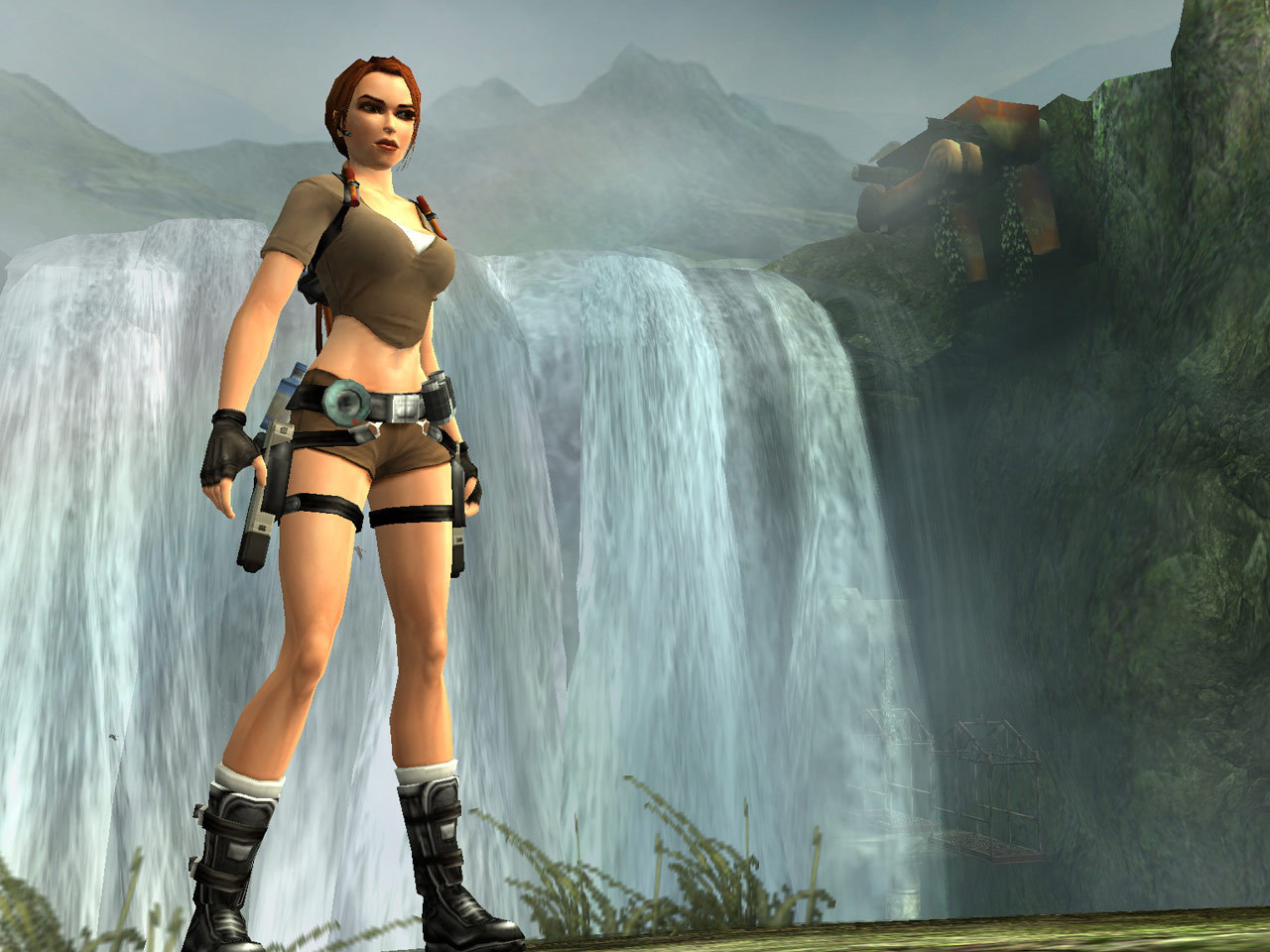
Combat appears between stretches of climbing and puzzle solving. Lara’s dual pistols have unlimited ammunition, and she can carry one additional firearm at a time. Picking up another weapon of the same type supplies ammunition for the weapon she is using; changing to a different firearm means leaving the current one behind. Grenades give her another way to deal with a group or an obstacle. She can also kick, slide-tackle and grapple enemies at close range, or jump off an opponent to create space. That last move triggers a brief slow-motion window in which aiming becomes easier. The timing gives a clear reason to keep moving instead of standing still to fire. These actions keep fights focused on movement and target switching while Lara uses the same acrobatic control scheme she relies on during traversal.
The search also includes equipment for observation and a personal record of the expedition. R.A.D. binoculars help reveal interactive parts of the environment, while Lara’s PDA holds information, statistics and her thoughts about what she finds. The Personal Light Source runs for a limited time and then needs to recharge, so using it is a small part of moving through dark interiors. These devices give Lara several ways to inspect a space: the binoculars help identify a usable object, the light illuminates a route, and the PDA provides context from her investigation. The PDA also keeps track of expedition details, giving players a way to look back at progress between locations. The difference matters when a room contains both a visual puzzle and a route forward, because looking closely and moving through the room are separate parts of the task.
Croft Manor serves as a separate place to move around and learn Lara’s controls before or between expeditions. It contains secrets of its own, and the main game also hides artefacts that unlock extras. After finishing a level, the replay option lets players return to it; time trials add a timed run through completed stages. Outfits can be earned through secrets and time-trial rewards, then selected before a level begins. The manor gives those movement skills a quieter place to practice before the larger expedition resumes. Those rewards sit alongside the main hunt without changing its central objective: follow the trail, solve each site’s mechanisms, and reach the relic or evidence that points Lara onward. The levels therefore support both a straightforward story run and later returns focused on secrets, challenge times and unlocks.
- Developer
- Crystal Dynamics
- Genre
- Action-adventure