
About Tomb Raider IV-VI Remastered
Tomb Raider IV-VI Remastered collects The Last Revelation, Chronicles and The Angel of Darkness. Lara’s Egyptian artifact hunt, four recollected adventures and fugitive search across Paris form three distinct campaigns, connected by tomb exploration, platforming and combat while each introduces its own structure and play systems.
This collection brings together three later Lara Croft adventures from the classic series, with story links between them but different campaign shapes. In Tomb Raider: The Last Revelation, Lara discovers the tomb of the Egyptian god Set and triggers an ancient danger while pursuing the events around the artifact. Tomb Raider: Chronicles follows a memorial for Lara, presumed dead after the Egyptian expedition, as her friends recall four earlier adventures from different periods of her life. Tomb Raider: The Angel of Darkness shifts to modern Paris: accused of murdering her former mentor Werner Von Croy, Lara goes on the run and investigates a conspiracy involving secret societies, alchemical experiments and ancient artifacts. The trilogy moves from Egyptian temples to episodic flashbacks and city streets, giving each game a different reason to explore its spaces.
The first two games keep the classic movement language: Lara runs, walks, jumps, swims, climbs, grabs ledges, crawls and pushes or pulls objects through carefully arranged levels. Room geometry is part of the puzzle. A gap can call for a measured running jump, a ladder or handhold may connect two levels, and a switch or key can redirect a route back through spaces the player has already seen. The games rarely mark an objective on screen, so progress depends on reading the architecture and remembering which door or mechanism became usable. Keys, ammunition, medipacks and puzzle objects occupy the inventory, and Lara can combine certain items or attach a laser sight to compatible weapons. That makes exploration both spatial and practical: the next route may depend on finding an object, recognizing what it can join with, or using the right movement at a ledge.
The Last Revelation centers its main campaign on Lara’s journey through Egypt, beginning with a training sequence in Cambodia under the guidance of Werner Von Croy. Its linked level structure encourages the player to keep track of how one area leads back into another as the search around Set develops. The compass returns as a puzzle device, and the binoculars can illuminate dark passages that Lara otherwise cannot inspect. Those tools make observation more active: they help reveal where to look as well as how to cross a room. The game’s many tombs and temples ask for a mix of climbing, swimming, trap timing, switches and collected objects, while its Egyptian setting ties those actions to a single archaeological pursuit. It is the longest of the three campaigns, and its connected spaces give the expedition a continuous rather than chapter-by-chapter rhythm.
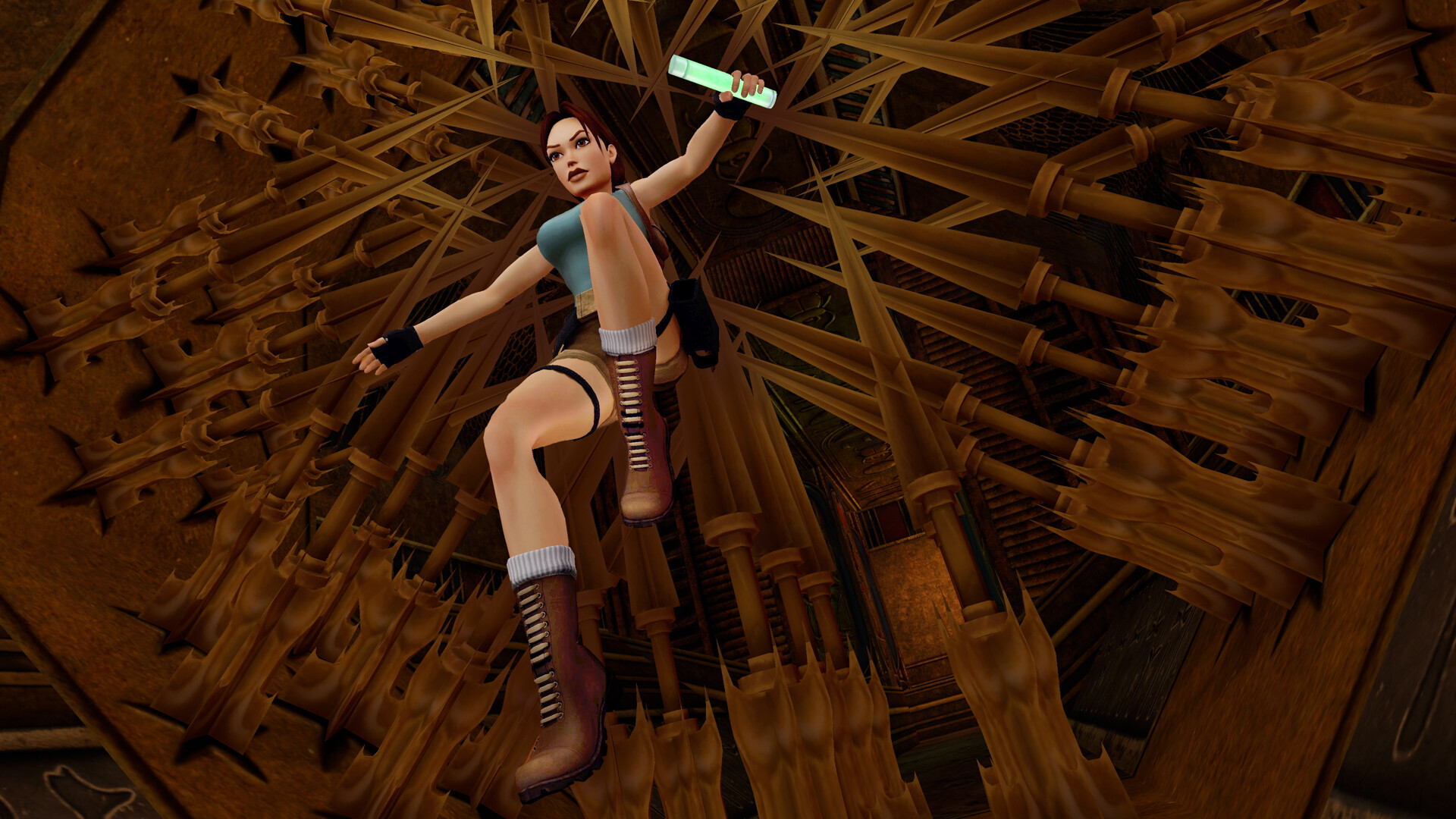
Chronicles changes that rhythm into four self-contained flashbacks introduced at Lara’s memorial. Rome presents a more familiar hunt through streets and ruins; the Russian sequence moves through a submarine and military sites; the Ireland episodes follow a younger Lara through traps and puzzles with limited reliance on weapons; and the VCI tower places her inside a high-tech security complex. Jean-Yves and Winston are among the friends recalling her past, while Zip helps guide Lara through the tower episode. The different settings alter the emphasis from one segment to the next: the player may be solving a classic key-and-platform route, sneaking through guarded machinery, or relying on timing and observation in a place where direct fire is not the answer. Its episodes are shorter and more varied in focus than The Last Revelation’s long Egyptian expedition.
The Angel of Darkness builds a darker pursuit around Paris, where Lara searches for the truth after Von Croy’s murder is blamed on her. Her route through apartments, streets, the Louvre and a high-security complex brings her into contact with journalists, investigators, mercenaries and the secretive Cabal. This entry shifts the series toward stealth and more flexible interaction: Lara can crouch, crawl, hug a wall, peer around corners and quietly approach guards. She uses scavenged weapons rather than the infinite-ammunition dual pistols that define the earlier five games, and some weapons support silent or non-lethal approaches. Lara’s physical abilities such as grip strength and jump distance can improve as she performs related actions. Kurtis Trent becomes a second playable character in parts of the campaign, moving more deliberately than Lara and carrying his Boran X pistol; his later remastered abilities also include the returning Chirugai and a psychic shield.
The collection preserves distinctions among the three engines and campaigns while adding ways to tune or frame them. Each game can switch between its original polygonal graphics and the remastered presentation, and players can choose classic tank controls or modern controls. The Angel of Darkness remaster restores movement and combat elements such as shooting while jumping, consecutive jumps and the Parisian Back Streets training area. It also restores Kurtis’s in-game use of the Chirugai. These changes sit beside the original progression: Lara still has to read ledges, identify objects, work out routes and manage what she carries, while the altered controls give players a different way to handle the same environments.
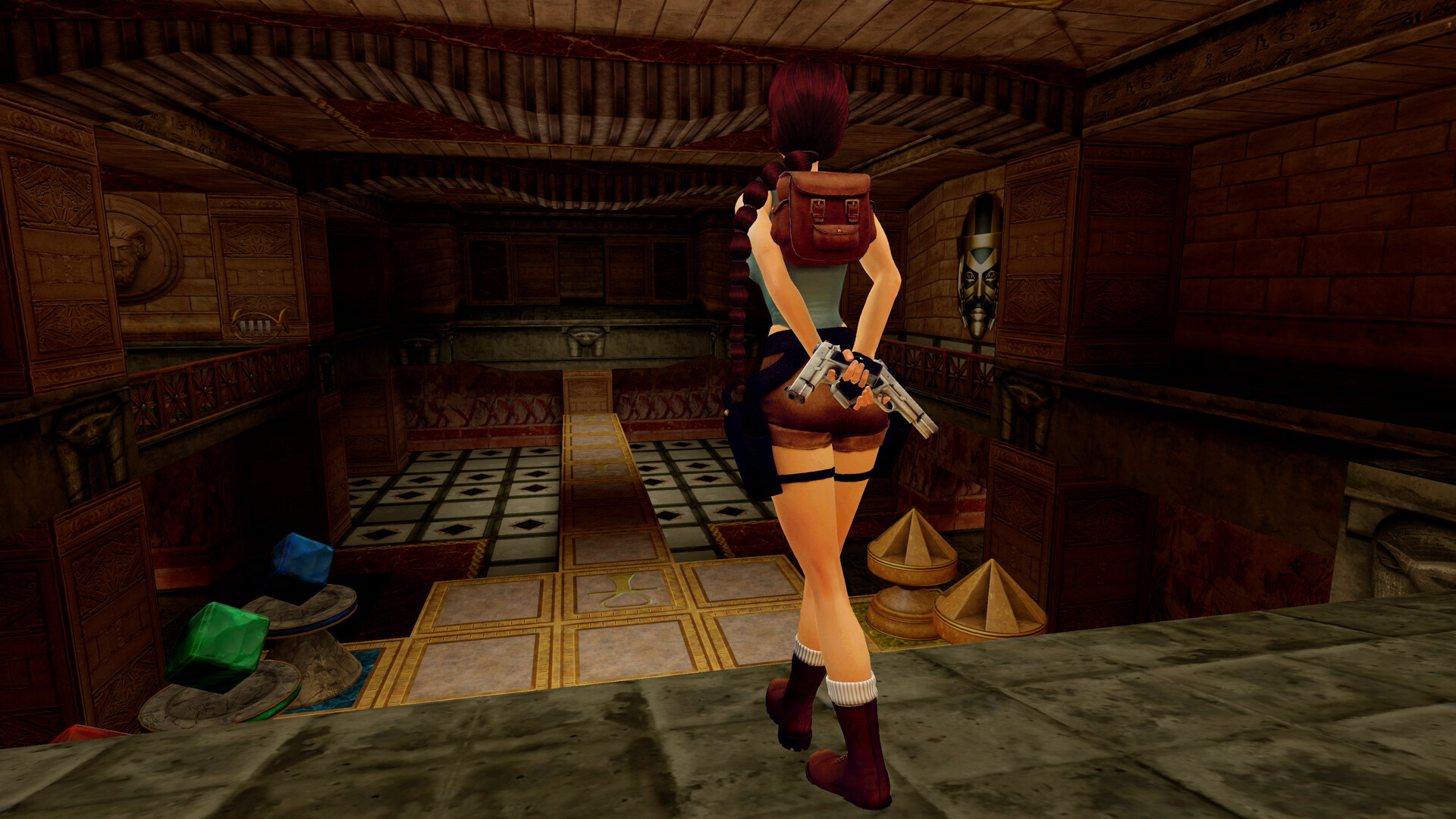
Photo Mode offers a separate way to pause and compose a scene, with Lara’s pose, outfit and weapons adjustable for a still image. The Flyby Camera Maker extends that tool into a moving camera path: a player can place up to twenty camera points, then adjust elements such as field of view, zoom, roll and movement speed. Elsewhere, quality-of-life options include switching visuals, modern controls, boss health bars, and an ammunition display. Each camera point can be adjusted before the path is played back, so a moment in any of the three campaigns can become a composed moving shot.
- Developer
- Aspyr, with Crystal Dynamics
- Genre
- Action-adventure