
About Tomb Raider (2013)
A storm wrecks Lara Croft’s expedition on Yamatai, leaving her separated from the Endurance crew on an isolated island. She searches for her friends and a way off the coast while learning to climb, fight, hunt, and interpret the ruins and the hostile group that controls parts of the island.
Tomb Raider (2013) follows Lara Croft on her first expedition aboard the research vessel Endurance. The crew is searching for Yamatai, a lost island associated with old Japanese legends, when a violent storm drives the ship onto its shore. Lara is separated from the others and must find her way through a place where escape is not straightforward. Captain Conrad Roth is an experienced explorer and mentor; Samantha Nishimura is Lara’s close friend and part of the expedition; and archaeologist James Whitman leads the search for the island. Their expedition becomes a survival story as Lara tries to reunite with the crew and understand the threat surrounding Yamatai. The game frames this as an origin chapter: Lara begins with little equipment and limited experience, then acquires practical tools as she crosses the island and confronts its inhabitants.
Yamatai is explored as a connected series of hazardous spaces rather than as a single uninterrupted wilderness. Forest, cliffside, settlement, bunker, beach, and ancient structures each present different routes and obstacles, with camps providing places to rest and manage skills or equipment. The landscape is shaped by steep drops, unstable platforms, fire, wind, water, and damaged structures. Lara’s traversal grows through tools found during the campaign: a climbing axe can bite into marked rock faces, while rope arrows pull wrapped objects or form lines that serve as ziplines. A rope ascender later lets her move quickly up those lines and haul some objects. These tools change which surfaces and routes are usable, so returning through familiar spaces can reveal paths that were not reachable earlier. The story guides movement between areas while leaving smaller caches, challenge objects, and optional tombs to locate along the way.
The early survival loop links observation, hunting, and progression. Survival Instinct highlights nearby prey, edible plants, and environmental points of interest, helping Lara identify useful resources without turning every route into a marked trail. Hunting animals and completing objectives earn experience; reaching a threshold awards a skill point that can be spent at a Base Camp. Skills are grouped as Survivor, Hunter, and Brawler, with later tiers opening after Lara learns enough abilities from earlier ones. The choices cover practical needs such as spotting animals, collecting more salvage, recovering arrows, carrying more ammunition, improving bow aim, or resisting damage. Crates, caches, and defeated enemies can also provide salvage or supplies. These activities make a detour useful for more than discovery: gathered resources contribute to Lara’s development and can reduce the pressure of later encounters.
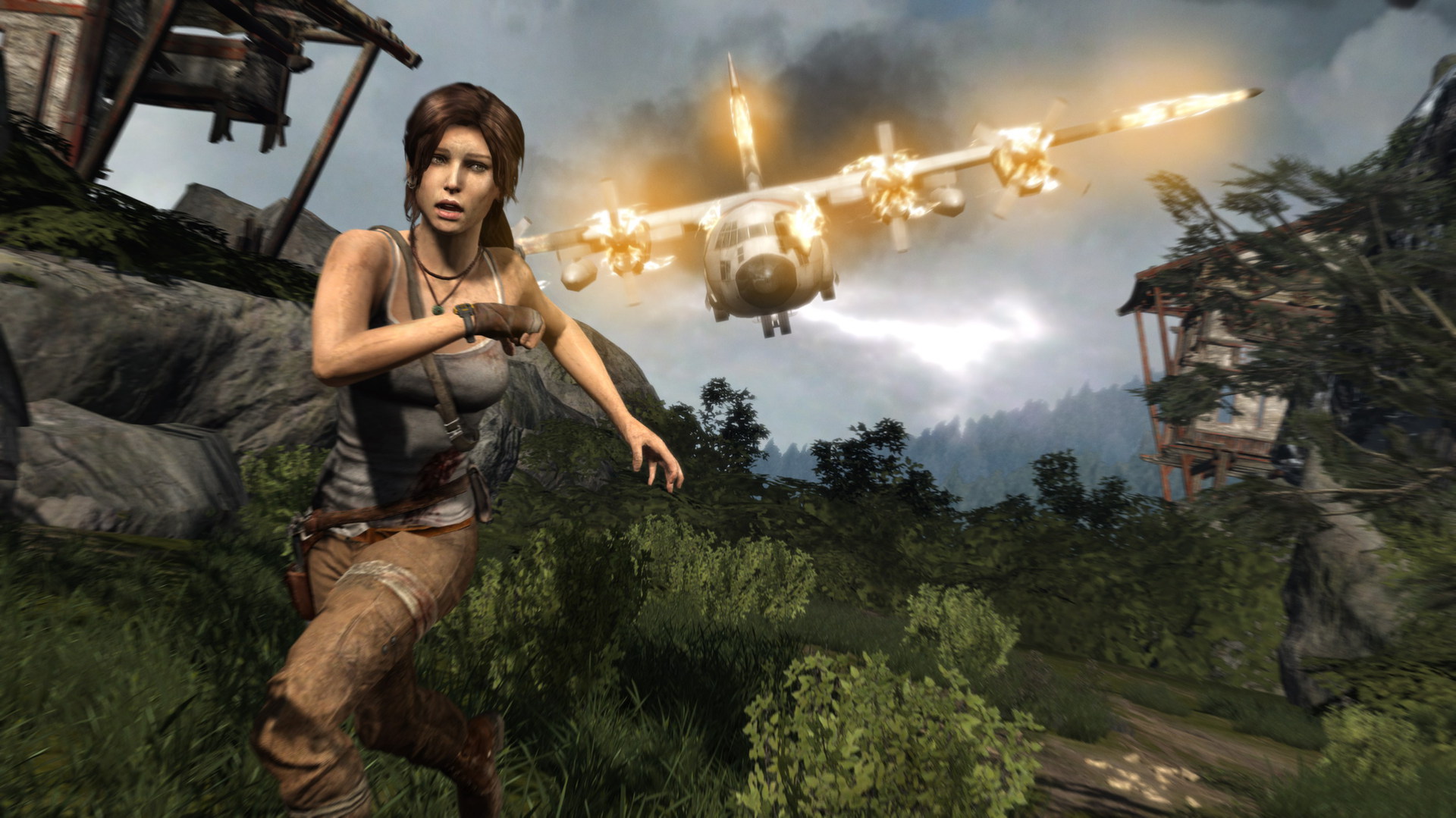
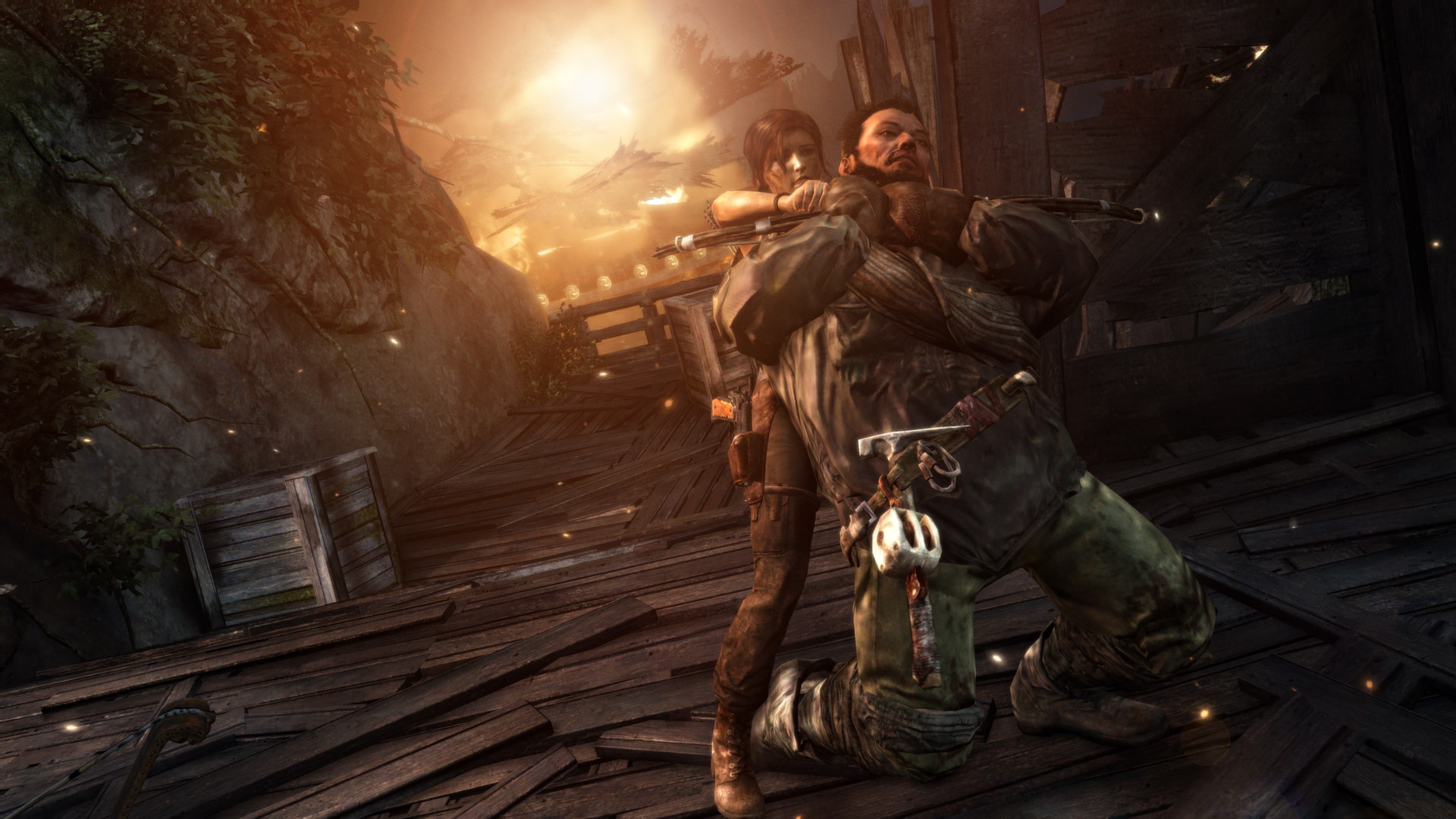
Combat begins with Lara poorly equipped and expands as she acquires weapons and learns new ways to use them. The bow supports quiet shots and can fire rope or fire arrows as those capabilities become available; pistols, rifles, and shotguns each offer a different approach at closer or longer ranges. Lara can aim for exposed targets, take cover, use stealth against unaware enemies, or interrupt an attacker at close quarters. Skills add options such as retrieving arrows from bodies or using a dodge followed by a blinding handful of dirt. Weapon parts gathered in the island’s crates and from enemies can be combined at a Base Camp, while salvage buys selected improvements to a weapon’s features. Newer versions replace earlier forms of the same weapon, and upgrades carry forward to later versions. The result is a progression from improvised defense to a broader set of tools without requiring one fixed combat style.
Base Camps connect character growth and equipment changes to the island’s route structure. Lara spends skill points in the Skills menu and uses the Gear menu to improve weapons with salvage. Equipment arrives through story progress: the pry axe opens crates and can lever certain objects; the climbing axe adds access to rough rock; and later gear extends her use of rope lines and fire. The bow’s rope arrows can pull movable objects, form ziplines, or dislodge some enemies from ledges, while fire arrows burn flammable materials. These are both traversal tools and ways to interact with the environment, so a change in equipment can open a passage or alter a puzzle as well as help in a fight. The player repeatedly moves between an objective, a camp, and surrounding spaces, deciding whether to continue forward or inspect an accessible branch for supplies and experience.
Tombs provide a quieter kind of challenge alongside the main route. The 2013 game includes optional puzzle chambers away from the critical path, where Lara uses physical properties of the room rather than solving a long chain of abstract riddles. A chamber may ask her to manipulate a mechanism, redirect wind, use ropes, or shift a heavy object so it changes the path forward. The Chasm Monastery’s bell puzzle, for example, uses a natural wind tunnel to turn the bell into a wrecking ball. These spaces reward reading the room: identify what can move, notice how force or airflow affects it, and use Lara’s tools to reach the mechanism’s result. They also add glimpses of Yamatai’s history beyond the immediate effort to escape. Optional tombs sit beside the combat and survival systems, giving the island’s exploration a puzzle-focused form without displacing the campaign’s search for Lara’s crew.
- Developer
- Crystal Dynamics
- Genre
- Action-adventure