
About TOEM: A Photo Adventure
A young photographer leaves home with a camera from their grandmother and travels through hand-drawn communities toward the TOEM phenomenon. Photographing subjects, solving residents’ requests and earning travel stamps open the route to new regions, while optional discoveries and camera equipment invite closer exploration.
TOEM: A Photo Adventure follows a young photographer setting out from home to witness the mysterious natural phenomenon called TOEM. Before the journey begins, the protagonist’s grandmother gives them a camera and describes the event as something worth experiencing, while leaving its nature unexplained. The player travels alone through a hand-drawn world where the camera is a practical tool as well as a way to record the trip. The premise is deliberately simple: reach the high peak where TOEM can be seen, and notice what happens along the way. Rather than build toward a battle or a branching narrative, the game makes attention the central activity. People, animals, landmarks and odd details become things to observe, photograph or ask about. The quiet, black-and-white presentation gives the locations a consistent visual identity, while their silhouettes, signs and architectural details distinguish places from one another. The game presents the trip as a sequence of connected stops, so each area can be explored at a small scale before the player boards a bus and moves farther from home. The goal supplies direction, but most moment-to-moment progress comes from looking around and responding to the requests found in each community.
The route unfolds through a succession of compact settlements and landscapes, including a starting farm, a forest, a large hotel, a metropolitan district and a seaside town. Each stop has paths that loop around buildings and natural features, with residents positioned near the places or objects relevant to their requests. Exploring is therefore less about finding a single marked line than learning the shape of a small neighbourhood. A player may pass a distinctive object before knowing why it matters, then recognize it when a later conversation points toward it. Speaking with people reveals what they need, while the surrounding scene provides clues about where to look or what to capture. Bus stations connect these spaces and act as the main gates between them. The destination is visible as a broad objective, but reaching it requires a certain number of stamps earned during the journey. This creates a flexible route through optional tasks: players can choose among requests in an area, revisit streets as new context appears and decide how much of the local activity to complete before moving on. Every new region shifts the scenery and community without changing the basic rhythm of walking, noticing, helping and travelling.
The camera gives the game its central verb. Exploration uses an elevated view of the character and the surrounding scene; raising the camera switches to a first-person viewfinder that can reveal subjects hidden by distance or by the angle of the normal view. The lens can zoom in, making it useful for photographing a faraway object and for examining what is happening elsewhere in the same landscape. A photo is not merely a collectible image: requests often ask for a particular subject, arrangement or event, and the player must decide what the wording means before composing the shot. Some tasks reward clear identification of an animal or person, while others use the camera to investigate an unusual sight or help a character understand the situation around them. The shift between the two perspectives is important because movement and framing solve different problems. Walking provides access to new viewpoints and conversations; the viewfinder tests whether a detail can be found and captured from where the player stands. The photo album preserves images from the outing, giving the camera a record-keeping function that suits a story about travelling and seeing a place for oneself.
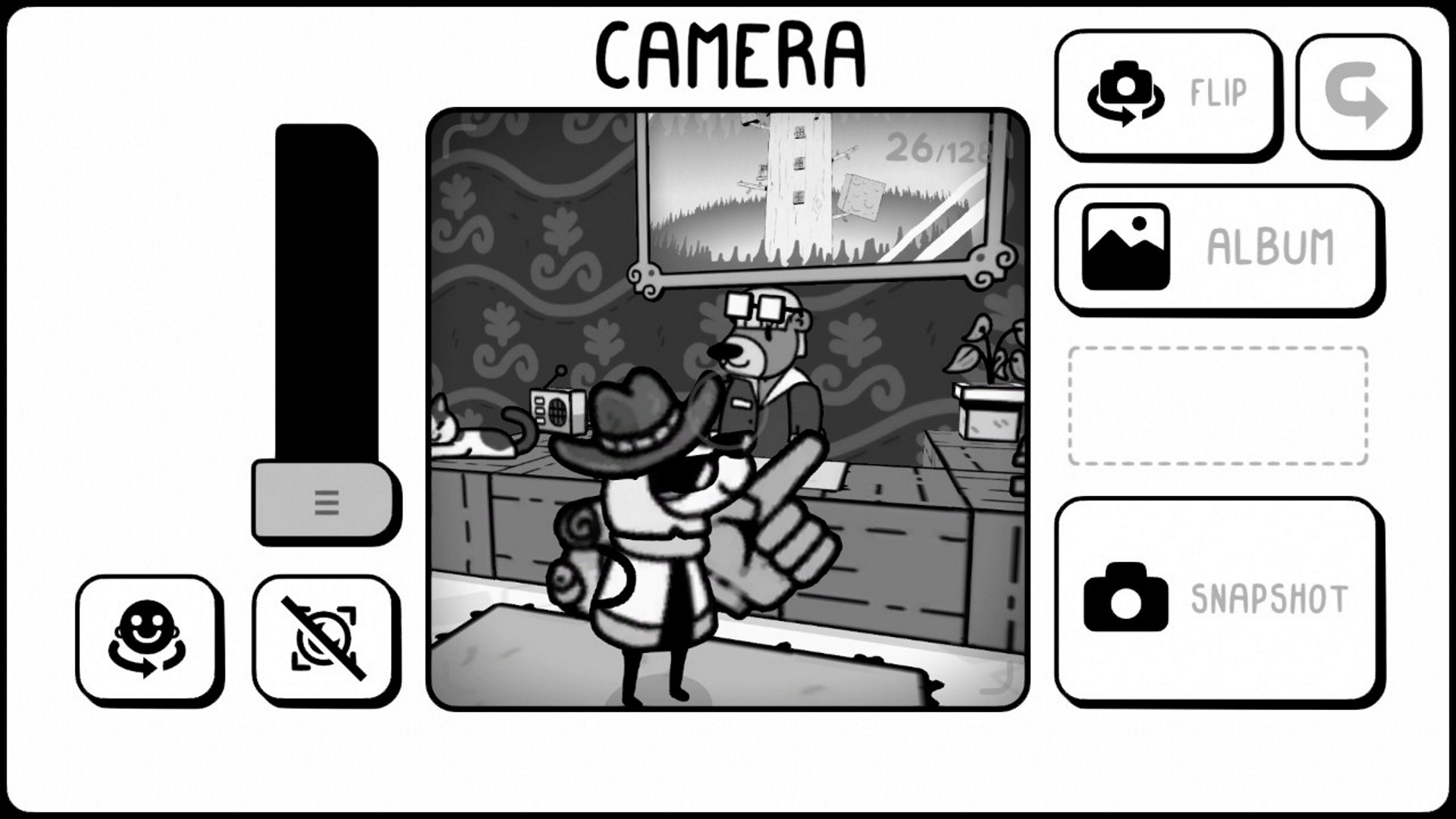
Requests are built as small visual puzzles rather than as tests of quick reflexes. A resident may describe a problem indirectly, leaving the player to infer which person, animal or environmental detail answers it. The solution can involve finding the subject, positioning the camera and adjusting the zoom or angle until the desired image registers. Other challenges ask for several photos or for evidence of something happening in the environment. This makes careful observation useful before the camera is raised: movement can reveal a new corner or bring the player closer, but the important question is often what the scene means. A request can also change how a familiar location looks on a return visit, because the player now knows which detail to search for. The game does not turn photography into a combat system, and the camera is not used to damage enemies. Instead, the photograph functions as a response to a situation or a way to document a discovery. The individual tasks are short, but together they give each town a set of small human concerns and curiosities. Finishing them produces visible confirmation in the player’s community card, tying observation to the larger trip.
The community card is the main measure of progress. Helpful acts and completed photo challenges add stamps; earning enough in a region provides the bus pass needed to continue to the next stop. The system allows a choice of which local activities to pursue, so the main route is not a checklist that requires every optional request. Exploration can also reveal clothes and camera attachments. Most outfits change the character’s appearance, but selected clothing has a practical purpose, such as opening access to a place that otherwise remains out of reach. Camera add-ons extend what can be done in the world: an air horn can move birds or break ice, while other equipment provides a new way to interact with objects and people. The distinction between cosmetic items and useful ones matters because the game makes equipment a light layer of progression instead of a deep inventory-management system. New tools can make an earlier obstacle readable in a different way, and finding one gives the player a reason to reconsider nearby paths. Stamps carry the journey forward, while clothing and attachments add local access and small abilities. There are no experience levels to grind; progress is tied to specific discoveries and the tasks undertaken in each place.
The world supports exploration beyond the requests needed for the next bus ride. Animals can be photographed and recorded in a compendium, and additional details, secrets and optional scenes reward players who revisit paths or look behind the obvious route. Because the environments are compact, a single change in viewpoint can expose a subject that was easy to miss while walking. Conversations also add context to the places: a request may involve a local job, a personal worry or a peculiar interpretation of what is happening nearby. These interactions keep the inhabitants connected to the landscape rather than making them anonymous quest markers. The challenge is to understand what someone is describing and relate it to what is visible in the world. The photograph then acts as proof that the player found the relevant subject. Optional collection works on a different scale from bus progression: a player can continue after securing enough stamps, while a more thorough visit might include the animal record, additional photographs and equipment. This separation makes the album both a trace of the main expedition and a record of extra observations. The game’s gentle pacing leaves room to make pictures simply because a scene or character caught the player’s attention.
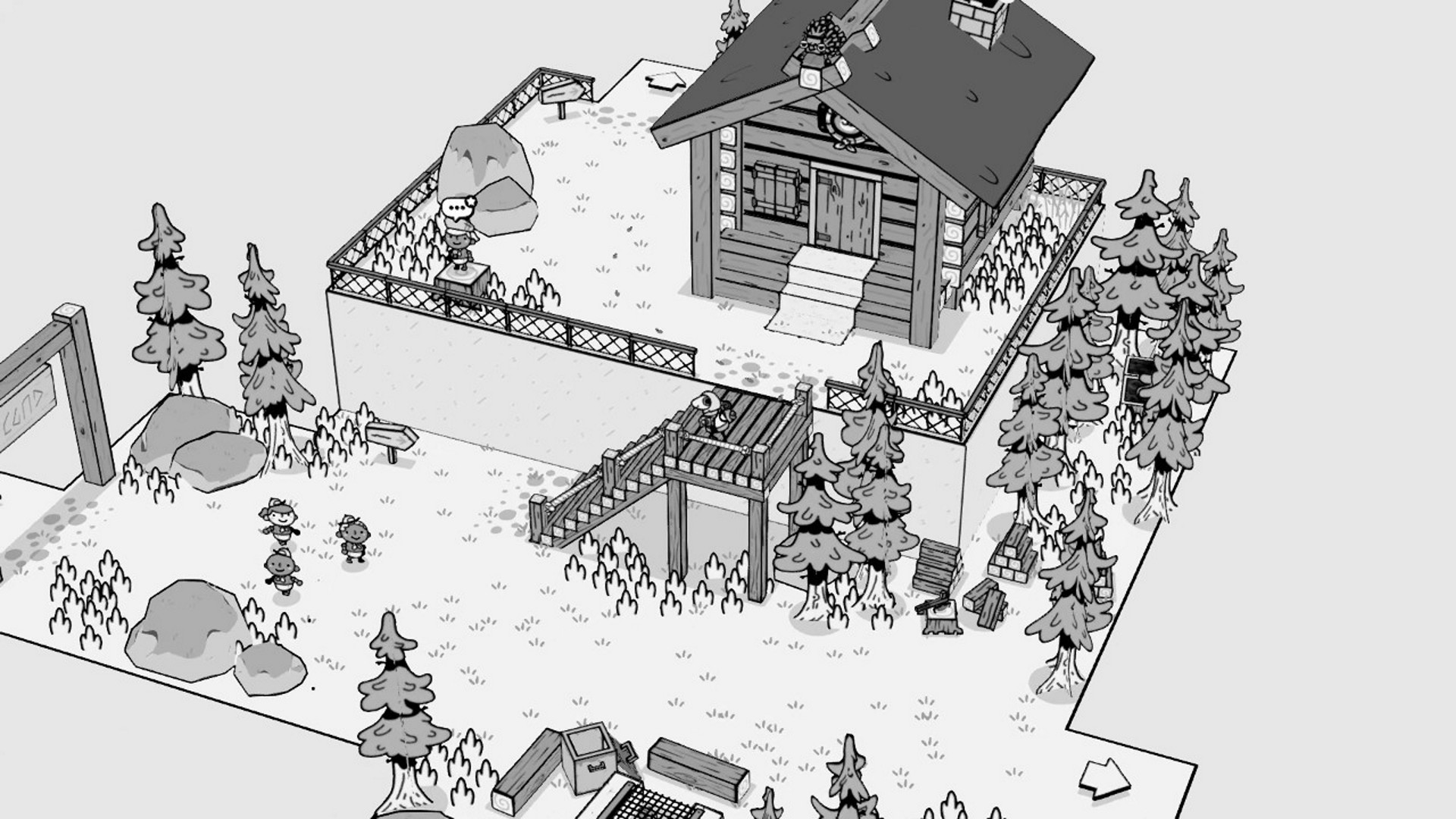
Music and visual design reinforce the sense of moving through distinct places. The monochrome artwork uses line, contrast and readable silhouettes to make its small scenes legible, while the camera’s closer view provides another way to inspect their composition. The soundtrack includes cassette tapes that can be discovered during exploration and played through the character’s music player; the available music gives the journey an audible counterpart to its growing album. The game’s Scandinavian-inspired landscapes are not only natural settings: settlements, a hotel, city streets and a coast bring different built environments into the same route. That variety changes what a player might notice, from wildlife and terrain to people, signs and objects shaped by everyday life. Reaching the peak completes the outward journey and brings the player to the phenomenon that gave the trip its name. The destination is framed as the end of a personal expedition, while the stamps, photographs, optional discoveries and conversations are the activities that fill the distance before it. TOEM stays centered on a young traveller, a camera and a world that becomes more familiar through attention. Its structure lets players move toward the summit while deciding how much of each stop they want to see.
- Developer
- Something We Made
- Genre
- Photography adventure