
About Titanfall 2
Titanfall 2 is a first-person shooter set on the Frontier, where Militia rifleman Jack Cooper is separated from his unit and paired with BT-7274, a Vanguard-class Titan. Its single-player campaign alternates between Pilot movement and Titan combat, while multiplayer pits customizable Pilots and Titans against one another in objective-based matches.
Titanfall 2 takes place on the Frontier, a distant region contested by the Frontier Militia and the Interstellar Manufacturing Corporation (IMC). In the single-player campaign, the player controls Jack Cooper, a Militia rifleman who hopes to become a Pilot. When events leave him behind enemy lines, he inherits responsibility for BT-7274, a veteran Vanguard-class Titan. The two must cooperate to carry out a mission beyond Cooper’s training. The story follows their partnership through hostile environments and military operations, with the campaign framing the Pilot and Titan as two distinct but interdependent combatants.
As a Pilot, Cooper moves through spaces on foot with the speed and mobility expected of a futuristic infantry fighter. Running, jumping, sliding, climbing through routes and using tactical abilities are central to navigating arenas and engaging enemies. Firearms, grenades and close-range attacks support different approaches to encounters, while the environment often provides routes above, around or through opposing forces. The campaign uses these movement and combat tools in a sequence of missions, mixing firefights with traversal challenges and situations that ask the player to move between open combat spaces and tighter interior locations.
BT changes the scale and rhythm of a fight. The player can call the Titan into the field, embark or disembark, and choose when to fight inside the machine or remain outside as a Pilot. Titan controls include movement, sprinting, a dash, weapon fire and separate offensive, defensive and utility abilities. The Titan’s Core ability offers a further combat action, while an emergency ejection can return the player to Pilot combat if the machine is in danger. These options make Titan encounters less like simply using a larger gun: the player manages positioning and ability timing while weighing the protection and firepower of the cockpit against the Pilot’s agility.
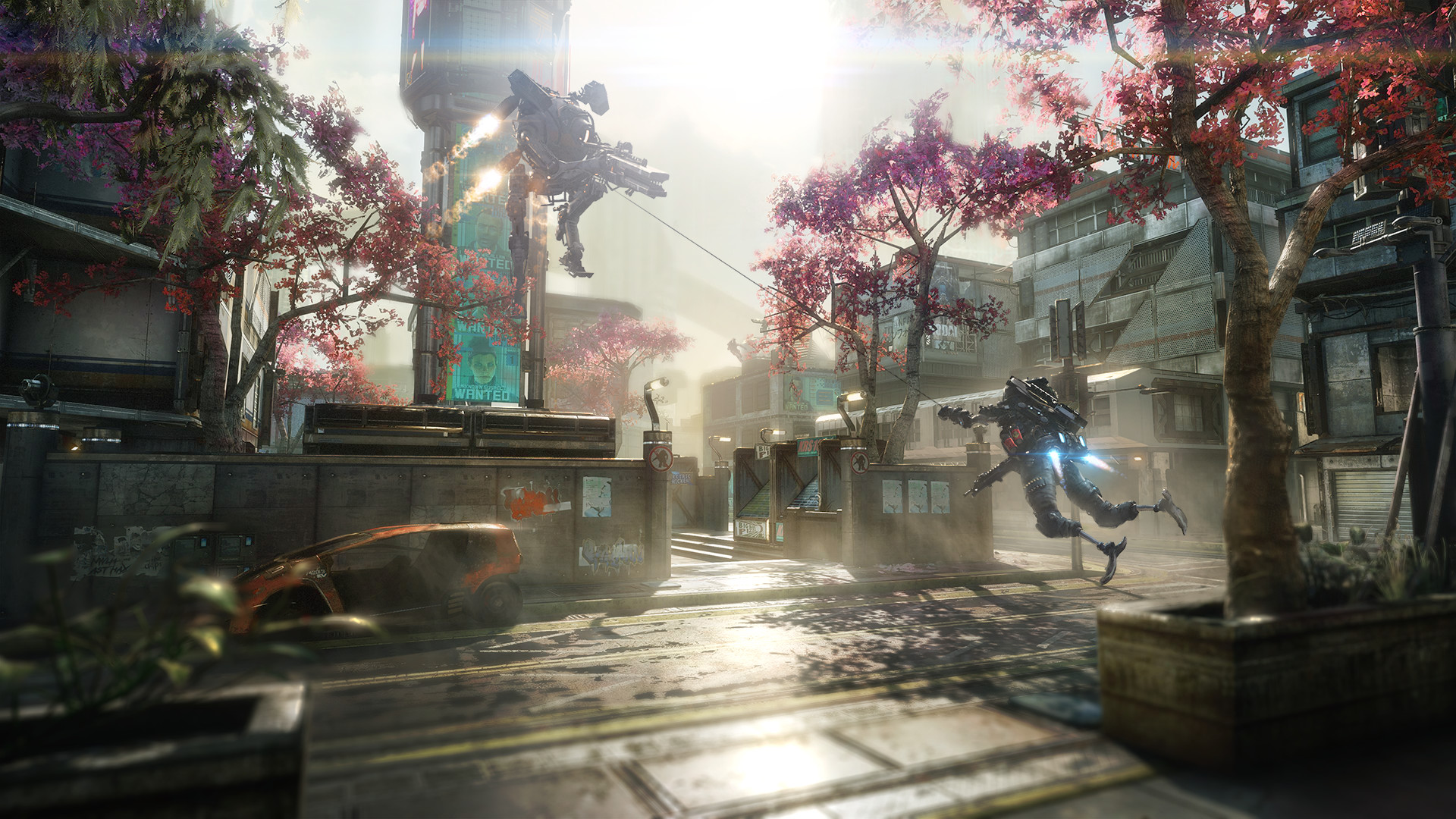
The campaign builds its set pieces around this change of perspective. Cooper can cross a battlefield on foot, use BT to confront heavier opposition, then leave the Titan to navigate a space too confined or hazardous for the machine. BT is a Vanguard-class Titan, and the story treats him as a partner with his own capabilities rather than an interchangeable vehicle. The partnership anchors the mission structure: Cooper must adapt to unfamiliar responsibilities while BT supplies the battlefield knowledge and mechanical strength of an experienced Titan. Mission Select becomes available for replaying sections already unlocked, allowing players to revisit campaign missions without beginning a new game.
Multiplayer extends the same Pilot-and-Titan combat into competitive matches. Players enter as Pilots, choose a faction, and fight other players while calling in Titans as the match unfolds. The game offers multiple playlists with different rules, including variations in time limits and player counts. Movement and shooting on foot remain important, while Titan calls introduce a heavier combat phase that can alter how teams contest open ground. Players can join a match alone or invite friends or members of a Network, which functions as a social grouping for finding people with similar interests or play styles.
Before a multiplayer match, players can adjust both Pilot and Titan loadouts. Pilot equipment includes primary and secondary weapons, sights, weapon modifications, abilities, kits and executions; Titan choices include their own armament and abilities. This gives players ways to tune their role for a preferred approach, then change equipment between matches as they learn the playlist and its objectives. Callsigns provide cosmetic recognition for accomplishments through banner and patch images. The game also offers expanded character, Titan and loadout personalization, with multiplayer progression unlocking additional items and options. The result is a shooter built around two linked combat scales: quick Pilot movement between engagements and the heavier tactical choices that come with deploying a Titan.
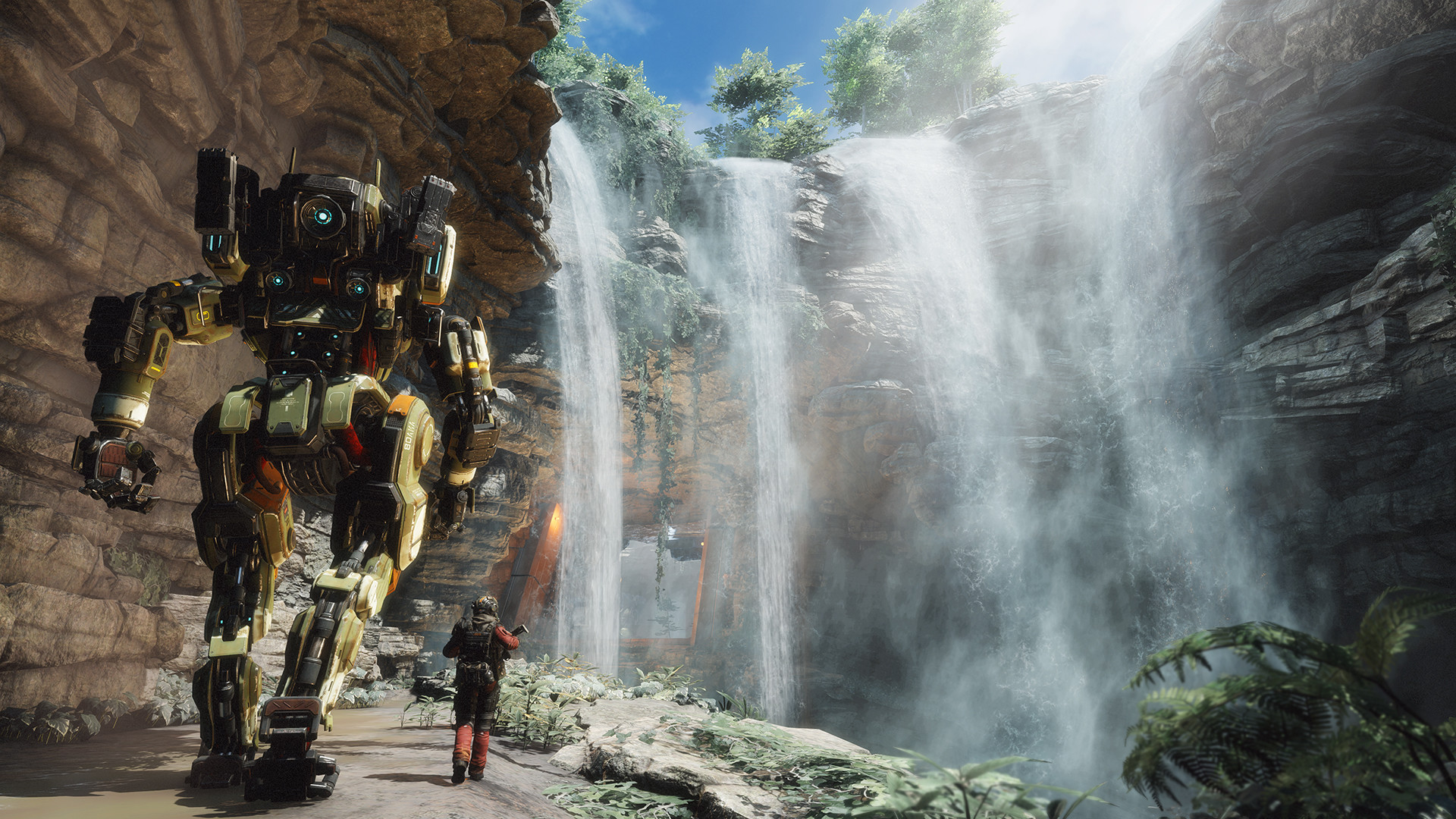
The Titan is also a progression choice in multiplayer rather than merely a match-ending reward. A player earns access to a Titan during combat, and the manual describes Boosts as single-slot Pilot power-ups available on the way to earning that Titan; some can help build toward its arrival more quickly. Once a Titan is deployed, it brings its own weapon and its own offensive, defensive, utility and Core abilities. Using it in battle unlocks Titan Kits as well as cosmetic camouflage, weapon finishes, nose art and Warpaints. Those unlocks give continued use a visible record, while the abilities define what the selected machine can contribute in a fight.
A called-in Titan does not always require its Pilot to stay inside. The controls allow the player to embark, disembark and switch the Titan to an autonomous mode, so the Pilot can act on foot while the machine remains active. That choice changes how the pair occupies a combat space: Cooper or a multiplayer Pilot can use the movement and tactical ability available outside the cockpit, then return to the Titan's heavier weapons and defensive systems. An emergency ejection provides another transition back to Pilot play when a Titan is threatened. The campaign uses the partnership with BT as a story device, while multiplayer places that same division of roles inside team matches.
- Developer
- Respawn Entertainment
- Genre
- First-person shooter