
About Tiny Tina's Wonderlands
Tiny Tina's Wonderlands is a first-person looter shooter framed as a tabletop fantasy campaign run by Tiny Tina. As a customizable Fatemaker, you join Valentine and Frette on a quest to stop the Dragon Lord, travelling through storybook realms while combining guns, spells, melee weapons, class skills and loot.
Tiny Tina’s Wonderlands turns a tabletop role-playing session into a first-person fantasy adventure. Tiny Tina acts as the Bunker Master, shaping the campaign around the Fatemaker, a hero created by the player, and two tablemates: Valentine and Frette. Their party sets out to save the queendom from the Dragon Lord, a self-aware villain trying to overturn the familiar role Tina has assigned him. The premise gives the world room to shift between a grand quest and the messy spontaneity of a game being narrated at a table. Tina can introduce an environment, a threat or a detour, while the party’s dialogue supplies reactions to the story and one another. The central pursuit follows the Dragon Lord’s threat without requiring a knowledge of prior Borderlands stories.
Character creation starts with one of six launch classes: Brr-Zerker, Clawbringer, Graveborn, Spellshot, Spore Warden or Stabbomancer. Each provides a Class Feat, two Action Skills to choose between and a passive skill tree. As the campaign progresses, the Fatemaker unlocks a second class at level 13, giving the build access to a second tree and another Class Feat; only one Action Skill can be equipped at a time. Appearance and personality shape the hero’s miniature and voice, while Hero Points tune attributes such as critical damage, spell cooldown, status damage, health and Action Skill cooldown. The primary class is permanent, but skill points and several other character choices can be adjusted at Quick Change stations, allowing a build to develop without remaking its initial class choice.
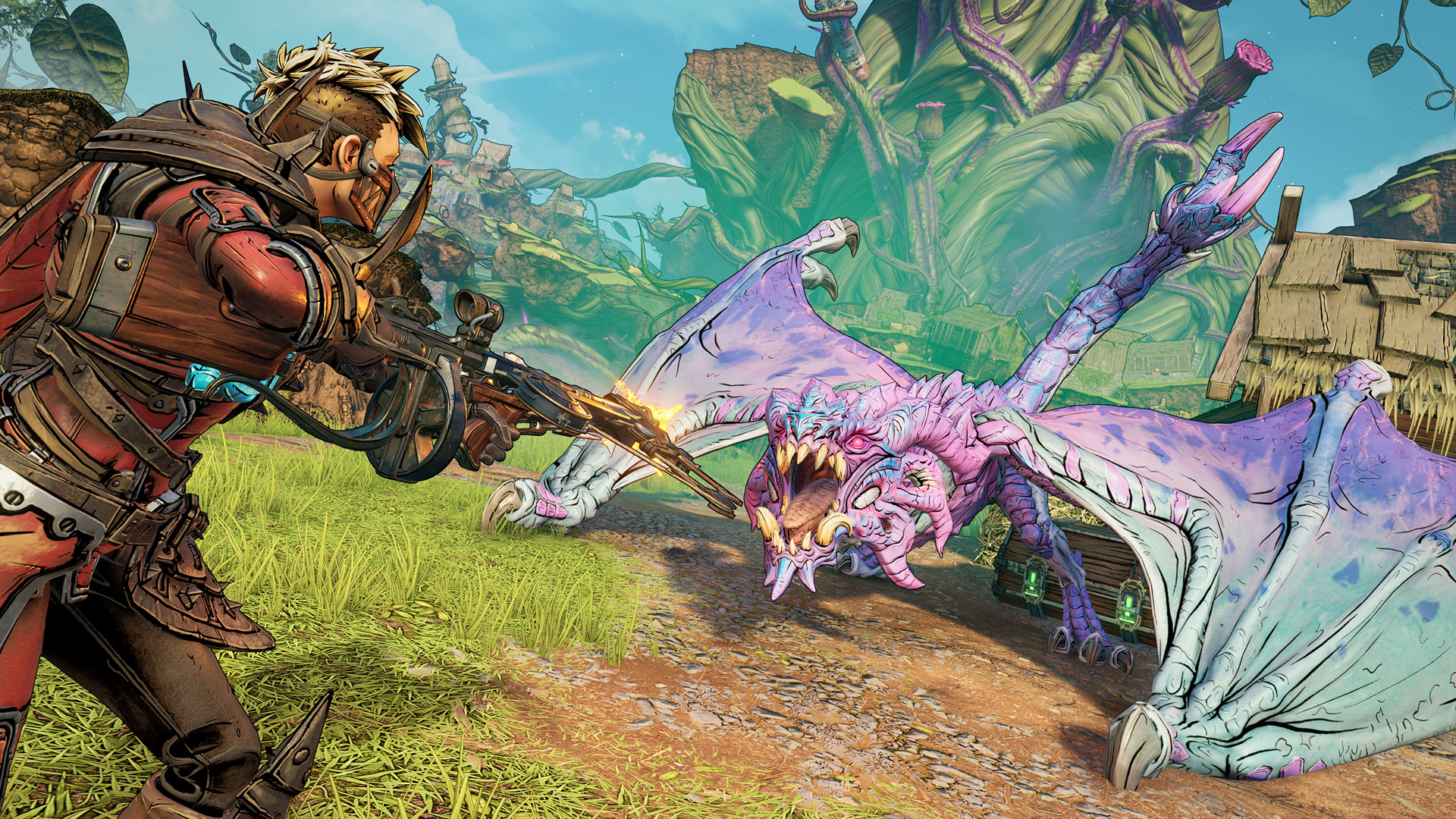
Fights combine guns and spellcasting, with a dedicated melee weapon available alongside both. Guns are divided into pistols, SMGs, assault rifles, shotguns, sniper rifles and heavy weapons, drawing from separate ammunition supplies. Their parts, effects and firing modes can change how a drop behaves, so replacing equipment involves comparing more than rarity. Spells recharge separately from Action Skills. A spell might launch a fireball, send a magic missile, summon a hydra, call down a meteor, or protect allies; some carry multiple charges, continuous casting or a cooldown reset on critical hits. Melee swings stagger many nearby enemies, and a strike aimed at a target just out of reach makes the Fatemaker leap-glide forward.
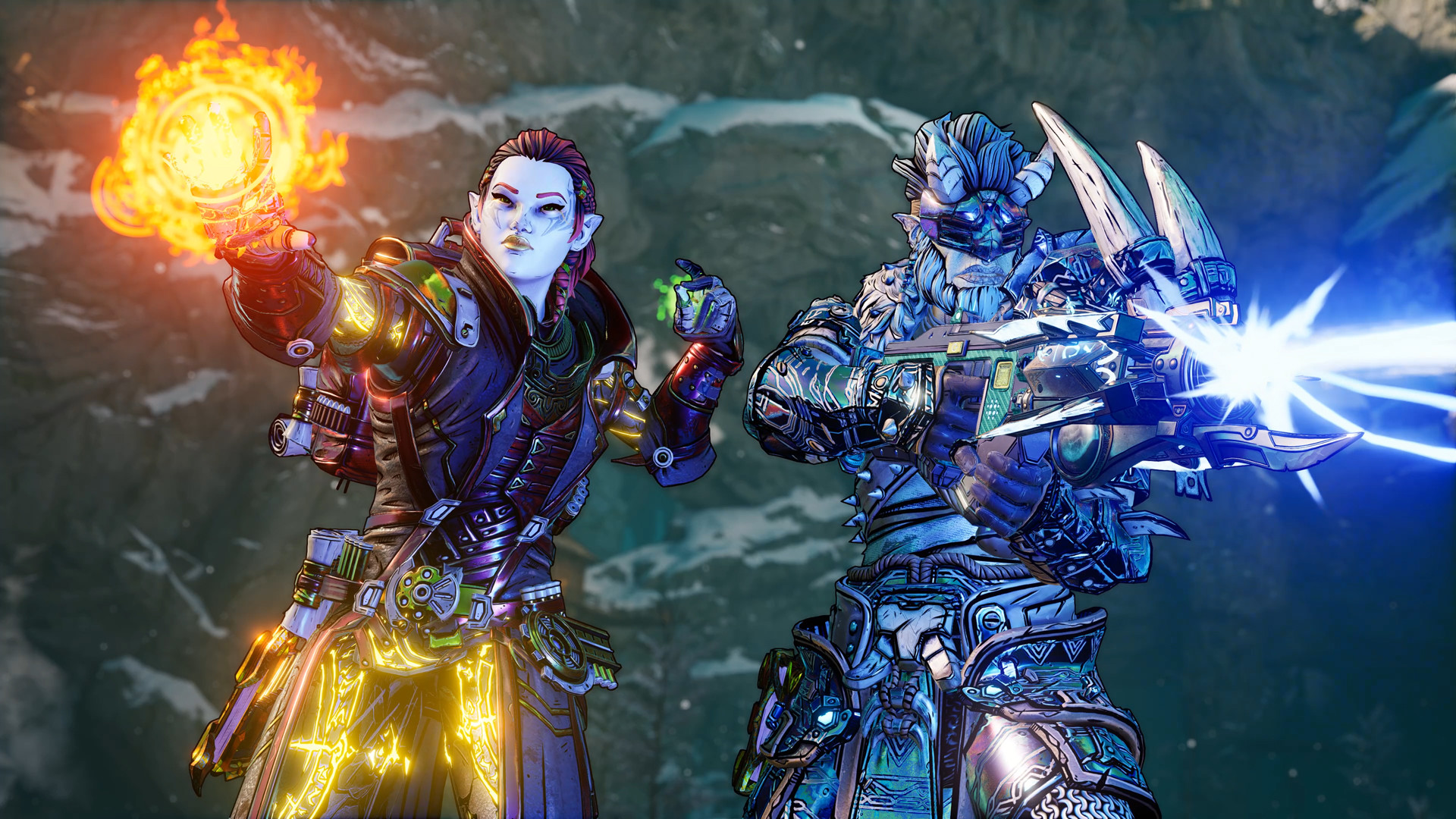
Class identity comes from mixing passive skills, Action Skills, companions and equipment rather than choosing a fixed weapon role. A Brr-Zerker leans into frost and close-range attacks; a Clawbringer calls on thunder, fire and a wyvern; a Graveborn spends health to fuel Dark Magic and fights beside a Demi-Lich. Spellshot combines weapons with spell effects, Spore Warden brings nature-themed attacks and a mushroom companion, and Stabbomancer focuses on critical hits and stealth. Multiclassing opens combinations between these trees, while only one Action Skill is active at once. Class Feats remain passive, and the class skills influence which weapons, spells or melee modifiers reinforce the build. Skill points arrive as the Fatemaker levels, and deeper tree abilities require investment further up the same branch, making character progression a sequence of connected choices.
The Wonderlands move between distinct combat maps and the Overworld, where the Fatemaker appears as a small miniature running across Tina’s game board. It is a third-person, bird’s-eye view of routes linking settlements, forests, fortresses and other realms; scattered details such as miniature terrain and tabletop clutter keep the framing visible. Wandering off the direct route can reveal optional zones, chests, Lucky Dice and shrines whose restored state grants continuing buffs. Enemies encountered on the board can lead into a separate combat encounter, while a quick melee strike can sometimes clear a pursuer before that transition. Once Travel Stations have been discovered, the world map can fast travel between them, so returning to a quest giver or revisiting a region does not require crossing every stretch on foot again.
The campaign’s missions give the fantastic regions their local concerns as well as a common threat. Residents may need help with goblins, a garden, or a pet landshark even while the Dragon Lord remains the larger danger; optional quests can add their own characters and objectives rather than simply repeat the main plot. Main-story progress can also alter familiar maps, from small visual changes to newly open playable areas. Within each zone, the familiar loop of navigating to objectives, fighting groups, collecting equipment and gaining experience is interrupted by shifts in Tina’s narration and the party’s responses. Valentine and Frette remain present as tablemates, helping make the adventure feel like a campaign played by characters around a table rather than a silent journey through disconnected fantasy levels.
After the campaign, the Chaos Chamber offers a repeatable dungeon run built from changing combat rooms and choices. Blessing altars spend Crystals for buffs that last through the current run, while curses add pressure; completing rooms accumulates more crystals and helps determine the rewards. At the end, loot-type rabbit statues accept crystals and dispense randomized equipment from the category each statue represents, letting players direct some of the reward chase without removing its chance element. A run summary records combat and build details, and Featured Runs provide a shared seeded layout with the same elements and side objectives for that run. This endgame mode turns the game’s combinations of class skills, guns, spells and melee into a repeatable challenge whose room sequence, bonuses and loot decisions can vary from one attempt to the next.
- Developer
- Gearbox Software
- Genre
- First-person looter shooter / action RPG