
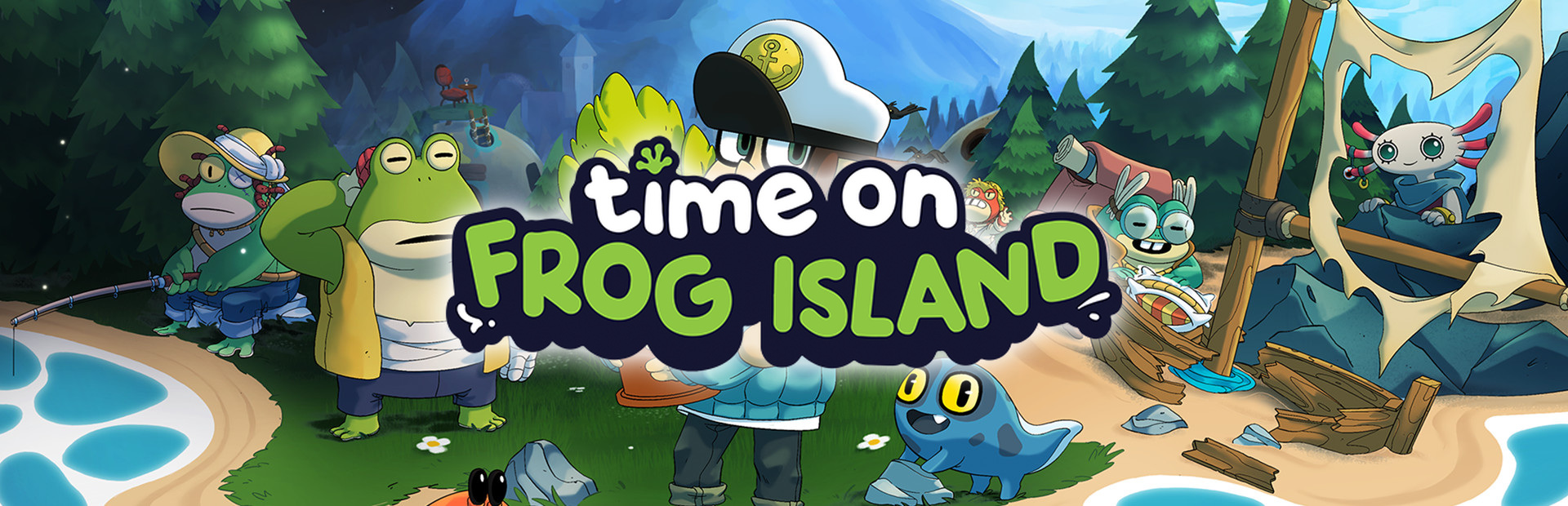
About Time on Frog Island
After a storm destroys his ship, a sailor washes ashore on an island inhabited by frogs. He explores its beaches, farms, town and highlands, helps residents through image-based requests, and follows interlocking trades to gather parts for his vessel. Fishing, farming, brews and unusual movement items open additional ways to investigate the island.
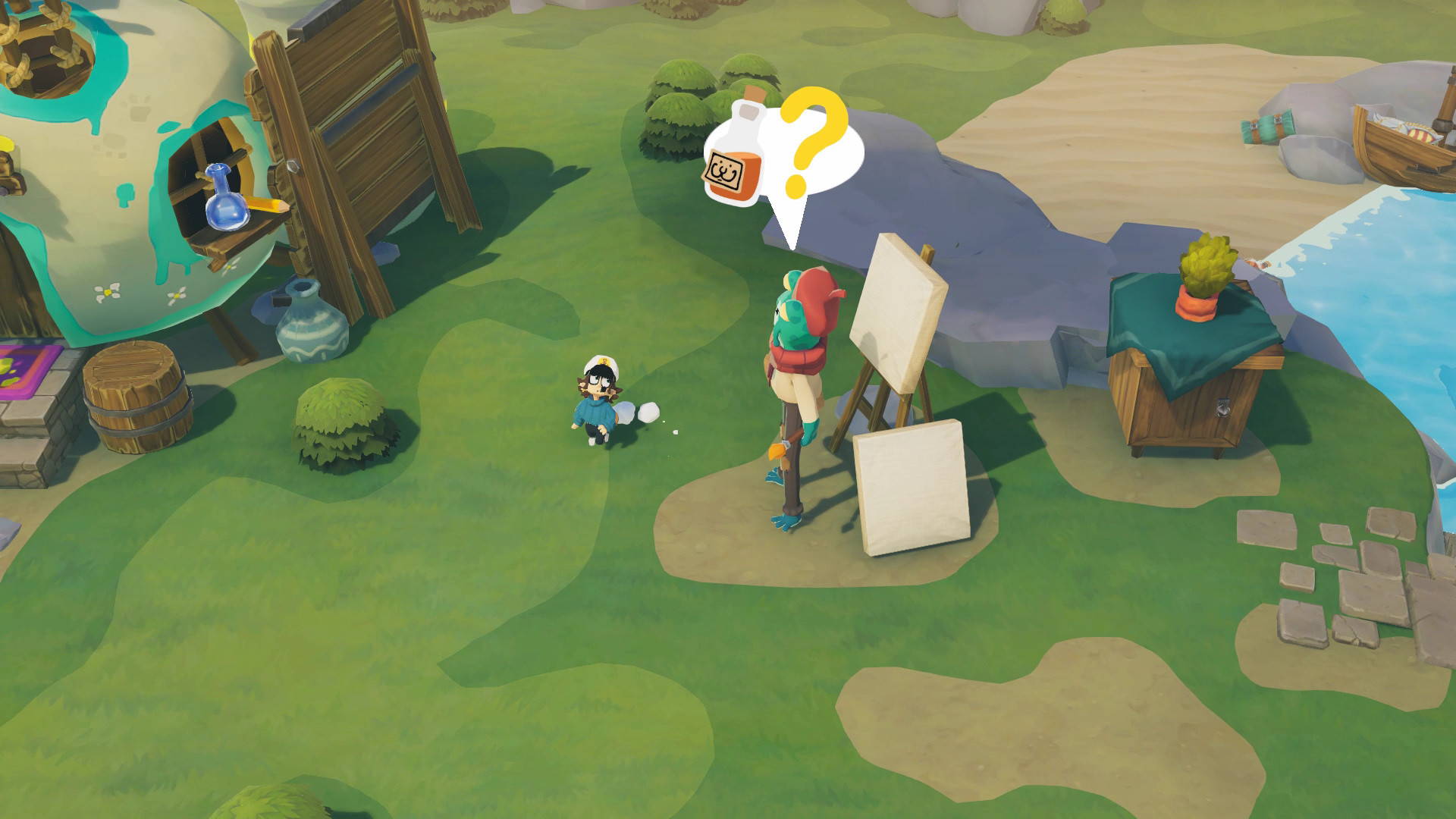
A violent storm leaves a sailor and his shattered vessel on an island whose inhabitants are frogs. The immediate problem is practical: the ship needs replacement materials before it can sail again. The islanders have their own requests, however, so the sailor cannot simply collect parts from a supply pile. He has to learn what the locals want, find objects that might help, and trade favors and goods through a chain of small puzzles. The sailor also carries a potted plant from the wreck, a keepsake that appears in the images shown when he sleeps. Those quiet glimpses add context to the voyage without turning the island into a dialogue-heavy story. The frogs communicate through wordless vocal sounds and pictured speech or thought bubbles, so a request is something to interpret as well as fulfill. A frog may show an object, another character, or a situation; the player then connects that clue to places and people encountered around the island. The result is a story shaped by errands and discoveries: the sailor's route home depends on understanding the daily concerns of a small community.
Frog Island is arranged as connected outdoor regions rather than a sequence of isolated puzzle rooms. The beach around the wreck leads inland toward the central town, with a farm, nesting grounds, mountain paths and a flower patch among the places to investigate. Signs along paths use simple pictures to point toward nearby landmarks, and the terrain itself supplies visual landmarks: shorelines, paths, crops, buildings, cliffs and distinctive plants. There is no conventional objective list spelling out every active favor, so players can revisit a character to see a request again or follow a fresh clue they have noticed elsewhere. This supports a wandering rhythm in which an apparent detour can supply the next useful object. It also lets players choose when to pursue the ship repairs and when to spend time on optional island routines. Curiosity is useful because objects can serve more than one purpose: a plant may be a trade good, a tool for crossing terrain, or an ingredient in a brew. The game invites trying these possibilities in the environment, where a short route or visible obstacle can suggest a different use for something already picked up.
Trading gives the exploration its main progression structure. The sailor can carry one loose object at a time, take it to a frog, and offer it when it matches the pictured request. Some residents need a favor or a sequence of items before they hand over what another resident wants; completing one exchange therefore reveals a new step rather than ending the errand. The Carpenter, for example, has misplaced the saw needed for work around the settlement, while the Farmer's crops are being damaged by crows and need protection. The Blacksmith has her own urgent concern when her tadpup goes missing, and the Tavern Keeper relies on others to bring ingredients for her brews because she cannot leave the tavern easily. These are not separate menus of quests: they are practical problems encountered in the world, communicated through pictures and solved with objects found, grown, or acquired elsewhere. The aspiring Merchant adds a money-based branch to the barter economy: initial exchanges introduce him to the sailor, after which a coin can be used to buy some goods directly. The Lumberjack also accepts coins for building a house. Boat repairs remain the central long-term goal, but social favors, purchases and construction give the same trade network other destinations.
Objects also change how the sailor moves. A small pod-like plant can be held and used for a burst of speed; its petals eventually drop, ending the effect. A broad leaf can slow a fall and carry the sailor across a longer gap when used from an elevated point. Simple brews prepared through the island's tavern alter movement too, with effects that can help cover ground or meet a traversal challenge. These are temporary, carried tools rather than permanent upgrades to a character skill tree. That creates a useful choice during an errand: keep hold of the requested object for a direct delivery, or set it down to use a plant or brew that makes the route easier. Different approaches can also help complete trades, since items sometimes have uses beyond their first apparent purpose. The same movement tools come into play at ancient gates that start timed races, asking the sailor to reach a matching gate elsewhere before time expires. Learning the geography and experimenting with what an object does are therefore linked: a faster crossing may depend on knowing where to start, while a useful vantage point can turn a leaf into a way across a gap.
The island's day, night and weather patterns affect what can be done and when. As daylight fades, the sailor gets tired and the frogs retire, so advancing to a new day means finding a campsite, gathering firewood and lighting a fire before resting. Sleep also reveals another still image from the sailor's past. Weather changes what is available in certain spots: rain can alter plants that appear in a patch, while wet conditions keep crows away from the farm and let the Farmer's fruit be gathered. This means the environment is more than scenery around the trade puzzles; conditions can create an opportunity or delay an action until the island changes. Time also matters to recipes and some requests, which can call for waiting until the next day. The player can use that rhythm to decide whether to press on with a current chain, look for a campsite, or spend the remaining daylight on another activity. Because the characters and resources respond to these cycles, learning a route includes remembering the conditions under which each opportunity becomes available.
Beyond barter, the island supports a handful of self-directed activities. Fishing uses found objects in an unusual way, encouraging experimentation with different potential bait rather than relying only on the trade network; catches can provide new items to inspect or use. The sailor can also grow and gather crops, help the Tavern Keeper collect ingredients, and prepare brews whose effects matter on later journeys. Garden work can connect to favors, but it also gives players something to tend while delaying departure. Races marked by paired colored gates test route planning and movement effects, and ancient ruins and tucked-away treasures reward looking beyond the direct route between residents. A house can also be built once the requested coin payment is supplied, adding a place to settle into island life. These activities are optional alongside repairing the boat, and the game allows the sailor to continue exploring after completing the voyage. In this way, the central objective provides direction without making every discovery a mandatory step: the same beach-to-mountain landscape can be crossed for a ship part, a race, a crop, a fishing experiment or a secret.
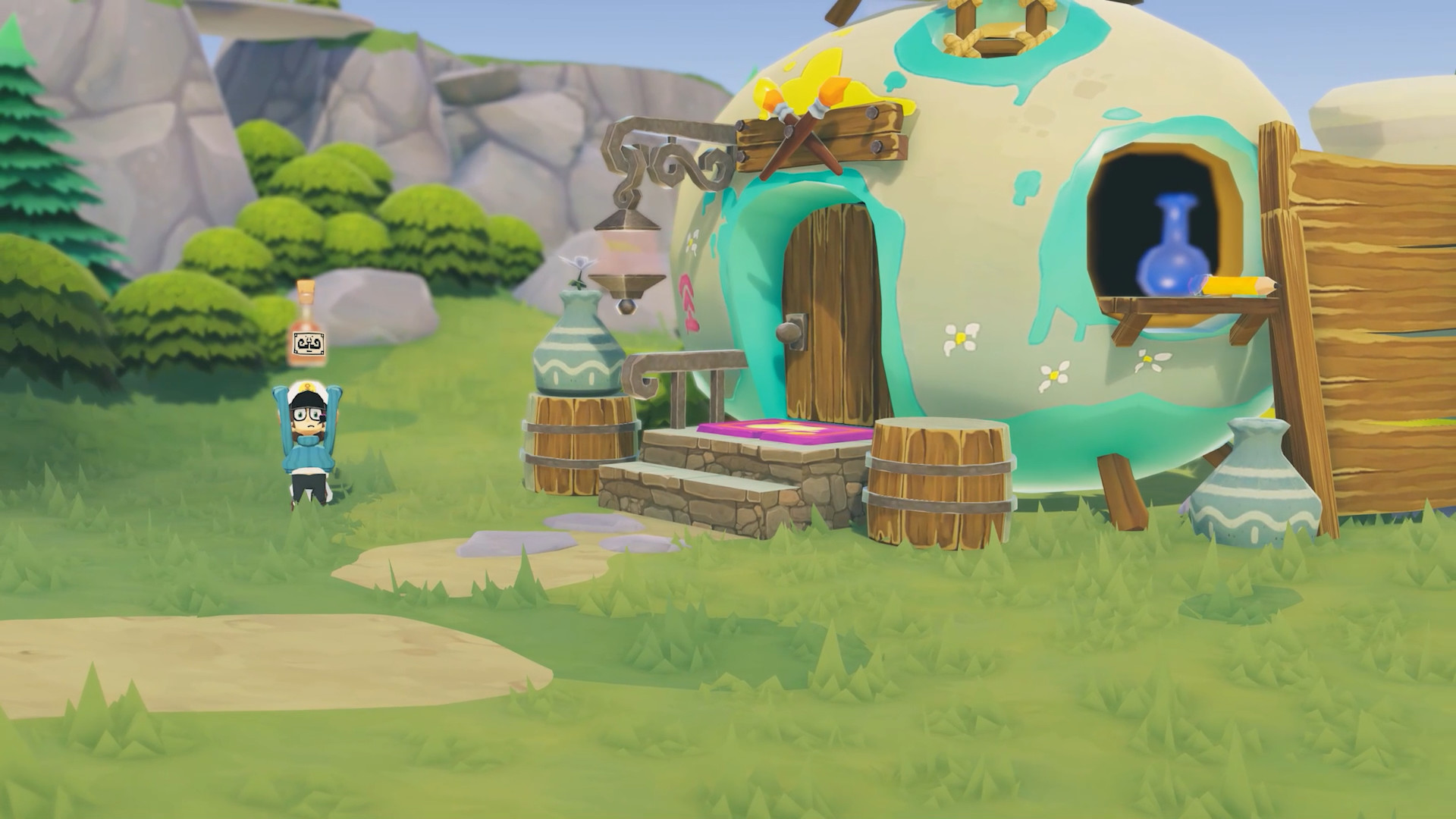
The presentation uses bright, stylised 3D environments and frogs distinguished by their shapes, clothes and jobs. Most information is conveyed visually: pictured requests keep the trading puzzles legible without conventional dialogue, and environmental icons on signs offer hints about paths and nearby facilities. The characters make brief gibberish sounds rather than speaking a readable language; their gestures and bubble images carry the practical meaning. Resting creates a quieter contrast, showing static story images instead of a voiced cinematic, while the island's daily lighting and weather changes make familiar paths look different. The game is a single-player adventure built around exploration, environmental puzzles and item exchanges, with no conventional combat loop described in its store material or mechanics coverage. The full game is sold for Windows through Steam and for Nintendo Switch, PlayStation 4 and PlayStation 5, and Xbox One and Xbox Series X|S; platform stores identify the same 2022 release and core island adventure. Steam also offers a Deluxe Edition bundle that adds the separate soundtrack, so the bundle listing does not describe a distinct in-game campaign or gameplay edition.
- Developer
- Half Past Yellow
- Genre
- Single-player adventure with exploration, barter puzzles and platforming elements