

About Thomas Was Alone
Thomas Was Alone follows a group of newly sentient shapes through a digital world of platforms, hazards and strange physics. Each rectangle has a distinct movement ability, and levels ask the group to combine those differences to reach exits. Danny Wallace’s narration gives their small acts of cooperation a personal story about identity, isolation and friendship.
Thomas Was Alone begins with Thomas, a red rectangle that has become aware inside an unfamiliar computer world. The shapes he encounters are presented as artificial intelligences with names, temperaments and their own impressions of what is happening. Their story unfolds through short stretches of platforming and Danny Wallace’s narration, which describes feelings and relationships the characters cannot express through speech. The premise keeps its scale intimate: this is a tale of lonely individuals discovering that other minds exist, then trying to understand what they mean to one another. Its lightly comic voice can make a character’s self-image part of the joke, but the emotional stakes gather as the group meets obstacles that no one shape can overcome alone. The plot concerns the emergence of these minds and what they do together; the profile leaves its later turns undisclosed. The digital setting makes abstract ideas such as confinement, movement and connection tangible through spaces the characters must physically cross.
The game is a two-dimensional puzzle-platformer built around rectangles whose proportions are also their abilities. Thomas can jump and move across ordinary ground, while other shapes may jump higher, float, swim, move quickly or interact with unusual parts of the environment. A level’s exit is usually visible, but reaching it means reading the geometry and deciding which character can handle each section. A gap too wide for one shape may be crossed by another, and a tall ledge may require a teammate to act as a step. The characters are controlled in sequence rather than as one blended group, so the player repeatedly shifts attention between their positions and capacities. This straightforward control scheme lets the puzzle come from coordination and spatial arrangement: use one shape to make a platform, move another across it, then bring the rest of the group through. Obstacles are deliberately legible, with the challenge often residing in working out how the cast’s contrasting physical traits can complement one another.
Cooperation is expressed through concrete, sometimes fragile constructions. A broad shape can become a platform or bridge; a buoyant character can carry companions through water; a strong jumper can reach a high route and help the others follow. Some characters initially appear less useful, but a narrow passage or specialized hazard can make that apparent weakness the exact quality the group needs. This gives puzzles a social rhythm as well as a mechanical one: the player learns each rectangle’s limits, then revises their view when a new environment turns those limits into an advantage. Because different shapes can be required in the same solution, progress depends on gathering the group at exits rather than racing one agile character to the end. The cast’s functional variety also supports the writing. Narration may frame an individual’s confidence, insecurity or ambition while the level quietly demonstrates what that character can actually do. The physical puzzle and the characterization therefore reinforce each other, without requiring elaborate dialogue trees or a separate inventory of abilities. The player switches between shapes to position them one at a time, leaving previously moved characters where they are while the next part of the route is prepared. A successful solution often involves sequencing: move a useful shape into place, return to a companion who cannot reach the next ledge alone, and use the new arrangement to bring the whole party together. This gives the levels a clear endpoint while making the process of arriving there a small exercise in mutual dependence.
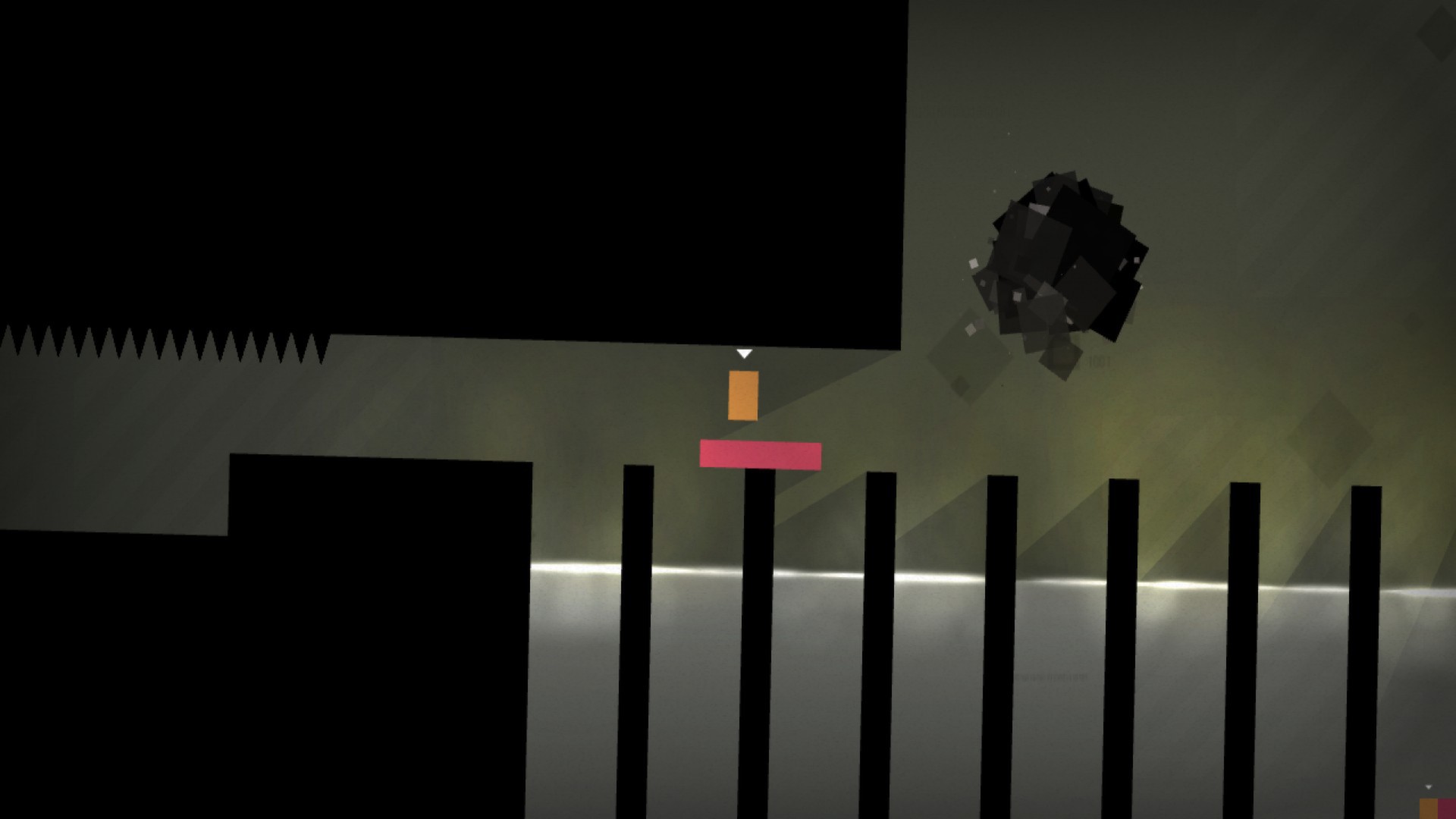
The early environments teach jumping, stacking and navigating ledges, then gradually add hazards and altered rules. Spikes punish careless contact, pools can divide characters by whether they float or sink, and portals or other level devices change where movement leads. Later spaces introduce forces such as altered gravity and air currents, making a familiar jump behave differently or turning open space into a route. The game tends to introduce a new property through a compact sequence, allowing players to see what it changes before combining it with older ideas. Levels remain short enough that a solution is usually a series of linked actions rather than a long campaign of resource management. The emphasis is on controlling jumps, judging distances and positioning shapes accurately; there is no combat system or equipment progression to master. Each new mechanic asks the player to adapt the same basic toolkit to a different arrangement of platforms, hazards and character abilities.
Narration runs alongside play rather than pausing the game for lengthy scenes. Wallace’s voice gives each shape a point of view, adding motives and reactions to movements that could otherwise seem purely functional. A jump can become an expression of anxious determination; a character’s confidence may be undercut by the awkward route ahead. The voiceover also provides connective tissue between the separate level spaces, so the group’s changing relationships feel continuous even when the visual environment shifts. Its lines sometimes orient the player toward a useful property or hint at a character’s role, but they remain part of the storytelling voice rather than a detached objective list. The shapes themselves stay visually spare, distinguished by colour, size and movement rather than facial animation. That restraint leaves space for the narration to supply personality, while the player’s task of moving them gives the relationships a physical counterpart. The story is consequently delivered through the combination of spoken framing and repeated acts of helping one character reach a place another can access.
The visual design uses flat colour, clean silhouettes and simple geometric environments, making both characters and hazards easy to read. Platforms and barriers are arranged with the clarity of a diagram, but changes in colour, scale and atmospheric effects give the digital world enough variation to signal that the journey is moving through distinct spaces. The minimalist presentation is central to how the game communicates: a rectangle’s proportions immediately suggest how it may move, while the same uncluttered view keeps jumps and landing points legible. David Housden’s score changes with the action and supports shifts between playful movement and more reflective passages. Music and narration lend warmth to the sparse imagery without turning it into a conventional realistic world. The result is a deliberately abstract setting where mechanics remain visible and the player can concentrate on the group’s movement, while audio adds emotional nuance. Presentation and puzzle design share a single purpose: to make a small set of shapes feel distinct and to give their changing relationships room to register.
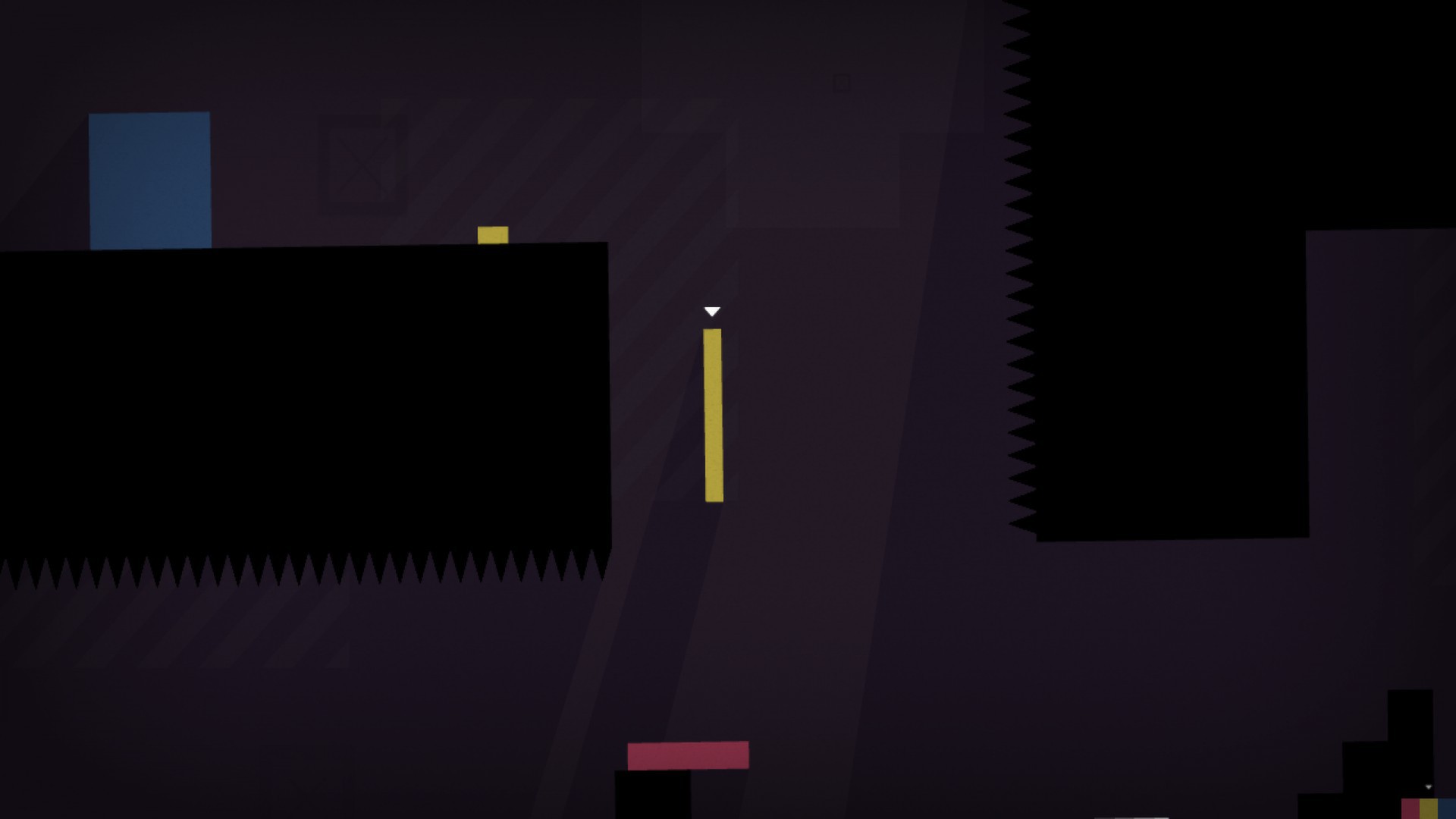
Progress comes through a sequence of authored levels, not through character statistics, loot or an open-ended world map. New shapes and environmental rules expand what the player can do, and later puzzles ask for combinations of abilities already introduced. Reaching an exit closes a local challenge and carries the story forward; the principal reward is learning more about the characters and how they fit together. The main adventure is a single-player experience. A separate add-on, Benjamin’s Flight, follows Benjamin and introduces additional characters and levels; store editions differ in whether this extra chapter is bundled or sold separately. Thomas Was Alone has appeared on PC and several console and mobile platforms, with platform listings and included extras varying by edition. Steam’s listing identifies Bithell Games as developer and publisher, while other storefront releases may credit a porting partner or different publisher. The profile describes the core platforming adventure and treats the additional level pack as a distinct extra rather than silently folding every edition’s contents into the base-game scope.
- Developer
- Bithell Games
- Genre
- Minimalist 2D puzzle-platformer