
About This War of Mine
In a city under siege, a small group of civilians tries to outlast a war without the protection or training of soldiers. During daylight, survivors repair and equip a damaged refuge; after dark, one scavenger searches nearby buildings for food, medicine and materials. Hunger, illness, danger and the consequences of hard choices shape each changing run.
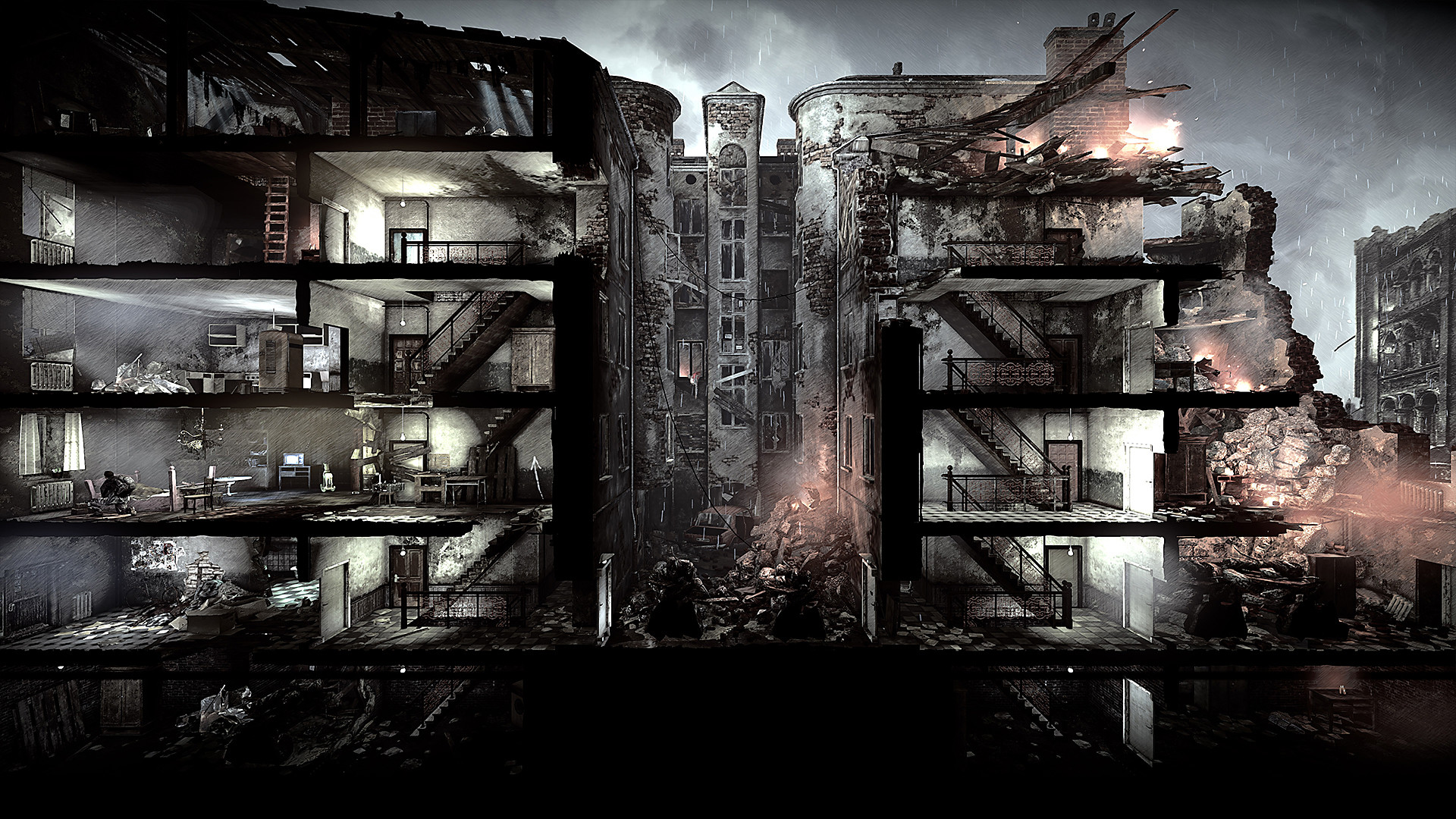
This War of Mine places the player among civilians trapped in a fictional city during a prolonged siege. The people in the shelter are not an army and have no campaign to win: they need to make it through another day while gunfire, snipers and armed groups make the streets dangerous. A new run can begin with a different combination of survivors, shelter and nearby places to search, so the group’s abilities and immediate shortages vary. The city’s ruins form a side-on, cutaway world of rooms and floors, with people moving through homes, shops and public buildings where the ordinary traces of life remain alongside the damage of conflict.
The daily rhythm divides the work into two connected phases. Daylight is spent inside the refuge, where each survivor can be assigned a task such as clearing rubble, repairing damage, crafting, resting, tending to needs or keeping watch. Night is the opportunity to leave: the player selects one person to visit a location and search its rooms, while the others stay home to guard, sleep or recover. At dawn, the scavenger returns with what they could carry, and the group must use those supplies to get through the next stretch. Every assignment costs time or leaves another need unattended, so deciding who is fit to go out and who must remain behind is part of managing the household.
Scavenging turns each location into a practical risk assessment. The site briefing describes what may be there and whether other people are present; once inside, the chosen survivor searches containers, moves debris and decides which items are worth carrying home. Some places are empty, while others contain traders, residents in need, or armed people who may threaten the scavenger. Inventory space is limited, and the night does not allow unlimited searching, so food, medicine, components and tools compete for the same capacity. Noise and hostile encounters can raise the danger, while a survivor’s own skills affect how efficiently they can search or carry supplies. The player can withdraw early with a smaller load when staying longer feels too risky.
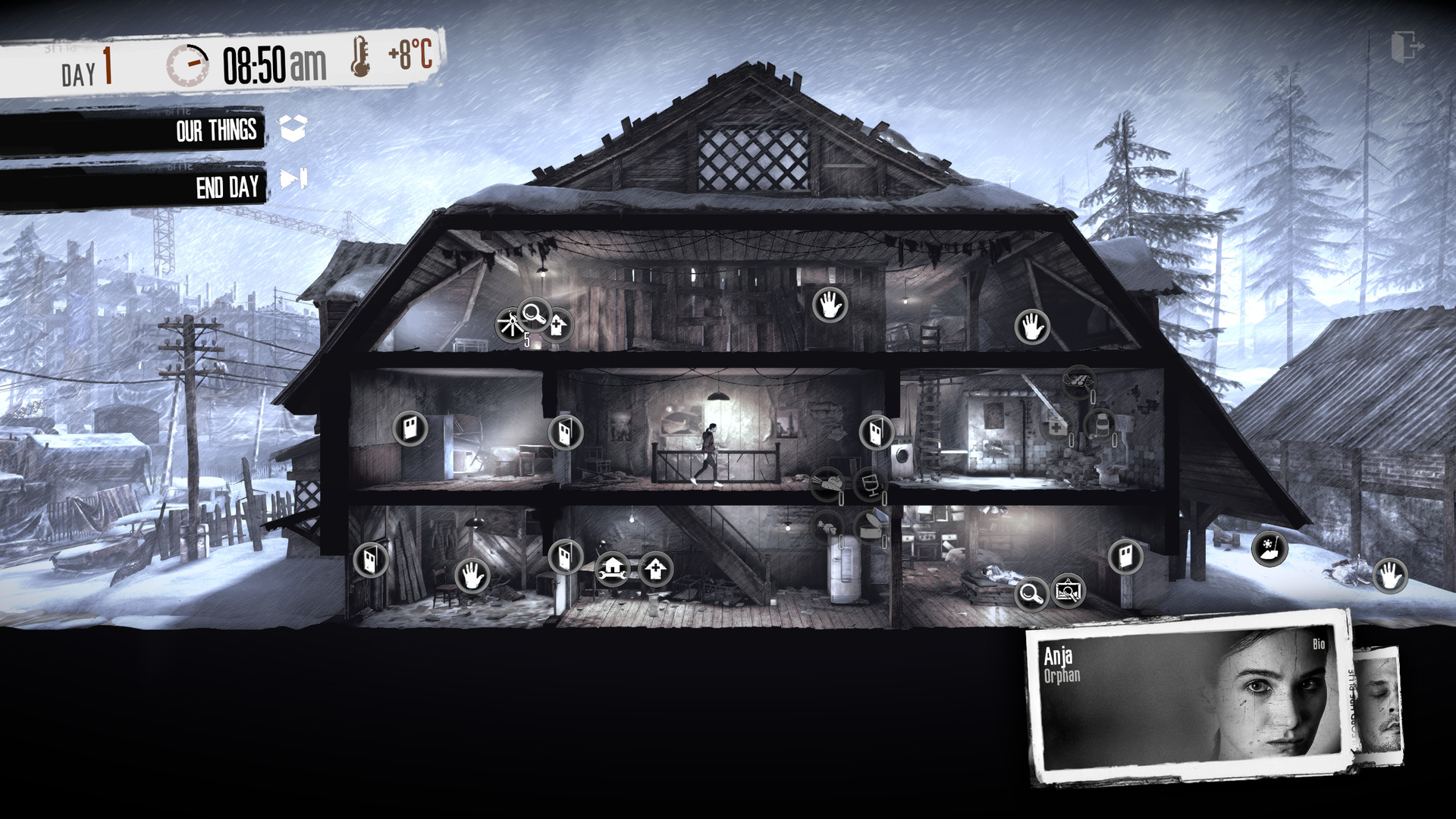
Back at the shelter, collected materials feed a crafting and maintenance loop. A workbench and other stations let the group turn parts, wood, fuel and other supplies into useful objects: beds and a stove support daily survival, while tools help remove obstacles or gather materials. A heater and fuel become especially important when cold weather arrives; a rainwater collector, traps and a garden can provide continuing sources of supplies once built and maintained. Repairs and barricades reduce the shelter’s vulnerability to raids, and crafted weapons can help a guard defend it. Trading offers another way to exchange surplus goods for scarce necessities, but every item spent on an upgrade is unavailable for food, treatment or protection that same day.
The survivors’ condition changes what the group can accomplish. Hunger, exhaustion, wounds and illness can worsen if they are left untreated; food, sleep, medicine and bandages each address different needs, and supplies are rarely enough to meet them all immediately. A wounded or sick person may be less useful on a dangerous expedition, while sending a rested survivor out can mean that no one is available to guard the refuge. Mental health matters as well: witnessing violence, losing companions or taking part in harmful acts can leave a survivor distressed or depressed. Comfort, conversation, books and small comforts can help morale, but they also take resources and time. A crisis can therefore spread from one person to the whole shelter, reducing the group’s ability to work and endure further setbacks.
Other people turn shortages into moral and practical decisions. At some locations, a survivor can help residents, trade fairly or leave others’ belongings alone; at others, taking needed supplies means stealing from people who are also trying to survive. If violence occurs, the scavenger can attempt to sneak past danger or fight, but civilians are vulnerable and combat can bring injuries as well as consequences for morale. The people at home may react to what happened, and a character who feels guilt can become less able to contribute. Requests for help and encounters with strangers can lead to later consequences, so a decision made for the group’s immediate survival may affect who trusts them or whether they receive support afterward.
There is no fixed cast with one predetermined route through the siege. Survivor groups, sites, encounters and the conditions of a run can vary, and the war’s end comes only after the group has endured the changing pressures of shelter life. The player’s progress is measured in a more ordinary set of tasks than battlefield victories: preparing meals, treating an injury, keeping the cold out, deciding who can risk a night outside and making sure the people left at home can manage until morning. The base game’s central survival mode is built around those recurring routines and their consequences. The child-focused The Little Ones expansion and the separately released This War of Mine: Stories episodes add distinct scenarios and perspectives beyond that core group-survival frame.
- Developer
- 11 bit studios
- Genre
- Civilian survival and resource-management game with shelter crafting, trading and night scavenging.