

About Thirsty Suitors
Jala Jayaratne comes home to Timber Hills before her sister’s wedding with old romances, family expectations and unfinished apologies waiting for her. Thirsty Suitors makes those encounters playable as turn-based emotional battles, South Asian cooking sessions and skateboard journeys across town. The three activities connect Jala’s past mistakes to the person she is trying to become.
Jala Jayaratne returns to Timber Hills with very little chance of slipping quietly back into her old life. Her sister’s wedding is approaching, her parents have expectations about the person she should be, and the former partners she left behind still live with their own versions of the relationships that ended. Even her grandmother Nani’s impending visit carries the weight of an examination. Jala is a bisexual daughter of immigrants from India and Sri Lanka, and her homecoming brings family and cultural pressures into the same space as romantic mistakes and broken friendships. The town is neither a neutral hub nor an endless open world. It is a place with people who remember what Jala did, people she might have misunderstood, and routines she once knew by heart. A trip downtown can turn into a confrontation; a visit to the skatepark can surface another old connection. Her sister’s wedding gives the story a forward pull, but reconciliation cannot simply be ticked off as a list of errands before the ceremony. Jala has to hear other accounts of the past and work out whether the version of herself she has relied on can survive being questioned by someone who was there.
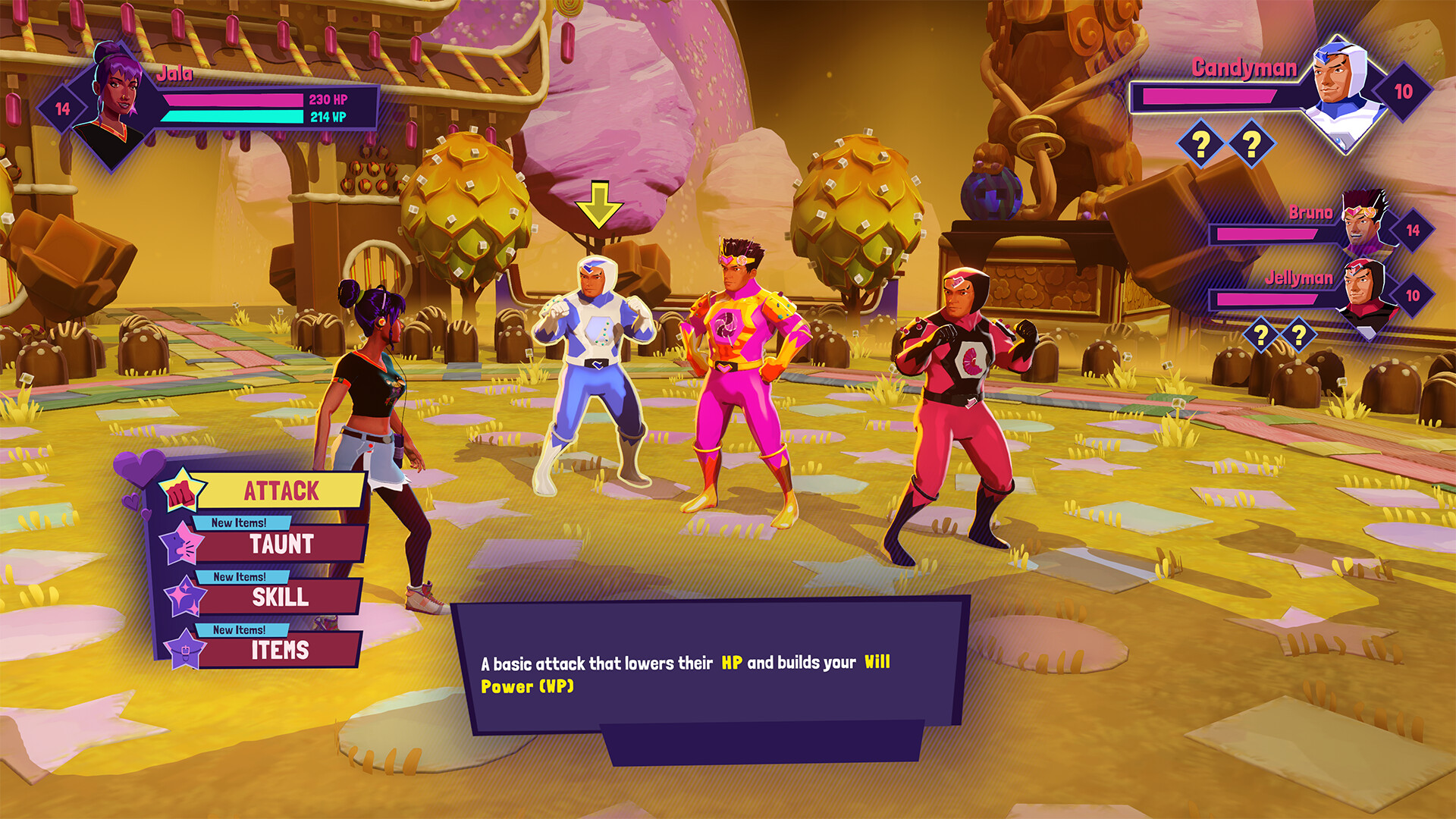
The game turns difficult conversations into turn-based battles without pretending those people are monsters to be defeated. Jala faces exes, random suitors and skate punks through a menu of attacks, skills, items and taunts. A taunt can expose an opponent’s emotional weakness; moods such as anger or infatuation then change which approach is useful. Timed inputs bring a rhythmic, active layer to an exchange, while the words chosen during it shape the encounter as much as an acrobatic move. An ex can appear in an extravagant Inner World, dressed and staged according to an idealized self-image. The heightened scene expresses how a remembered relationship can feel enormous even when its argument began with something ordinary. Earlier in the story, Sergio’s encounter introduces the idea that Jala and the person she dated may tell incompatible versions of the same romance. The challenge is therefore not merely to reduce a health bar. Jala must decide when to press, when to listen and what a possible reconciliation would actually require. The bright props and exaggerated motion make these clashes lively, but the characters’ grievances remain recognizable underneath the spectacle. Sound, costume and space can shift with an opponent’s imagined Inner World. Rather than a literal account of how two people once dated, the arena makes their competing memories visible while Jala chooses a response in the present.
Jala’s Thirstsona gives the battles a link to choices made elsewhere. Heartbreaker, Star and Bohemian are the three named orientations, and points gained through narrative decisions, fights, cooking and skating help define her build. The selected emphasis affects combat and can shape how later moments play out. It is an RPG way of expressing a character who is not blank at the start: Jala has a past, a family and established habits, yet the player can lean into different parts of her personality as she deals with them. This system connects the otherwise very different activities without pretending they all require the same reflex. A conversation might push Jala toward one self-image; a board challenge or cooking session can strengthen another. Combat upgrades and special abilities provide further options when an opponent’s mood changes. There is room to choose optional encounters and develop a preferred approach, but the main line still moves through chapters and Jala’s meetings with people she knows. The game does not require the player to invent a new biography for her or to treat every emotional exchange as a route to a completely separate campaign.
Skateboarding is how Jala crosses Timber Hills, and it has more to offer than a travel animation between dialogue scenes. She can grind, wall-run and link moves into combinations while moving through town. Bearfoot Park has its own mysteries and a conflict involving skate punks and their leader, Soundie the Bear. Challenges there offer a more demanding use of the movement system for someone who wants to spend time mastering it. At the same time, skating gives Jala a way to inhabit the place she has returned to. She can pass familiar streets on a board rather than selecting each destination from a static menu, and the rhythm of travel provides space between charged encounters. After the opening establishes her situation, chapters allow choices about whether to cook, go downtown, take on a challenge or follow the next story event. Those choices do not turn the game into an unlimited day planner; major events still move the narrative forward. They do let the player spend extra time with the side of Timber Hills that matters most to them, whether that is its social circle, its skaters or the family kitchen. The optional skate routes ask for movement precision that the main journey does not always demand, so the board remains a distinct system to learn rather than a shortcut to the next conversation.
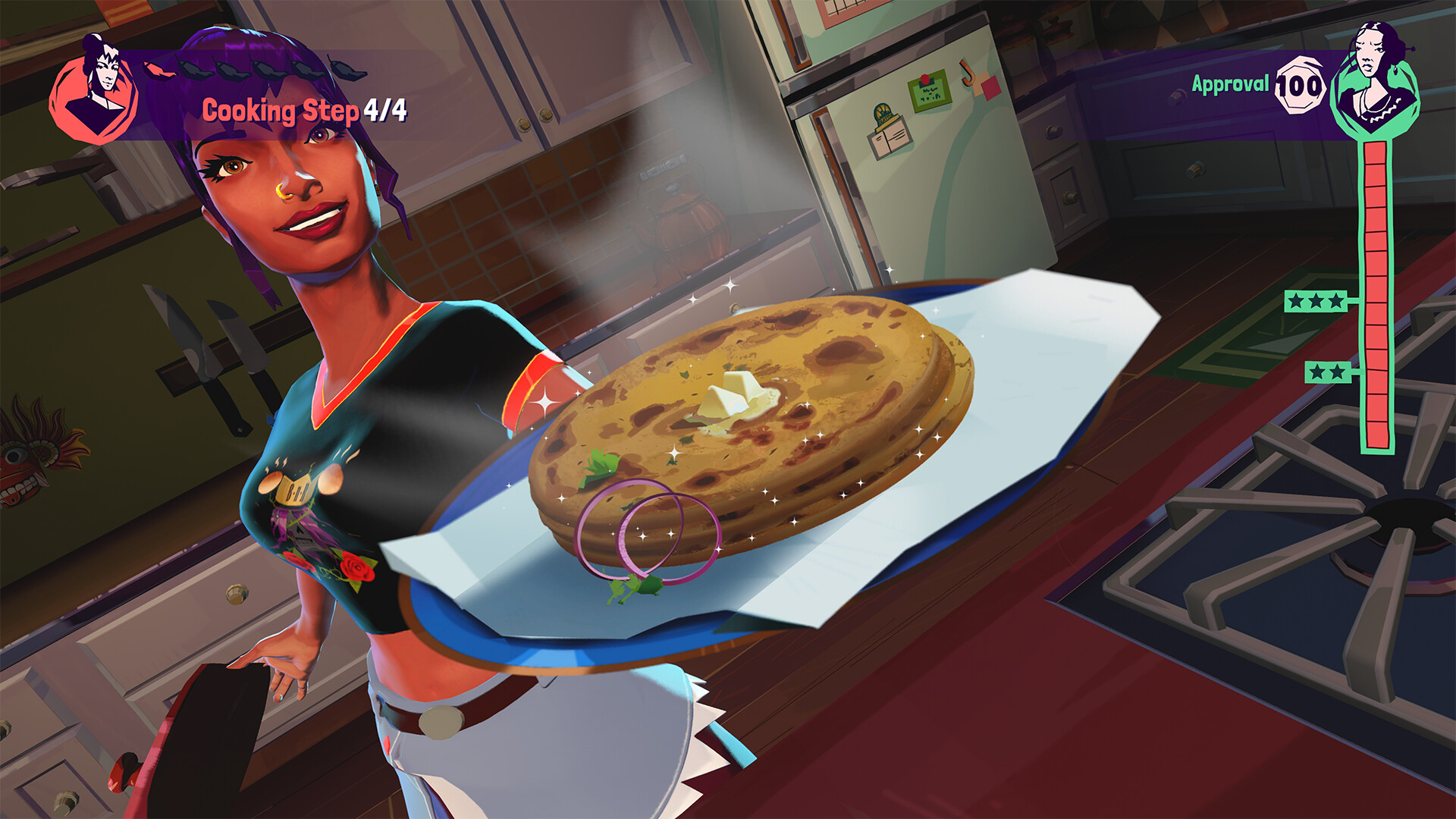
Cooking brings Jala back to her parents in a more intimate register. The kitchen is a place where a person can work beside someone without having to begin by announcing the difficult conversation they both know is coming. Preparing South Asian-inspired dishes asks for active steps and timed responses, but the exchange around the food is just as important as completing the recipe. Jala tries to win her mother’s approval, avoid emotional traps and learn what her parents might say when their attention is on a shared task. The theatrical presentation turns ordinary preparation into action, while a failed moment can carry the sting of a family judgment that has existed much longer than the meal. Cooking thus has a different role from either skating or battling an ex. It is a chance to explore inherited knowledge, expectations and affection through the practical work of feeding people. The game does not treat culture as decoration applied only to the scenery: dishes, family speech, intergenerational disagreement and Jala’s attempts to express herself all occupy the same domestic space. Optional cooking sessions make room for more of those exchanges outside the strictly required sequence of confrontations.
The visual style lets a small-town argument swell into something stranger without losing the person inside it. Timber Hills has spaces for skating and meeting people, but a battle can transform an ex’s self-presentation into a colourful private fantasy. The contrast suits a story in which Jala’s memories of a relationship are never guaranteed to match those of the other person. Even the cooking scenes borrow the heightened timing and theatrical motion of combat while keeping a recognisable parent and child at their centre. Thirsty Suitors was released in 2023 as a single-player game by Outerloop Games and Annapurna Interactive. The base game combines these chapters, town activities and confrontations; its separate soundtrack offering is music rather than another playable story. There is no multiplayer partner to make the awkward calls for Jala. One moment she may be choosing an emotional tactic in a battle, the next navigating Bearfoot Park or preparing food with a parent who remembers her childhood. Each activity changes what kind of question she can ask of herself and how another person might answer it.
- Developer
- Outerloop Games
- Genre
- Single-player narrative RPG with turn-based combat, skateboarding and cooking