
About Thief Gold
Garrett works the shadows of the City, stealing from the powerful while avoiding guards, alarms and dangers beyond ordinary human schemes. Thief Gold includes the original Thief: The Dark Project campaign alongside three additional missions, with stealth built around light, sound, movement, tools and changing objectives.
Garrett is a professional thief in the City, a dark urban setting of wealthy households, guarded streets and institutions with secrets of their own. He takes jobs for money, relying on contacts such as the fence Cutty to connect him with opportunities. What begins as a series of thefts becomes entangled with the competing forces and strange histories beneath the City's surface. The story unfolds between missions and through discoveries made inside them, so the work of entering a property and finding a way back out remains tied to a larger chain of events. Thief Gold is the expanded edition of Thief: The Dark Project: it contains that game's twelve-mission campaign and adds three further missions that deepen the plot and introduce five enemy types. Those added missions belong to the Gold edition's campaign content; they are not a separate sequel or a replacement for the original missions.
Each mission places Garrett in a sizeable environment with objectives to complete and routes to discover. The player moves through first-person spaces, checking doors, windows, passages and rooms while watching for guards and searching for valuables or useful objects. A mission map and written objectives help establish the assignment, but they do not turn the location into a single corridor: connecting rooms, locked doors, balconies and less obvious openings can make the same destination approachable from different directions. Picking up loot contributes to the job's monetary result, while keys and readable documents can reveal access or context. The spaces are built for cautious observation, and an open door or disturbed area can draw attention. Success means understanding the assignment, reaching what it asks for and finding a way out while controlling how much evidence of Garrett's presence remains behind.
Visibility and sound make movement a practical system rather than a cosmetic choice. The Visibility Gem reflects how exposed Garrett is: darkness and concealment reduce the chance that a nearby watcher will see him, while stepping into a lit area makes him easier to detect. Footsteps also change with the surface underfoot. Hard or metallic flooring can announce movement that carpet or other softer ground would muffle, so the player has reason to slow down, crouch, pause, or choose another route. Guards can respond to sounds, investigate what they hear and raise alarms when they identify a threat. Listening helps locate a patrol and judge its distance; watching its route helps identify a gap to cross or a place to wait. A successful approach therefore combines line of sight, lighting, floor material, movement speed and the guard's attention, rather than treating invisibility as a permanent state.
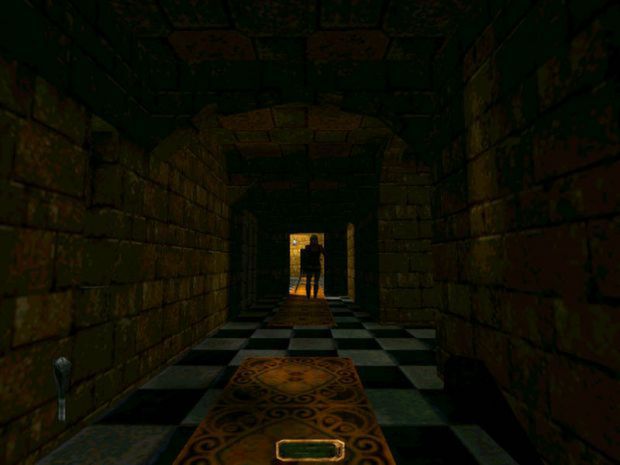
Garrett carries equipment for avoiding a direct fight as well as weapons for emergencies. The blackjack can knock out an unaware human guard, while the sword and broadhead arrows can cause lethal damage and expose him to retaliation. The bow's special ammunition changes the environment: water arrows extinguish torches and other open flames, creating darker areas; moss arrows spread a softer covering over noisy ground; and rope arrows attach to suitable wooden surfaces to create climbable routes. Noisemaker arrows can be fired to make a sound away from Garrett and draw nearby attention toward the impact. These tools are limited resources, so using one can solve an immediate problem while removing an option for later in the mission. A lit corridor might be crossed by waiting for a patrol to turn, extinguishing a flame, or finding a higher route; the equipment supports these different approaches without requiring combat as the default answer.
At the start of a job, the loadout screen lets the player review the briefing and objectives, see the gear provided, and spend available cash on additional supplies for that mission. Difficulty is selected for each mission and changes its requirements: harder settings can demand a larger amount of loot or add specific tasks, while Expert often forbids killing human characters. Higher difficulty can also make the environment more demanding by locking doors that were open on easier settings, removing useful supplies or adding more capable opposition. The money found during a mission is available for purchases before the next one, while bought or discovered items do not carry into later missions. This creates a repeated planning cycle: learn what the next job asks, decide which tools are worth buying, then use or conserve them while navigating the level. The selected difficulty also changes what counts as a completed assignment, not merely how forceful guards are.
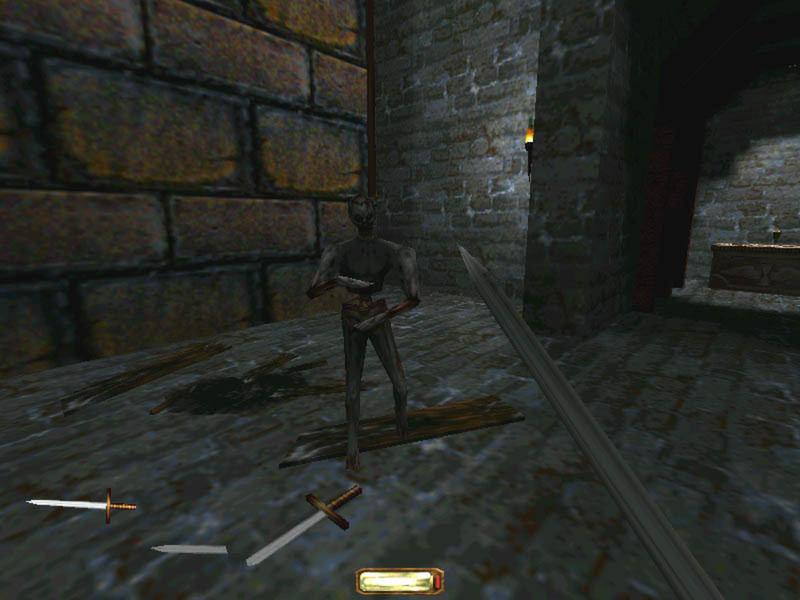
The City mixes human security with places where ordinary burglary gives way to the uncanny. The original campaign moves among locations such as a noble's manor, a prison, ancient burial spaces and the districts around them; the Gold additions extend that variety with three more missions. Guards are only one kind of obstacle. The broader enemy roster includes creatures and supernatural threats that may require a different response from silently bypassing a human patrol. Exploring side rooms can uncover more loot, keys, documents and alternate connections, but it can also expose Garrett to new hazards. The player can use shadows and architecture to stay out of reach, manipulate light and sound, or choose when a threat must be confronted. Across the campaign, the balance between urban theft, exploration and stranger dangers gives the missions distinct demands while keeping Garrett's tools and cautious movement at the center of play.
- Developer
- Looking Glass Studios
- Genre
- Stealth action / simulation