
About The Wreck
The Wreck follows Junon, a screenwriter called to the hospital after her estranged mother suffers a stroke. Difficult conversations pull her into memories she can revisit and examine from new angles. The 3D visual novel connects what Junon learns about her past to the choices she can make during a single pivotal day.
The Wreck begins on a day when Junon has little room to hide from her life. She is 36, her screenwriting career has stalled, and an urgent call brings her to the hospital where her estranged mother Marie is critically ill after a stroke. Marie has named Junon as the person trusted to speak for her, so a family relationship she has not resolved suddenly carries an immediate medical responsibility. The game places that pressure within a small cast rather than an expansive world of side quests. Hospital staff, Junon's sister Diane and people from her past confront her with decisions and conversations she would prefer to postpone. This is a 3D visual novel, so the main action is neither combat nor free exploration of a large map. It is watching an exchange closely, entering Junon's thoughts, and finding a way for her to answer when the next question comes. The hospital day provides a fixed present tense, but the story repeatedly leaves it to examine events that shaped Junon long before she reached Marie's bedside. That movement between present and past is the structure of the game, not a detachable flashback inserted between more conventional levels.
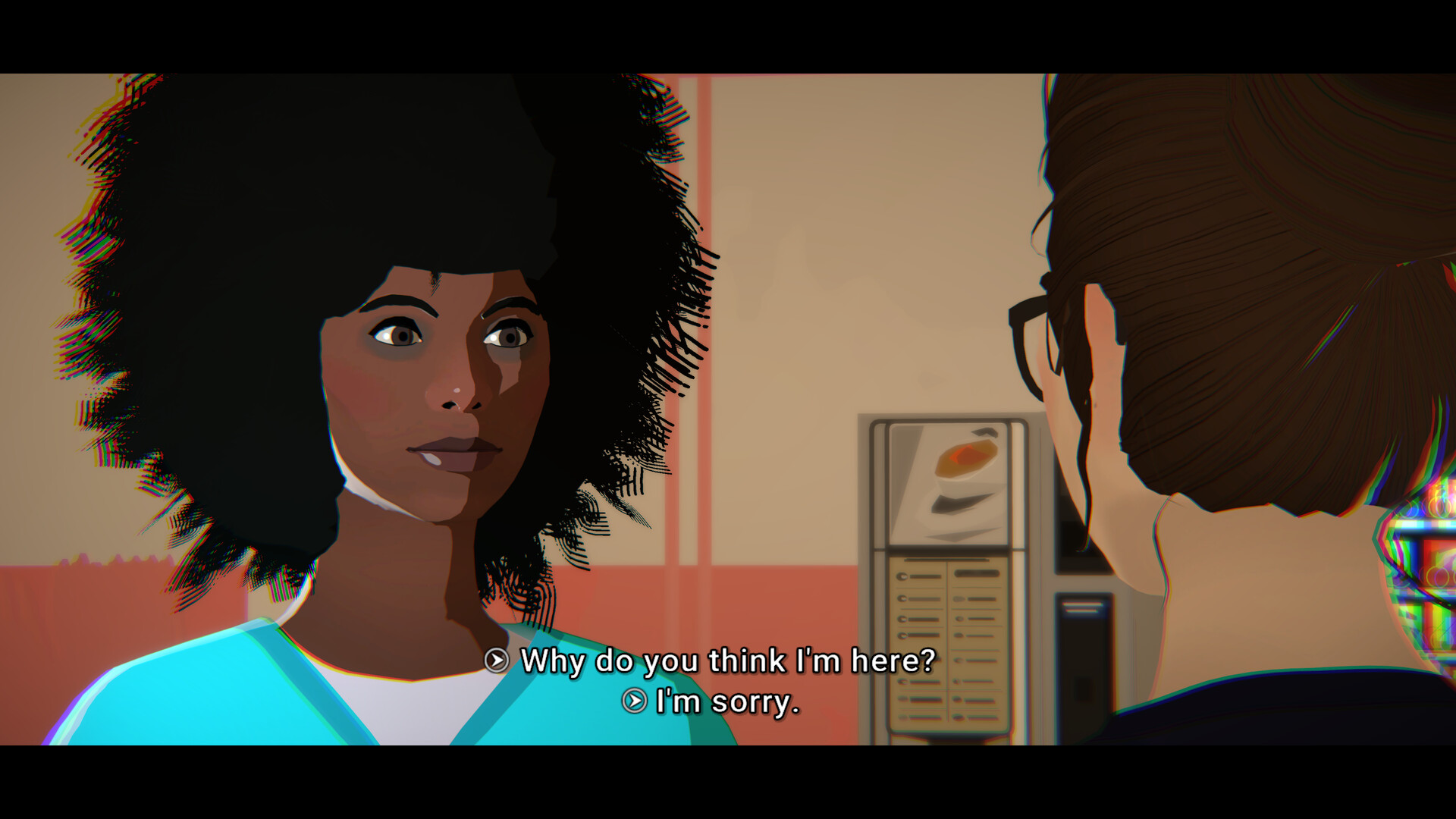
Junon's thoughts are visible rather than sealed away in narration. Words appear in the scene as her mind catches on a fear, an objection or a possible response. The player can activate those thoughts and steer how she considers a situation, opening different dialogue possibilities in the conversation that follows. A decision about how to meet Diane's tone, for example, matters less as a branch toward a completely new plot than as a way to understand what Junon is prepared to admit. The conversations can play out in different orders, with options revealed by the thinking that precedes them. This makes the usual visual-novel choice feel like the end of a process rather than a menu offered without context. What Junon says depends on what she has been willing to think through. A hospital exchange can therefore feel different even while it arrives at the same necessary event. Her sister might hear a more defensive reply, or Junon might find a way to press a subject she would have avoided before. The scene does not need to split into an unrelated storyline for that distinction to matter. It lets the player see how a new interpretation of Diane, Marie or Junon herself changes the texture of the words spoken aloud. Her stalled career as a writer also gives this arrangement a particular edge: someone who once made sense of events by shaping stories struggles to find language for her own. The player is not asked to invent her personality from nothing. Instead, each choice exposes a different part of an already complicated person while keeping the hospital's central problem in view.
When Junon cannot face a particularly difficult moment, the journey changes form. A car accident slows time and suspends objects around her; certain details become doors into earlier memories. Inside those memories the player can move the viewpoint back and forth through a scene, watching it repeat, inspecting what Junon noticed and what she may have overlooked. The rewind is not a device for erasing a mistake in an action sequence. It is a means of looking again at the same event until its emotional or practical meaning changes. A detail that seemed incidental on the first pass may explain a conversation at the hospital, or reveal why Junon reacts to someone with anger or distance. The suspended objects are not just a visual effect surrounding the accident; they give the player a way to enter the recollections attached to them. Within a memory, shifting the view and moving through the same moment again can turn a face, a remark or an object into the clue Junon needs. This is closer to examining a scene for meaning than hunting for an inventory item. The memory sections use shifting camera angles and floating words to separate them visually from the more grounded hospital scenes. Their cyclical form also gives the player a clear task: stay with a recollection, examine its pieces and find the understanding Junon lacks. The story does not claim that memory is a perfectly reliable recording. Returning to a scene can expose uncertainty as well as an answer, which suits a character trying to reconstruct relationships rather than solve a mechanical puzzle with one fixed clue.
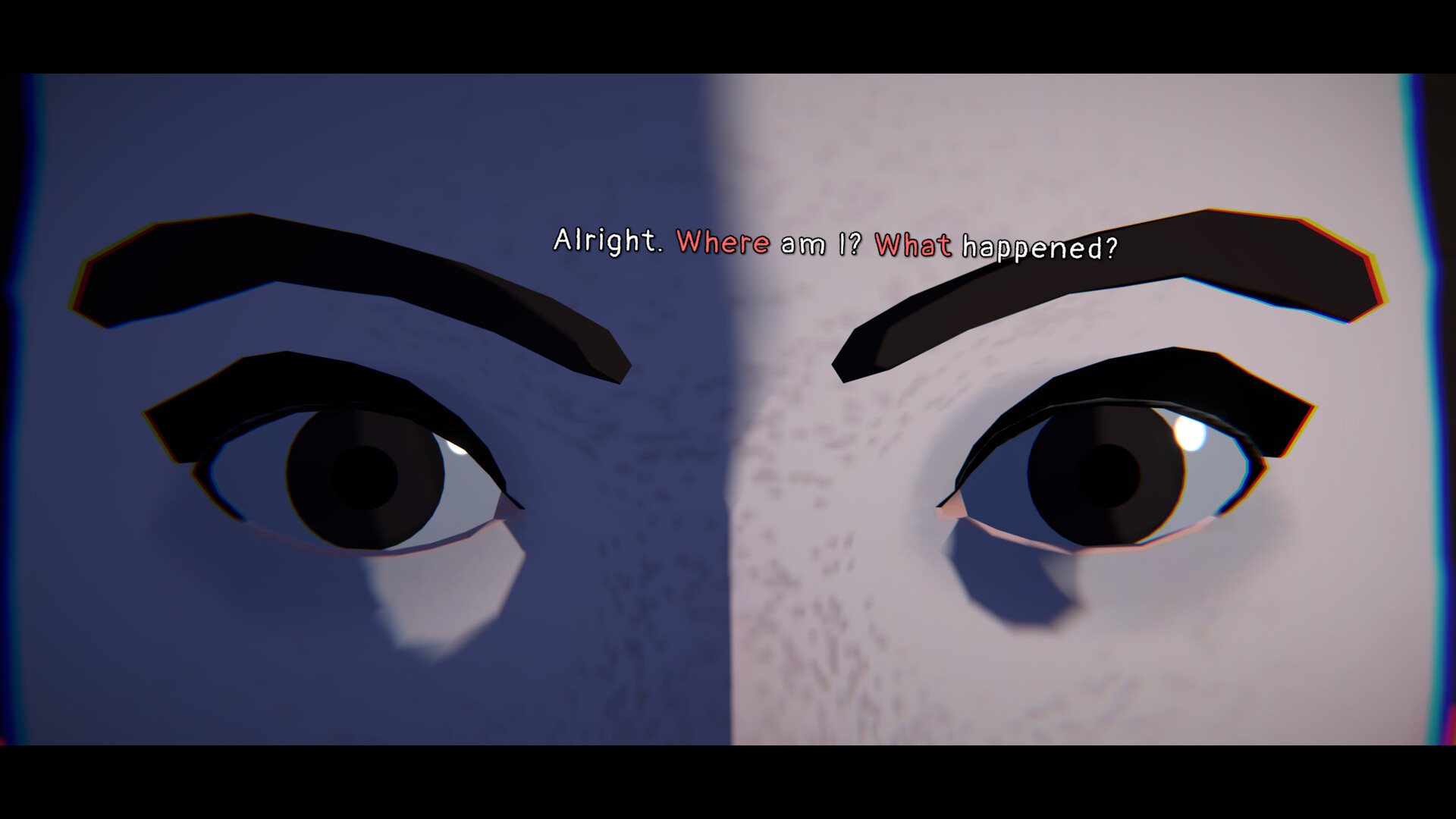
The new understanding is taken back into the present. Junon returns to the hospital with words or perspective she did not have before, and a conversation that previously stopped her can move forward. This makes progression less about accumulating objects and more about building enough self-knowledge to continue the day. The game has a non-linear arrangement of recollections, yet its present-day events keep the player oriented: each loop has a reason to begin and a person Junon needs to face when it ends. The hospital scenes look like a moving storyboard, with deliberate framing and restrained animation, while the memories are more fluid and dreamlike. That contrast helps signal whether Junon is dealing with someone in front of her or turning inward to an earlier event. Its themes are also unusually specific. Sisterhood and motherhood are not labels applied to a generic trauma story; they arise through Marie's condition, Diane's place in the family and Junon's own uncertain role. The conversations can be uncomfortable because everyone involved has a history that a single useful discovery cannot simply erase. The game asks the player to understand those tensions before treating any response as easy.
The Wreck uses choices, but it does not promise that each small selection will send the plot into an entirely different world. Choosing which thought Junon follows can reveal information, affect her available replies and change the way a scene reads. The larger trajectory remains concentrated on the same difficult day. That design puts weight on the relationship built with Junon rather than on collecting a catalogue of dramatically divergent routes. The later decisions matter because the player has spent time inside the smaller ones: listening to what Junon assumes, seeing how a memory unsettles that assumption, then finding a response she can live with. The game eventually asks a more consequential question about her future, but describing that outcome in advance would flatten the purpose of the earlier conversations. What matters for an overview is how the systems prepare for it. A thought choice is a way into character; a revisited memory supplies context; a changed hospital exchange shows whether that context helped. Together they make the story interactive without pretending that every painful event can be undone by selecting a clever line.
The Pixel Hunt built The Wreck around a cinematic presentation, full English voice acting and a relatively intimate setting. It moves between 3D hospital scenes and memories that can be replayed from altered perspectives, using floating text as part of Junon's mental space rather than as a separate notebook interface. Those choices fit a story about a screenwriter whose present is disrupted by the way she remembers her past. The game is available on PC, PlayStation, Xbox and Nintendo Switch; the same central premise carries across those versions. Its subject matter includes illness, grief, family strain and the aftermath of a serious accident, so the appeal is the close examination of people under pressure rather than a light puzzle diversion. A player should expect to spend time with conversations that do not resolve neatly on the first attempt and memories that require more than one glance. The Wreck's distinctive structure makes the title do double duty: an accident interrupts Junon's day, while the fractured shape of that day forces her to consider what can be rebuilt from the pieces.
- Developer
- The Pixel Hunt
- Genre
- 3D narrative visual novel