
About The Witcher 3: Wild Hunt
The Witcher 3: Wild Hunt is an open-world role-playing game following Geralt of Rivia, a professional monster slayer searching the war-torn Northern Kingdoms for his adopted daughter, Ciri. Explore Velen, Novigrad and Skellige, take contracts, investigate local troubles and prepare with swords, Signs and alchemy. Hearts of Stone and Blood and Wine are separate expansions.
Geralt of Rivia is a Witcher: a trained monster hunter whose work takes him through a Continent fractured by war and haunted by creatures from folklore. The main pursuit is personal as well as political: Geralt searches for his adopted daughter Ciri while the spectral riders of the Wild Hunt seek her unusual power. The road leads through places with distinct pressures and rhythms, from Velen’s muddy villages and contested countryside to Novigrad’s crowded streets and Skellige’s island communities. The journey is open-world, so following the central search sits alongside contracts, local disputes and other stories encountered in each region.
Much of the world’s detail arrives through people asking for help. A monster contract can begin with a conversation, then send Geralt to question witnesses, inspect a site and follow physical traces before he knows what he is hunting. Witcher Senses highlight clues such as tracks, blood or damaged objects, helping turn an apparently simple request into an investigation. The Bestiary records information about creatures Geralt learns of, giving context for choosing preparations. These jobs often involve more than locating and striking a target: examining the circumstances can reveal what happened and identify what Geralt is hunting before the encounter.
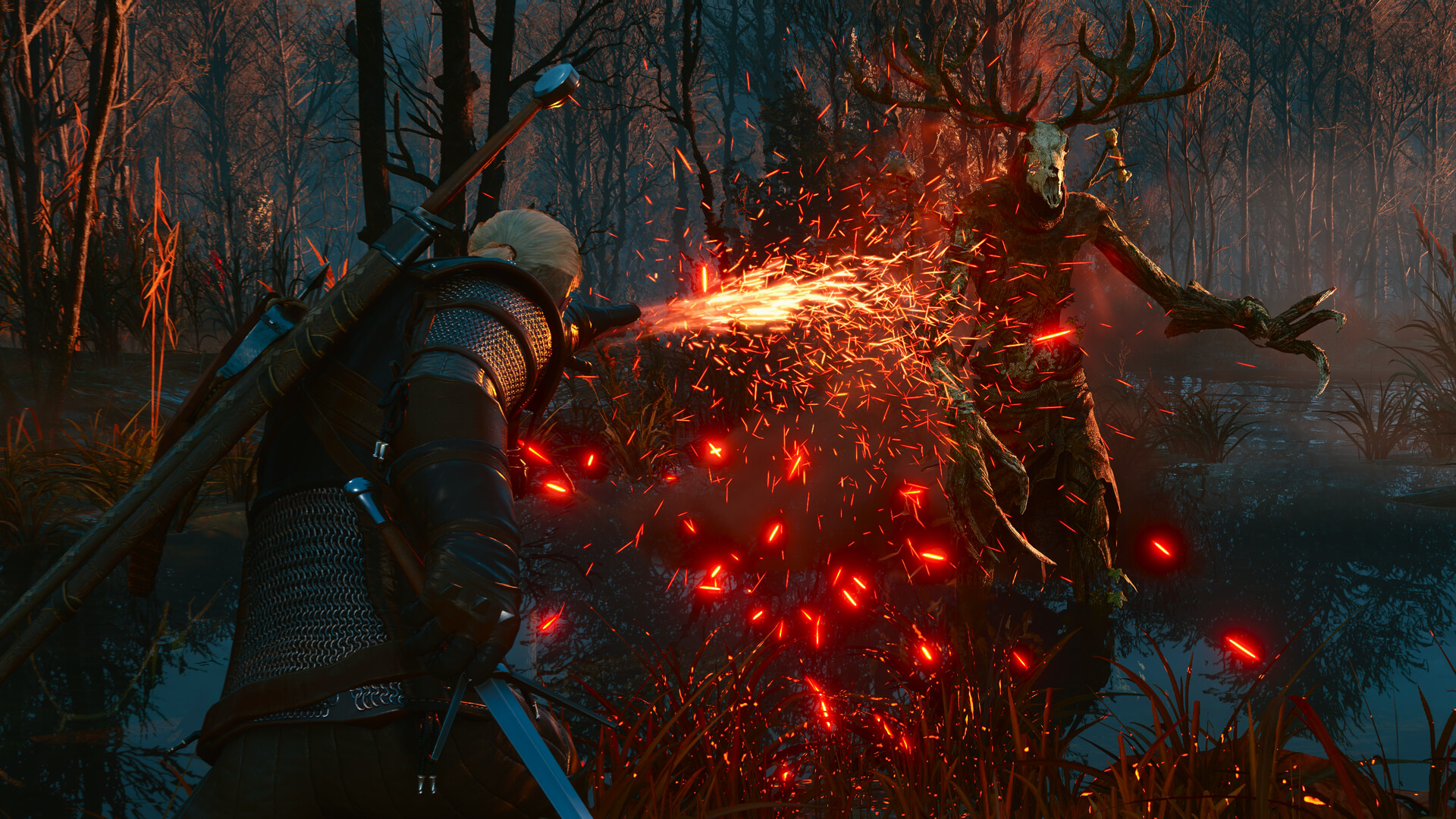
Combat combines two swords, evasive movement and five magical Signs. Geralt draws his steel sword against human foes and uses his silver sword for monsters; quick attacks and heavier blows suit different openings, while dodging, rolling and blocking help him avoid incoming strikes. Signs add tactical options: Igni sends fire, Aard releases a forceful blast, Quen provides a protective shield, Axii can influence a target, and Yrden creates a magical field useful against certain enemies. The opponent matters, so a fight can involve reading attack patterns, creating space, applying a Sign at the right moment and choosing when to press an opening rather than trading blows continuously.
Preparation extends beyond the sword. Geralt can brew potions and decoctions, make bombs, and coat a blade with an oil suited to an enemy category. Alchemy requires formulas and ingredients gathered from herbs, minerals and monsters; after an item is first made, meditation can replenish many potion and bomb supplies when Geralt carries strong alcohol. This makes collecting components and learning recipes part of the combat loop, rather than a separate crafting chore. Oils are applied to weapons, while bombs can disrupt or damage groups and potions provide temporary effects. A contract’s clues and Bestiary entry can therefore inform what Geralt brings into the encounter.
Character growth gives Geralt more ways to specialize as the journey continues. Experience and ability points let the player develop combat, Sign and alchemy skills, then equip selected abilities in the character build. Equipment is another progression track: diagrams and materials allow blacksmiths and armorers to make weapons or armor, while Witcher School gear is found through quests that uncover its diagrams and later upgrades. Better equipment is not simply picked up as a finished reward; Geralt may need to find the plans, collect the ingredients and locate a craftsperson capable of making a particular piece. Loot, merchants and exploration all feed into those choices.
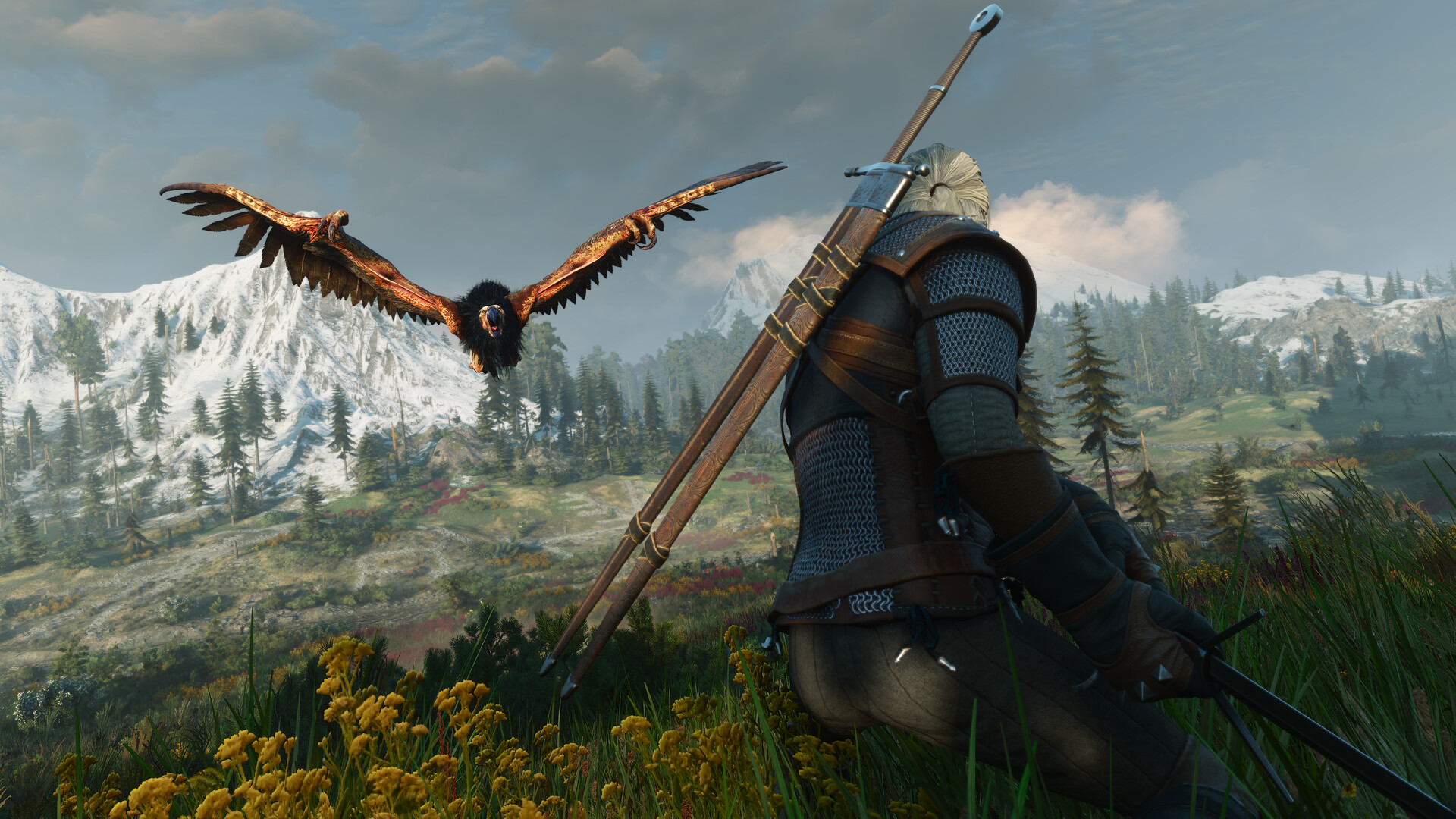
Travel between settlements and wilderness is part of the adventure. Geralt can ride Roach across roads and fields, use discovered fast-travel points to cross long distances, and explore on foot when a clue or point of interest draws him off the route. Towns provide services such as merchants, herbalists, blacksmiths and armorers; outside them, caves, ruins and monster sites offer ingredients, treasure or new encounters. The regional map gives the main search a changing backdrop: Velen’s occupied farms and swamps, Novigrad’s crowded urban districts and Skellige’s rugged coasts each introduce different people and landscapes to investigate.
Alongside contracts and the main search, Geralt encounters optional diversions with their own rules. Gwent is a turn-based card game played by building a deck around base-game factions such as Northern Realms, Nilfgaard, Monsters and Scoia’tael. Players draw a hand, then take turns placing cards whose strength contributes to their side’s total; special cards can alter how a round plays out. A player may pass, leaving the opponent to continue, and the match goes to whoever first wins two of up to three rounds. Managing a limited hand across those rounds makes Gwent a contest of timing as well as card strength. Between stages of the search for Ciri, Geralt can also spend time with figures such as Yennefer, Triss and Dandelion.
Conversation is also a practical part of Geralt’s toolkit. Dialogue choices can steer how he responds to allies, strangers and people caught in local conflicts, and some quests change according to what he learns or decides. The Axii Sign has a social use as well as a combat one: investing in Delusion can open opportunities to influence certain conversations, sometimes avoiding a fight or changing how a discussion proceeds. Characters do not all yield to the same approach, and a choice can leave consequences that surface later. This makes listening, asking questions and deciding how directly Geralt intervenes another layer of play alongside investigation and combat.
- Developer
- CD PROJEKT RED
- Genre
- Open-world role-playing game