
About The Witcher 2: Assassins of Kings Enhanced Edition
The Witcher 2: Assassins of Kings Enhanced Edition is a single-player role-playing game starring Geralt of Rivia amid a succession of royal murders and conflict across the Northern Kingdoms. Track people and monsters, prepare for dangerous fights, and make choices that redirect Geralt’s path through the political crisis.
Geralt of Rivia is a witcher: a professional monster hunter whose training combines swordsmanship, alchemy and a small set of magical Signs. The Witcher 2 opens with him under suspicion in the aftermath of an attack on King Foltest, and its framing moves between Geralt’s interrogation and the events he recounts. Beyond the immediate question of the king’s killers, the Northern Kingdoms are approaching war, with rulers, soldiers, mages and rebel forces pursuing their own interests. Geralt travels through settlements, forests, camps and strongholds where the political conflict meets local dangers. Conversations and investigations reveal pieces of what is happening, while encounters with people and creatures lead into action. This is the second role-playing game in CD Projekt Red’s Witcher saga, with its own plot and systems; it is not the open-world structure or combat model of The Witcher 3.
The narrative is built around decisions that can change which characters and groups Geralt works with and what part of the conflict he sees. Vernon Roche, commander of Temeria’s Blue Stripes special forces, and the elven rebel Iorveth represent different routes through the story’s political landscape. Supporting one path affects the people who travel alongside Geralt and the locations and events that follow, giving the campaign substantial structural variation. The choices arise amid more than a simple division between sides: nobles, soldiers, nonhuman communities and sorcerers have overlapping aims, and the information Geralt receives depends on whom he trusts and what he investigates. The game carries consequences forward through linked quests, so decisions can shape later opportunities and relationships. Its branching design is focused on a crafted story and its alternate paths rather than a single continuous open-world map.
Geralt’s work in each area mixes the main political investigation with local requests and monster-related problems. He questions witnesses, follows clues, searches for people or objects, and can take on contracts that require learning about a creature before confronting it. Towns such as Flotsam and Vergen, military encampments and contested locations each bring distinct communities and immediate concerns into the larger crisis. The bestiary and conversations help establish what a monster is and how it behaves, while preparation ties investigation to combat: the relevant sword, Signs, potions, oils or bombs can make a difference once a target is found. Some quests allow several ways to resolve a problem, and optional conversations or tasks may reveal more context or supply useful equipment. Exploration is therefore organized around reachable areas and story progression, with discoveries feeding into quests rather than an all-directions open-world itinerary.
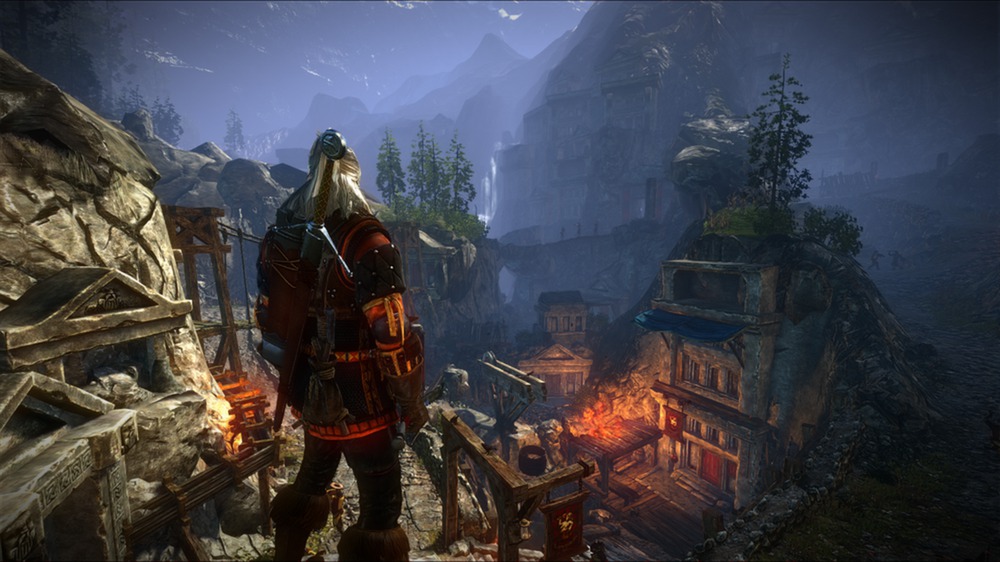
Combat combines direct sword attacks with defensive timing and witcher abilities. Geralt carries a steel sword for human opponents and a silver sword for monsters, and fights can place him against several enemies at once. Dodging and blocking help him create space; parries can reduce damage and open a chance to counter, while Vigor limits how often he can block or use certain abilities. The five familiar Signs give the player different tactical effects: Quen forms a protective shield, Yrden can trap an enemy, Axii can influence a target, Aard pushes foes back, and Igni deals fire damage. These options work alongside thrown weapons, traps and alchemical preparation, rather than replacing the need to choose an approach for the opponent at hand. Geralt can also use stealth in some sequences, where avoiding attention changes how an encounter unfolds.
Character growth is organized through talents and connected ability paths. The Training path is the initial foundation; spending talents there opens the specialized Swordsmanship, Alchemy and Magic paths. Swordsmanship improves direct fighting and defensive techniques, Alchemy develops potions, oils, bombs and mutagens, and Magic strengthens the Signs and can unlock additional effects. Abilities have prerequisites and can be improved through more than one level, so investments shape which later talents become available. Talent points are committed choices, making the build a matter of selecting a focus or balancing several disciplines over time. Preparation is part of this progression: Geralt meditates to allocate talents and prepare alchemical mixtures, and potions raise toxicity while active. The system connects decisions made between fights with how Geralt manages a dangerous encounter, instead of granting every upgrade at once.
The Enhanced Edition expands the original release with additional story material in new locations, characters, mysteries and monsters, alongside a revised introduction and added cinematics. It also includes the downloadable content and improvements introduced in version 2.0. Arena Mode is a separate challenge mode built around successive waves of enemies, while the tutorial introduces controls and systems through a guided start. Dark Mode is a higher difficulty setting with distinctive dark-themed equipment and a greater demand for preparation, defensive play and well-timed attacks. These additions sit alongside the main branching campaign, so the edition includes both its narrative routes and ways to engage with combat outside those quests. The story itself still follows Geralt through the Northern Kingdoms’ crisis; this is the Enhanced Edition of the second game, not a bundled version of The Witcher 3 or the later expansions to that sequel.
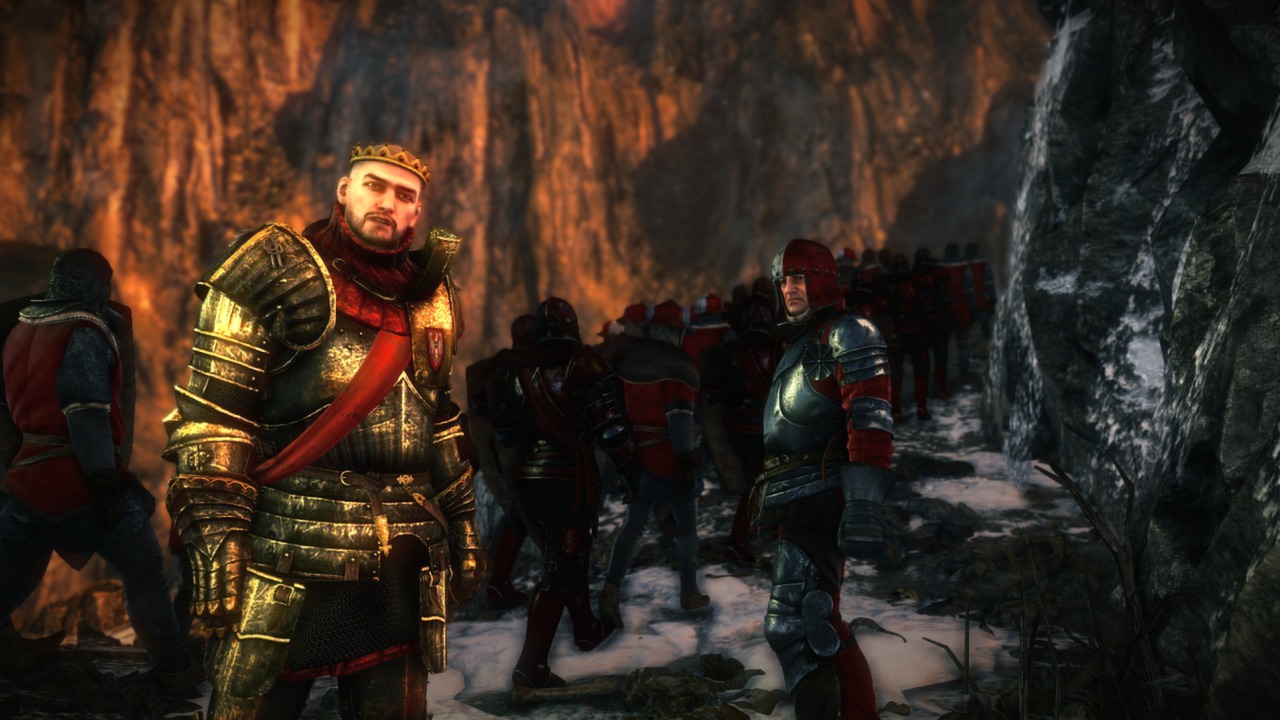
Gear crafting gives Geralt a reason to look closely at what he carries and what local tradespeople can make. Found or bought diagrams specify the required components, but he needs a qualified craftsman to turn materials such as leather, wood or twine into a sword or piece of armour. Some equipment has slots for runes and enhancements, and fitting one is an irreversible choice. The journal records quests, people, locations, monsters, crafting and alchemy information, helping the player connect discoveries with future preparation. Inns also host dice poker, fistfighting and arm wrestling. Dice games involve wagers and hands built from five dice, while fistfights use timed button prompts; victories can yield money, experience in tournaments or occasional quest items. These smaller activities give Geralt something to do in a settlement beyond buying supplies and following the next political lead.
- Developer
- CD PROJEKT RED
- Genre
- Single-player role-playing game