
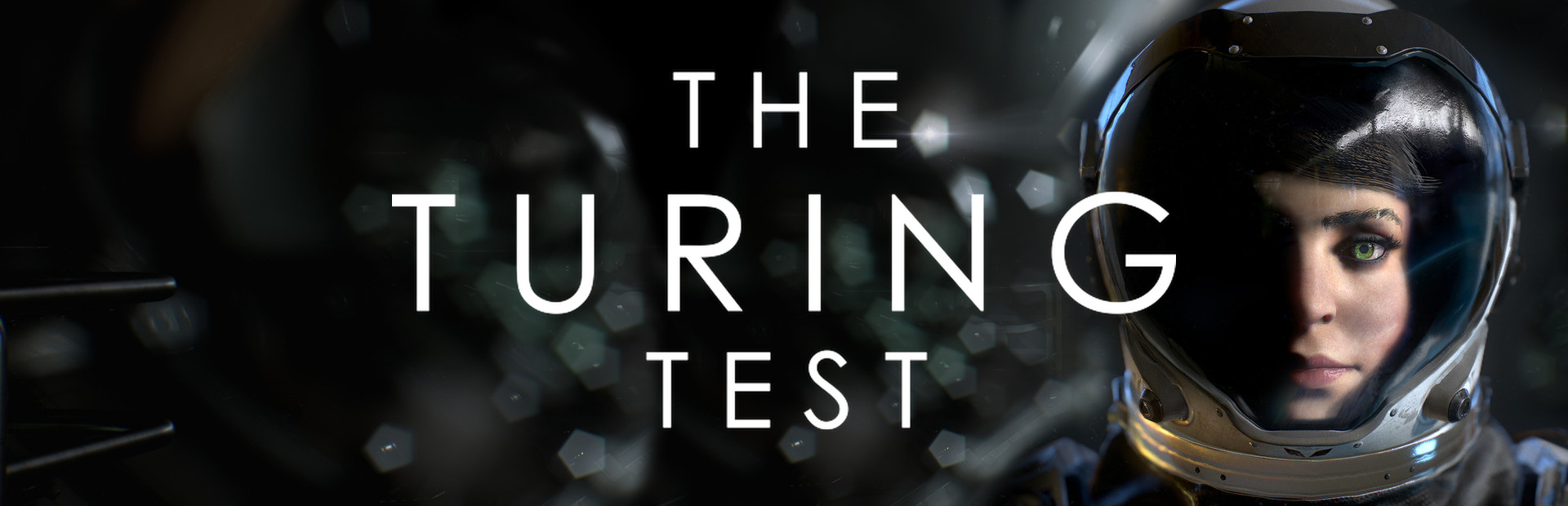
About The Turing Test
The Turing Test is a first-person science-fiction puzzle adventure set at a research base on Europa. As engineer Ava Turing, investigate the disappearance of the ground crew with help from the station AI, T.O.M. Its Energy Manipulation Tool redirects power through machines and chambers, while the story examines how humans and artificial intelligence make decisions.
The Turing Test opens with engineer Ava Turing being awakened from stasis after contact with the International Space Agency’s ground crew on Europa has been lost. The station AI, T.O.M., directs her toward the surface and the research base, where a sequence of locked chambers stands between her and the missing team. These rooms are presented as tests set up by the crew, and T.O.M. frames them as problems that require human judgment. Their purpose becomes part of the mystery: why would the crew leave obstacles in Ava’s way, and what do those tests reveal about the people who built them? The game uses this investigation to connect its puzzle structure with questions about intelligence, agency and morality. Ava’s route through the station becomes both a practical search and an inquiry into the relationship between its human occupants and the system guiding her. The profile keeps later explanations and revelations undisclosed.
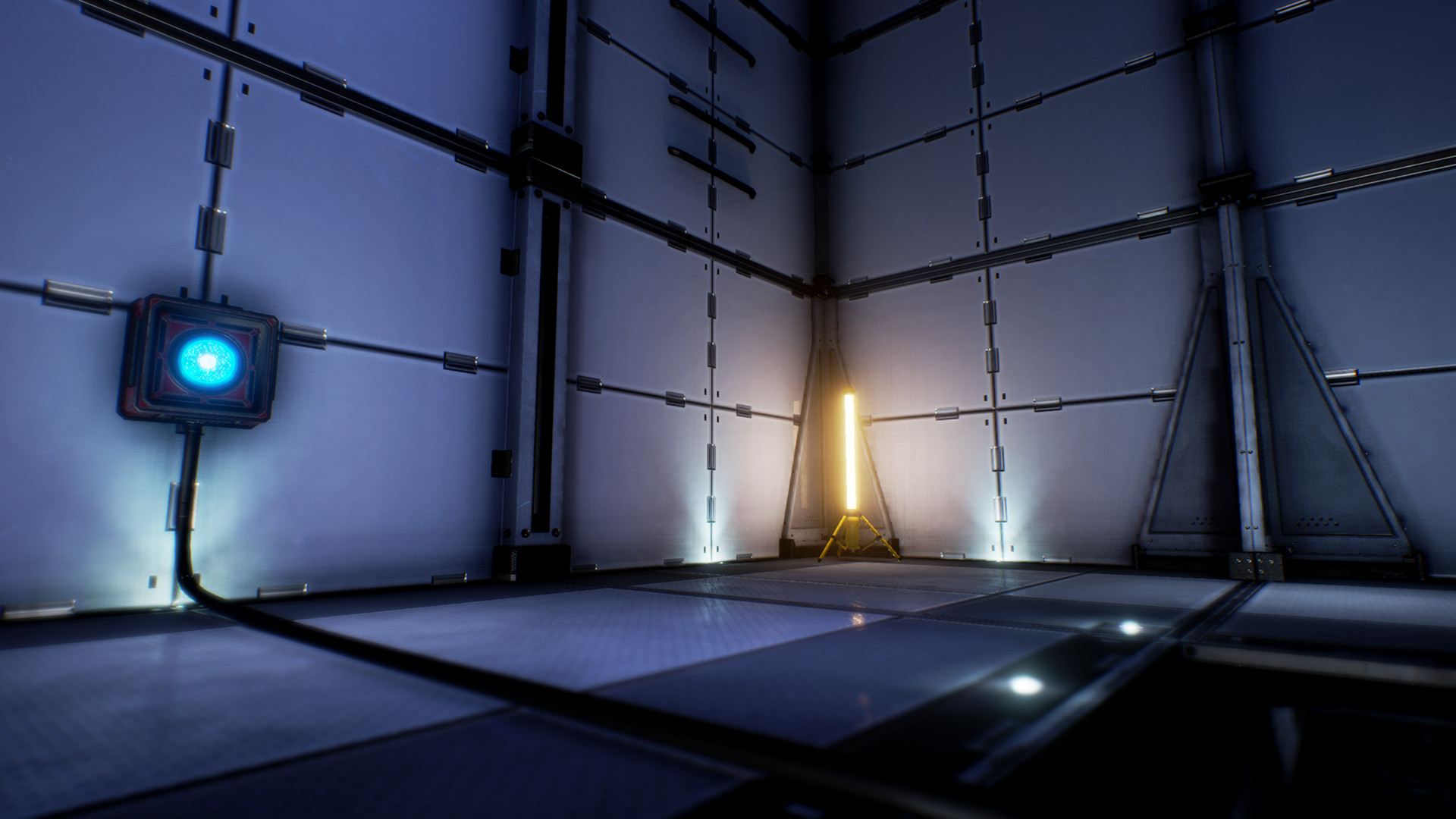
Play takes place from a first-person view as Ava explores rooms designed around switches, doors, lifts, platforms, barriers and powered devices. Her main instrument is the Energy Manipulation Tool, or EMT, which transfers energy between compatible objects. A beam can take power from one source and place it in another, changing which mechanisms operate and which paths are accessible. Some puzzles instead use portable power cells or objects that can be carried between sockets. The useful question is not simply which switch opens a door, but how to arrange the available power so that the player can move through the room and still leave a route open. The EMT provides the consistent rule set; the spatial arrangement determines what that rule demands. Looking through windows, tracing cables and checking the relation between a device and its power source help turn each chamber into a readable system. The tool is a puzzle instrument rather than a weapon, and there is no combat loop competing with the investigation.
As the chambers grow more involved, the EMT’s transfer rule combines with environmental machinery and movement. Power may be routed through a barrier, shifted to a lift, or used to operate a platform or large magnet. A portable cell can create an awkward trade-off: removing it may enable movement to a higher area, but also deprive another machine of power. This encourages players to reason about the whole room rather than repeatedly activating every visible switch. The order of actions matters too. A route may depend on positioning an object before transferring energy, or on changing the power source after crossing a threshold. The puzzle sequence accumulates ideas, building on established interactions instead of replacing the rules with a completely new system in every room. The tools remain limited enough to understand, while their combinations create the challenge. Success usually comes from noticing what the current setup permits, then rearranging it to make a new path possible. Where differently coloured energy types are involved, their distinct behaviour adds another property to track alongside location and power source. The important decision remains spatial: identify which machine needs which form of energy, work out how to deliver it, and preserve access to the next part of the room. This means the puzzles can add complexity without discarding the basic act of transferring power.
The station also introduces shifts in perspective as part of its more demanding puzzles. Switching between multiple perspectives lets Ava approach a space from another viewpoint and use what that reveals to change the solution. That mechanic extends the game’s central idea of control: solving a room can require changing the flow of power and the position from which its layout is understood. The familiar tool and machinery therefore support puzzles that ask the player to reason about relationships across connected spaces. The game does not depend on a large inventory of gadgets; it develops a small collection of interactions through new layouts and combinations. Early chambers help establish the connection between power cells and doors, while later rooms ask the player to manage more than one dependency at once. The difficulty curve is intended to teach through experimentation, with the room itself supplying feedback when a transfer opens a mechanism or leaves another without energy.
The mystery extends beyond the machinery. Ava follows signs of the crew’s presence and uncovers information about the mission and its people as she moves through the station. Story details are delivered through the environment and through material placed in the research base, including optional chambers and audio logs described by contemporary coverage. The spaces function as more than neutral test rooms: their layout and the traces left behind give the player reasons to ask who arranged them and what the crew was doing. T.O.M. remains Ava’s conversational guide, but the difference between guidance and control becomes increasingly important as she learns more. The title invokes Alan Turing’s work on distinguishing human and machine, yet the story’s questions are not limited to whether an AI can imitate a person. It also asks how decisions are made, what responsibility means and whether a human’s choices can be separated from the systems that shape them. The narrative keeps these themes close to the player’s actions, since the player repeatedly decides how to proceed through a test.
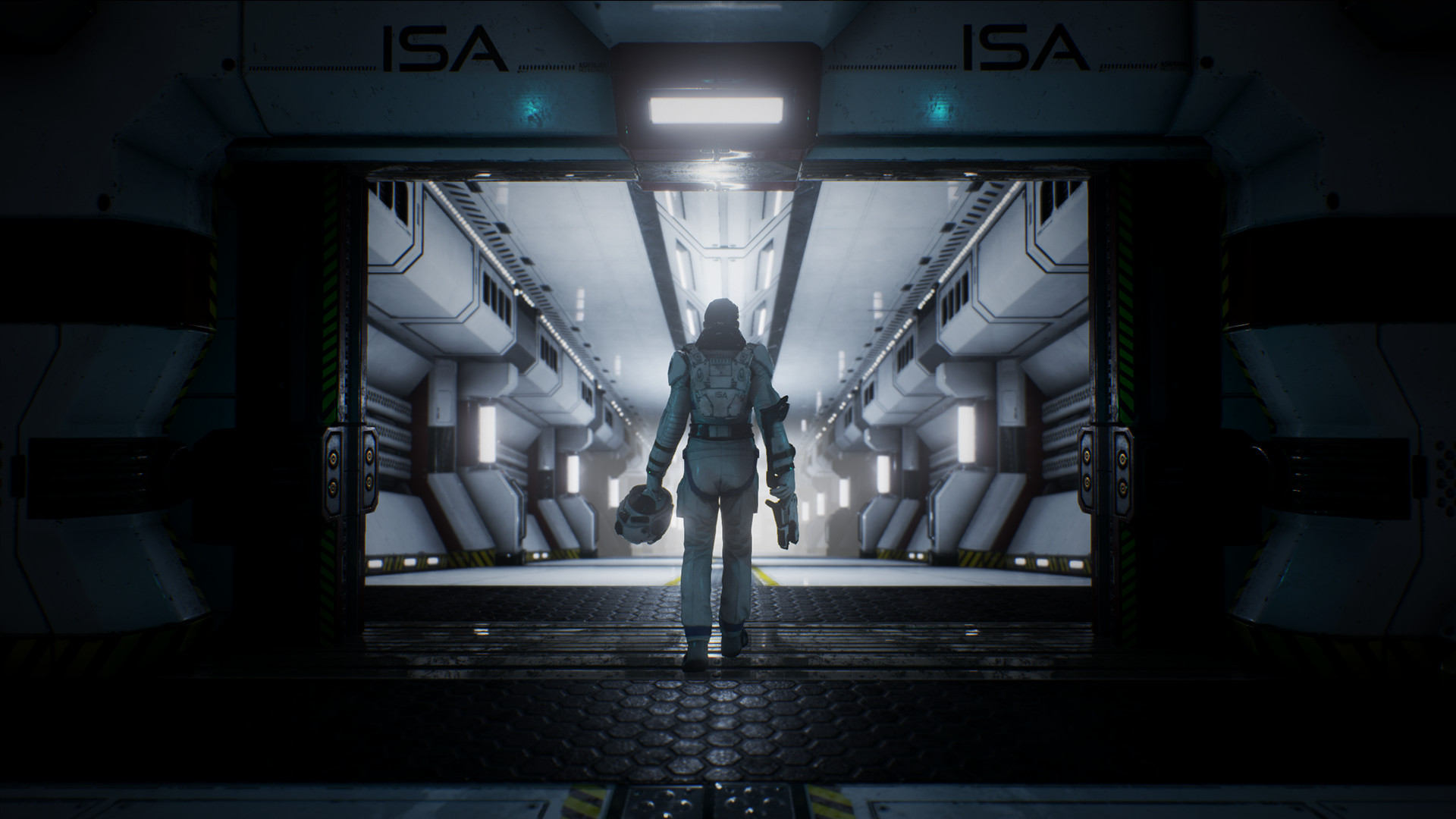
The presentation uses a clean, science-fiction research station built into Europa’s icy environment. First-person movement makes the chambers feel like spaces Ava physically enters and inspects, while windows, doorways and visible cables communicate how rooms connect and where power might travel. The contrast between engineered interiors and the remote moon outside gives the investigation a contained setting without making every puzzle room look identical. Environmental details reveal traces of the crew and mission, so exploration can provide background beyond the next locked door. The audio presentation combines T.O.M.’s voice with environmental sound and music to maintain the sense of an active facility, even when Ava is alone in a chamber. The visual language also supports puzzle clarity: switches, cells and powered objects need to be recognizable because the player must track them while planning a sequence. The atmosphere comes from the gap between a controlled research environment and the uncertainty of what happened there, rather than from combat encounters or constant threats.
Progress is structured as a linear journey through successive puzzle chambers and broader story sections. Solving a room opens the way forward, while optional chambers provide additional challenges and story material for players who choose to investigate them. There is no combat skill tree or equipment build; development comes from learning the EMT’s rules, recognizing recurring devices and applying earlier knowledge in unfamiliar arrangements. The game is a single-player first-person puzzle adventure. A chamber that first seems to concern only a door may require Ava to move energy through several machines, plan where she will stand after a lift rises, and make sure a portable cell remains available on the other side. This layered logic gives the station a cumulative shape: each solved test makes the next one more intelligible, even as the arrangements grow more demanding. The optional spaces allow a player to spend longer with those rules and with the traces of the missing crew, but the main route keeps returning to the same central tension between Ava's own decisions and T.O.M.'s explanations of what a human can do.
- Developer
- Bulkhead Interactive
- Genre
- First-person science-fiction puzzle adventure