
About The Thaumaturge
In The Thaumaturge, Wiktor Szulski reads the emotional traces people leave behind and commands folklore-inspired salutors in 1905 Warsaw. Investigate the city's inhabitants and hidden motives, then bring Wiktor's powers and pride into turn-based battles and difficult decisions that test his moral responsibility.
The Thaumaturge is set in 1905 Warsaw, a city described by its publisher as culturally diverse and on the brink of change. Wiktor Szulski returns to this setting as a thaumaturge: someone able to perceive emotions, desires and secrets that other people cannot see. His talent gives him access to information, but it is bound to a flaw of pride. That connection is central to the premise. Wiktor can use his abilities to influence people and shape encounters, yet the same confidence can create trouble or close off better choices. The result is a character-driven role-playing story in which investigation and self-control sit beside supernatural power. Warsaw is not a neutral stage for a fantasy plot; it is a lived-in historical city whose different inhabitants bring competing interests and perspectives. The game keeps Wiktor at the centre of those encounters, asking how much he can learn from others while remaining aware of the cost of treating people as problems to solve.
Investigations begin with Wiktor noticing signs that a less perceptive visitor might miss. Objects can preserve personal secrets, and his heightened perception lets him interpret those clues from another angle. Wiktor can use this ability in detective work, social situations and encounters with the criminal underground. That range makes observation more than a special effect: it can change how Wiktor understands an event before he decides what to do about it. A person may be guarded, an object may point to something absent from the conversation, or a motive may be concealed beneath an ordinary explanation. The game presents the city as a place to explore and investigate, with different characters connected to Wiktor's past and to Warsaw's present. What he discovers can offer leverage, but knowing a secret does not automatically make using it wise. The investigative side overlaps with role-playing: perception supplies possibilities, while judgement determines whether Wiktor presses, persuades or leaves a matter alone.
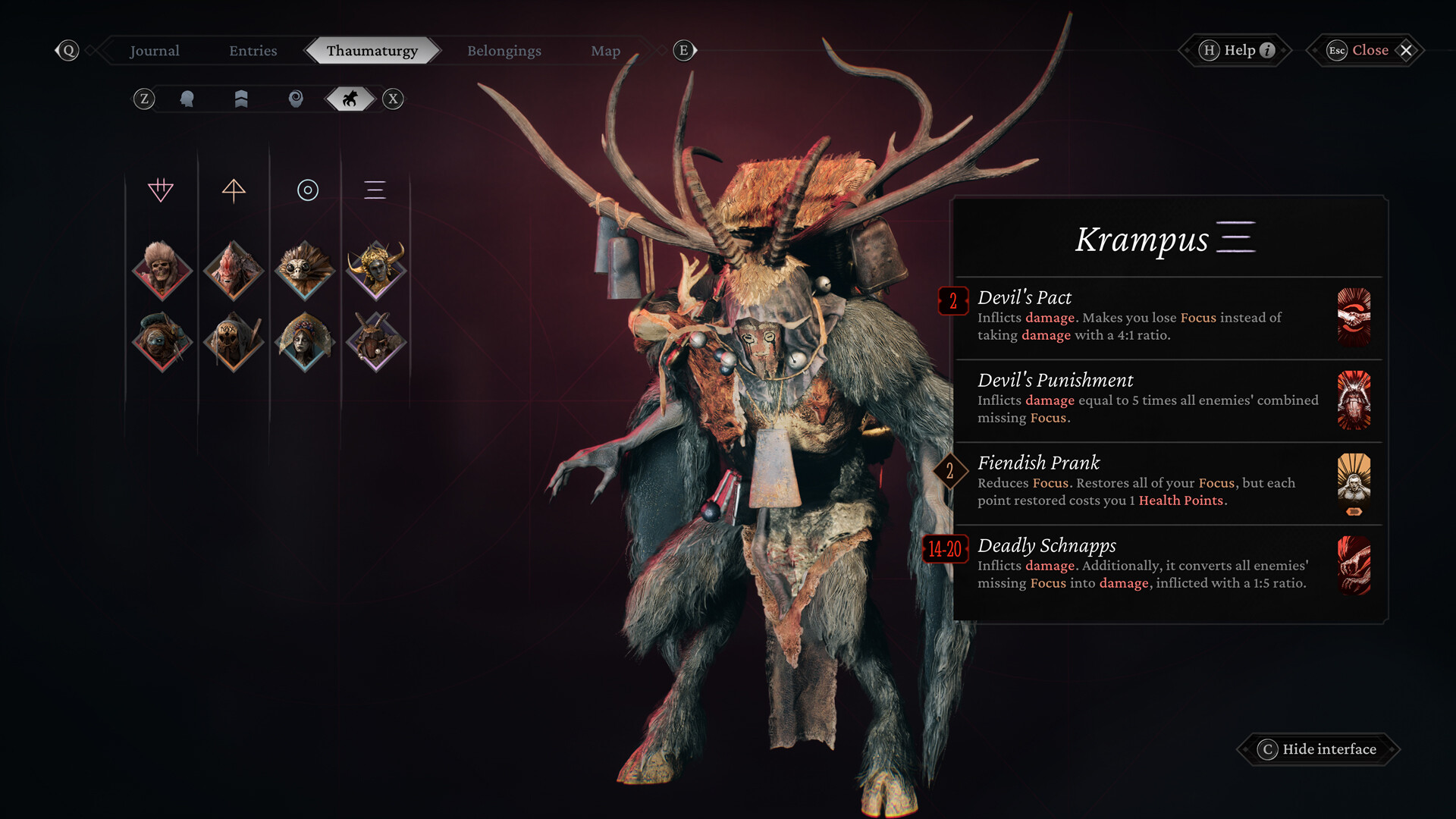
The supernatural element takes the form of salutors, folklore-inspired beings that thaumaturges can perceive and command. They are not simply creatures collected for display. Their powers help Wiktor while exploring and in combat, where they can manipulate opponents or create a tactical advantage. Their folklore roots place the otherworldly beside the specific social world of 1905 Warsaw, rather than transporting Wiktor to a separate fantasy kingdom. A salutor's presence changes what Wiktor can do, but it also reinforces the unusual nature of his position: he deals with forces that ordinary people do not perceive in the same way. These beings are described as demons, with an esoteric and folklore-inspired character. Keeping those terms together matters because the setting uses local mythic texture rather than a generic monster roster. Each supernatural encounter becomes part of the same wider question as Wiktor's investigations: what is hidden, what can be brought under control, and what happens when power is used for personal ends.
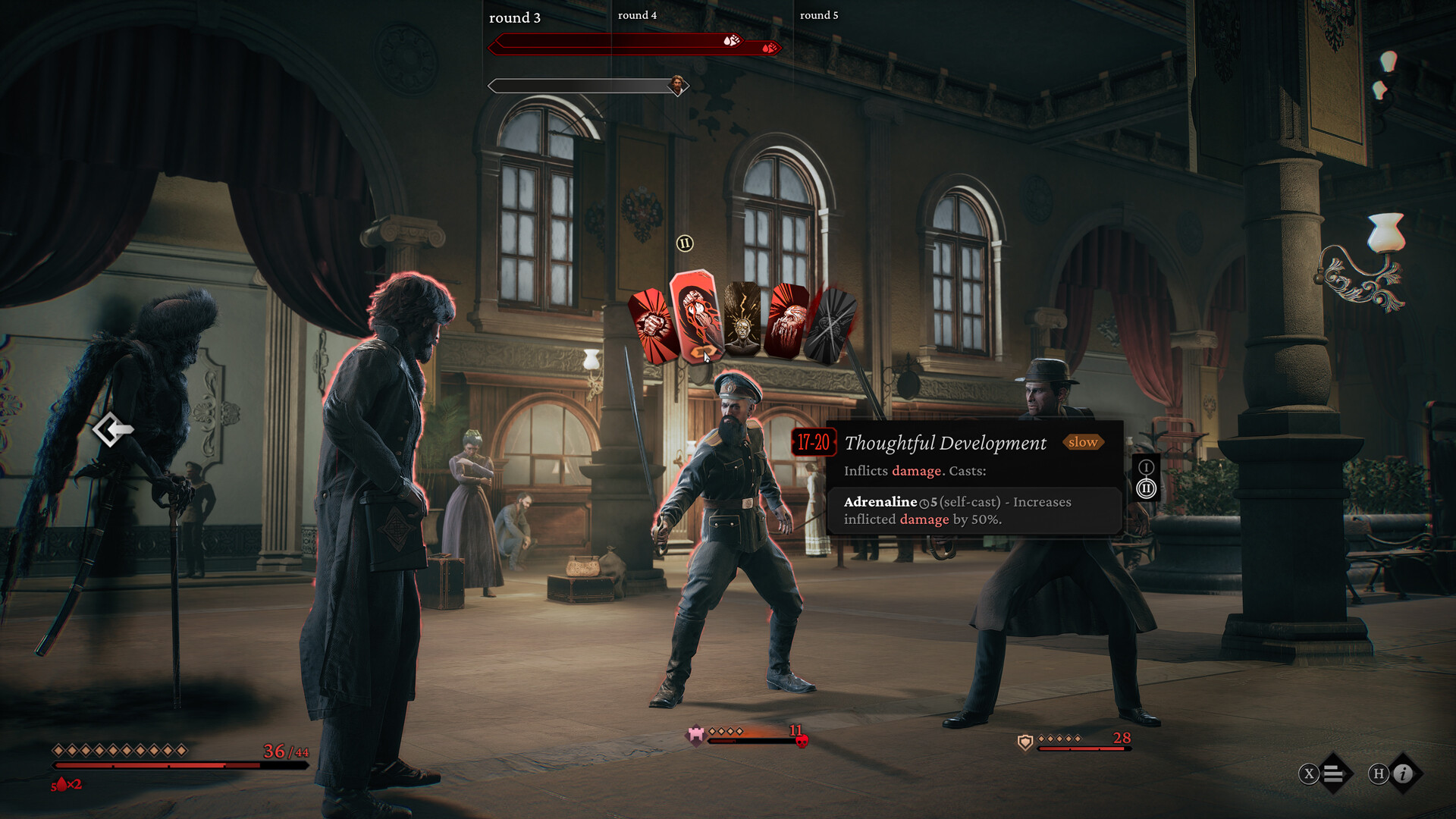
When an encounter becomes a fight, The Thaumaturge switches to turn-based tactical combat. Wiktor can use physical attacks and skills from the salutors he has tamed, choosing how to handle opponents who may be physically imposing or more elusive. This makes preparation and ability selection part of the encounter, rather than relying only on quick reactions. Combat is turn-based and tactical, with summoned beings able to attack or offer advantages. The fictional logic and battle structure reinforce one another. Wiktor's supernatural expertise has a tactical purpose, while his human flaws remain relevant to the decisions that lead into and shape confrontations. Different foes call for attention to the tools available, and salutors give the player a way to affect a fight beyond ordinary physical attacks. The system keeps combat connected to character and folklore rather than presenting it as an unrelated action sequence.
The people Wiktor meets anchor the story in Warsaw. Wiktor encounters his sister Ligia and childhood friend Abaurycy, who has turned to a life of crime, alongside historical figures such as Rasputin and Tsar Nicholas II. Their presence places invented personal histories next to recognisable names and a changing city. Wiktor's relationships are therefore shaped by more than a simple division between allies and enemies. His ability to read emotion can help him understand what someone wants, but it also tempts him to steer a conversation toward his own aims. Choices are described as morally ambiguous, and the game's central flaw gives that ambiguity a personal source: pride can open an opportunity or produce a consequence. The city offers several kinds of social setting, from public streets to personal encounters and underworld dealings. Wiktor moves between them with information that other characters may not know he has, making the way he uses that advantage part of the role he inhabits.
Role-playing choices shape the outcome of the story, while Wiktor's abilities determine how he gathers and uses power. He can seek secrets through perception, use what he learns to influence people, and call on salutors when physical conflict follows. Each part draws on the same character: a man whose skill makes him formidable and whose pride complicates his judgement. The historical setting gives those decisions a particular texture, because Wiktor's actions take place amid a multicultural city rather than an abstract series of quests. The game combines investigation, dialogue, exploration and turn-based encounters within that frame. Moving through 1905 Warsaw as Wiktor Szulski means reading the emotional marks left by people and places, then deciding what to do with the power to see more than others can.
- Developer
- Fool's Theory
- Genre
- Story-driven isometric role-playing game with turn-based combat