
About The Technomancer
On a Mars settled for generations, rookie Technomancer Zachariah Mancer becomes entangled in Abundance’s political conflicts and a wider struggle among corporations, criminal groups and mutants. His implanted electrical powers and interchangeable combat stances help him survive as dialogue, faction standing and companion bonds shape the quests ahead.
The Technomancer is a science-fiction role-playing game set on a far-future Mars, where human settlements have developed for generations. You play Zachariah Mancer, a young Technomancer associated with Abundance, one of the corporations that holds power on the planet. His electrical abilities are not ordinary technology: Technomancers channel them through implants, and the power makes Zachariah both a trained fighter and a figure within the political order. The story begins in Ophir, Abundance’s capital in the Ophir Chasma, then moves through other Martian cities and hostile terrain as corporate rivalry, military pressure and mutant life complicate his place in the world. The campaign keeps Zachariah’s own choices at the center of how these conflicts develop.
Mars is presented through distinct settlements and regions rather than as an empty wilderness. Ophir contains the Exchange, where Abundance maintains its authority, and the Slums, where the Vory criminal organization exerts influence. Later journeys reach the trader settlement of Noctis and the Mutant Valley, while the Army, Abundance’s forces and the Opposition add further sides to the planet’s political landscape. These groups do not share one outlook, and the game tracks Zachariah’s standing with them as he completes quests. Helping one community or choosing a particular response can improve one relationship and strain another; sufficiently poor standing can make a group hostile. The route between settlements therefore connects combat and conversation to the broader question of who will offer work, information or safe passage as the story unfolds.
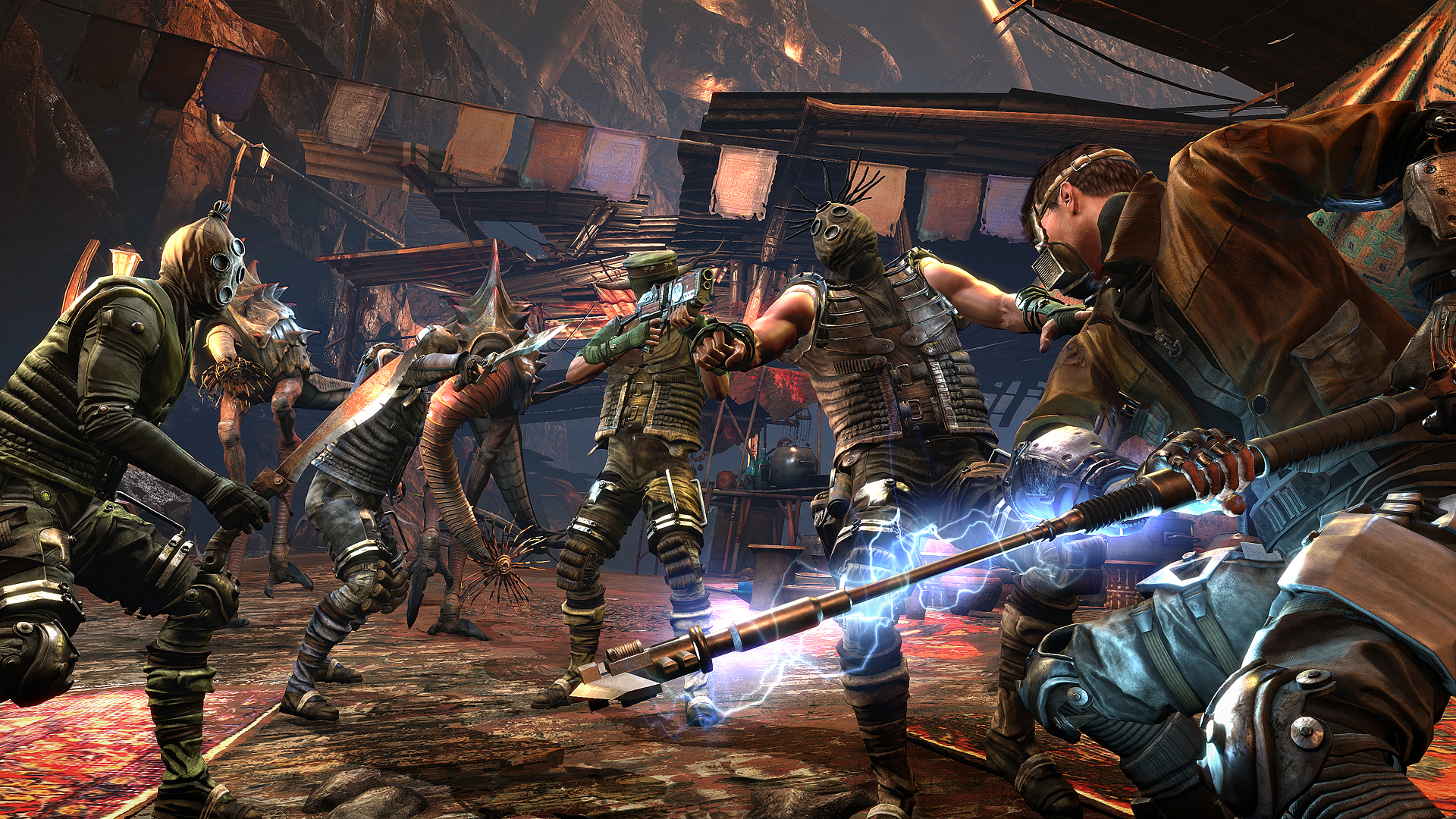
Combat uses three weapon stances that can be switched during an encounter, alongside a separate Technomancer ability tree. The Warrior uses a long staff for sweeping attacks that can reach several nearby enemies, making spacing and movement useful against groups. The Rogue carries a dagger and a pistol: quick strikes and dodges let Zachariah change targets, while the firearm supplies a ranged interruption. The Guardian pairs a blade with a shield and focuses on blocking and parrying before answering an attack. Each stance has its own progression and associated equipment, so the attributes and upgrades Zachariah receives affect which approach he can develop. Switching stance changes both his weapon and the choices available in the moment; he can reposition with one style, then use another when a threat calls for a different distance or defence.
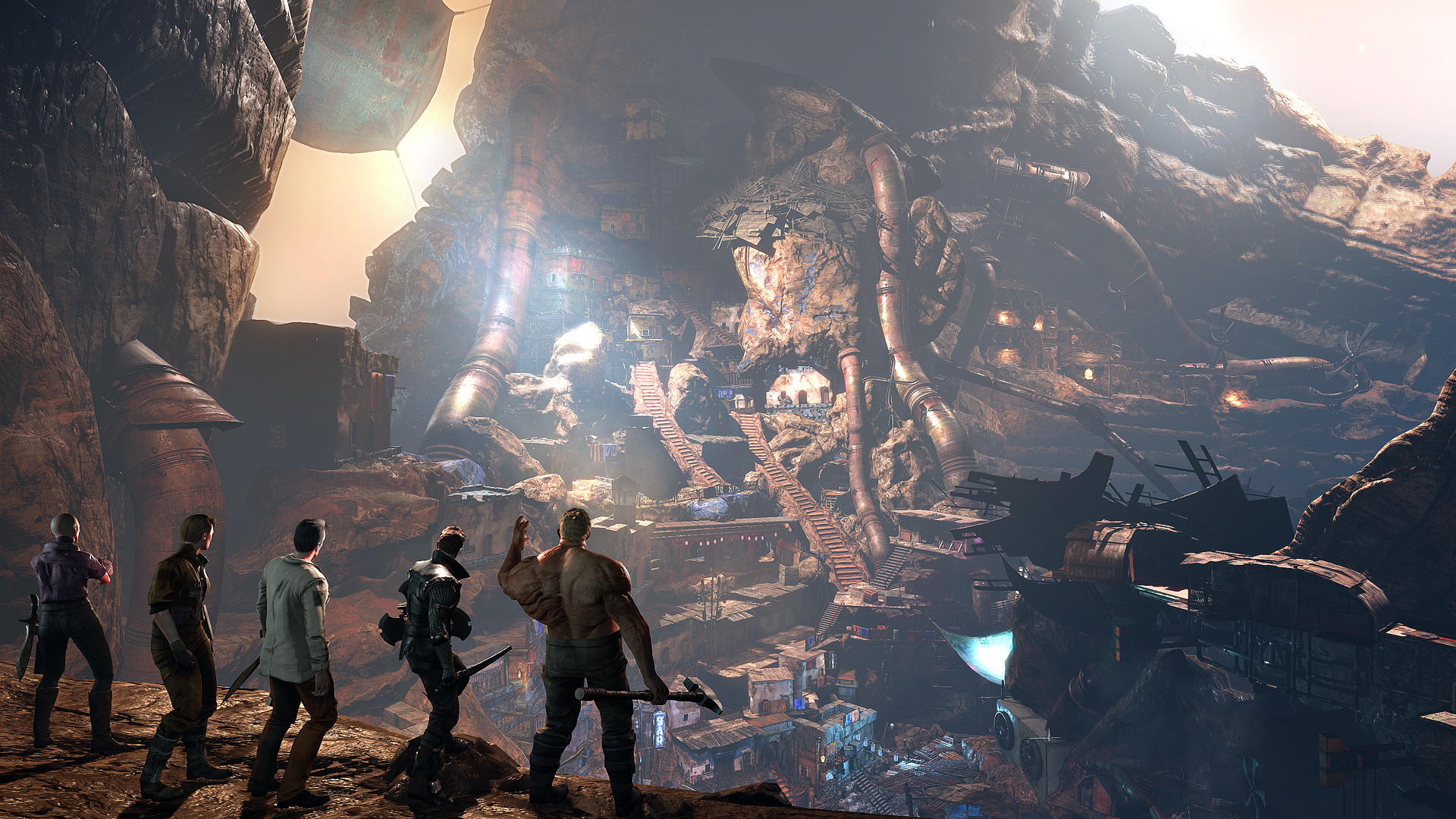
Technomancy works across those three styles instead of replacing them. Zachariah can charge a weapon with electricity to add damage or use active lightning abilities to attack and interrupt enemies. A defensive electricity shield adds another option when he is under pressure. These powers draw on a regenerating Power reserve, so their use has a rhythm: spend energy to control a dangerous exchange, then rely on weapons and movement while the resource returns. Enemy resistance also matters, making Technomancy one part of a larger toolkit rather than a universal answer. Skill points expand the different ability trees, while attributes influence damage, resistance, critical chances and the gear he can carry. The player decides whether to concentrate development on one stance, combine two compatible approaches or invest more deeply in electrical powers.
Quests provide the main structure for travelling between districts and regions. Zachariah can investigate a request, use a dialogue skill to negotiate, pay Serum to resolve a dispute, intimidate someone or fight. Some choices avoid combat or open a different result for a quest. Charisma is useful in many negotiations, while other situations can call for a relevant ability such as Science or Creation; the dialogue interface shows the chance of success for these checks. Not every objective has to end in a conversation: when the player already knows where to go, Zachariah can sometimes bypass an investigation and head directly to the destination. The journal keeps track of objectives, while the map links known areas. These systems make everyday decisions part of the playable loop, since a route through a task can spend money, expose him to a fight or affect relations with people who may matter later.
Companions make the journey a small-party RPG as well as Zachariah’s personal story. He can bring two allies at a time and change the active pair at the rover. Each has a combat role and abilities of their own, so the party can cover gaps in Zachariah’s approach. Their equipment can be managed alongside his, with weapon and armour choices constrained by each character’s fighting style. Conversations after important quests, completing personal missions and choices that fit an ally’s outlook can improve the relationship. Friendly bonds provide attribute benefits while that companion is in the party, and relationships can open additional paths and quests. Karma also influences how some companions react. Their presence therefore affects both the tactical side of encounters and the kinds of personal stories Zachariah can pursue as the campaign advances.
Character development uses experience, talents, attributes and Serum, the game’s currency. Main and side quests, along with defeating enemies, award experience; levelling grants ability points and periodic points for talents and attributes. Talent investments can unlock practical skills such as lockpicking, crafting injections or making higher-level gear upgrades. Serum pays for purchases and can also be spent in negotiations, giving the player a reason to weigh a peaceful deal against a costly one. At workbenches, Zachariah can modify weapons and armour, choosing effects such as more damage, better critical performance or poison on a dagger. Blueprints purchased from traders open further options, while raw materials come from loot, merchants or dismantling equipment. The result is a cycle of taking on work, gathering useful equipment, improving the party and choosing how to handle the next problem on Mars.
- Developer
- Spiders
- Genre
- Science-fiction action role-playing game