
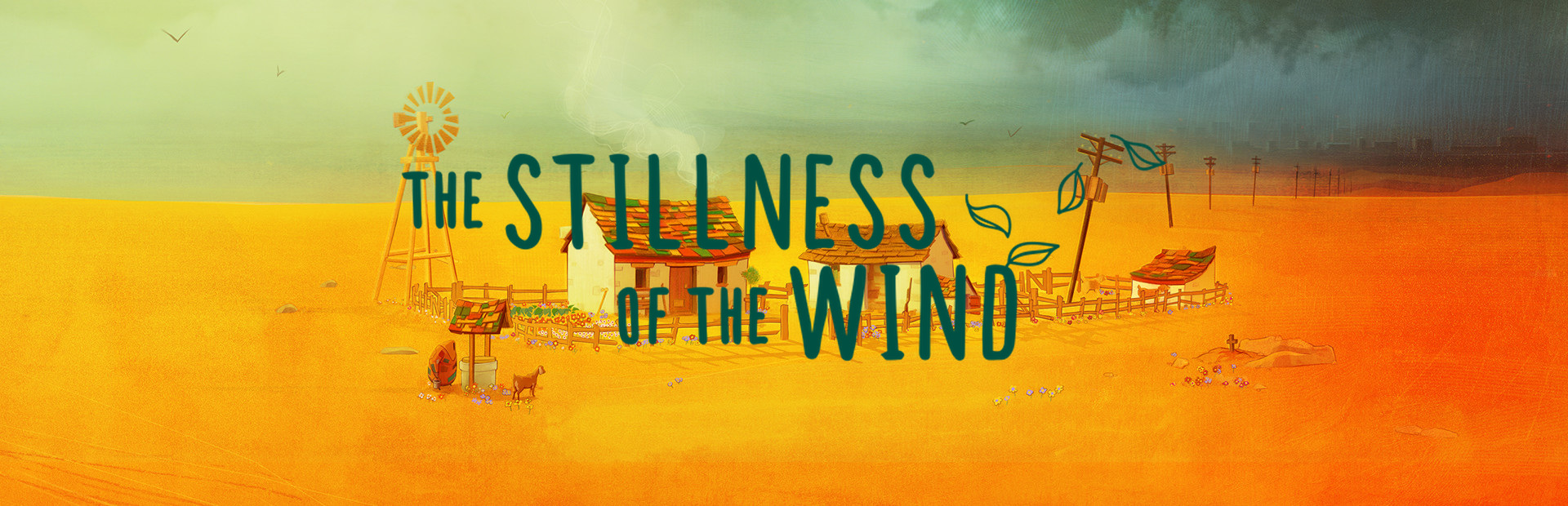
About The Stillness of the Wind
Talma remains on a remote homestead after her village empties for the city. Each day she tends goats and crops, gathers food, and barters with a travelling merchant who brings letters from her family. The routine gives her small choices while the desert and the news from afar slowly change.
The Stillness of the Wind places Talma alone on a homestead after the people of her village have left for the city. She is approaching the end of her life, but the game does not turn that premise into a race through a list of objectives. Instead, the player shapes the rhythm of her days: tending animals, working a small garden, preparing food, visiting the surrounding desert or staying close to the farmhouse. A travelling merchant is the regular human visitor, carrying supplies and letters from Talma’s family and friends. Those letters offer a view of a distant city whose circumstances become increasingly troubling, while Talma’s life remains rooted in repetitive practical work. The setting is spare, with a farmhouse, animal pens, a well, cultivated ground and a wide, dry landscape beyond them. Its central contrast is between a familiar routine that can be maintained one day at a time and a world beyond the farm that cannot be reached or controlled through that routine.
A day is an open block of time rather than a checklist with a mandatory order. Talma can move between the farmhouse, the churn house, animal areas, the well and nearby ground, deciding which chores to complete before she rests. The player directs her by selecting places or objects to interact with; her pace is deliberately slow and she cannot simply sprint between tasks. That means the distance between two errands matters. Walking to draw water, returning to the garden and then visiting a distant patch of desert all take time, while her energy limits how much work she can do before eating. The player can settle into a repeated schedule or leave a task for another day in order to wander or spend time with an animal. Some days bring the merchant and a letter, while others can pass mostly through routine. The game’s movement is deliberately modest: it asks the player to notice the effort involved in crossing the yard and the open land rather than offering a fast travel system or a growing series of traversal abilities.
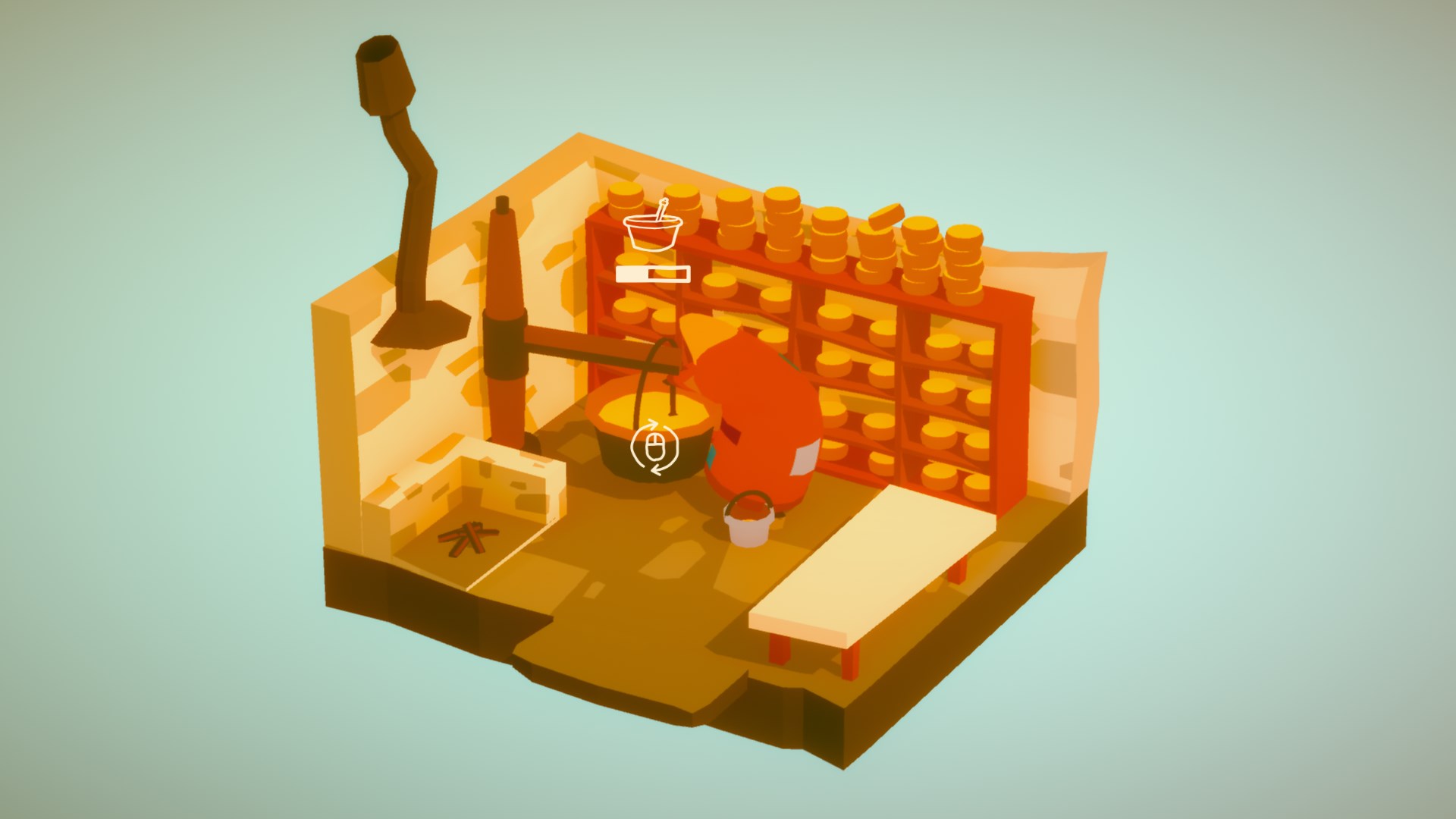
Goats provide one of the homestead’s main cycles of work. Talma cares for them, feeds them hay and can breed the herd when the merchant offers an animal for trade. With the milking pail, she collects milk and carries it to the churn house, where she works it into cheese through a sequence of hands-on actions. Cheese is valuable in barter, so the herd turns daily care into a source of supplies rather than a conventional business with cash profits. The animals also need food and attention, and the game makes their care part of the day’s limited labour. A goat pen gate and the herd’s condition affect whether Talma can keep the animals close and productive. The work connects several places: hay comes from the travelling trader, milk is made at the pens, cheese is prepared indoors, and the finished food can later be exchanged. It is a small agricultural system with a clear chain of inputs and outputs, but its purpose is subsistence and continuity rather than accumulating wealth or expanding into a large farm.
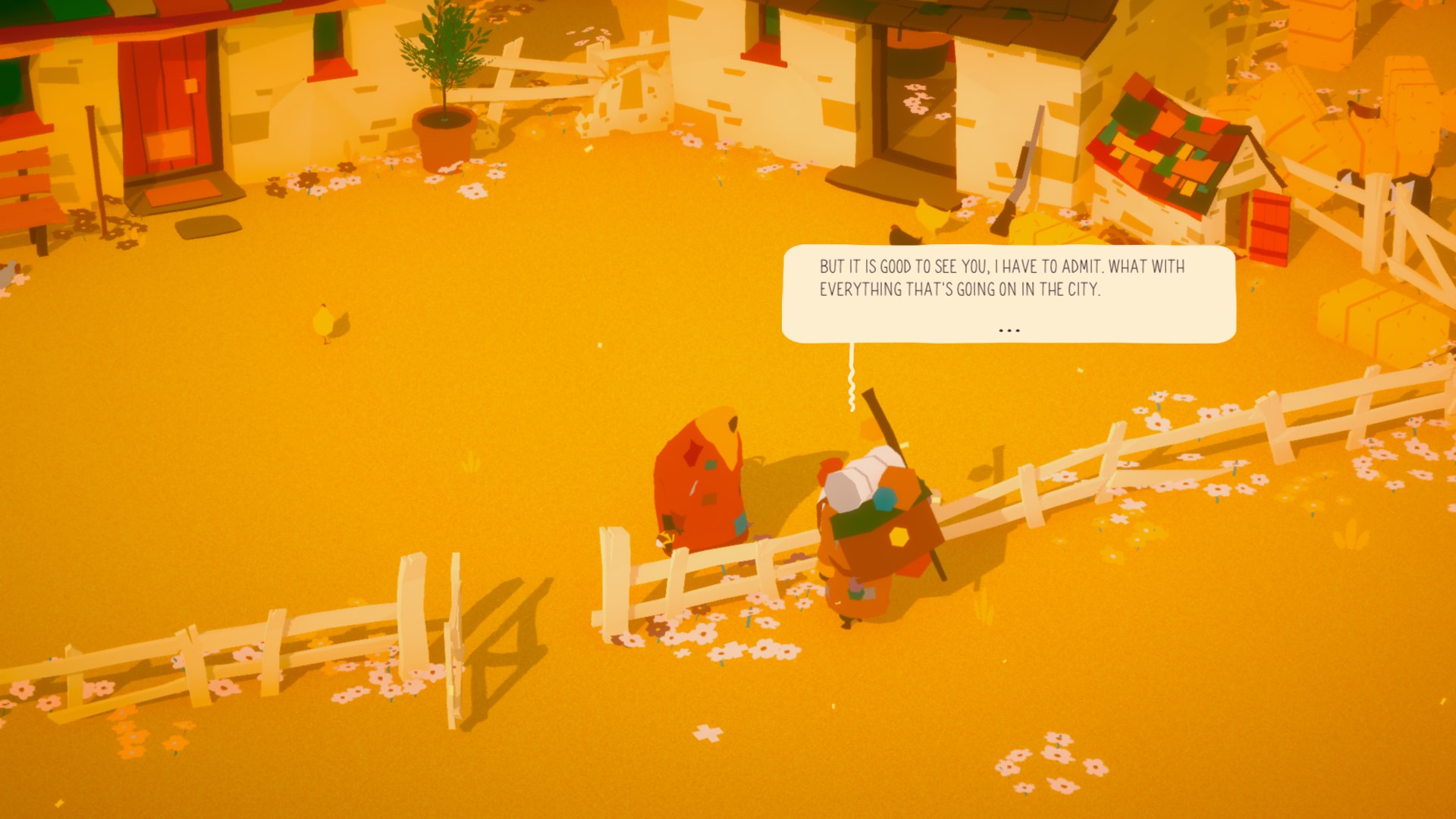
The garden adds another set of linked needs. Talma buys seeds from the merchant, prepares soil, plants them and carries water from the well to keep crops growing. Harvested vegetables can become food for Talma or goods for trade, so each planting has a practical choice attached to it. Water and daylight limit how much ground can be worked in a single outing, and a small bucket means the player has to consider the garden’s size alongside the walk back to the well. Chickens contribute eggs that can also be eaten or exchanged. Talma needs food to restore the energy required for more work, so keeping some harvest for meals competes with the temptation to barter everything for feed, seeds or other items. The player can cook indoors and choose a simple meal from what is available. This economy is intentionally concrete: the useful question is whether Talma has enough to eat and maintain the animals, not how much money a sale will bring. A productive garden helps, but it does not remove the daily decisions about labour and supplies.
The travelling merchant, Laszlo, connects the isolated farm to the family in the city. When he visits, Talma can exchange cheese, eggs, crops and other goods for things such as hay, seeds, fables, unusual objects and shotgun shells. The exchange is barter rather than a cash shop, so an item’s value is understood through what Talma gives up and what the farm needs next. Laszlo also brings letters, which the player can read inside the farmhouse. Their contents gradually make the distant lives of Talma’s relatives more legible, while the gaps between visits leave room for quiet chores and speculation. He is not simply a quest-giver who sends Talma across a mission map: his arrival is one of the farm’s recurring events and the principal channel through which news from elsewhere enters the routine. Items obtained from him can decorate or add detail to the homestead, while practical trades support the next cycle of tending, cooking and growing. The letters and barter screen therefore share the same visitor but perform different roles: one changes what the player knows, the other changes what Talma can do.
Beyond the yard, the desert offers space for brief excursions and small discoveries. Talma can carry a basket to collect mushrooms from the landscape, bringing back food or a valuable trade item, and can walk simply to look across the dry terrain or draw patterns in the dirt with her stick. These activities do not open a sprawling map of new regions; the surrounding ground remains broad, quiet and difficult to cross quickly. Distance and the fading light make it sensible to decide how far to wander before starting back. A defensive problem can also arise at night: wolves threaten the goats, and Talma can use the shotgun to frighten them away. The weapon does not turn the game into a combat adventure; it is a limited response to a danger that can cost the farm livestock. Preparing shells through trade and getting back in time give that tool a place among the other demands on the day. Most of the experience remains peaceful routine, but the possibility of loss gives the player a reason to care about the animals and the supplies accumulated for them.
The farm’s systems are deliberately small and interdependent, with no level tree or endless expansion to pull the player toward a larger estate. The player works within the homestead Talma already has, making a garden, caring for animals, gathering food and deciding what to exchange. Daily repetition provides a reliable structure, but it also makes changes in the letters, the landscape and Talma’s capacity to keep up with chores more noticeable. The game does not promise that careful management can make the world outside the farm safe or restore the village to its former activity. Its movement, barter, food and animal-care systems instead keep attention on what can be handled today and what must be left for later. The presentation supports that scale through quiet scenes of farm work and the contrast between the open desert and the interior spaces where letters are read and meals prepared. The player chooses how to spend Talma’s time, but those choices take place inside a life shaped by isolation, age and dwindling resources. The ordinary actions remain the main way the story is encountered: feeding, carrying, cooking, trading and waiting for the next letter.
- Developer
- Memory of God / Lambic Studios
- Genre
- Narrative life simulation