
About The Stanley Parable: Ultra Deluxe
Stanley leaves his empty office to discover what happened to his vanished co-workers, following or resisting a Narrator who describes his actions. Ultra Deluxe preserves the 2013 game's first-person exploration and branching paths while adding new choices, secrets and endings to its looping story.
The Stanley Parable: Ultra Deluxe begins with Stanley at work in an office where every colleague has mysteriously disappeared. The computer terminal at his desk has gone blank, leaving him with no task and no explanation. In first person, the player guides him out of his room and through a workplace of corridors, doors, meeting spaces and unfamiliar routes, trying to understand the silence. There is no conventional enemy to defeat or external mission briefing to complete. The premise instead gives the Narrator, an unseen voice, the job of describing where Stanley is going and what his journey means, while the empty office supplies a simple place in which that account can be tested.
Movement and interaction are deliberately direct: look around, walk through the office, approach objects and use points of interaction when the environment presents them. The important decisions often appear as ordinary actions rather than a branching dialogue menu. At junctions, Stanley can continue along the route the Narrator describes or inspect another way forward; when asked to do something, he can comply, delay or try an alternative. Small gestures, such as choosing whether to press a button or jump when prompted, can become part of the story. The first-person view keeps the workplace at eye level, so a change in corridor, room or object is itself a cue to explore and find out what the game will acknowledge.
The Narrator is both storyteller and an active part of the play. His commentary describes Stanley's movements, frames them as parts of a planned sequence and reacts when the player makes a different choice. Following his directions can carry a scene toward the outcome he has announced; turning away forces the narration to account for a route it did not set out to tell. That response may introduce new context, redirect the scene or expose the gap between what the voice says and what the player can do. Kevan Brighting performs the Narrator, whose delivery accompanies the player throughout. Rather than selecting lines from a menu, players shape what is said by their movement and timing, making the relationship between control and narration the central interactive system.
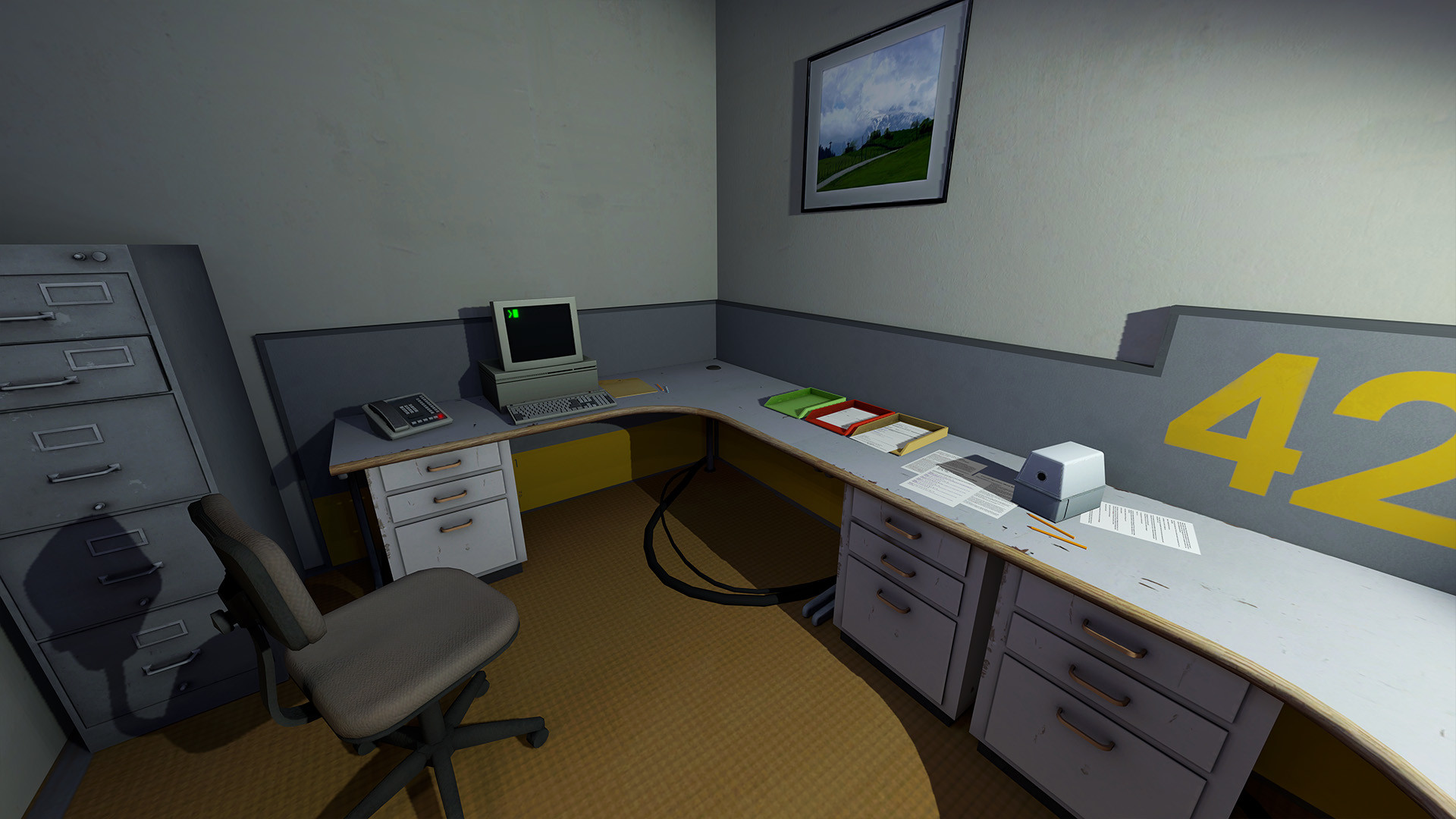
A route through the office is not a single campaign with one fixed ending. Choices split the story into paths, and those paths can arrive at distinct endings before the game returns the player to a new start. Restarting is part of the structure: it lets Stanley revisit a familiar space with knowledge of a previous route and try another available action. The Narrator's account and the surroundings may change with those decisions, so repetition is also a way to discover additional scenes and see how a changed action alters what follows. The game does not use a conventional score or victory screen to measure success. Progress comes from finding further variations in the conversation between the route the voice proposes and the route the player chooses.
Ultra Deluxe is the expanded 2022 reimagining of The Stanley Parable, the separate 2013 release. Its Steam description states that the original game's material is preserved and that new content, choices and secrets extend the world. This edition therefore gives the familiar office and its established possibilities a place inside a larger set of routes, with added areas and outcomes that deepen the game’s self-aware treatment of sequels, player expectations and the act of revisiting a known story. New material is not simply a replacement for the original structure: the player can encounter the returning material and then branch into additions. The expanded script and the contrast between remembered and unfamiliar details make recognition itself one of the things the game plays with.
Some Ultra Deluxe paths introduce the Reassurance Bucket, a handheld object that can be carried through parts of the office. The bucket is not just a prop: the director describes it as a mechanic that can alter various endings, and the game's new routes build on the familiar pattern of carrying an object, making choices and seeing how the Narrator responds. Deciding whether to take it along changes the context of later scenes and can produce bucket-specific variations. This gives exploration a small, concrete system to test across restarts: a player can compare a route with the bucket to one without it and look for altered narration or outcomes. Other added sequences provide their own choices and surprises, so no single object or route accounts for all of the new content.
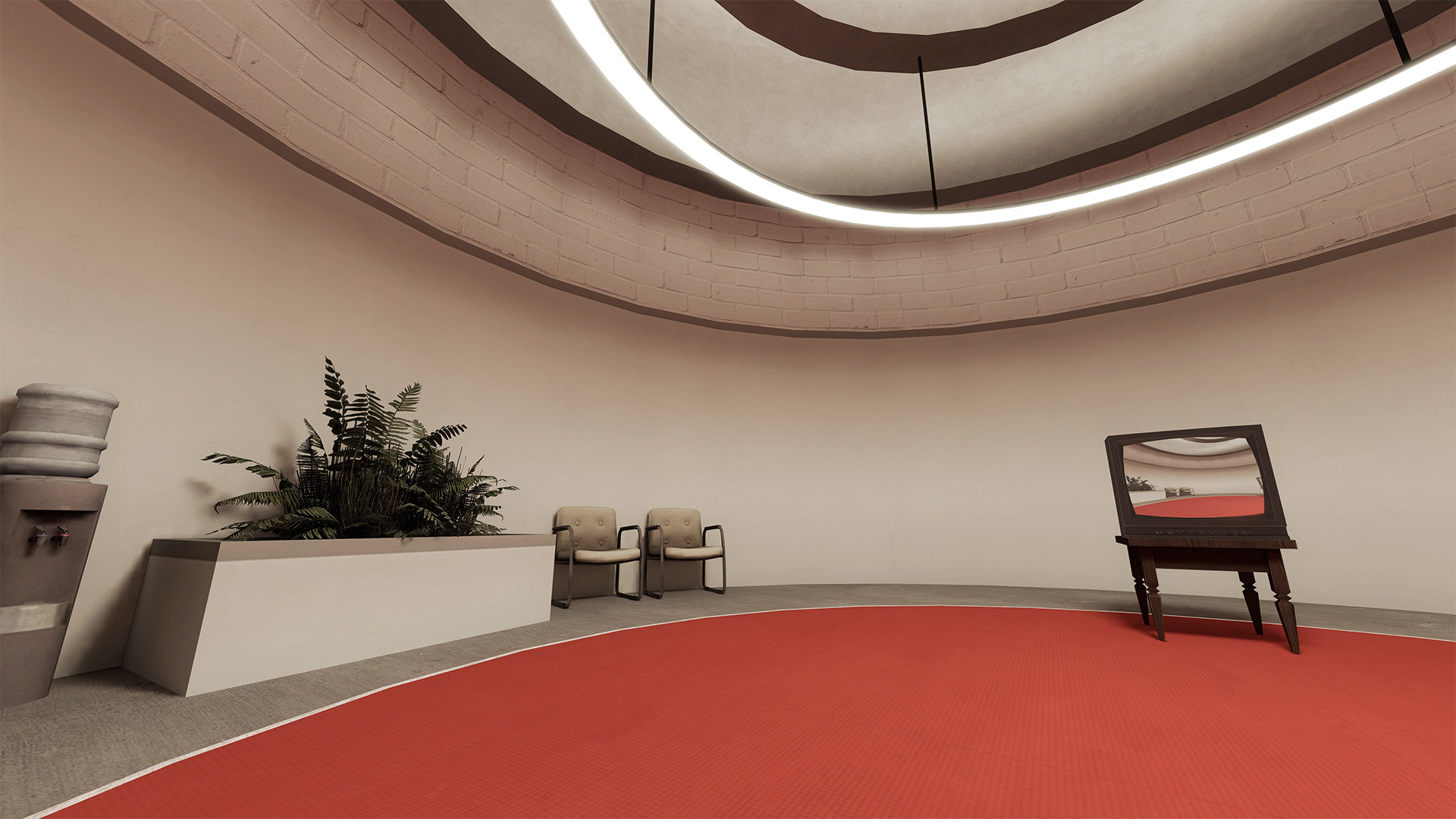
The office's plain walls, repeated corridors and shifts into unfamiliar spaces support the story's movement between routine and absurdity. Ultra Deluxe updates the visuals while retaining the tone associated with the earlier game, according to its official store description. Sound and voice are equally central: Brighting's narration remains present as the player moves, and changes in his delivery help mark shifts in the relationship between the stated story and Stanley's actions. The edition also adds accessibility options, including localization of text within the world, colorblind options and content warnings. These features sit alongside the branching narrative rather than changing its premise.
- Developer
- Crows Crows Crows
- Genre
- First-person exploration adventure