
About The Sinking City Remastered
In The Sinking City Remastered, a private investigator enters the half-submerged city of Oakmont to investigate the supernatural forces affecting its streets and inhabitants. Travel through the open world, pursue cases, examine evidence and manage the strain of confronting the uncanny. This edition rebuilds the adventure in Unreal Engine 5, with revised visuals and improvements to controls, combat and tutorials.
The Sinking City Remastered places a private investigator in Oakmont, a city partly swallowed by floodwater and beset by supernatural forces. The assignment is to investigate what has taken hold of the city and its inhabitants, following cases through streets, buildings and districts shaped by the disaster. Its horror draws on the fiction of H. P. Lovecraft: the unknown is not merely a creature to defeat, but a pressure that can unsettle a witness, distort a lead or make a seemingly ordinary place feel hostile. Oakmont is presented as an open world rather than a sequence of isolated missions, so the investigator can move between its locations and pursue clues at a chosen pace. The city itself supplies the setting for the cases, while the larger mystery develops through the people and evidence encountered along the way.
Investigation is the central activity. A case starts with a question and develops through searches, conversations and evidence that must be interpreted. Cases can be solved in more than one way, so the player decides which leads to pursue and how to use the information uncovered. This gives the investigator room to follow the clues that seem most useful instead of moving through one fixed chain of objectives. As separate cases accumulate, they connect local events to the supernatural crisis affecting Oakmont. A room, conversation or document can change what the player understands about a case, and returning to a lead with new context can alter its meaning. The work of detective play is to gather these details, judge their relevance and decide what to do with them.
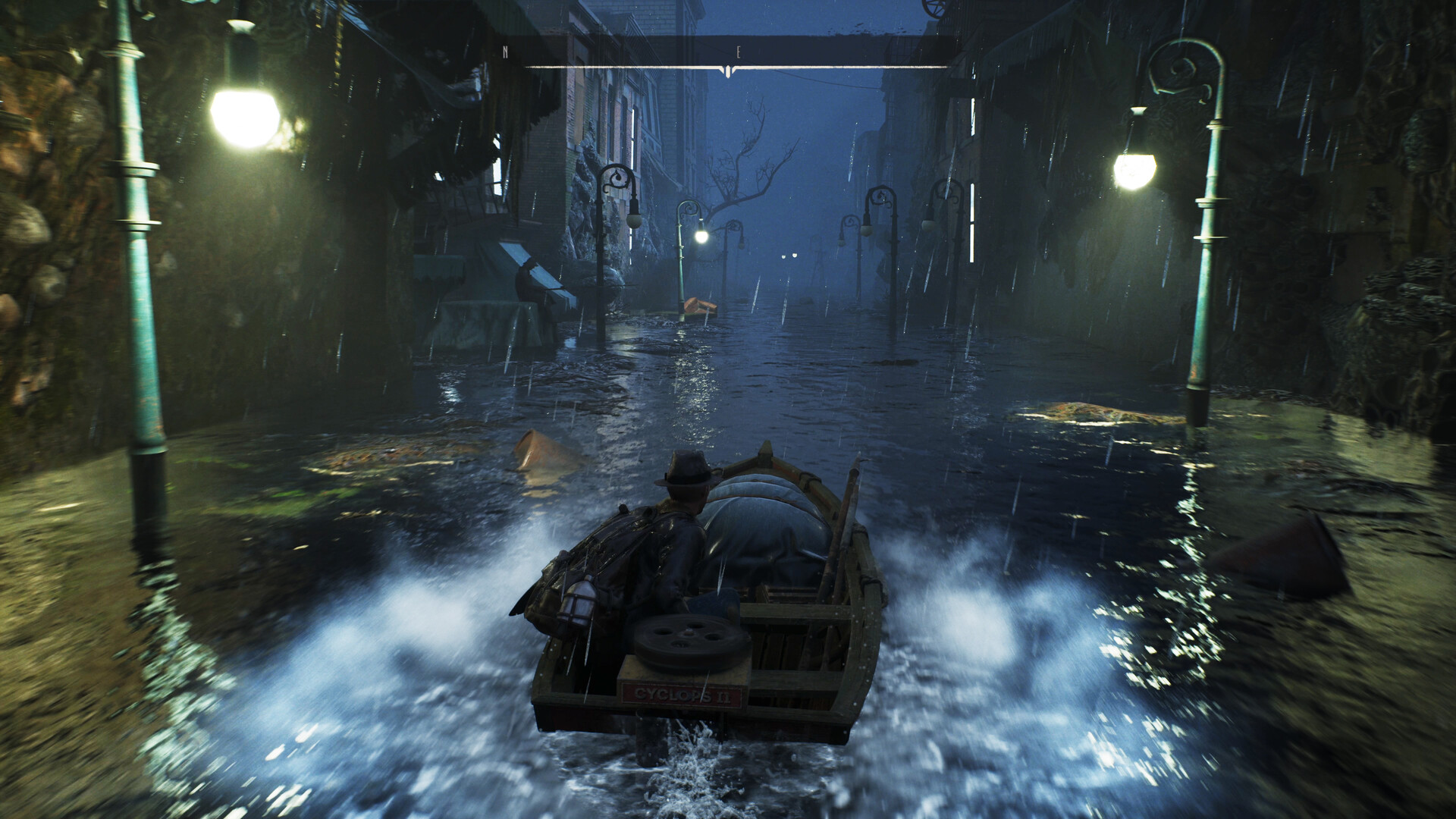
Oakmont can be crossed on foot, by boat and in a diving suit, giving the player different ways to approach its partially submerged streets and surrounding areas. Water is part of the city’s layout, so traveling through Oakmont means adapting to a landscape reshaped by the disaster. Moving between neighborhoods brings the investigator to witnesses, records and physical clues that may matter to a case. The open map allows the player to decide where to look next and how much of the city to search before pursuing another lead. The damaged, flooded landscape also shapes the atmosphere: the investigator moves through a place visibly struggling under forces larger than any individual mystery. Exploration joins the casework by letting players seek out the people and locations that can clarify events, rather than keeping each inquiry inside one isolated scene.
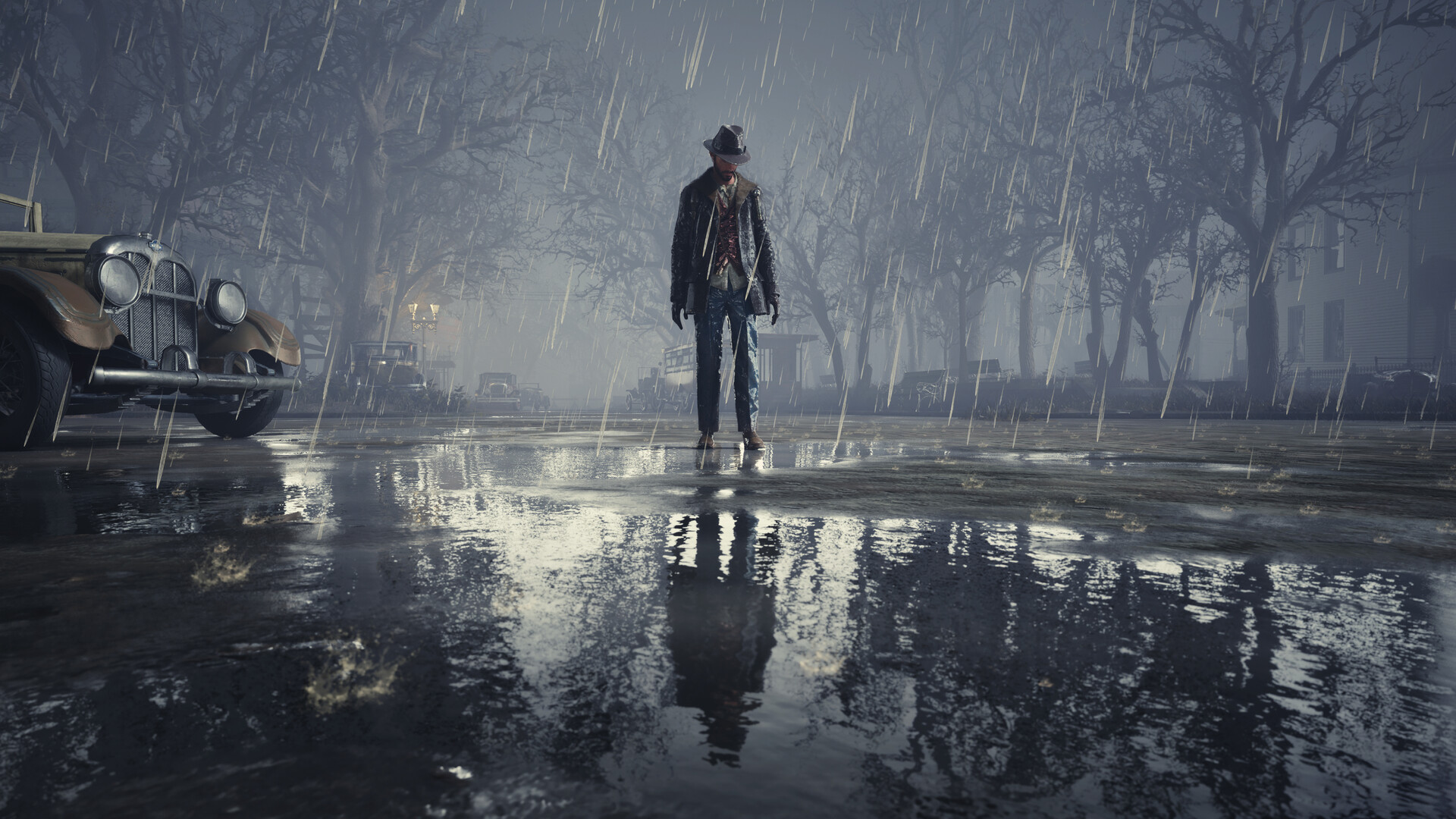
The supernatural investigation has a psychological cost. The game includes a mental-health system that asks the player to manage the investigator’s condition while confronting disturbing events. That mechanic ties the Lovecraftian premise to moment-to-moment play: gathering information may mean witnessing scenes or encountering phenomena that put pressure on the person doing the investigation. The player must continue to seek answers while accounting for that strain. The system complements the case structure, where new evidence can clarify one part of a mystery while exposing the investigator to something more unsettling. It also gives the horror a different role from combat. Weapons are available against nightmarish creatures, but force is one part of the experience rather than a universal answer to the city’s problems. Observation, judgment and endurance remain central to making progress.
Oakmont's threats include nightmarish creatures, and the investigator has an arsenal of weapons drawn from the 1920s. Violence is only one part of moving through the city: a weapon can address an immediate danger, while a case still requires evidence, exploration and judgment. The Remastered edition brings that adventure into Unreal Engine 5. Lumen global illumination and ray tracing change the lighting across its flooded streets and interiors; 4K textures and added environmental detail update the places the investigator searches. HDR and a photo mode offer additional ways to view Oakmont, while FSR, DLSS and frame generation support address its technical presentation. The edition also improves controls, combat balance, crowds and tutorials. These changes affect how the same city is seen and navigated without replacing its case-driven structure. Players still have to cross damaged districts, enter places connected to an inquiry and face dangers that cannot be understood by fighting alone.
The way a case is resolved can depend on the investigator’s actions, and different choices can lead to different endings. Deciding what to do with gathered information gives each inquiry a consequence beyond finding the next clue. The cases sit within a larger story about Oakmont’s decline and the forces affecting its residents, so local mysteries feed into a citywide crisis. The player moves among neighborhoods, examines evidence and chooses how to proceed, balancing the pursuit of answers with the pressure of confronting the uncanny. The story unfolds through investigations and encounters with the people affected by the city’s condition. The investigator must weigh what residents say against the evidence and the uncanny forces shaping events across the city.
- Developer
- Frogwares
- Genre
- Single-player open-world investigation adventure with Lovecraftian horror and combat