
About The Sims 4
Create a household, shape its home and guide its members through everyday needs, relationships, ambitions and careers. The Sims 4 is an open-ended life simulation with no fixed protagonist or required story path: players can build, manage routines, pursue personal goals and let the household’s relationships develop through play.
The Sims 4 is a life simulation built around households rather than a single prescribed campaign. You create one Sim or a family, choose their traits and aspirations, place them in a home, then direct their routines and interactions in Live Mode. The game does not assign a central hero, rival faction or mandatory plot: established households can be selected as starting points, or a new cast can be made from scratch. This makes the neighbourhood a social setting for personal stories, career plans, family changes and small domestic mishaps. A session can focus on one Sim’s ambitions or follow several household members as their schedules overlap.
Create-a-Sim establishes the people who will drive that story. Players adjust physical features, body shape, voice, movement, clothing and personality traits, and select an aspiration that gives a Sim longer-term aims. Households can be related through family genetics or assembled as friends, partners or strangers sharing a home. Build Mode then lets the player choose a residential lot and construct or furnish a house with room-based building tools and a catalogue of objects. Starting with a premade home is also possible. The relationship between household and space matters in practical terms: beds, kitchens, bathrooms and activity objects give Sims ways to meet needs, while layout determines how they move between tasks.
In Live Mode, the player queues interactions and keeps an eye on each Sim’s motives, schedule and current situation. Everyday actions such as sleeping, eating, washing, cooking, socialising and using entertainment objects consume time and help satisfy needs. If several Sims share a household, their routines must be coordinated around limited time and household funds; one member can prepare food while another gets ready for work or school. Needs and moodlets make these ordinary tasks part of the simulation rather than a decorative backdrop. Some careers favour a particular emotional state when a Sim goes to work, and skill activities can produce moodlets that feed back into what the household does next.
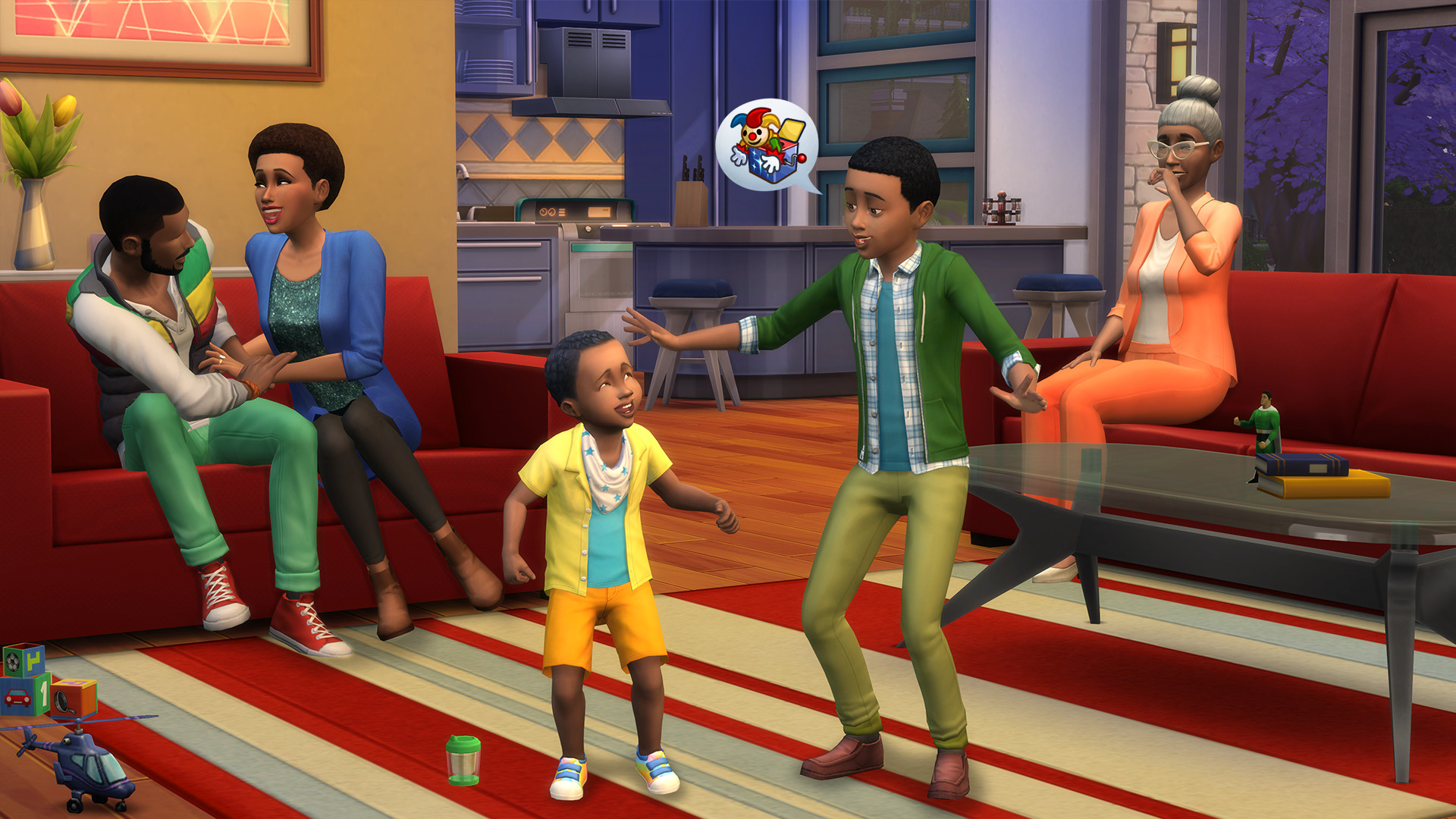
Relationships grow through conversations and shared activities. Selecting another Sim opens social interactions shaped by the participants and the context, while repeated exchanges can establish friendship, romance, conflict or distance. A conversation may bring more than two Sims together, so household gatherings and visits can develop into overlapping group dynamics. Players can guide a relationship toward a commitment, keep it casual, or let misunderstandings and competing priorities pull people apart. The game leaves those arcs open: a wedding, friendship circle, argument or new family arrangement emerges from the player’s choices and the Sims’ changing responses, rather than from chapters in a fixed narrative.
Aspirations, wishes and skills provide ways to turn that open sandbox into a progression plan. Sims can work toward aspiration milestones and complete short-term desires; doing so earns Satisfaction Points that can be exchanged for rewards. Skills rise as Sims repeatedly practise activities, linking household routines to new capabilities: cooking in the kitchen, painting at an easel, writing at a computer or gardening outdoors all give a Sim a practical focus. Children have their own Motor, Creativity, Mental and Social skills, which connect to base-game child aspirations and school-related progress. These development tracks let a family’s time at home shape what its members can attempt later.
Work adds another structure to the week. Sims can find jobs through a phone, computer or the Career panel, then balance work shifts with sleep, chores, relationships and aspiration goals. Career progression depends on meeting the requirements shown for each level and completing assigned daily tasks; a Sim’s emotional state when leaving for work can also matter for some jobs. Promotion brings new responsibilities and career rewards, while changing direction means leaving a current job and beginning another path. Around those schedules, players can keep expanding a household, redesign a room, invite neighbours over or simply see what happens when several individual goals compete for the same evening.
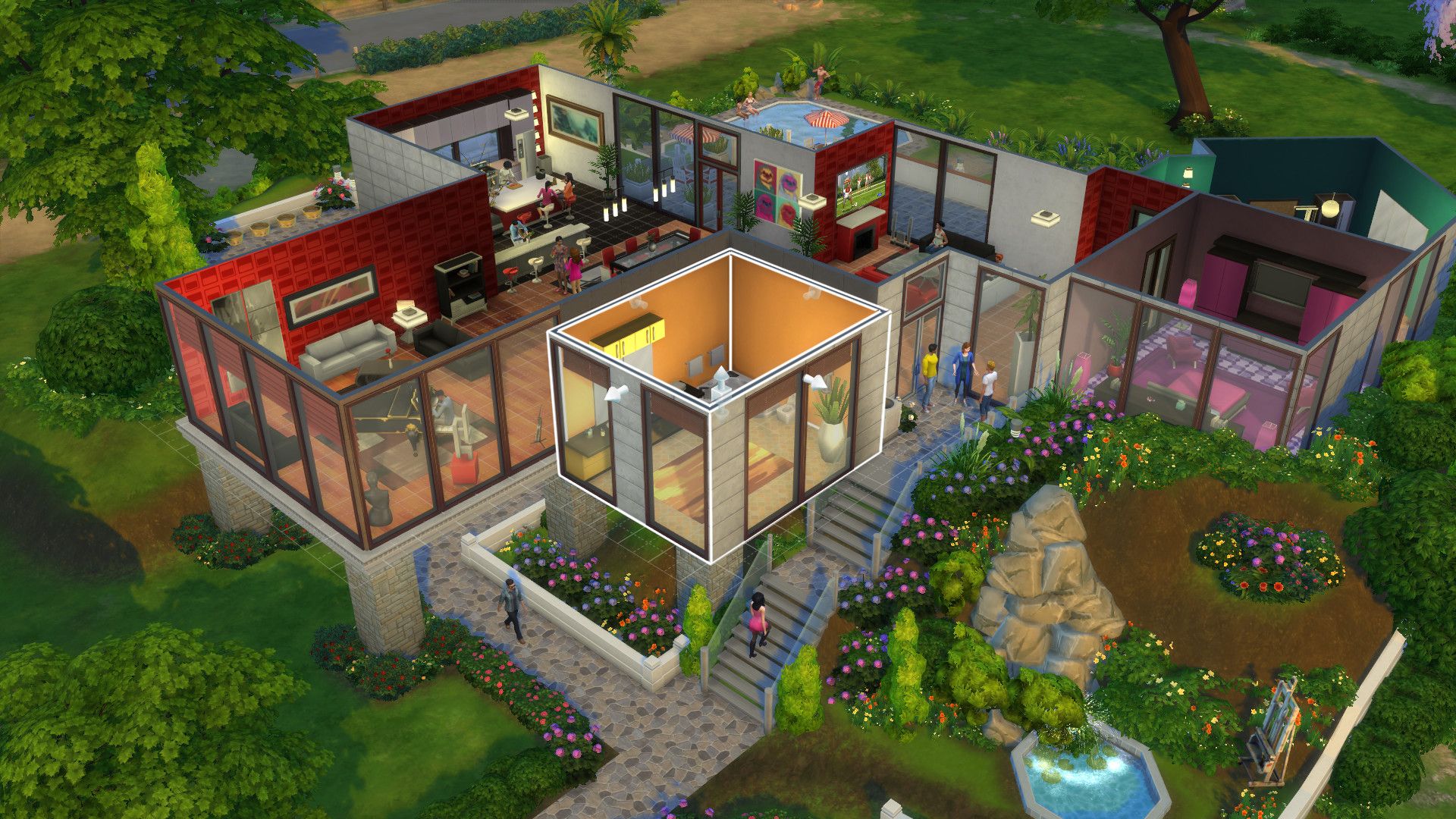
The Gallery adds a way to bring community-made Sims and spaces into a household’s story. Players can browse Sims, homes and complete rooms created by other players, then download them to use in their own game; they can also share their own creations. That makes the starting point flexible: a player can build a household and its home from the ground up, adapt an existing community creation, or combine downloaded rooms with a personally designed lot. A downloaded Sim can be the seed of a new household, while a downloaded lot supplies a home that can be moved into or reworked. Gallery creations provide templates and characters, while the household’s subsequent relationships, routines and goals still develop inside the life simulation. Its sharing tools connect a largely single-player routine to a broader creative community without supplying a required story or changing the open-ended structure of play.
- Developer
- Maxis
- Genre
- Life simulation