
About The Shore
The Shore is a first-person horror adventure about Andrew, a father searching for his missing daughter on a forbidden island. Explore unsettling environments, solve puzzles and investigate a mystery shaped by H. P. Lovecraft’s mythology. Strange entities and artifacts turn the journey into a struggle to survive, as the story questions Andrew’s perception.
The Shore follows Andrew, a father searching for his lost daughter on a forbidden island. The setting draws on H. P. Lovecraft’s works and mythology, filling the island with horrors and mysteries. Andrew’s search supplies a personal reason to keep moving, while strange inhabitants and unsettling environments make each step uncertain. The story stays close to his perspective and raises questions about his sanity as well as the secrets around him. Exploration, puzzles and encounters with supernatural entities shape the journey. Its horror comes from pursuing a loved one through a place where the dangers and even Andrew’s understanding of events are difficult to trust.
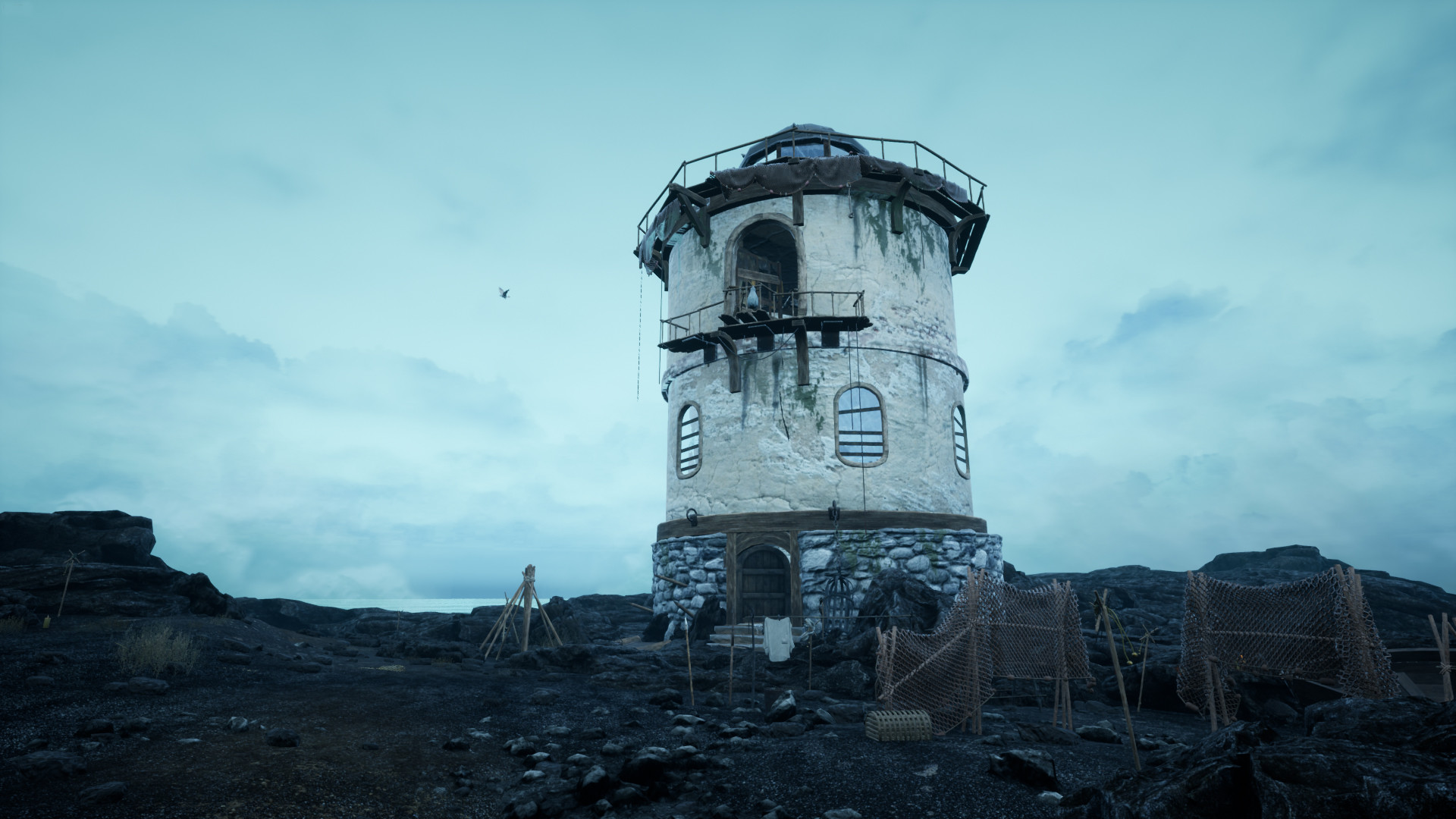
The player explores varied environments in search of routes, clues and objects that reveal more of the island. Locations carry their own stories and background details, giving the surroundings a role in the narrative beyond their appearance. Searching helps Andrew pursue his daughter, but it also draws him into the island’s larger mystery. The experience asks the player to enter unfamiliar places and learn from what they find there. Exploration thus joins movement with interpretation: a new area can present an immediate hazard, an environmental puzzle or a fragment of the setting’s history. The island becomes something to investigate as well as a place to cross. The daughter’s absence keeps the supernatural discoveries tied to a concrete objective, even as the island expands the scope of what Andrew is trying to understand. His search does not proceed in a safe sequence of clues; the player must approach spaces where creatures and unfamiliar phenomena can interrupt exploration. The contrast between a recognizable family motive and the island’s cosmic horror gives the story its central tension.
Puzzles shape that exploration and connect it to the effort to gain knowledge about the island. The player examines the environment and considers how its pieces fit, rather than simply following a route from one encounter to the next. Solving a puzzle advances the search and adds context to the larger mystery. Some discoveries lead into unfamiliar dimensions, extending the journey beyond what Andrew first encounters on the island. These sequences make progress feel uncertain: understanding a location can open the way forward while introducing another unsettling place to explore. Puzzles are woven into the adventure’s investigation, not separated from its story and atmosphere. The search can therefore move from a visible route to an environment that works by unfamiliar rules. The player is encouraged to inspect surroundings and consider how spaces relate, while the story keeps Andrew’s immediate goal in view. Background plot adds context to these discoveries, but the island’s history emerges through exploration rather than a detached exposition sequence.
The island’s entities make survival part of the investigation. Andrew encounters Lovecraftian creatures, and artifacts associated with the old gods give him a means to fight back. The odds remain threatening, so combat is framed as a struggle against forces that feel larger than Andrew rather than a confident power fantasy. Learning to use these artifacts becomes one of the practical demands of moving through the island. The tools and the creatures belong to the same mythology, tying encounters to the world the player is trying to understand. Fighting can create room to continue, but it does not remove the sense that Andrew faces overwhelming forces. Knowledge has a cost in this setting: entities try to stop Andrew from learning more, so curiosity can lead directly into danger. The player has to make sense of a puzzle while remaining alert to what may be waiting beyond it. That link between investigation and threat makes the act of solving problems part of the horror. Progress can bring answers closer while also taking Andrew into increasingly strange places.
Psychological uncertainty runs through the journey. Slow-building scenes and moments that challenge Andrew’s sanity shape how the player interprets what is happening. His perspective is the lens through which the island is experienced, so strange events can unsettle the player’s understanding as well as Andrew’s. The story does not explain every sight immediately. Instead, tension grows from the combination of a personal search, an unfamiliar place and encounters that challenge his ability to make sense of events. This uncertainty supports the horror while keeping the mystery open as Andrew moves deeper into the island.
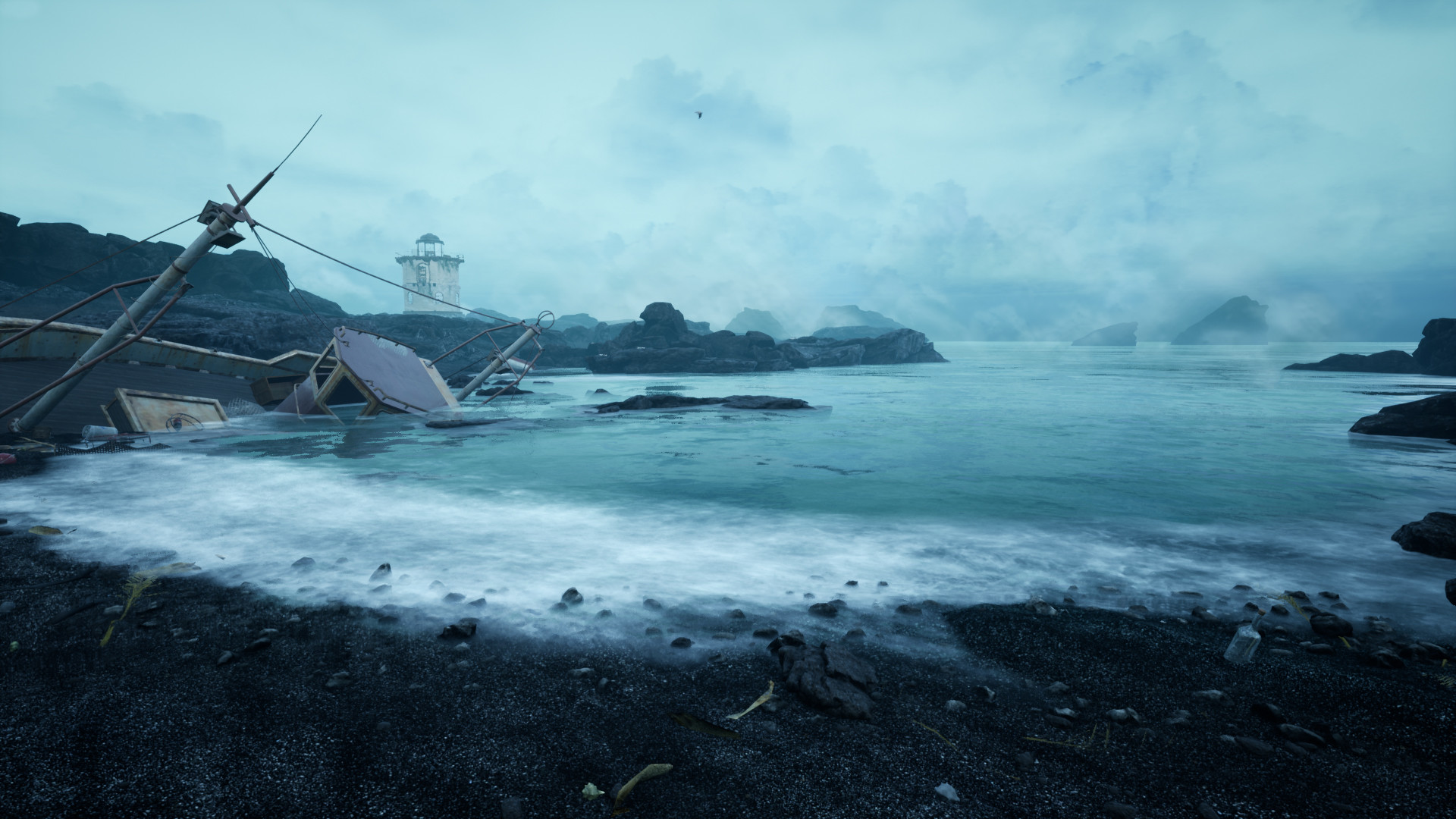
Sound and visual design support the island’s uneasy mood. Narration accompanies Andrew’s journey, while the soundtrack and environmental presentation give exploration a strong sense of atmosphere. These elements make quiet stretches feel charged, allowing tension to build between puzzles and encounters. The slow-burn approach leaves space for the player to notice the surroundings before the next threat appears. Each new area can shift the mood without changing the central goal: continue searching, learn what the island contains and survive the entities that try to stop Andrew from gaining knowledge.
The Shore is a single-player, first-person horror adventure built around exploration, puzzles, artifact-based combat and Andrew’s search for his daughter. Its Lovecraft-inspired mythology informs the entities and places he encounters, while the story’s questions about sanity keep his perspective uncertain. The player moves between investigating the environment and confronting threats, with each activity contributing to the same journey. Atmospheric locations and narration carry the story as it develops, and discoveries add background to the main search. The game keeps its focus on the tension between seeking knowledge and surviving what that knowledge reveals, allowing the island’s mysteries to unfold through play.
- Developer
- Ares Dragonis
- Genre
- First-person story-driven horror adventure with exploration, puzzles and combat