

About The Sexy Brutale
At a masked ball in a casino mansion, priest Lafcadio Boone must uncover how the guests are being killed and alter their routines before the day resets. Observe rooms through doors, use clocks to plan loops, manipulate objects and earn mask abilities as each rescue opens new parts of the mystery.
The Sexy Brutale begins during a masked ball at a casino mansion whose guests are being killed by members of the staff. Lafcadio Boone, an elderly priest among the party, wakes in the middle of this repeating day with a blood-marked mask that lets him remain outside the pattern that traps everyone else. From noon to midnight, guests and staff follow routines across the building; when the clock reaches the end, the day starts again and the murders are set to recur. Boone cannot solve the crisis by confronting anyone. He has to watch what each person does, learn what leads to a death, and find a point in that sequence where a small intervention can change the outcome. The mansion’s occult atmosphere is part of the mystery, while its clockwork systems give the player a practical way to reason about the repeated events. The central task is therefore both investigative and temporal: understand a particular guest’s day well enough to make a different version of it possible.
The casino mansion is a connected environment of rooms, corridors, stairways and distinct wings rather than a succession of isolated murder scenes. Boone moves through it in an isometric view, checking doors and looking for routes between the grand lobby, casino, guest rooms, theatre, music rooms and other spaces. The same room can serve different purposes as its occupants move through their schedules: a place that is unsafe while staff are present may later contain an object or route needed for another part of the investigation. Boone is vulnerable when he shares a room with masked guests or staff, so observation is built around thresholds. He can spy through keyholes, listen from outside, or hide while a scene unfolds, then enter when the people involved have moved on. Exploring is not simply a search for every open doorway; it is a way of learning where people are, what they can see, and which spaces are safe at a given time. The map and brochure help keep explored rooms, character positions and guest information in view, so the player can return to an investigation without treating each loop as a blank slate. Room knowledge becomes a usable map of the day.
Each guest’s murder works like a chain of timed actions that the player must reconstruct. A person leaves one room, follows a routine, encounters a staff member or object, and reaches a fatal event at a particular point in the day. Boone can observe that chain from a doorway, follow the movement between rooms, and repeat the day to inspect a moment he missed. Because the mansion’s events run at once, a sound from elsewhere or an empty room can be evidence about what is happening beyond the player’s current view. The objective is to identify a cause that can be changed, such as an object being moved, a route being opened, or another character being made aware of danger. The game’s puzzles often depend on connecting separate observations rather than finding a single clue in the victim’s room. A route can hinge on information heard from outside a room, on a camera being redirected, or on reaching a particular object after the staff have left; these are examples of changing a condition rather than confronting its cause directly. Once an intervention works, the rescued guest’s situation changes the larger investigation and opens a new layer of the mansion’s mystery.
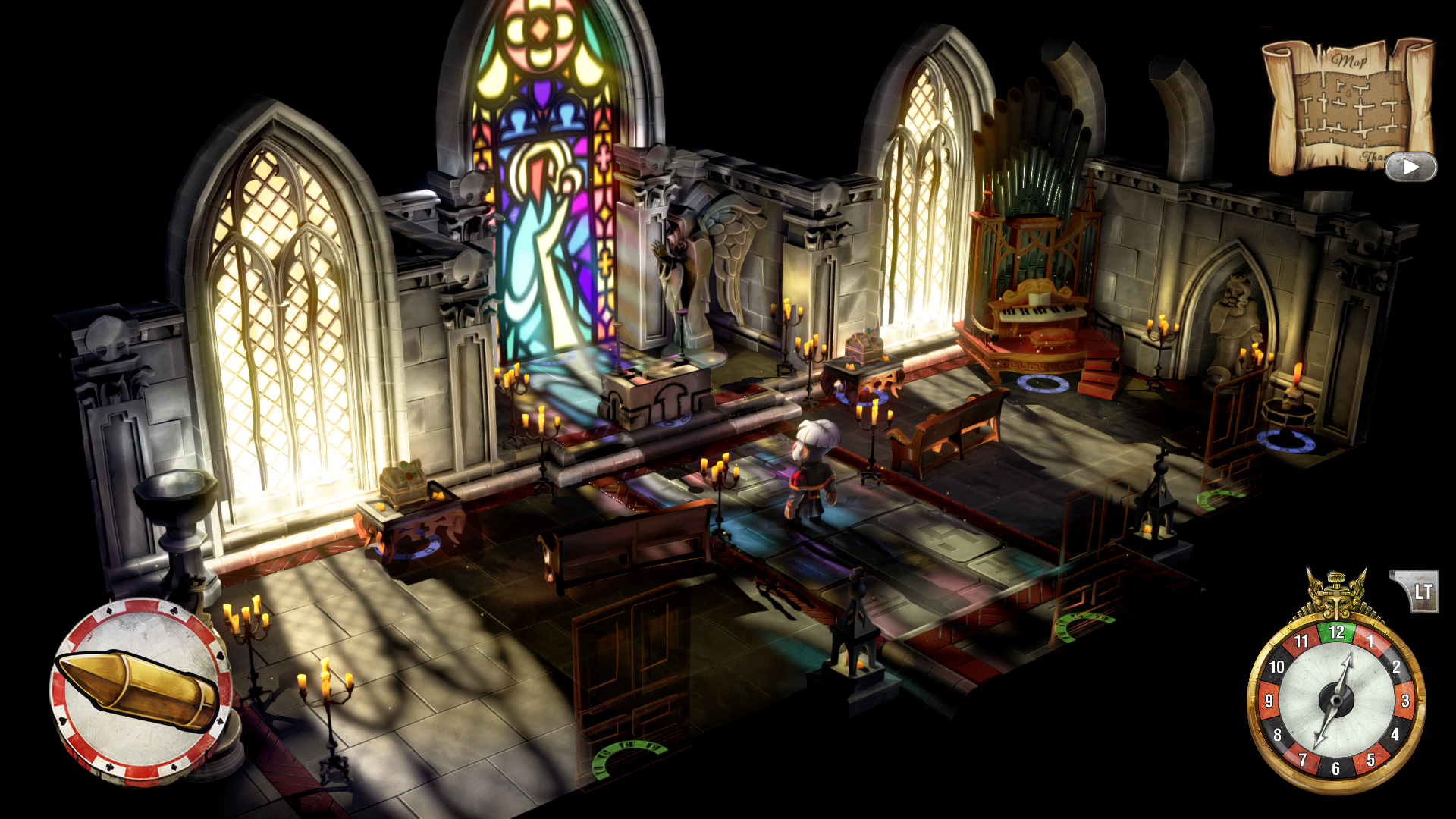
Time is a navigable part of the space. Winding keys activate clocks in different areas, and an active clock can be used to establish a return point for a later loop. The pocketwatch also lets Boone jump ahead to set times, including 4 p.m. and 8 p.m., instead of replaying every minute from the start. These tools make experiments more focused: after discovering that an important event happens in the evening, the player can restart nearby and arrive at the relevant window without retracing a long route. The day still contains simultaneous schedules, so skipping forward is useful only when Boone has already learned what is likely to happen during the skipped interval. A winding key is needed to activate the clock in its area, tying this convenience to exploration rather than making every room an automatic checkpoint. Setting a clock is therefore a choice about where to begin the next attempt, while advancing time is a choice about which part of a known routine to inspect. A well-placed return point turns a large mansion into a repeatable puzzle space.
Objects and abilities let Boone alter routines indirectly. Ordinary items can be picked up and used on people or objects, but many disappear when the day resets; lasting keys and mask powers remain part of progression. This distinction matters because an item found during one attempt may need to be used before midnight, while a later loop can be planned around knowledge gained from the first. In one investigation, Boone can listen for an access code and use a CCTV control to change what a camera shows; elsewhere, an ordinary tool such as a lighter affects a scene through an object. The player must identify what an item does, then judge when and where it can be used without putting Boone in danger. Rather than fighting through a route, Boone watches, hides, tests a sequence and changes one condition at a time, using the mansion’s machinery and routines as the means of intervention.
Saving guests also changes what Boone can perceive and do. Each successful rescue grants a new ability associated with a mask, expanding the tools available for later cases and opening access to more of the building. The Clockwork Mask is associated with control over time, the Moth Mask picks up quiet sounds, and the Voodoo Mask lets Boone perceive activity beyond the grave. These abilities give the new tools a distinct purpose instead of acting as interchangeable upgrades. Their role is not only to make old puzzles easier. A new ability can reveal that a previously unexplained sound, sealed route or hidden detail belongs to a larger mechanism, prompting the player to revisit a room with a different question. The game’s progression is organized around these individual rescue problems: understand one guest’s routine, alter its outcome, gain a new capacity, then use the broadened set of options to investigate further. This structure links character outcomes to exploration without turning the mansion into a conventional combat ladder. Knowledge and perception are the principal forms of advancement.
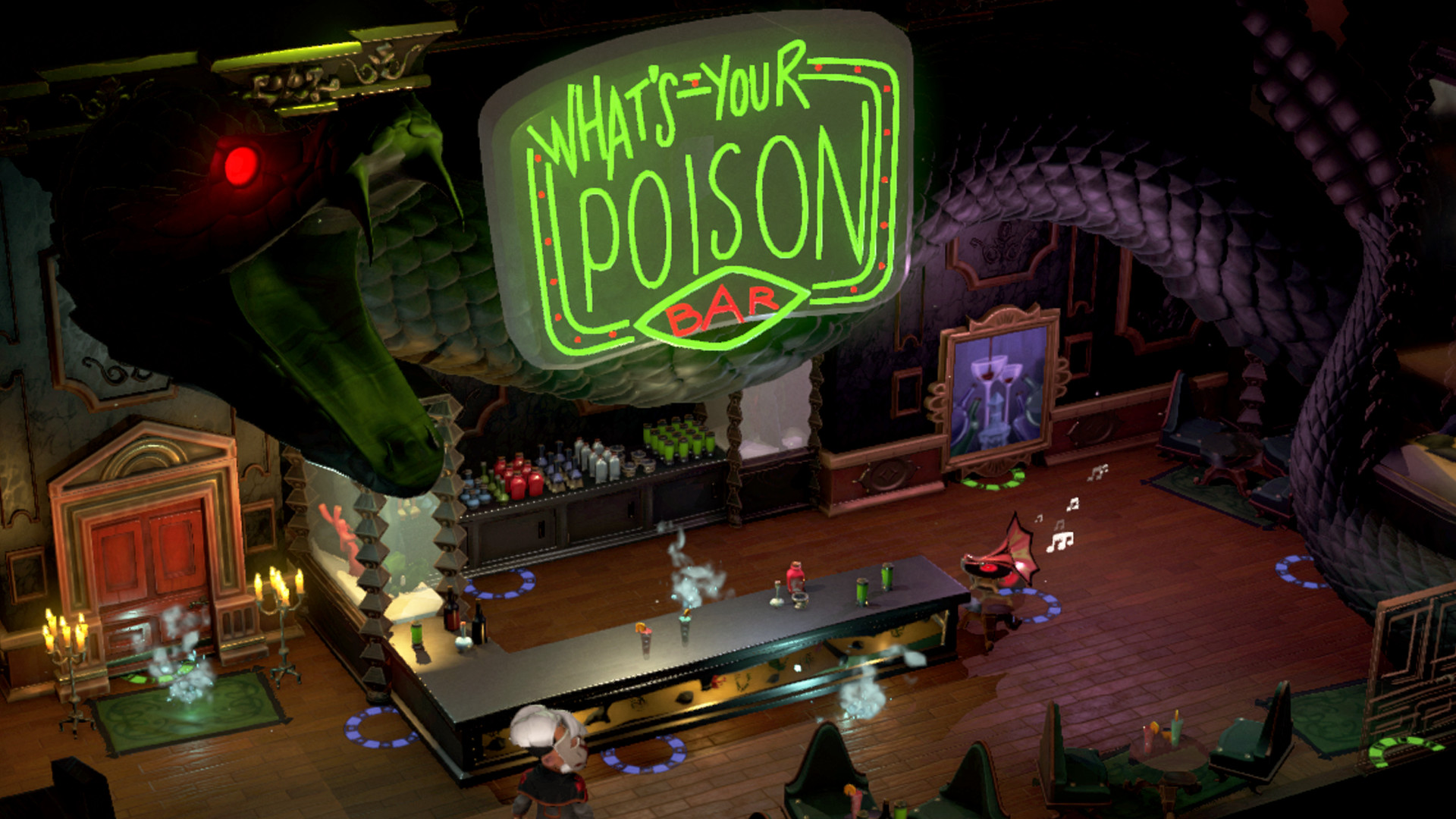
The mansion’s timing clues are not limited to a person standing in front of Boone. A gunshot heard across the building at 3:45, a bell sounding after six, or lights flickering after noon raise questions about what happens in another room and when. These events belong to the same twelve-hour schedule as the guests’ routines, so interpreting them means relating a distant cue to a person, room or mechanism rather than treating it as atmosphere alone. The extravagance of the masked ball supplies the setting: guests move through casino, theatre, guest rooms and other wings while masked staff carry out their parts in the repeated day. The player learns these connected routines from places Boone can safely observe, then can return to a clock or use accumulated knowledge to test a relationship between events.
- Developer
- Cavalier Game Studios; Tequila Works
- Genre
- Time-looping puzzle mystery adventure