
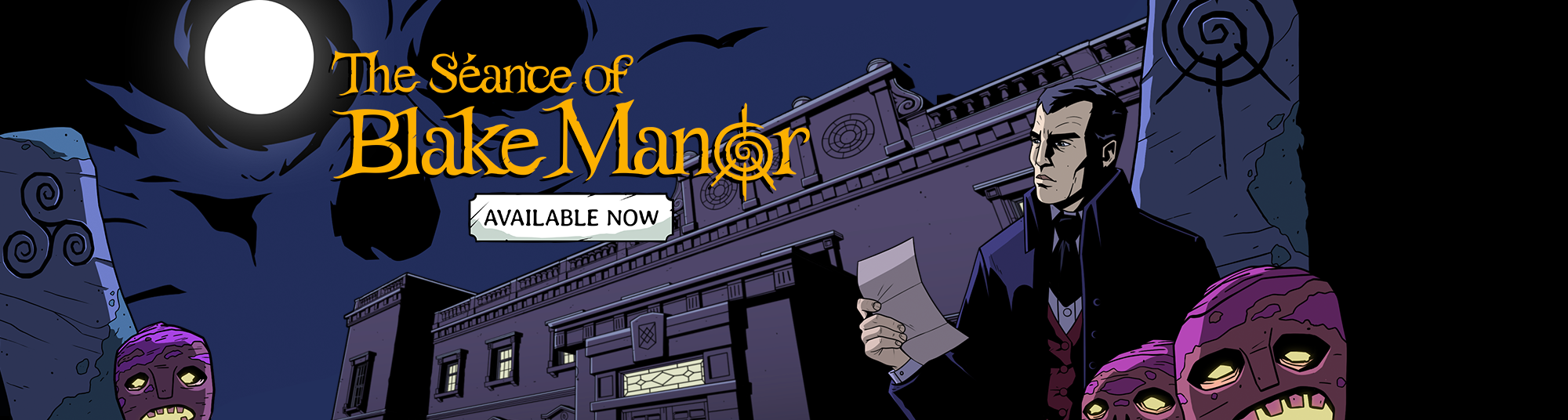
About The Séance of Blake Manor
In 1897 Ireland, private investigator Declan Ward arrives at Blake Manor to find the missing Evelyn Deane before a gathering of mystics holds its Grand Séance. Every inspection and conversation advances the in-game day, while guests follow schedules of their own. The Séance of Blake Manor turns evidence, timing and deduction into a supernatural hotel mystery.
Private investigator Declan Ward reaches Blake Manor in Connemara in late 1897 to find a young guest, Evelyn Deane. She has vanished, yet the hotel's owner and staff continue as though nothing has happened. A Grand Séance is approaching on All Hallows' Eve, drawing mystics to the remote house for an encounter with the dead. Ward has a narrow window in which to learn where Evelyn went, why so many people have gathered and what the hotel is concealing. He enters the story as an outsider, a working-class Dublin investigator among residents and visitors absorbed in spiritualist ideas and private agendas. The premise supplies a detective's task, but the building is not a static arrangement of clues left behind after a crime. Its guests are still living through the days before the ritual. They meet, move and withhold information while Ward is present. This makes the mystery less a search for one hidden object than a study of a place at a particular moment, when a missing person, an old house and an imminent ceremony press on the same group of people.
Blake Manor is explored from a first-person perspective. Ward walks its corridors, examines rooms, finds access to forbidden areas and questions people who may know more about Evelyn than they admit. An ordinary investigative action has a cost: inspecting something or pursuing a conversation moves the in-game clock forward. Other characters follow schedules, so a useful exchange or event can depend on being in the right place at the right time. The clock is not a real-time demand to click faster; it advances through deliberate choices. That gives each decision an investigative weight. Ward might spend time examining a room before a guest arrives, or pursue a lead that draws him away from another appointment. The developer built this system to make a largely linear unfolding story explorable in a less prescribed order, while allowing the people inside it to behave as if they have lives beyond the player's immediate question. It also means an incomplete first investigation need not be treated as a broken run. The game asks for judgment about which lead to follow, what evidence is already sufficient and what might become available later.
Evidence does not live solely in the player's memory. Ward records observations, motivations and clues in an in-game journal, and a mind-map structure helps organise relationships among them. Once enough material is assembled, the investigator can form deductions and challenge a person about an account that no longer holds together. Lead designer Treasa McCabe has explained that the mind maps emerged as a way to make a large, non-linear collection of clues readable; a separate lead system was added after testing showed that removing a traditional quest log left some players overwhelmed. The resulting interface gives a way back into an investigation after a break without requiring a handwritten notebook, yet the player still decides which people and contradictions to pursue. The game's deduction prompts ask the player to complete an account from the material gathered, which makes the difference between having a suspicion and being able to state it with evidence. A character-focused board sits within the larger mystery map, keeping the question of who someone is connected to the question of what happened to Evelyn. McCabe describes these structures as a way to break a complicated story into ideas the player can test, rather than simply releasing a flood of lore in one sequence. The investigation can move between an observed object, a person's schedule and a conversation that changes its meaning. A clue can point toward a guest's motive, open another line of questioning or indicate where Ward should be when the day advances. That combination of note-taking and choice keeps the story comprehensible while preserving the uncertainty of a hotel full of possible explanations.
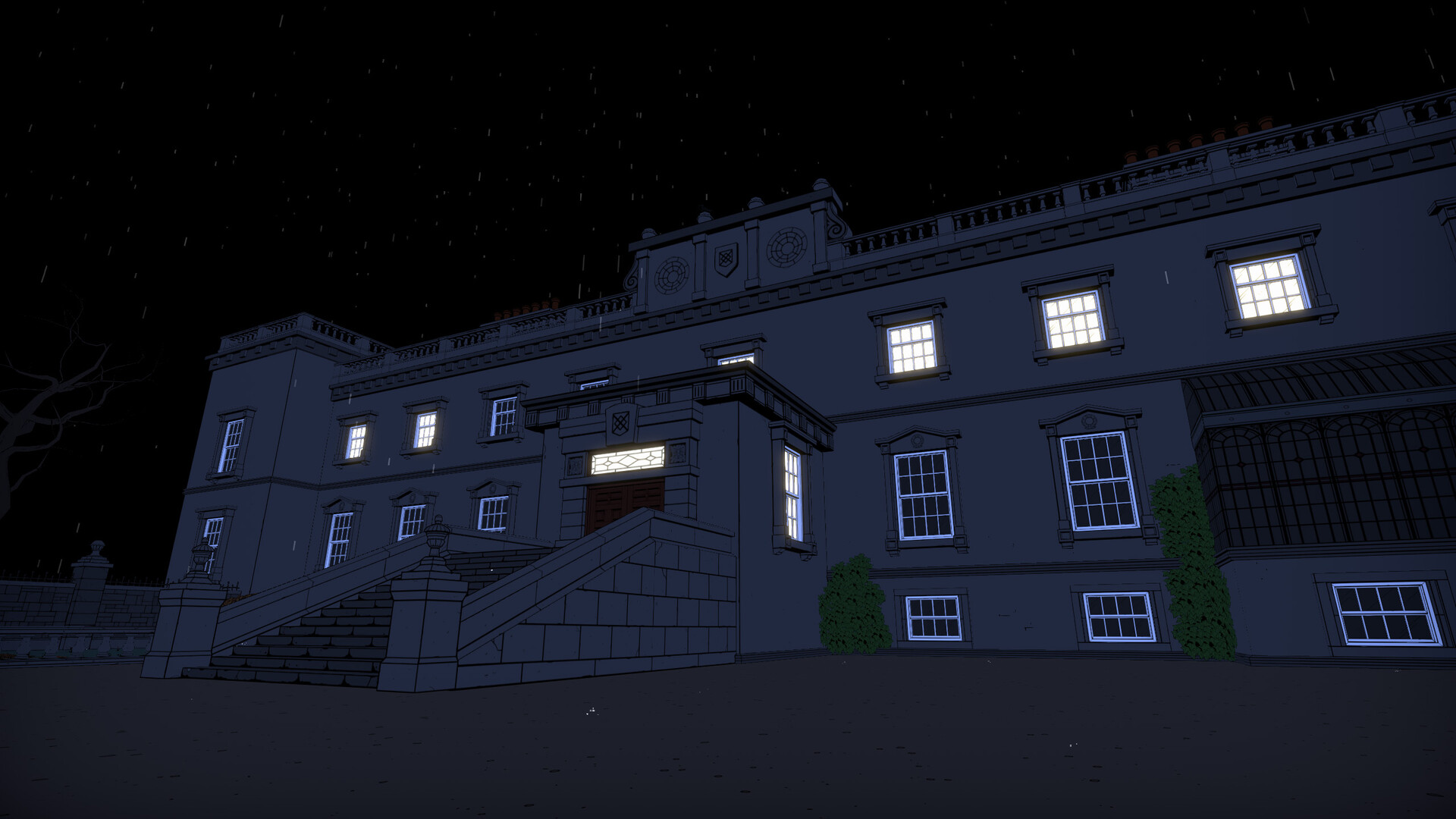
The guests and staff are not interchangeable suspects waiting in one room to be interrogated. Narrative lead Dave McCabe has described a large group made up of staff, residents and people who arrived for the séance, each carrying a secret purpose. Their interests meet Ward's search for Evelyn in different ways, and the house has a history of its own. Victorian spiritualism offers one language for the gathering; Irish mythology offers another for the more unsettling parts of the mystery. The developers drew on stories of fairy forts, haunted places and old gods familiar from Irish oral culture. That background gives the supernatural events a local context rather than treating them as random disturbances in a generic gothic hotel. The player can encounter apparently ordinary social manoeuvring beside accounts of forces that Ward may not yet understand. The game does not demand that every strange report be accepted at face value, nor can the investigation remain a purely mundane exercise in alibis. Finding Evelyn involves learning what the guests believe, what they want from the ceremony and where those beliefs touch the manor's own past.
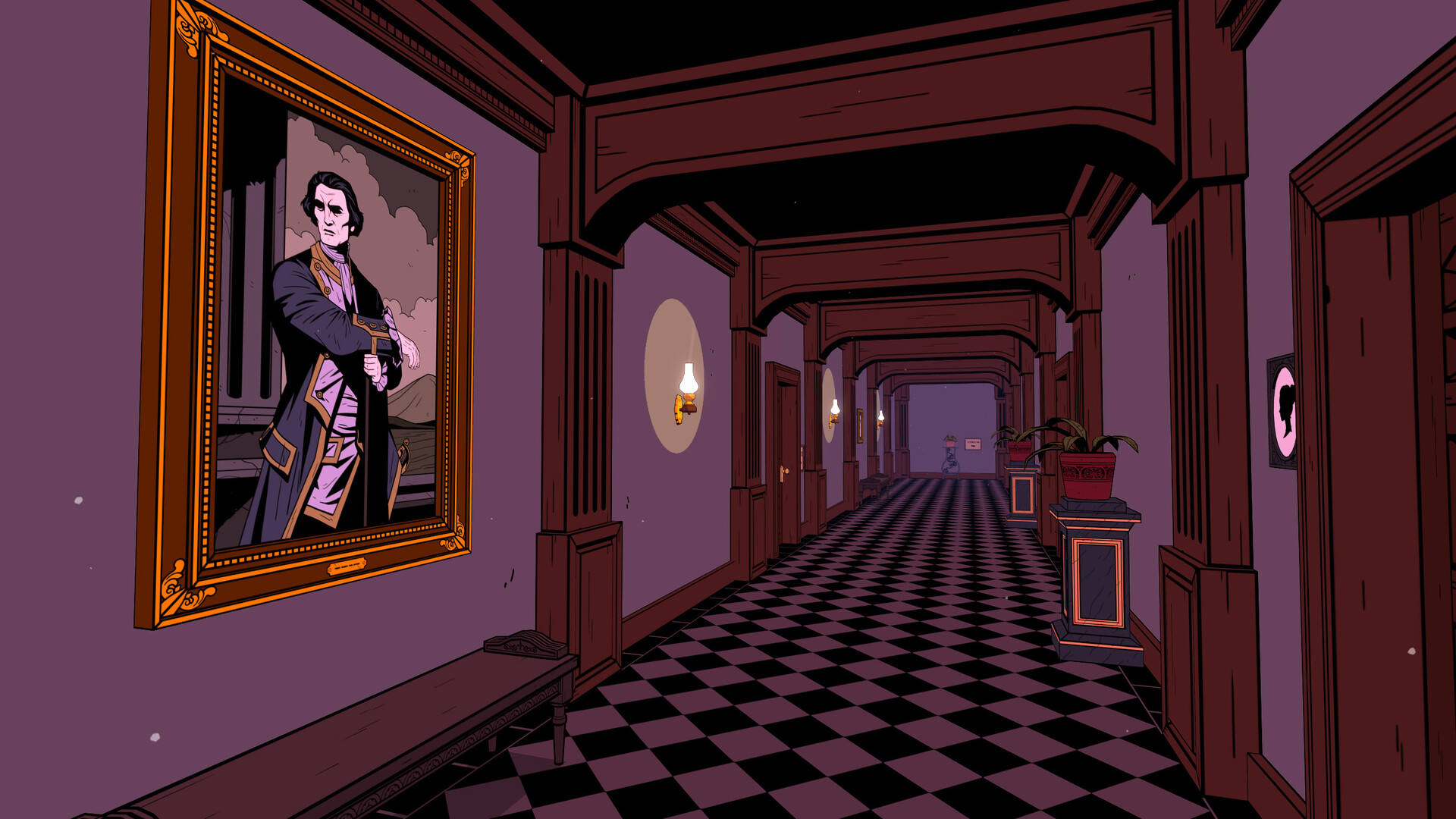
The presentation makes these layers readable at a glance. Spooky Doorway uses a comic-book look for the people and rooms, with strong silhouettes and colour blocks that set off the manor's Victorian interiors. The game also uses cutscenes and a soundtrack that responds to the environment. Those choices distinguish it from the studio's earlier pixel-art Darkside Detective games, while retaining an interest in ghost stories and close observation. A portrait in a corridor or an unnaturally quiet room can suggest history before Ward has assembled a formal deduction about it. The interface keeps evidence close to the scene, so looking at a face, an object and a journal connection are related parts of one inquiry rather than separate games. The house itself changes with the passage of time: a corridor may lead Ward toward a person who was elsewhere earlier, while night brings different possibilities from the day. The visual language supports a detective story whose stakes are both social and supernatural, with no need to reveal the exact resolution of Evelyn's disappearance in order to understand why the next room matters.
The Séance of Blake Manor was developed by Irish studio Spooky Doorway and published by Raw Fury for PC in 2025. The released PC game is currently available only in English. Its design took a different shape during development: Treasa McCabe has described an earlier, more linear version with systems such as a quest log and trust mechanic, before time, mind maps and clue-completion structures helped define the final investigation. Those discarded ideas are part of the game's history, not features to expect in the release. The finished version gives the player a hotel to revisit mentally as well as physically, because information about a guest can change the significance of a place already explored. Ward's journal and the controlled passage of time make that re-evaluation practical. They let the mystery unfold while still requiring the player to choose which possible account to test. The Grand Séance provides a destination for the story, but the journey there is made of smaller decisions: whether to inspect, whom to question, when to return and which connection in the evidence is strong enough to confront someone with. The game's supernatural promises sit on top of that concrete detective work, rather than replacing it.
- Developer
- Spooky Doorway
- Genre
- First-person supernatural detective mystery