
About The Rogue Prince of Persia
A reckless Prince has helped bring the Huns into Persia, and a magical bola returns him to a desert oasis whenever he dies. In this side-scrolling roguelite, each attempt through a changing kingdom joins wall-running and acrobatic combat with discoveries that expand the story, arsenal and possibilities for the next run.
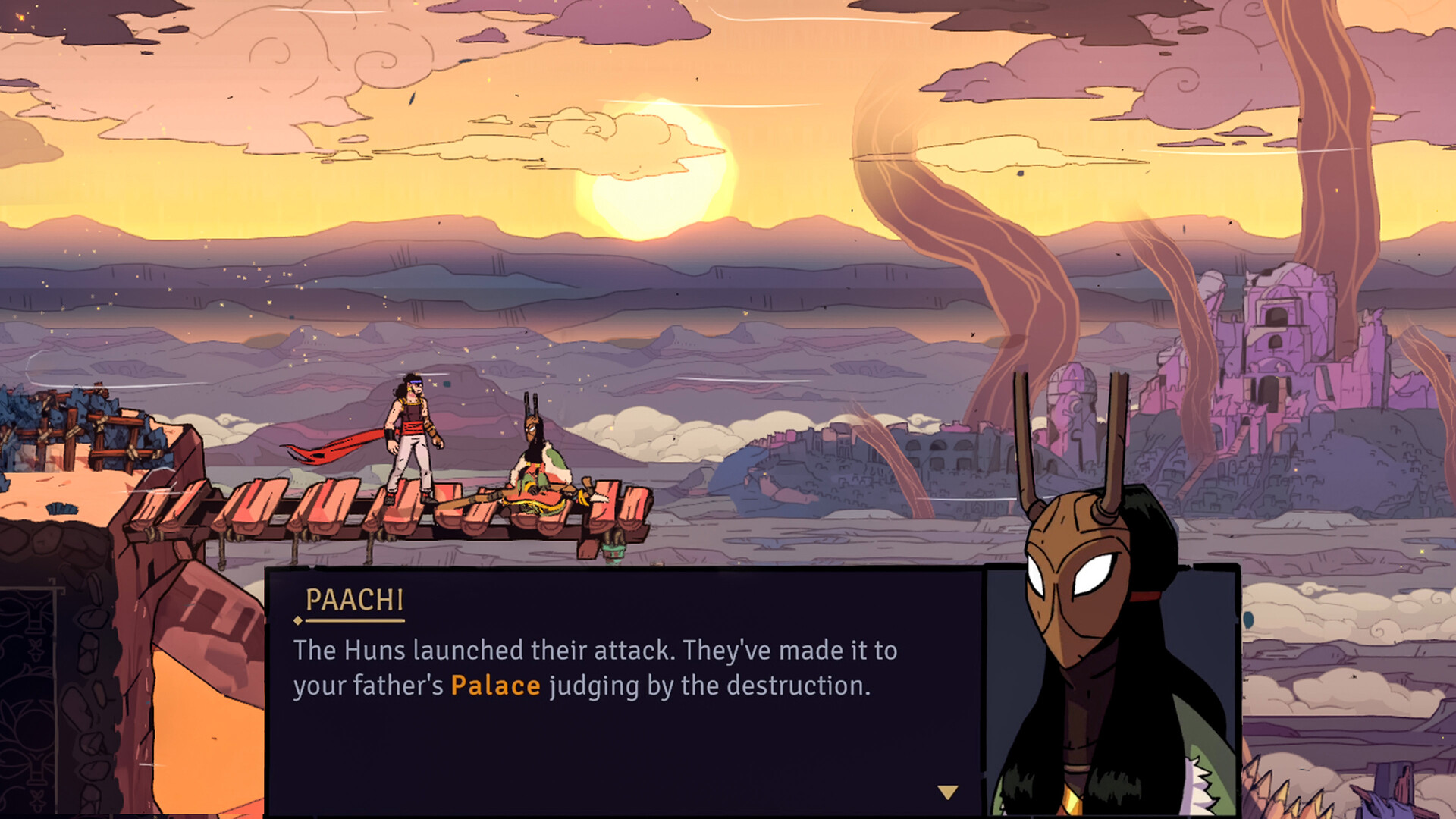
The Rogue Prince of Persia begins with a mistake that its hero cannot simply undo. The Prince has grown up with a magical bola that saves him from death by returning him to the last safe time and place he visited. Familiarity with that protection has made him reckless, and his actions help provoke an invasion by the Huns, whose forces sweep across Persia using dark magic. When he falls and reappears at a desert oasis, the invasion is already underway. He has another chance to act, but the country has not been restored to its former state. That gap between personal survival and the damage done to everyone else gives repeated attempts a purpose within the story. Each journey out of the oasis is a chance to learn how the invaders are moving through the kingdom, reach people he missed before and push closer to saving a capital under attack.
Evil Empire builds that journey as a two-dimensional action-platformer in which the route changes from one attempt to the next. Areas contain rearranged paths, enemies, treasures and traversal challenges, so returning from the oasis involves more than retracing a memorized corridor. An invasion-ravaged village and an aqueduct with treacherous water passages are two of the places used to give the kingdom a physical identity. Doors can lead away from the main route toward rewards or optional challenges, while branching paths ask whether a detour is worth the danger of reaching it. The reshuffling makes each run a fresh reading of familiar spaces: an opening that was easy to approach once may demand a different jump or fight the next time. Exploration matters because discoveries can reveal characters, secrets and alternative routes as well as supplies for the current attempt.
The Prince's defining movement is his wall-run. He can travel up and across visible walls in the background, turning a flat side-scrolling route into a sequence of vertical and horizontal possibilities. A jump can lead into a run, a run into another jump, and a change of height can put the Prince above an enemy before the fight begins. Poles, ropes, switches and moving structures add other ways to cross a hazardous space. The same mobility that carries him past traps also changes how he enters combat: slipping behind a guard or approaching from above is different from meeting an armed opponent head-on. This is a Prince of Persia built around momentum rather than a slow search for one prescribed path. The movement is agile and expressive, yet the Prince remains a physical fighter who must use the terrain around him.
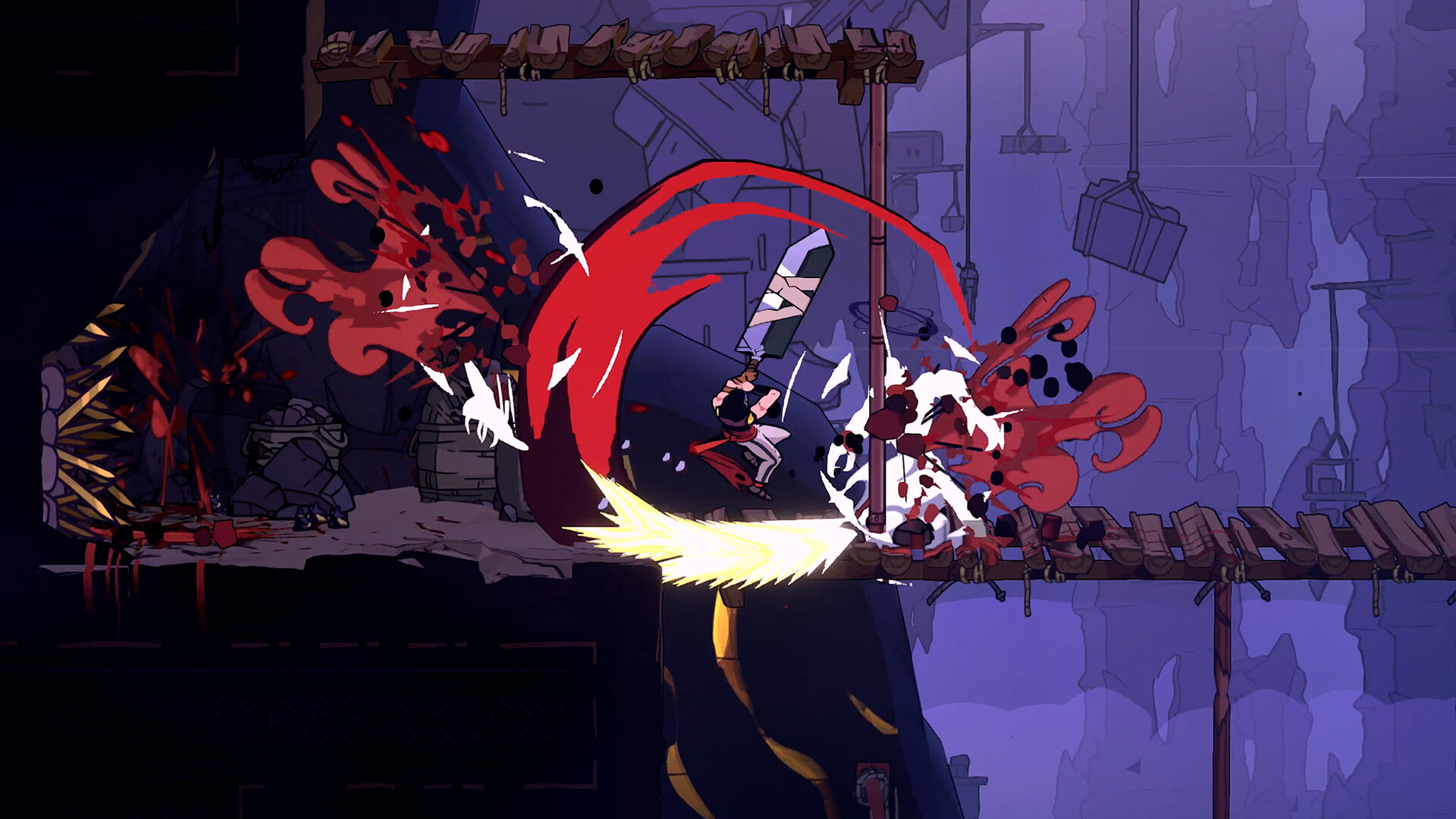
Combat gives that mobility a sharper consequence. The Prince can dodge incoming attacks, strike with a main weapon, use tools at a distance and kick opponents into their surroundings. Weapons differ in their pace, reach and special attacks, so a fast blade invites a different rhythm from a heavier option. A kick may interrupt an enemy or send them toward a wall, a hazard or another foe, turning position into an offensive resource. Wall-running can create the space for an aerial approach, while a quick dodge can keep a crowded encounter from closing around him. These choices encourage players to watch both the enemy and the shape of the room. A platform edge, a narrow passage and a high wall each alter which approach is practical, even before a weapon is swung.
Medallions and tools widen the possible combinations during a run. Medallions can strengthen abilities, attach status effects to attacks or change how a particular action pays off; tools add another way to control an encounter. The full-release game presents a large pool of weapons and medallions, making the available loadout part of the challenge rather than a fixed character build. A useful discovery may suggest leaning into repeated attacks, careful spacing or a movement-based opening, while the next run may offer a very different set of possibilities. The point is to assemble a workable relationship between what the Prince carries and what the current route demands. Experimentation sits beside execution: a strong combination still needs a player who can clear a trap, read an enemy's response and keep moving when the room turns hostile.
Death resets the immediate journey, but the oasis gives the wider adventure continuity. Narrative discoveries populate a Mind Map, creating a record of what the Prince has learned about the people and circumstances around the invasion. Soul Cinders sent back to the oasis can unlock new weapons, medallions and permanent improvements across skill trees. Those systems give exploration two timescales: the weapon or route that helps today, and the knowledge or unlock that changes a later attempt. Difficulty modifiers and random events add further variation to the repeatable structure. The game has a vivid, revised visual style and a soundtrack by Asadi that accompanies its fast movement through Persia. Its central question remains grounded in the Prince's original error: how much can he discover, change and protect when he alone can keep returning after a fatal mistake?
- Developer
- Evil Empire
- Genre
- 2D roguelite action-platformer