

About The Rise of the Golden Idol
In the 1970s, the Golden Idol’s legend draws a relic hunter, scientists, enlightenment seekers and corporate interests into a chain of strange events. As an observer, investigate twenty cases by examining scenes, identifying people, collecting useful terms and assembling deductions. Each investigation contributes to a larger mystery surrounding the artifact and the motives of those seeking it.
The Rise of the Golden Idol moves the saga’s mystery into the 1970s, a period of disco, fax machines, hallucinogens and renewed interest in paranormal explanations. The Golden Idol’s earlier history has faded into rumor, but the relic has not lost its ability to attract people who believe it can change their fortunes or the world around them. The game places the player in the role of an observer rather than a named detective with a fixed biography. From that viewpoint, a determined relic hunter, a group of scientists, members of an enlightenment-seeking cult and corporate profiteers become part of a story that grows across twenty cases. Their occupations and beliefs establish different routes into the same mystery: the artifact has value to each group, but their reasons for pursuing it are not identical. The setting’s modern conveniences also change the kinds of evidence available, bringing offices, media and technology into a series built around close attention to human behavior.
Each case begins with a self-contained situation to understand: a crime, a death, an accident or another unsettling event whose context is initially incomplete. Scenes are presented as detailed, largely still tableaux that the player can inspect at their own pace. Clicking people and objects reveals information, while documents, conversations and environmental details can supply names, relationships, locations and actions. The task is not simply to find a marked clue and follow an instruction. An apparently ordinary object may connect a person to a place or event; a note can clarify who had access to a room; and the arrangement of people can suggest what happened before or after the frozen moment. The observer can revisit the scene and compare details as new ideas emerge. This patient, point-and-click investigation is the game’s central form of movement: attention travels across a composed image and its evidence, while the player decides which details deserve a closer look.
Information gathered in a scene feeds into deduction statements that ask the player to explain what happened, who was involved and how particular events fit together. The game collects useful terms from observations and witness testimony, then makes those words available for completing blanks in the statements. Names, objects, places and actions can all matter, but possession of a word is not the same as understanding its significance. The player has to connect the terms to what the evidence supports and arrange them into a coherent account. A name may be known before it can be matched to the correct person, and an object may be visible before its role in a sequence is clear. This gap between collecting information and interpreting it is central to the puzzle design: the statements test whether clues support a complete explanation rather than whether the player has clicked every obvious item. The redesigned interface keeps these deduction prompts closer to the investigation, allowing the scene and the developing theory to inform one another without relying on a completely separate thinking screen. A solution is therefore a compact explanation built from accumulated clues. If an answer does not fit, the player can return to the tableau, reconsider a document or test another interpretation rather than treating the first plausible story as settled.
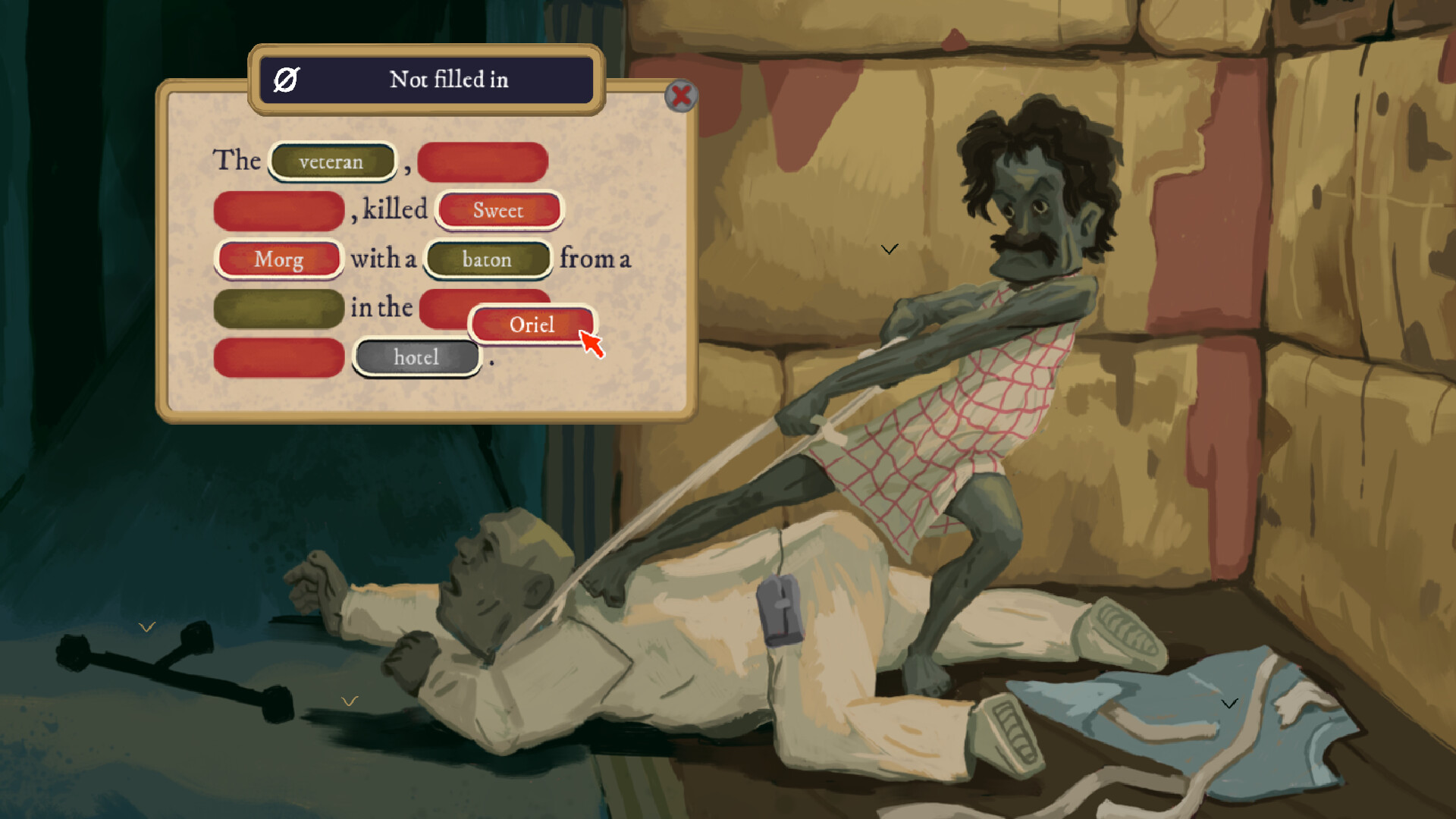
The cases vary in subject and in the kinds of reasoning they require. A prison escape may depend on determining who occupied which cell and how people moved through the institution; a laboratory incident can turn on experimental evidence; a public performance can hide a meaningful sequence inside what appears to be ordinary entertainment. Fingerprints, written records, colors, images and small changes in a character’s appearance can each supply a different kind of link. Some scenes include more than one state or a recording that can be reviewed carefully, so evidence may involve comparing moments as well as identifying objects. In one such recording, the player can pause, rewind and step through a television segment frame by frame, treating its sequence as evidence to interpret. Another investigation uses the same room at two different times, inviting comparison between what was present before and after an event. Those examples show how the game varies the act of looking: sometimes a detail is spatial, sometimes temporal, and sometimes the important clue appears only through a comparison. The game’s approach does not depend on combat, reflexes or traversing a continuous physical world. Progress comes from finding relevant information, recognizing what it implies and checking whether the resulting account explains the visible facts. That variety lets the investigative method remain familiar while each new situation changes the questions that method must answer.
The people in these cases occupy a broad cross-section of 1970s institutions and subcultures: prisoners and guards, researchers, corporate employees, performers, spiritual seekers and people caught near the consequences of other people’s plans. Establishing who is who is often a necessary first step. A name spoken in conversation may need to be matched with a face; a surname in a letter or work record can complete that identification; and the resulting identities can clarify who had the knowledge or opportunity to act. Motives have to be inferred from the same evidence. The cast is connected through private ambitions and professional relationships, but the game does not ask the player to accept every character’s account at face value. Instead, repeated names, objects and organizations turn small facts from one investigation into context for another. In this way, an individual case can be solved locally while also adding another piece to the wider picture.
The larger structure is divided into chapters that group cases and give their findings a cumulative role. At the end of a chapter, a further deduction asks the player to summarize what the preceding investigations reveal about the underlying story. This step shifts attention from the immediate mechanics of one scene to connections that may have been easy to miss while solving it: recurring people, shared interests and the changing reach of the Idol’s influence. It also makes progression depend on revisiting earlier conclusions in light of newer information. The game does not present its central mystery as a single exposition dump; its account is assembled from local explanations and then tested at broader scale. Hints are available for players who need help identifying a direction, with guidance that can prompt further thought or provide a more direct clue. The purpose of this system is to support continued deduction without replacing the work of interpreting the evidence.
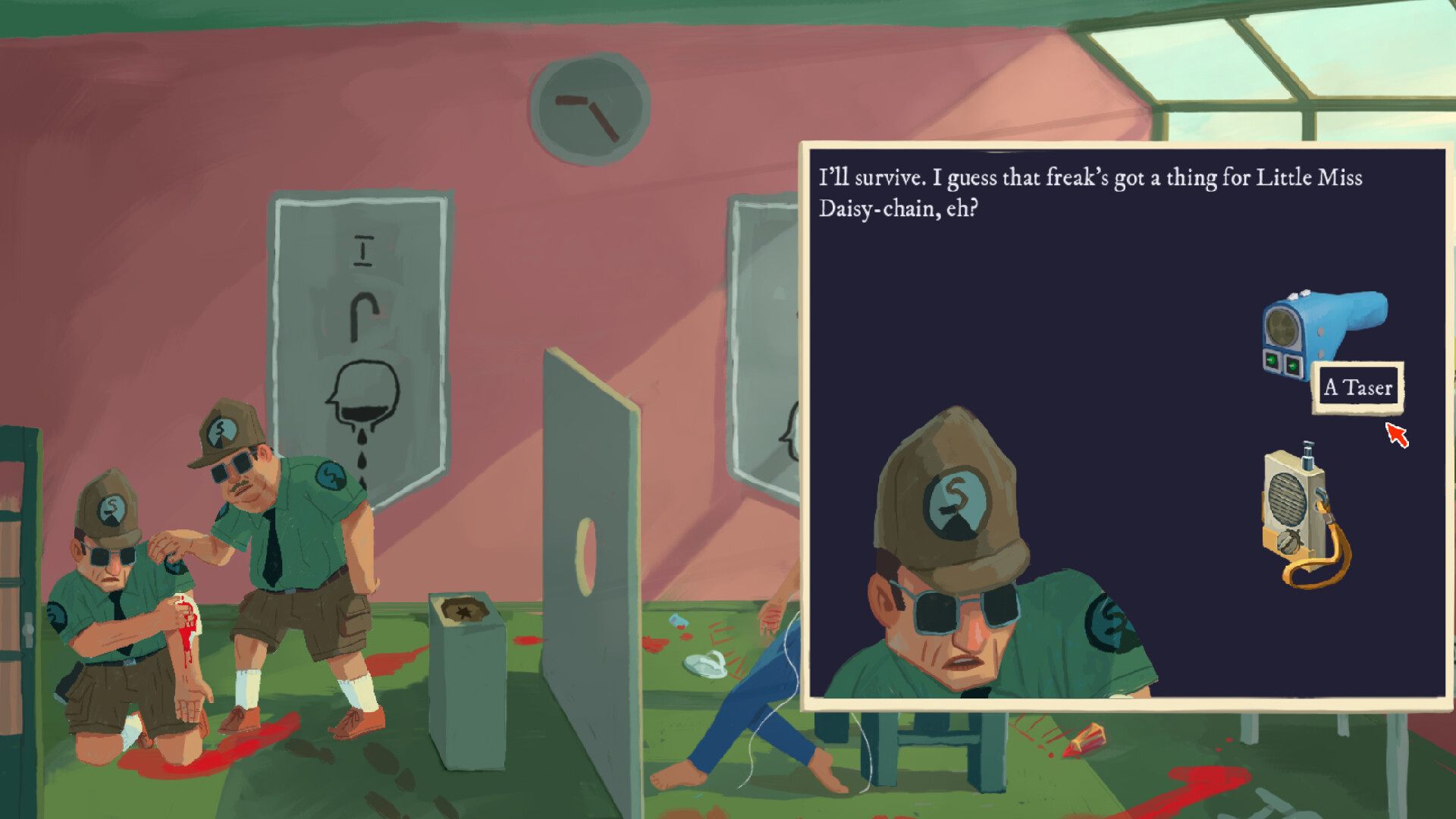
Presentation supports the contrast between everyday settings and events that resist an ordinary explanation. The 2D scenes hold a precise instant still, using objects, gestures and spatial relationships as part of the evidence rather than as decoration alone. A desk, a noticeboard or the contents of a pocket can carry information that spoken dialogue leaves out; the player’s attention gives these details their narrative weight. The period setting supplies recognizable objects and cultural references, while the Golden Idol links those contemporary spaces to an older and more troubling legend. The game is a standalone sequel to The Case of the Golden Idol, so its central investigations are set in a later era and can be approached as their own mystery, even though the artifact’s history connects the two games. The base game contains its twenty-case investigation and chapter deductions. Golden Idol Investigations expansions and the Detective Pass are separately listed add-ons, and are outside this account of the base game.
- Developer
- Color Gray Games
- Genre
- Deduction puzzle adventure