
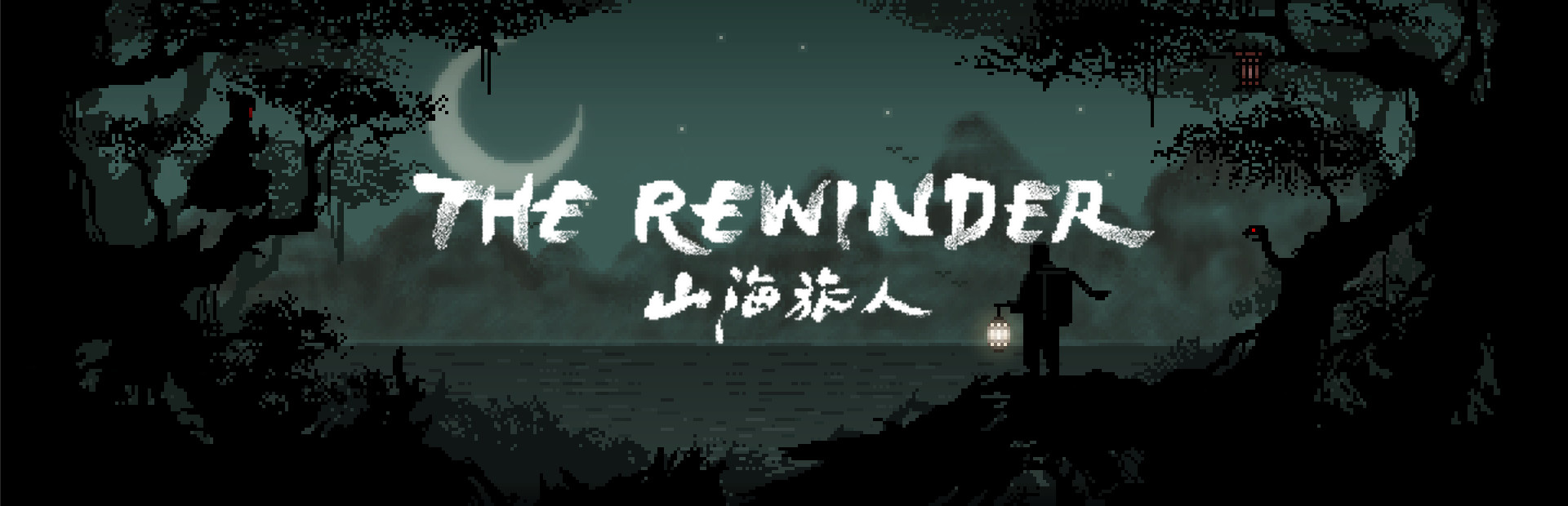
About The Rewinder
Yun, the last known Rewinder, enters memories to influence choices that shape life, death and reincarnation. Sent by the Spirit Wardens to investigate Reed River Village, he searches abandoned homes, speaks with people and spirits, and combines clues with inventory and memory puzzles to learn why its dead cannot move on.
The Rewinder casts Yun as a specialist in the passage between death and rebirth. In a world where the reincarnation cycle has been disrupted, the Spirit Wardens send him to Reed River Village to investigate a spirit unable to reincarnate. The settlement that was once thriving now appears deserted and troubled by resentful spirits; one woman remains in the teahouse, waiting for someone. That immediate mystery gives Yun a concrete place to investigate while opening onto a larger question about what happened there seven years earlier. The game draws on traditional Chinese folklore and mythology, presenting a supernatural afterlife with its own guardians and rules rather than treating ghosts as isolated scares. The Spirit Wardens, the Ox-head and Horse-face Guardians of the Beyond, and Tudi Gong, Keeper of the Land, place Yun’s work within a network of spiritual authorities and local beliefs. The stakes are both personal and cosmological: understanding individual deaths is tied to repairing the cycle that should carry spirits onward.
Yun’s investigation uses the familiar grammar of a two-dimensional point-and-click adventure. He moves through village spaces, examines objects, speaks with characters, follows paths between locations and gathers items that can be applied elsewhere. Conversations and observations provide context for tasks, while the journal and gallery preserve clues and information the player has encountered. Environmental details matter because a seemingly ordinary object can become a tool, a memory token or evidence about the village’s people. Inventory puzzles connect rooms and characters: finding an object is only one step, and its use may depend on learning who needs it or what event it relates to. The supporting spirit Light accompanies Yun and offers guidance, helping explain puzzle instructions as the investigation proceeds. This structure makes movement through the village investigative rather than action-oriented. The player revisits details with new context, tests possible uses and builds a picture of how the community functioned before its collapse. Conversations provide context for tasks and help the player understand the people involved; the defining changes to the case come from solving puzzles and altering memories.
The defining ability is Rewind: Yun can enter another person’s memory and influence actions that affect the person’s fate. A memory is not opened by selecting a generic time-travel command. The investigation first supplies a memory item associated with someone; Yun then brings it to a shrine, completes the shrine’s reverse-action puzzle and identifies whose memory the item represents. Only after that sequence does the related past become a playable space. This threshold links the present-day detective work to the supernatural mechanic: the player needs to understand the person well enough to interpret the fragment before trying to change events. Within a memory, the player observes a short sequence of actions and can pause or move through it at different speeds. The goal is to find opportunities where an intervention can redirect what happens. Those episodes function as compact investigations with a timeline, people whose behavior can be influenced and a result that depends on the clues Yun has gathered. The game’s puzzles therefore include both physical object problems in the village and causal problems in a remembered moment.
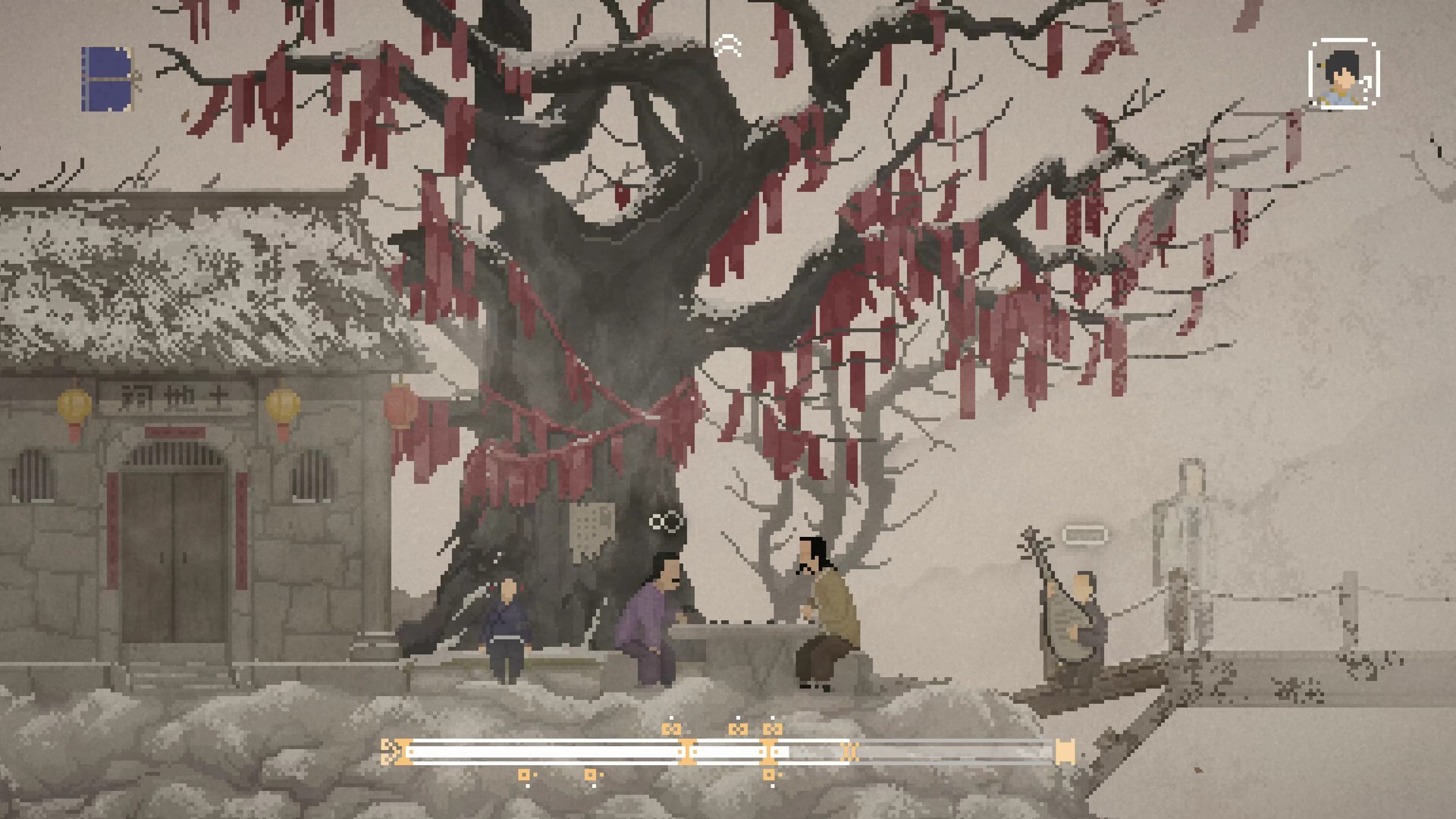
Senses are the key to changing a memory. Yun gathers them from details in the scene or from the thoughts of characters who are musing. A Sense represents an idea or perception that can be brought to bear on someone who hesitates, inviting that person to think or act differently. The player has to connect the collected idea to the right character and moment; simply possessing a Sense does not guarantee a useful intervention. Timing is part of the reasoning because a character’s hesitation occurs during the memory sequence, but the sequence can be paused, fast-forwarded or rewound to checkpoints, giving the player room to inspect and reconsider. Successful interventions alter actions within the memory and can change its final outcome. The practical loop is thus observation, interpretation and targeted influence: look for the thought, understand what it implies, then apply it when a person is receptive. This differs from a conventional branching dialogue tree because the crucial options are discovered in the environment and expressed through Senses. The player is reconstructing the cause of an event while also testing how a changed choice could alter its consequence.
Outside the memory sequences, the adventure varies its puzzles instead of relying only on item combination. The puzzle roster includes number and logic problems, a lever-and-scale challenge, an abacus puzzle and dexterity tasks such as a spinning wheel. Some puzzles use conventional clues placed around the environment; others ask the player to infer a rule or coordinate an action at the right time. Tools can include recognizable adventure-game objects such as a pickaxe or lighter, alongside culturally specific items such as a pipa, a plucked string instrument. Their usefulness comes from context rather than combat statistics: an item helps Yun interact with the setting, solve a practical obstacle or continue a character’s story. This combination of puzzle forms gives the village investigation a varied rhythm. A quiet conversation or search may lead to a logic puzzle, while a shrine sequence shifts attention to ritualized movements and memory ownership. Light’s hints help bridge these different forms, but the player still has to notice relationships among clues and decide when an action belongs in the present or in a remembered past.
The story’s progression is organized around the case of Reed River Village, with present-day exploration feeding access to memories and those memories revealing the circumstances behind the dead who remain. Yun’s route follows leads through people, objects and places; its puzzles and memory interventions take precedence over combat. The tension comes from what the investigation discloses and whether the player can interpret the clues needed to redirect a memory. The game also contains a secret memory level and additional achievements. After completing the story, a Karma Stone enables chapter and checkpoint selection for revisiting scenes; that is a post-completion convenience rather than the main route through the story. The standalone game The Rewinder is separate from its Root of Evil add-on and the later sequel. Steam lists the game for Windows and macOS, with its own free demo and separate downloadable soundtrack and add-on content. The demo, soundtrack and add-on are separate from the base adventure.
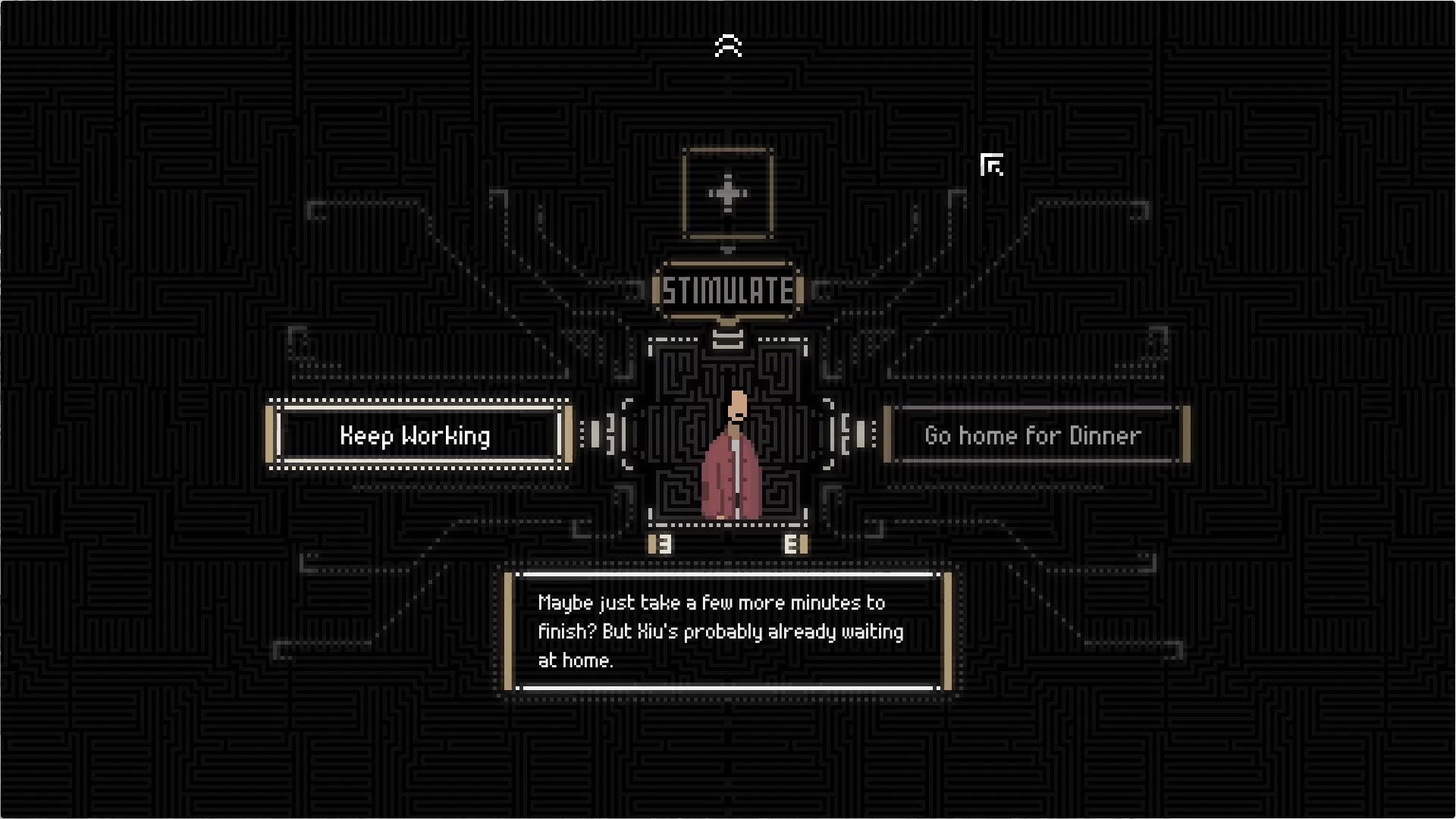
The visual design translates the folklore setting into detailed pixel art that evokes Chinese ink painting. Scenes use atmospheric touches such as moving leaves, rain and snow, and the contrast between richly designed environments and simpler human faces keeps attention on places, objects and supernatural presences. The effect is not merely a backdrop: the painted look gives ordinary village spaces the quality of a remembered or illustrated tale, while distinctive figures such as the guardians make spiritual roles legible. In-world signs and notes use Chinese characters, with English translations appearing when needed, so reading is integrated into examining the setting. Most dialogue is text-led rather than fully voiced. Sound effects and music add texture to the environment, and the score combines traditional Chinese and Western instruments with occasional electronic elements. Ambient details—the wind, a sigh, or the sound accompanying a journal entry—help distinguish quiet investigation from the more deliberate rhythm of a shrine or memory puzzle. This presentation supports a game whose movement is primarily attentive: the player reads scenes for clues, follows Yun through connected locations, and watches repeated moments closely enough to understand how a different choice could change what follows.
- Developer
- Misty Mountain Studio
- Genre
- 2D puzzle adventure / point-and-click adventure