
About The Red Lantern
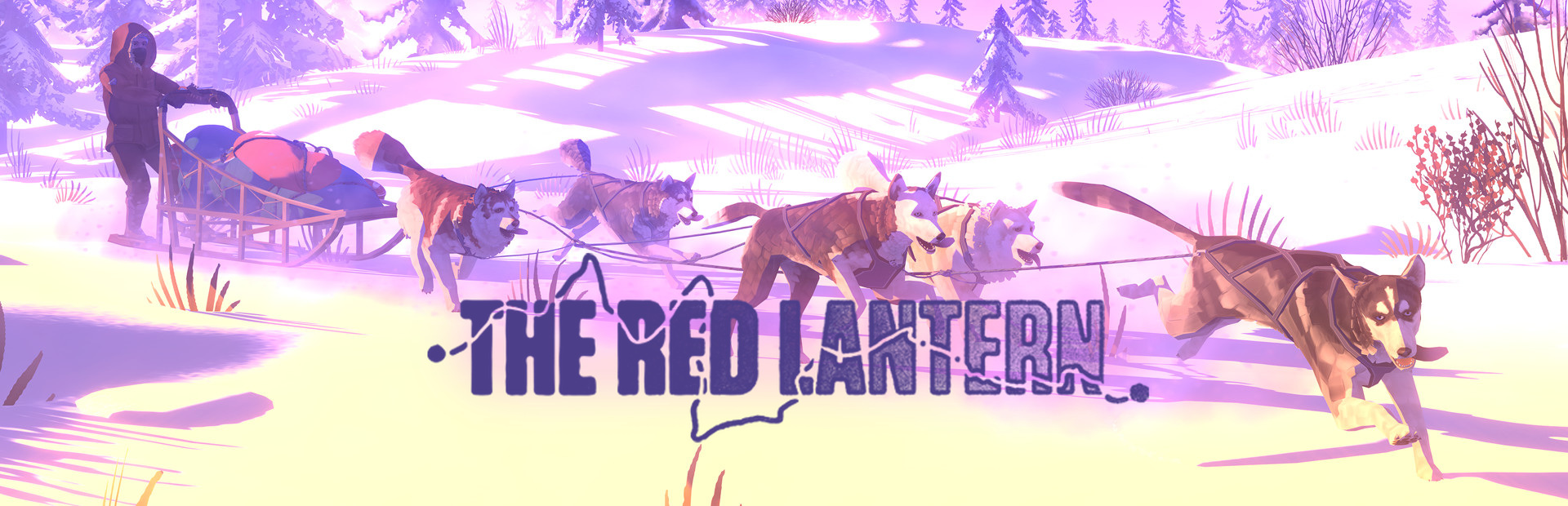
In The Red Lantern, a woman known as the Musher and her sled dogs cross the Alaskan wilderness to reach a new home. Each run brings changing encounters, route choices and resource pressures. Caring for the dogs, hunting for food, resting at camp and learning from failed attempts shape the journey.
The Red Lantern follows the Musher, a woman who leaves city life to begin again in Alaska. Her plan is to build a life around dog sledding, but reaching her home means travelling through an unforgiving wilderness with a team she is still learning to lead. Chomper, her best friend, is part of the journey, while the player chooses four additional dogs from a wider group to form the working team. The dogs are not interchangeable decorations: each has a personality and individual traits that can influence how encounters play out. The premise makes the trip both a practical survival route and a story about the bond between the Musher and the animals in her care. Runs start from a vehicle and branch across a trail toward a cabin, with the route presenting a changing selection of events along the way. The writing is delivered through the Musher's voiced reactions and the situations she encounters rather than through a conventional quest hub full of characters. A failed expedition is framed as a nightmare that gives her reason to prepare differently for another attempt. That loop supports the central premise: reaching a remote home requires learning what this particular team needs, how Alaska's dangers can disrupt a plan, and which supplies deserve space before the sled sets out again.
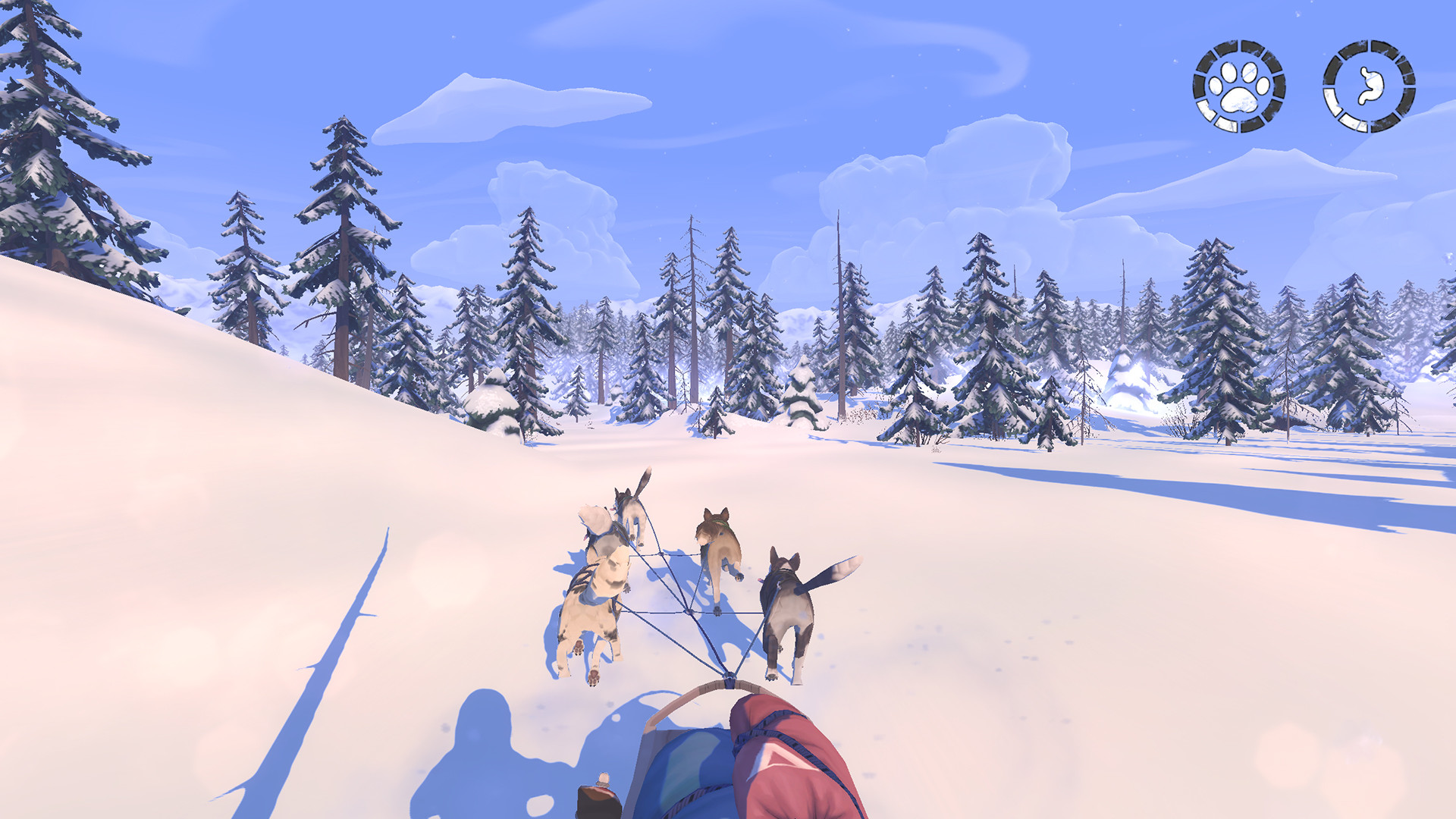
The player does not steer the sled freely through a continuous landscape. The journey is organized into trail sections and encounters, and choices determine how the Musher responds to what appears. At a fork, she can take one direction or the other; at a wildlife encounter, she may hunt, approach cautiously or simply observe when that is offered. These decisions have practical costs. An optional detour can provide meat or supplies but consume energy, while a direct route may preserve strength at the price of missing a useful opportunity. This makes navigation a sequence of judgments about risk, supplies and the condition of the team rather than a test of manual sled driving. The encounter pool includes wildlife, environmental hazards and discoveries such as abandoned structures or supply drops. Some events can help, others require resources to resolve, and their order is not identical from run to run. The repeated structure allows the Alaskan bush to feel unpredictable while keeping the player focused on a readable set of decisions. Wildlife is not simply scenery: it can be a source of food, a danger to the dogs or a moment to avoid escalation. The Musher's responses also build the narrative texture of each trip, as her voice registers the uncertainty and character of the people and animals travelling with her.
Survival depends on keeping several linked needs in balance. Food feeds both the Musher and the dogs, energy affects whether the team can afford strenuous encounters, and health and warmth can deteriorate during the journey. Ammunition supports hunting and can protect the group from dangerous wildlife, while medical supplies are needed when an encounter causes injury. Those supplies are finite, so shooting at an animal is not a cost-free way to fill the sled. A hunt can require a short aiming challenge and a decision about whether the remaining bullets justify pursuing the opportunity. At camp, the player can rest, feed the dogs, tend injuries and interact with them; a stop gives the party a chance to recover but also has to be weighed against remaining resources and distance. Hunting for meat, keeping the team rested and deciding when to treat an injury all feed into one another. Spending energy on a detour may make a later encounter harder; saving ammunition can leave less protection if a threat appears. The game presents these pressures through visible meters and discrete choices rather than a broad crafting simulation. Its survival loop is about anticipating the next leg, reading what the team can withstand and responding when the trail produces something unexpected. Resource management therefore shapes both the pace of travel and the relationship of care at the center of the story.
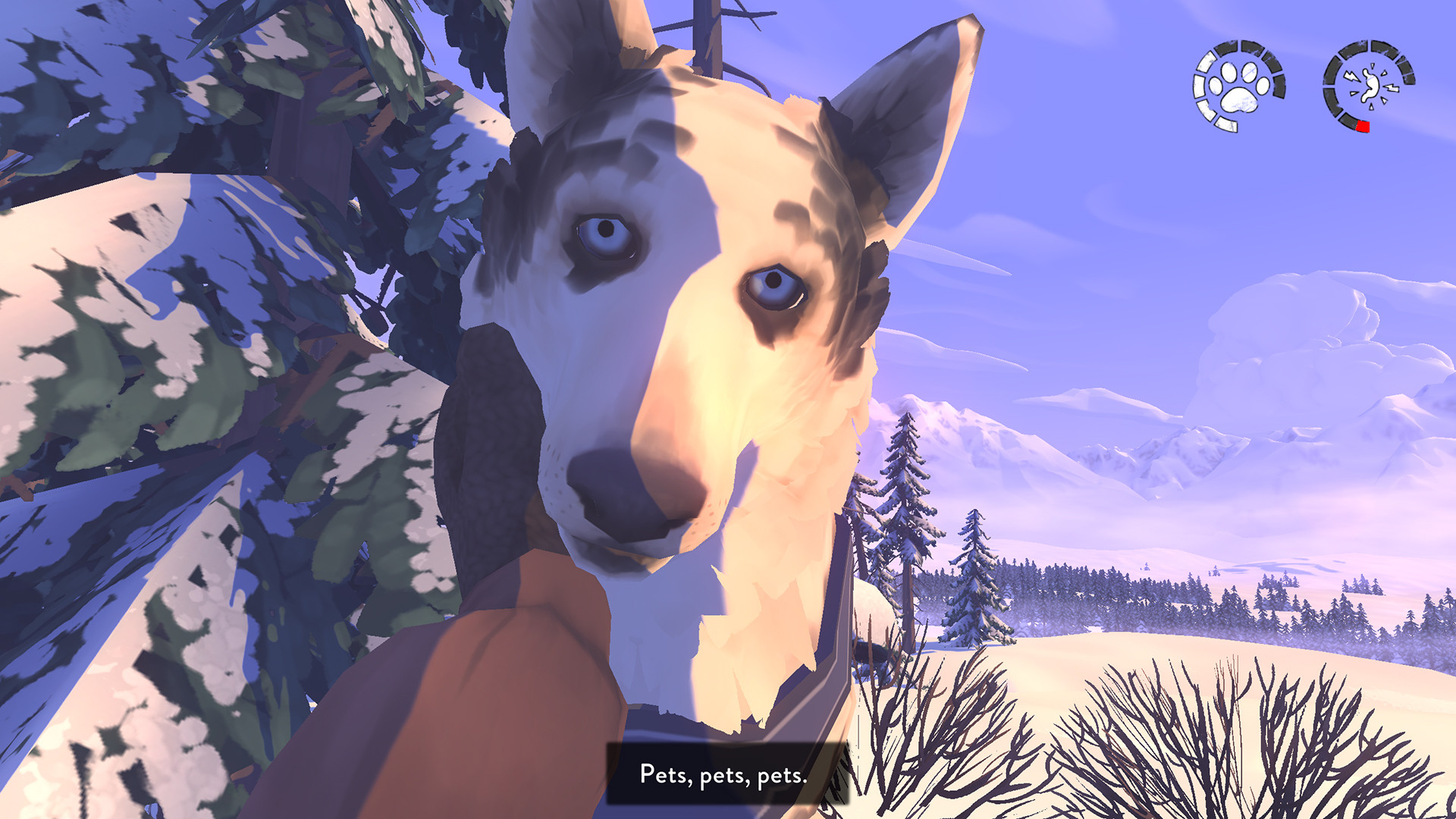
Choosing and caring for the dogs adds a longer arc to those immediate calculations. The team is selected from a pool of adoptable animals, and the four chosen companions each bring their own personality, story and useful qualities. Some can be better suited to hunting or sensing, while other traits affect how a dog responds to the wilderness and the Musher. A dog that is appealing for its character may also bring a demanding appetite, which turns team selection into a meaningful trade-off rather than a purely cosmetic choice. Individual reactions give repeat encounters a personal dimension: the same sort of event can feel different depending on who is pulling the sled. At camp, the player can pet the dogs, feed them, allow them to rest and treat injuries. Those interactions sit beside the survival gauges, making care part of the practical routine rather than an unrelated affection system. The game also tracks the trust that develops between the Musher and her companions across a run. Since a failed run leads back to preparation, the player can use what happened to choose supplies more deliberately on the next outing and to reconsider the team. The dogs' separate traits and stories create continuity between otherwise changing trails. The trip is still about reaching the cabin, but each run also reveals more about how this particular group works together under pressure.
Failure is part of the game's progression. When an expedition ends before the Musher reaches the cabin, she wakes as though the preceding trip were a nightmare, and preparation for the next run can account for what went wrong. If food was the first shortage, she can take more food; if ammunition ran out, she can adjust that supply. Tools can change what is possible on a later trip: an axe opens a way to gather wood, while a fishing rod offers another route to food when hunting supplies are scarce. This progression changes the conditions of another attempt rather than granting the Musher a conventional level, skill tree or combat build. The trail remains a sequence of uncertain encounters, so added preparation improves the available options without making every outcome predictable. Learning includes recognizing the cost of a route, understanding how much energy an optional activity consumes, and identifying which resource shortage proved decisive. Because new runs can start with different conditions and event combinations, the player applies that knowledge to a fresh set of decisions. The structure joins narrative and mechanics: the nightmare framing gives a story reason for repeated journeys, while the gradual accumulation of supplies and tools represents the Musher becoming better prepared. It is a roguelite loop centered on endurance, planning and adapting the team's preparation, rather than on defeating enemies to gain experience.
Reaching the cabin changes the routine from an expedition with a fixed destination to a place where the remaining dogs and the sled team can receive further attention. After arrival, the player can continue exploring and training the dogs, and adopt those who were not part of the original team. The cabin also unlocks Zen Mode; in it, the dogs can run without the player managing the same survival route. The cabin therefore functions as a progression milestone and as a shift in the player's relationship to the journey. Before reaching it, the focus is on preserving the team's health and supplies across a dangerous trail. Afterward, dog training and adopting the rest of the group extend the connection to the animals beyond the initial run. The presentation supports this quiet rhythm through soft, snow-covered scenery, changing Alaskan views and a score by Hrishikesh Hirway. The Musher is voiced by Ashly Burch, and her narration gives the events a personal point of view while the dogs' distinct behavior makes the team readable as individuals. Developed by Timberline Studio, the game brings its narrative survival loop to PC and Nintendo Switch. Its central systems remain the trail choices, resource balance, camp care and dog-specific interactions that carry the Musher from her starting point toward a new home.
- Developer
- Timberline Studio
- Genre
- Narrative dog-sled survival roguelite