
About The Quarry
When a stranded group of summer-camp counsellors spend one final night at Hackett’s Quarry, a summer party gives way to a fight to survive the woods. Guide nine playable characters through exploration, tense encounters and consequential choices in a branching horror story where decisions and quick reactions shape who makes it to morning.
The Quarry begins as the summer at Hackett’s Quarry camp is ending. A stranded group of counsellors cannot leave as planned, and the camp’s owner, Chris Hackett, tells them to stay inside after dark. The warning collides with the group’s plans for one last night together, sending them into the surrounding woods as the situation turns dangerous. The story shifts among nine playable counsellors, each with their own relationships and way of responding under pressure. Their separate scenes gradually connect the camp, its nearby locations and the people who live around it, while the player decides how the group handles a night that keeps producing new reasons to distrust the dark.
Control moves from one counsellor to another as the group splits up, reunites and pursues different immediate goals. During exploration, you guide the current character through cabins, paths and other parts of the camp, looking for clues and objects that can add context to what is happening. These quieter sections are deliberately bounded: doors and interactable details provide points of attention, while conversation lets the characters reveal their assumptions, tensions and loyalties. The player is not building a combat loadout or managing a conventional survival inventory. Instead, exploration supplies information and puts the next decision in context, so a detail discovered in one area can change how a later encounter feels.
Dialogue and action choices are the main way the player steers the story. Conversation options can make a counsellor cautious, confrontational, joking or more trusting, and decisions made in one scene can carry consequences into another character’s later situation. Under threat, the options are often direct: whether to approach or retreat, help someone or protect yourself, or make a risky move with incomplete information. The game does not pause to explain every consequence in advance. The counsellors are young people improvising in a horror scenario, so the player weighs what they know about the person speaking against what they fear may be waiting nearby.

Physical danger is handled through short action sequences and quick-time events. Prompts ask for a button press or directional response while a character is running, fighting or trying to escape, and the outcome becomes part of the scene rather than opening a separate combat arena. Some moments instead ask you to hold still and keep quiet while a threat passes. These interactions put attention on timing and restraint: the player may need to act immediately, or resist the instinct to move. Adjustable difficulty settings let players tailor gameplay elements, while the branching story still makes earlier dialogue and larger decisions part of each counsellor’s fate.
The woods around the camp are more than a backdrop for chase scenes. Moving through them gives characters chances to inspect their surroundings and find clues or collectibles, while the changing locations create different risks and lines of sight. Following one route may reveal information that another character can use later; splitting up may also leave someone without help when circumstances change. The game intercuts these searches with scenes of conversation and sudden danger, shifting the player’s attention from reading a place to judging a person. The setting’s cabins, paths and forest clearings make the camp feel like a connected area that the counsellors know imperfectly, rather than a sequence of unrelated arenas.
The branching structure keeps survival personal. Each counsellor can face danger at different points, and the choices you make for one character do not simply stand in for the whole group. Relationships influence how people react to one another, while the consequences of an earlier decision may surface after control has moved elsewhere. This means there is no single action rhythm that defines every scene: a quiet exchange can establish how two people see each other, an investigation can reveal a useful clue, and a later choice can ask whether that information is enough to trust someone. The story’s possible outcomes grow from those connected moments, rather than from a separate score or upgrade tree.
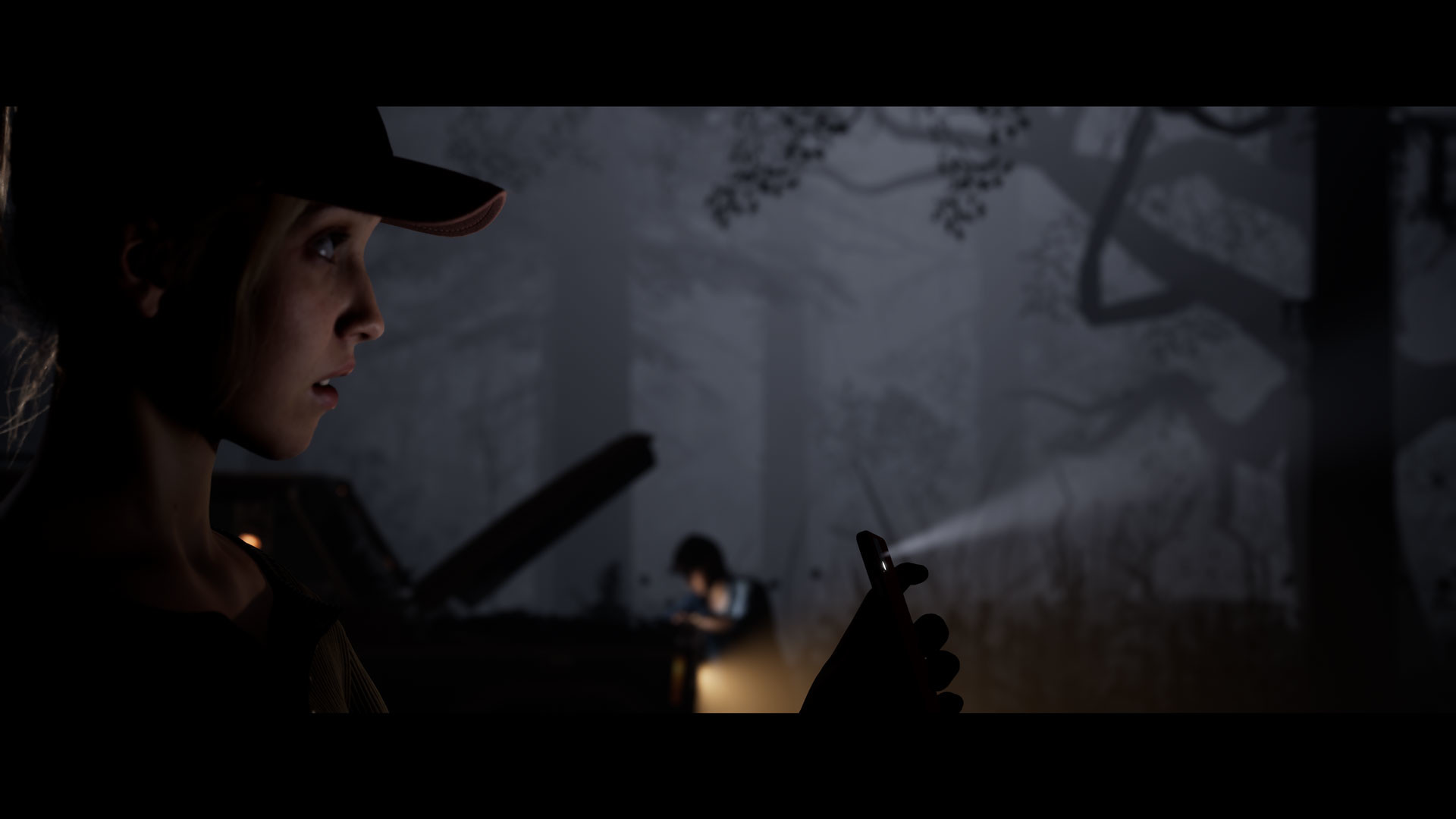
The Quarry also offers ways to share or reshape the experience. In couch co-op, players take turns controlling different counsellors as their scenes come up. Wolf Pack is an online voting mode for a host and up to seven invited friends: the host plays, while the group votes on key decisions and the majority determines the choice. Movie Mode changes the format again, letting players set a direction for the characters and watch the story unfold with less direct input. These options use the same horror narrative in different social settings, from one person making every decision to a group arguing over what the counsellors should do next.
The camp’s wider mystery also has an audio thread. The in-game Bizarre Yet Bonafide podcast follows fictional paranormal investigators Grace and Anton as they look into strange events around the area. Its six episodes add another perspective on the place beyond what the counsellors see directly, and make the surrounding community feel as though it has been discussing the woods long before the group’s last night at camp. Listening is separate from steering a character through danger, so it gives the player a quieter way to pick up the setting’s local folklore.
- Developer
- Supermassive Games
- Genre
- Interactive horror drama