
About The Procession to Calvary
After a holy war topples the old order, a sword-carrying warrior is sent to find the escaped tyrant Heavenly Peter. Her search crosses a comic medieval landscape assembled from Renaissance paintings, where conversations, inventory puzzles, musical diversions and a dangerously available sword offer different ways through a story of revenge and absurdity.
The war is over, but victory has left a wrecked religious order and an unfinished personal mission. The player takes the role of a female warrior who fought for the side that defeated the churches of the Old God; Heavenly Peter, the tyrant who escaped, is now the target of her pursuit. The premise treats the aftermath of a holy conflict as a launch point for a pursuit through a strange southern region rather than as a solemn epic. Cardinals, pirates, magicians, peasants and divine figures inhabit this route, and lofty religious imagery is repeatedly set beside ordinary bodily concerns and deliberately foolish behavior. The result is a fictional medieval world with the vocabulary of sacred history and the timing of irreverent comedy. Its central question is practical as much as narrative: how will the warrior locate Peter, and what will she do if she catches up with him? The story belongs to the same setting as Four Last Things, but it follows a new mission and can be approached on its own. Familiar names and echoes add context for returning players without making knowledge of the earlier game necessary to understand the hunt.
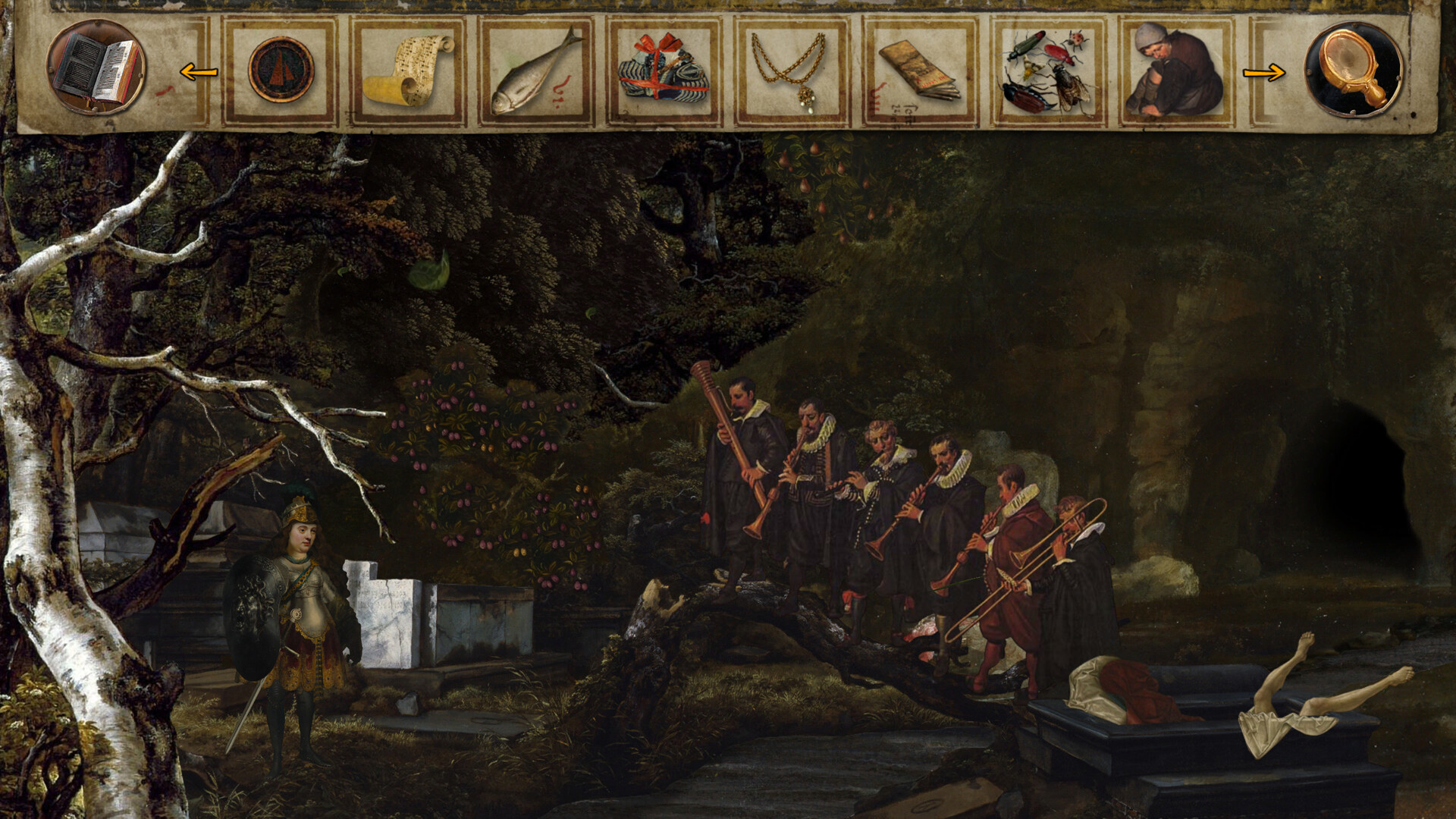
Play follows a traditional point-and-click adventure structure. Each location is a composed scene that the player inspects for people, objects and routes onward. A verb coin presents interaction choices, while a small inventory holds items collected during the journey; objects can be selected and used with parts of the scene or with other characters. Conversations supply requests and clues, and the solutions often depend on noticing how an item or person might fit an eccentric situation. The game moves between exploration, dialogue and object puzzles rather than asking the player to control a character through continuous action. Its scenes are linked into a coherent itinerary, with doors, paths and interiors connecting one tableau to another. This makes attention to the edges and details of a painting-like screen central to navigation: a person who looks incidental may offer a useful exchange, and an object that appears decorative can become part of a later solution. The point-and-click form also lets the comedy sit in the act of inspection, as the player tests ordinary adventure-game assumptions against a world whose characters may react in unexpectedly literal or violent ways.
The journey’s individual tasks vary in tone and activity. Along the way, the warrior may steal a ship, feed a donkey, enter a talent contest, help an inept street magician, sing, dance, play a possibly magical flute, hunt for treasure or speak with God. These episodes show the game’s varied approach: rather than repeating one puzzle device, it sends the warrior through situations with distinct objects, characters and comic premises. A request may lead the player to search another scene, collect a needed item or discover a less conventional solution. The puzzles have internal logic even when their setups are absurd, so the intended pleasure lies in connecting clues and testing possibilities, not in a separate inventory-management system with deep crafting. Songs, performances and small diversions punctuate the pursuit, giving the adventure changes of pace while keeping its route centered on the hunt for Peter. The sequence can include surprises that arise from an apparent side activity becoming a way to move forward. This variety gives each location a specific purpose and helps the player read the surrounding collage as both a navigable place and a collection of visual clues.
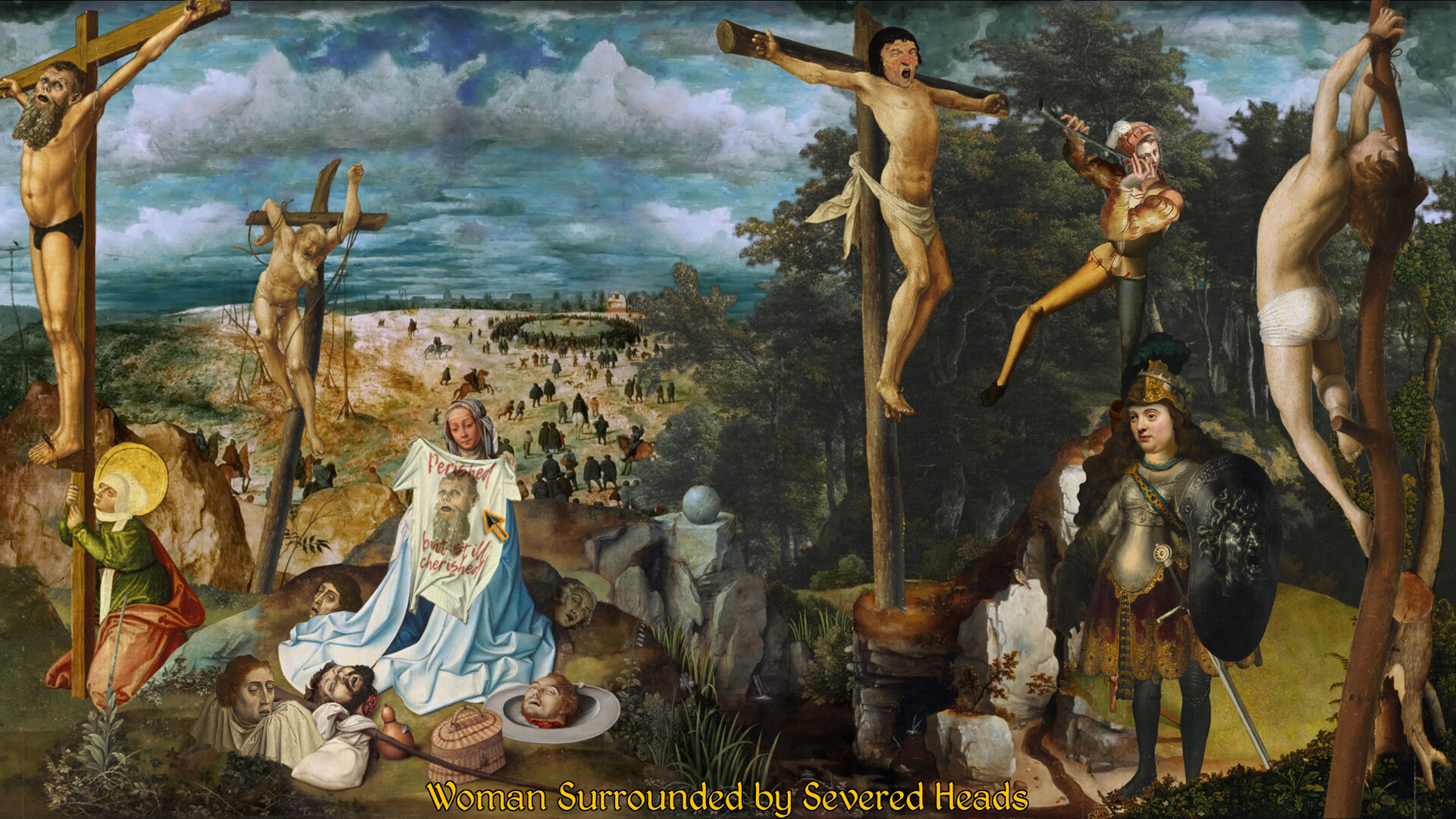
The warrior’s sword complicates the usual adventure-game rule that important characters must be preserved until their dialogue or puzzle is exhausted. She carries the weapon throughout the adventure, and the game permits the player to use it against some people. That can bypass a puzzle or remove an obstacle, turning violence into an alternate route through situations that might otherwise require conversation and item use. The narrative also warns that such actions can return to matter later; the sword is therefore a choice with possible consequences, not merely an attack button. This option changes how the player approaches a stuck interaction. A character who appears to be an unhelpful gatekeeper might be killed, but doing so trades away the possibility of learning more or taking a less destructive path. The warrior has been instructed to stop the killing that defined the war, so the freedom to continue it creates a comic tension between the mission’s new rules and the means still at her disposal. Rather than turning the game into an action combat adventure, the sword remains embedded in the point-and-click structure: it is one available interaction among many, and its use can alter puzzle progression and the story’s eventual outcome.
Progress comes from moving through scenes, collecting and using objects, and deciding how to handle the people met along the way. The important accumulation is knowledge of the world's puzzle relationships, the people on the warrior's route and the effects of her decisions. The inventory is intentionally simple, and many of the route’s challenges ask the player to connect a request with something found elsewhere. The sword adds a second kind of progression because it can open a shortcut while also changing the consequences of the journey. Different endings give the warrior's decisions a consequence beyond the immediate puzzle in front of her. The precise branches and their conditions are not needed to understand the structure: exploration can uncover alternate ways of dealing with obstacles, and choices can lead the pursuit to different conclusions. This supports a loop in which an unexpected outcome may make the player reconsider a person or puzzle on another attempt. The game does not present a separate open-world map or free-roaming simulation; forward movement is organized through a sequence of illustrated environments and the exits, conversations and interactions that connect them.
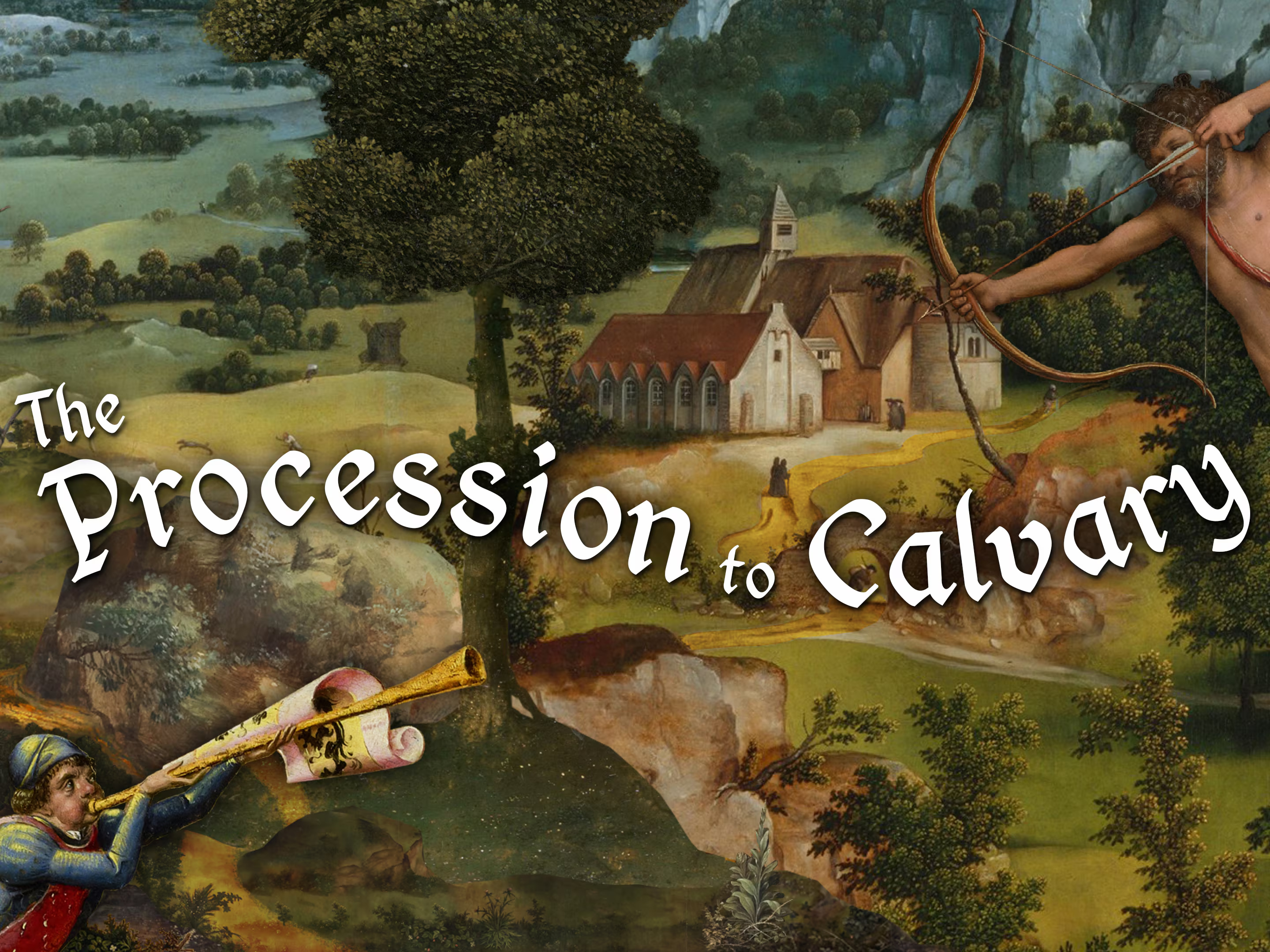
The visual identity is built from hundreds of Renaissance paintings, with figures and pieces of architecture cut, recombined and animated into a shared fictional world. Paintings by artists including Rembrandt, Botticelli and Michelangelo contribute recognizable poses and details, while the developer has explained that this installment uses more Italian art for its southern journey. The art is not a realistic reconstruction of one historical place. Instead, scenes from different works are joined so that a doorway, road or cave can lead from one assembled image to another. Characters animate within those collages, and the motion gives static painted figures a comic physical presence. Classical music by composers such as Vivaldi, Bach and Handel accompanies the scenes; some locations also place visible musicians into the image. Together, the imagery and soundtrack establish a deliberately old-world surface that the dialogue and situations then undercut. The contrast is a core part of the presentation: sacred or courtly images can frame a foolish exchange, and an elaborate painting can become the backdrop for a simple practical puzzle. The visual source material also shapes the range of available interaction, since characters and objects are chosen from paintings and then animated to make their poses usable in play.
The pursuit of Heavenly Peter holds the journey together even when a scene seems determined to wander into a song, a foolish request or an argument with a figure lifted from an old painting. Most obstacles invite the familiar adventure-game response: inspect the scene, talk to its inhabitants and find a use for whatever the warrior has picked up. The sword remains a troubling shortcut through that logic, since killing someone can remove a problem and create consequences elsewhere. That tension is what turns the warrior's hunt into more than a tour of Renaissance collages. She has been told that the killing should end, yet the game keeps asking what she is willing to do when patience and puzzle solving become inconvenient. Multiple outcomes make those decisions matter, while the staged landscapes and classical music keep the whole adventure tied to its absurdly grand setting. Four Last Things shares this world, but the hunt for Peter stands as its own story.
- Developer
- Joe Richardson
- Genre
- Point-and-click adventure