
About The Plucky Squire
Jot, a storybook hero, discovers that his adventures take place inside a book and that the villain Humgrump wants to rewrite it. To protect Mojo, Jot moves between illustrated pages and the three-dimensional world beyond them, solving puzzles and facing challenges with his friends.
The Plucky Squire begins in Mojo, a bright storybook land where Jot is known as a brave adventurer and champion. He is also the writer of the novels that describe his exploits. His familiar role changes when he realizes that he is a character inside a book. Humgrump, a bad-tempered sorcerer, wants to remove Jot from the story and make himself its main character. Jot's friends Violet and Thrash join him in resisting that plan, while the wizard Moonbeard offers guidance. The conflict turns the book itself into part of the adventure: its pages are a home to protect, a world to explore and a place where the rules can be changed.
Jot's journey moves between two distinct kinds of space. Inside the book, he runs and jumps through illustrated environments presented as two-dimensional pages. Outside it, the book rests on a desk in a much larger three-dimensional world of toys and art supplies. Jot can leave a page, explore the desktop, and return to the storybook, so progress depends on understanding both perspectives. Objects that look enormous from the page become features of the outside world, while illustrations can function as places Jot enters. This shift gives the adventure a playful sense of scale and asks the player to notice how each space connects to the other.
The book's storybook sections use action-adventure movement, platforming and combat. Jot can move, jump and use his sword against enemies as he explores each page. The manual describes basic controls and interactions, making the physical actions straightforward to learn while the unusual setting supplies the surprises. Pages form separate scenes in the tale, and their illustrations help establish where Jot is and what kind of obstacle might be ahead. On the desktop, the same hero must navigate a world built for much larger beings, where paint pots, toys and other objects become landmarks. The two modes provide different scales and visual languages for the same journey.
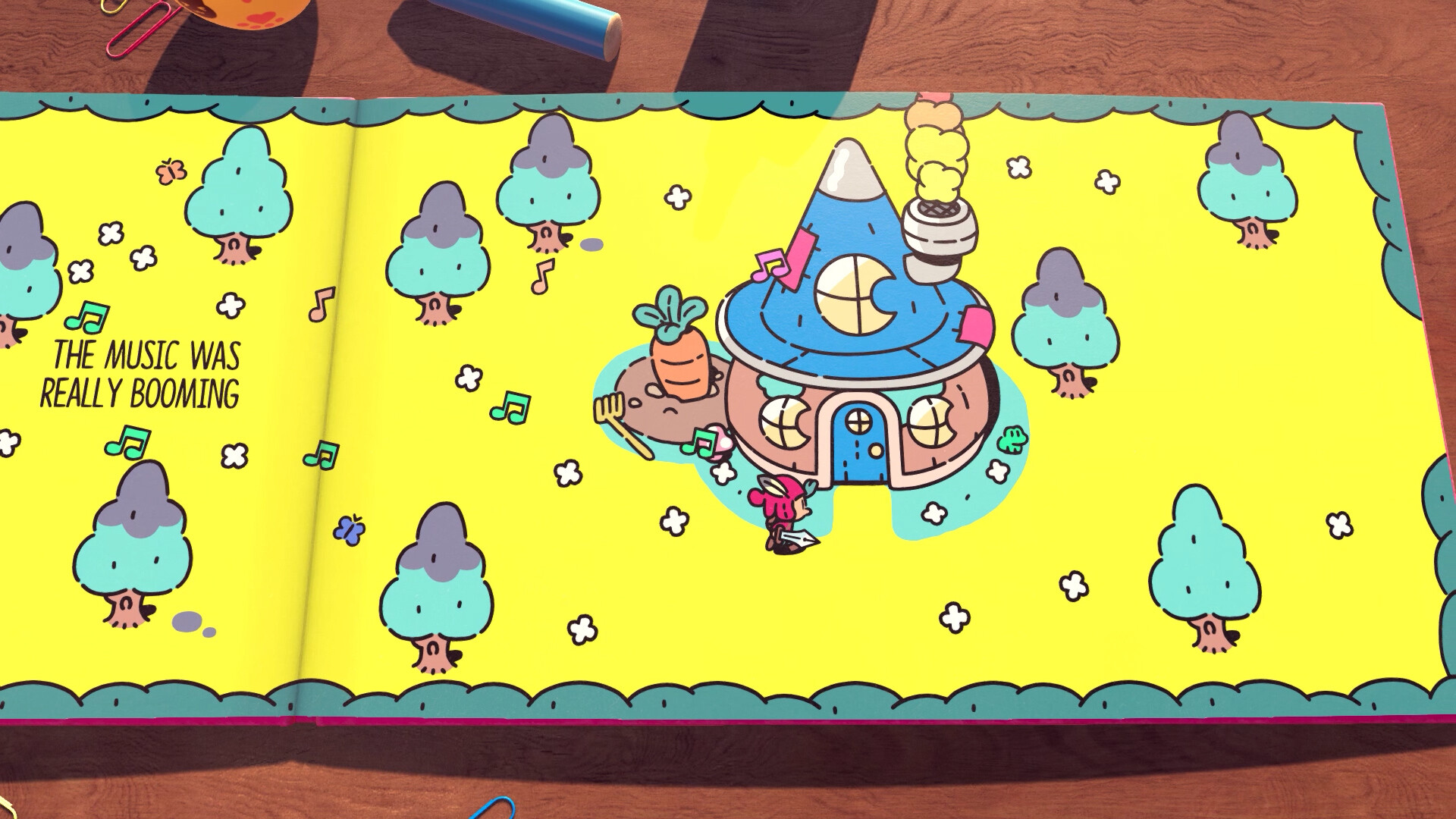
Moving off the page also lets Jot search for items that could help against Humgrump. The desktop is not only a display gimmick; it is a place with its own challenges, including oversized beetles and objects to investigate. Jot can jump into illustrations and use a jetpack, giving this three-dimensional layer its own movement and action sequences. Returning to the book reconnects those discoveries with the main story. The player therefore switches between reading a page as a navigable scene and treating the physical space around it as a larger environment. The contrast invites attention to what a drawing depicts and how its subject might work beyond the page. The change in scale also alters how objects are understood: a painted detail can become a destination, while an ordinary desk item can loom like a landscape feature. That shift gives exploration a practical visual clue, encouraging the player to look for connections between the illustrated scene and the space surrounding the book.
Jot's companions give the journey a group of distinct personalities. Violet is a trainee witch and artist from Mojo's capital, Artia. Thrash is a mountain troll and drummer whose easygoing manner sits alongside firm principles. Moonbeard is a curious sorcerer who helps the young heroes understand their potential, and his mouse companion Pip is an eager helper. Humgrump's ambition to rewrite the book provides the threat that brings these characters together. Their roles establish Mojo as more than a sequence of levels: it is a world with friends, rivals and inhabitants who care about the story they share. Their different talents also give the adventure a cast to meet as Jot travels.
Puzzles and platforming sit alongside combat as recurring parts of play. The player must work through obstacles while moving between the book and desktop, and Jot gains new abilities during his time outside the storybook. The manual includes a small wizard, Minibeard, who can offer hints when the player is stuck. It also describes options that adjust the experience, including two difficulty modes. Adventure mode is the default, while Story mode makes combat easier and adds jump assists. A hint character and adjustable challenge make the adventure more approachable for players who want help with either its puzzles or action sections.
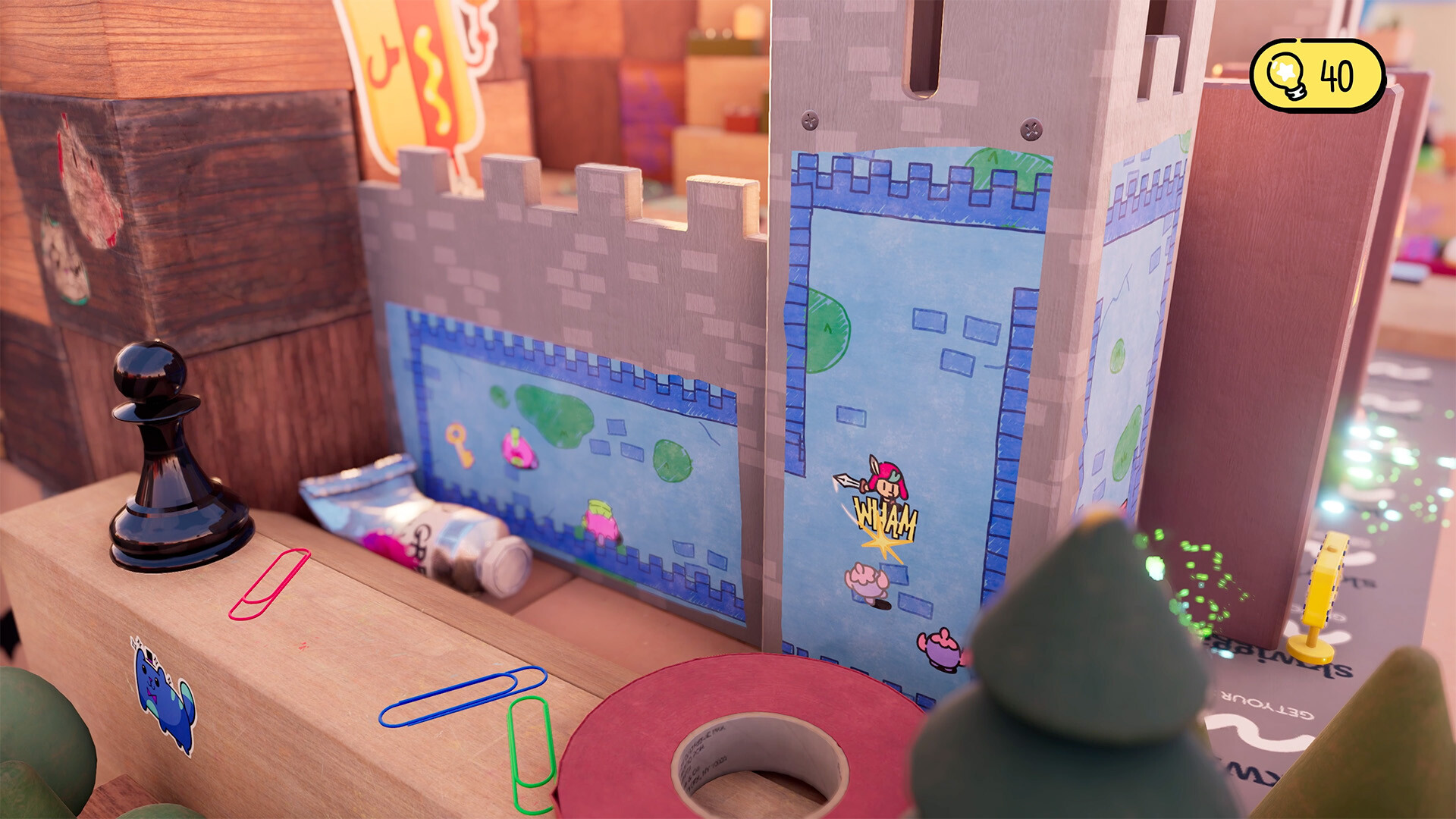
The manual also documents settings that let players tailor particular challenges. Jump assist can help when Jot needs to reach a platform, hidden portals can be revealed on a page, and falling platforms can be disabled. More direct combat options include invincibility and a one-hit kill setting. These controls can reduce specific obstacles without changing the central idea of moving between worlds. The game presents a whimsical illustrated adventure, but its options recognize that players may want different levels of support. Together, the storybook pages, desktop excursions, cast of companions and adjustable settings shape an adventure whose main surprise is built into its structure: Jot can step beyond the story he was written to inhabit.
- Developer
- All Possible Futures
- Genre
- Action-adventure with platforming and puzzles