
About The Planet Crafter
Stranded on a barren planet, you must survive by gathering minerals, crafting equipment, and building shelter before changing the world itself. Machines raise heat, pressure, and oxygen; as their combined terraformation progress unlocks new technology, water, plants, and animals reshape the landscape. Explore wrecks and ruins for resources and traces of earlier activity.
The Planet Crafter begins with a landing pod on a desolate world and a task that extends far beyond keeping its occupant alive: make the planet suitable for human habitation. The initial terrain is dry and largely lifeless, with scattered minerals, wrecked spacecraft, and abandoned structures interrupting the open landscape. The player starts with limited supplies and a small crafting station, then moves out to gather materials and establish a base. There is no combat loop built around hostile creatures; the early pressure comes from the exposed environment and the need to carry what is required for another trip. The planet’s history emerges through places and objects encountered during exploration, while the central objective is visible in the changing land and its growing environmental readings.
Survival is managed through health and food, thirst, and oxygen. Food can come from supplies found while exploring or from crops grown after the relevant equipment becomes available. Ice can be processed into drinkable water, while cobalt can be made into oxygen capsules; entering a sealed habitat refills the oxygen reserve. These needs influence how far the player can travel and how much cargo can be carried back, so a trip into a wreck or distant mineral field is also a packing decision. Back at a crafting station, collected minerals become tools, containers, equipment, and the first pieces of a habitat. Expanding the backpack and oxygen capacity increases the reach of later outings, while placing small shelters and workstations creates safe points where a longer expedition can be broken into manageable legs.
The defining system is the Terraformation Index, a combined measure of planetary change. Early machines contribute to temperature, atmospheric pressure, or oxygen, and the index rises as these environmental values increase. New blueprints become available at progression milestones, so construction changes both the world and the player’s available technology. Drills generate pressure, heaters produce heat, and oxygen producing structures begin to seed a breathable atmosphere; each machine also draws power, so production must be matched with generators. The player can inspect progress through display screens and use their readings to decide whether to build more of a particular machine or move toward a newly unlocked tier. Rather than a single crafting ladder, the system connects resource gathering, power capacity, environmental output, and access to further construction.
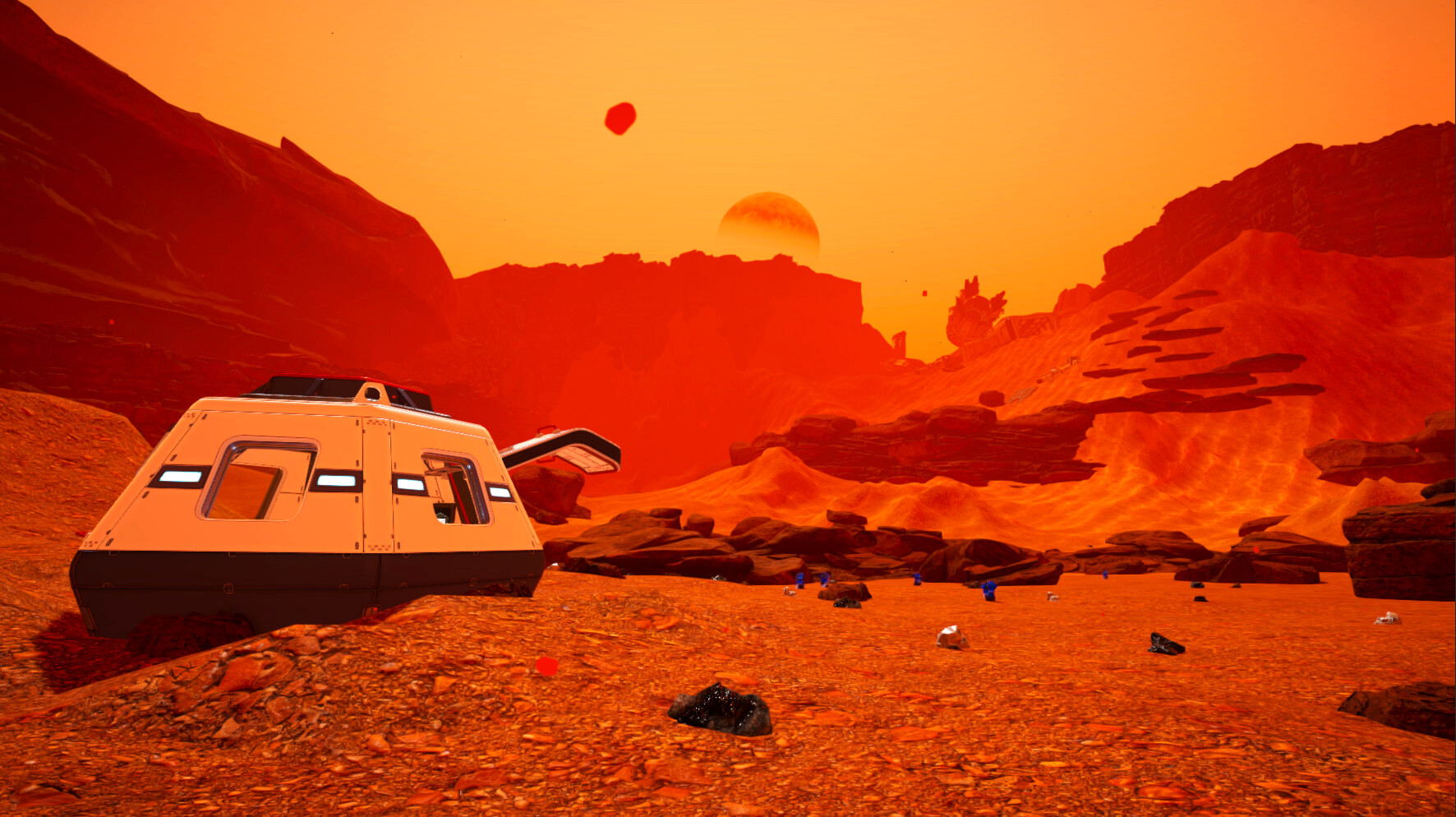
Progress gradually shifts the work from emergency survival toward a working industrial base. Early recipes use common minerals gathered by hand; later blueprints provide stronger machines, larger storage, improved equipment, and ways to obtain resources without collecting every piece individually. Some technologies unlock when the Terraformation Index or one of its component measures reaches a threshold, while blueprint microchips found in containers and wrecks can be decoded at a blueprint screen for additional plans. The player repeatedly checks what a machine needs, searches for the required minerals or seeds, crafts its components, and places it where power and space permit. As production expands, resource storage and energy generation become important planning tasks: a new line of heaters or drills contributes to the planetary project only if the base can supply its power demands.
Exploration supplies the materials and clues that a growing base cannot make from nothing. Surface regions contain mineral deposits and containers, while crashed ships and ruins have interior spaces to search. Wrecks can be dark, winding and partly obstructed, encouraging the player to bring a light, free backpack space and enough oxygen, food, and water for the return. Containers may hold materials, seeds, food, or blueprint microchips; those finds can make a substantial difference to the next construction step. The terrain also changes as terraformation advances: rising water can alter low ground, and new areas become accessible as environmental conditions develop. The player therefore revisits familiar routes with different equipment and needs, balancing the immediate value of a discovery against the supplies required to reach and carry it home.
The planet’s transformation is expressed through successive ecological changes rather than a separate sequence of levels. As environmental readings rise, the atmosphere and surface begin to support water and plant life; moss and insects appear before more developed growth such as forests and animals. Planting seeds in appropriate structures links collected biological material to oxygen and biomass production, extending terraforming beyond heaters and drills. Later systems let the player work with genetic material: DNA extracts can be combined to create creatures and introduce them into the evolving environment. These additions give biomass its own role alongside heat, pressure, and oxygen. The player can monitor these categories, craft the next biological infrastructure, and watch the same valleys that began as barren ground take on vegetation and movement. Each new stage is both a visual shift in the landscape and a new set of available production choices.
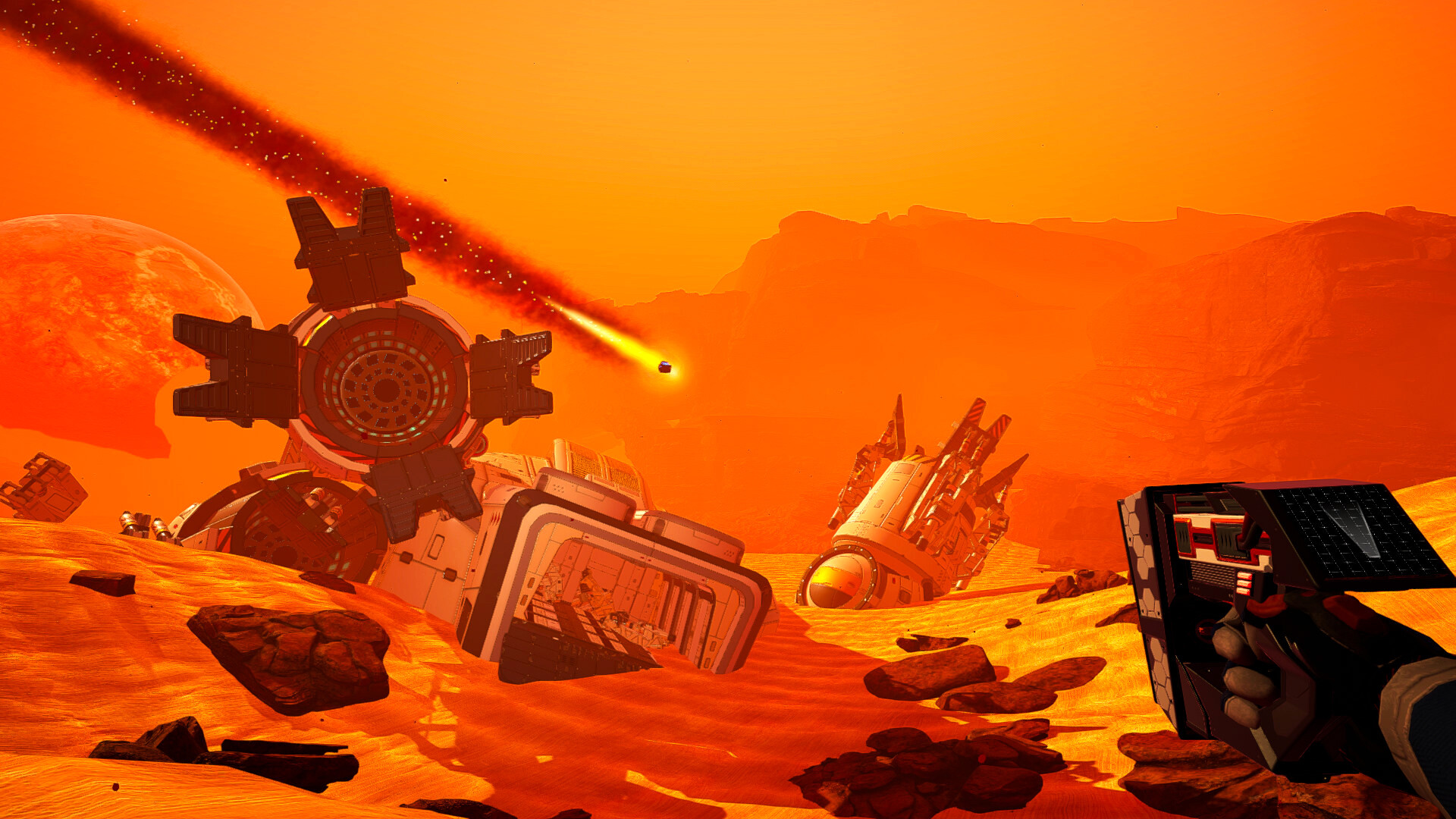
The experience can be played alone or cooperatively, with the same broad pattern of survival, construction, exploration, and planetary change. In a shared world, players can gather different materials, extend a base, or search separate wrecks while contributing to the same terraforming effort. Difficulty settings and starting presets adjust the conditions for a new save, and a creative mode offers a different relationship to resource and survival constraints. As the technology grows, the player can automate parts of resource handling and spend more time exploring for rare materials, old expedition relics, or additional construction plans. The structure remains open-ended: the index and blueprint screens set out the direction of progress, but the player chooses where to build, which production line to expand, and when to leave a developed base for another stretch of the changing world.
- Developer
- Miju Games
- Genre
- Open-world survival crafting and terraforming