
About The Outlast Trials
During the Cold War, Murkoff abducts civilians and confines them in its Sinyala Facility for experiments in brainwashing and behavior control. As a Reagent, you complete story-driven Trials and shorter MK-Challenges alone or with up to three other players, carrying out assigned objectives while avoiding enemies. The Sleep Room serves as a staging area between therapies.
The Outlast Trials places its horror in the Cold War era, when Murkoff Corporation abducts civilians and uses them as test subjects in experiments meant to alter behavior and condition them into covert operatives. The player becomes one of these subjects, called a Reagent, imprisoned inside Murkoff’s Sinyala Facility. The corporation presents the ordeals as therapy and makes release conditional on completing them. This premise gives each objective two meanings: it is a practical task that must be finished to leave a dangerous environment, and part of an institution trying to break down a person’s identity and impose a new one. Murkoff’s language of treatment and progress clashes with the coercion and violence shown in the trials. The game’s framing therefore makes the organization itself a persistent antagonist, even when a specific enemy is not in view.
The basic structure alternates between the Sleep Room and a selected therapy. The Sleep Room functions as a staging and recovery space inside the facility; from it, Reagents choose Trials and MK-Challenges, prepare their equipment and return after completing an assignment. Trials are longer, story-driven experiences, while MK-Challenges are shorter tasks set in modified or redesigned portions of existing maps. Each one provides objectives that must be completed before the player can exit. The differences in length and structure let the game shift between broader scenarios and concentrated challenges while preserving the same basic pressure: move through a hostile location, understand what Murkoff demands and finish the assigned work while threats remain active. Its stable framework centers on the base game’s trials and challenges, rather than limited-time events or seasonal programs.
Reagents can face the trials alone or in a group of two, three or four players. Cooperation is available but the required objectives are not locked behind mandatory co-op actions, so a solo player can still attempt the assignments. A team can divide attention, help with dangerous tasks and support a partner, while group play also requires people to move together and account for the noise and attention they attract. The game’s design keeps the underlying objective loop consistent across party sizes: understand the assignment, make progress through the environment and find a way to complete it while staying alive. This makes teamwork a tactical option rather than a separate genre layered over the horror. The fictional setup also explains why several Reagents are undergoing the same therapy at once: Murkoff is testing people in a controlled facility, and each participant is expected to endure the process.
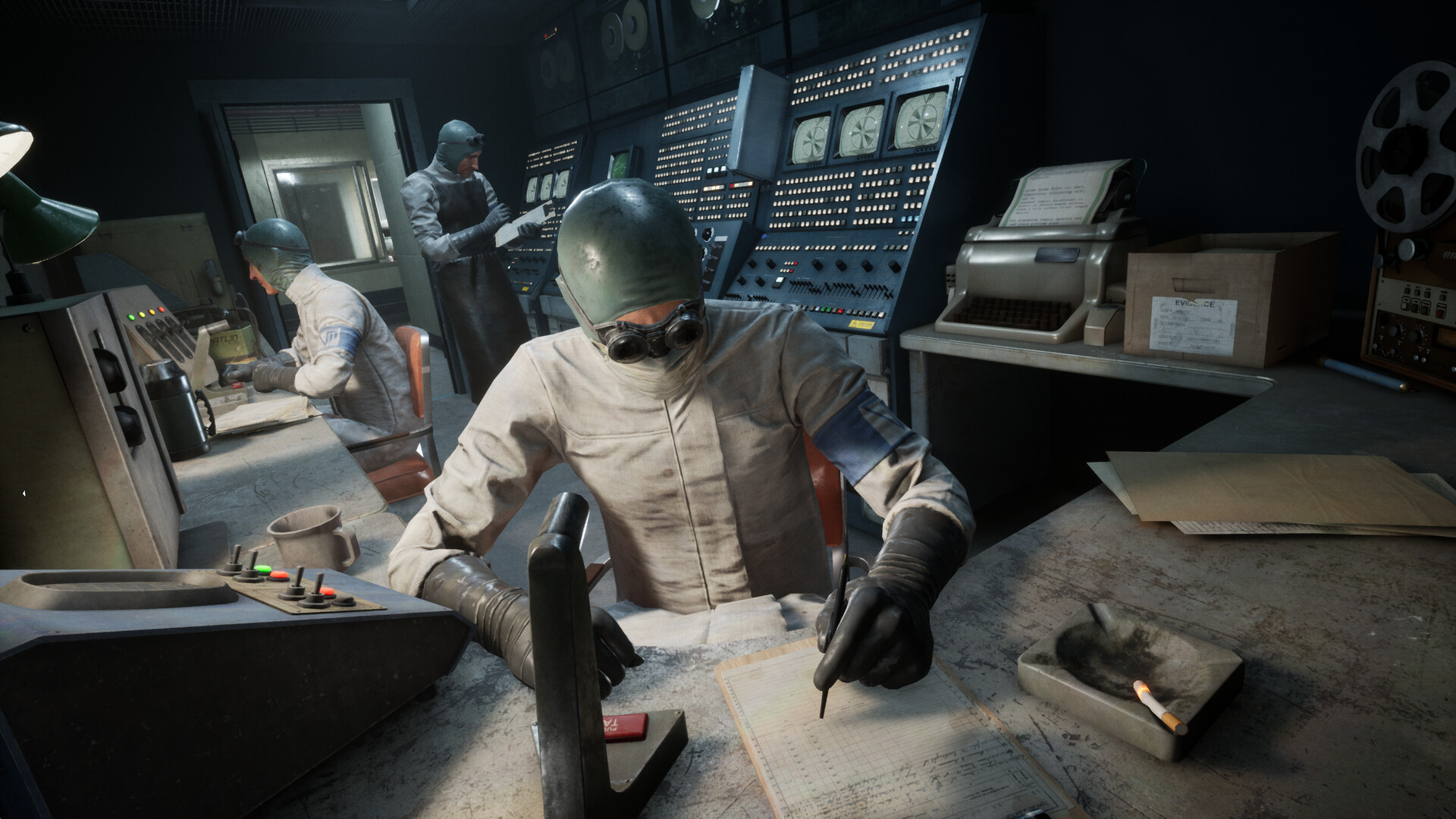
Avoidance is the central response to enemies. Players can hide, move carefully or run, and the environment provides places and objects that can help them evade pursuit. Murkoff also supplies tools that a Reagent earns and improves over time. Depending on the tool and its upgrades, these can stun or blind enemies, reveal them through walls, or heal the user and nearby teammates. These options create choices during an assignment: a tool may buy time, help locate a threat or keep a partner in the trial, but it does not turn the Reagent into a conventional fighter. The player still has to judge when to move, when to hide and whether using a resource now is more valuable than saving it for a later encounter. Assigned tasks continue to draw the player through spaces where danger can interrupt progress.
The Sleep Room connects the action to character progression and preparation. Reagents create and customize their patient character, decorate a private cell and select tools, upgrades and perks to suit an approach. Progression provides ways to improve the available loadout, so returning to the terminal between therapies is part of the larger rhythm rather than a decorative menu stop. Players can also find documents and objects during trials that help expose Murkoff’s malpractice and the history of the facility. That evidence gives environmental exploration a narrative purpose alongside objective completion: a detour may reveal information about the institution or its patients. The game’s story can therefore be followed through both the assigned task and the material left around the map, while the player’s own Reagent remains caught inside the organization’s process.
Murkoff’s behavioral program is described as a sequence of pressure and reconstruction: first attack a subject’s beliefs and identity, then offer an alternative ideology as a replacement, and finally demand allegiance to that new order. The Reagent’s progress through therapies gives this coercive framework a playable structure, but the experience remains focused on escaping individual trials and surviving their enemies. The facility’s denizens, task briefings and evidence documents widen the context without requiring the player to accept Murkoff’s account of what it is doing. The result is a cooperative or solo survival-horror game built from stealth, pursuit, objectives and preparation between runs. Its Cold War setting and institutional premise distinguish its scenarios from an ordinary escape story: even the apparent promise of release is presented by the corporation conducting the experiments.
- Developer
- Red Barrels
- Genre
- Co-op multiplayer survival horror