
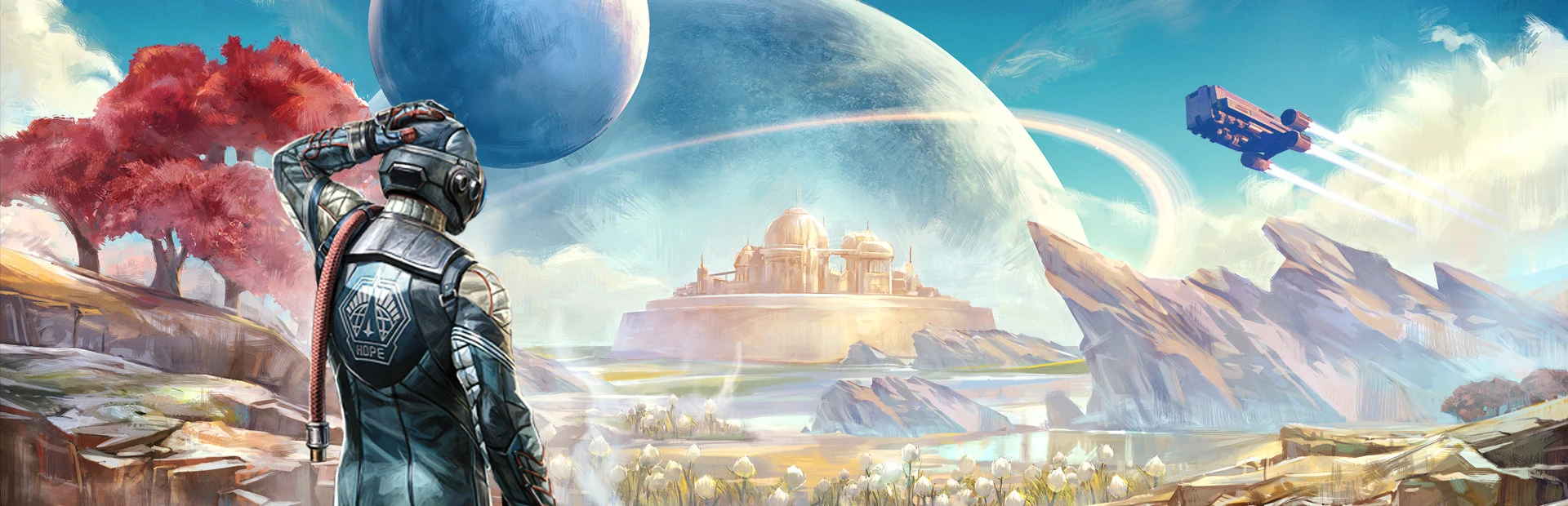
About The Outer Worlds
A colonist lost in transit wakes decades after departure aboard a ship bound for the edge of the galaxy and finds Halcyon threatened by a conspiracy. As the Stranger, you travel between settlements, take work from rival interests, build a character around combat or social skills, and decide which people and institutions shape the colony’s future.
The Outer Worlds begins with a journey that has gone badly wrong. The player is a colonist aboard a ship sent toward Halcyon, a distant colony, but wakes decades after becoming lost in transit. The colony is already established, and a conspiracy threatens its future. The adventure is a single-player first-person role-playing game: you explore the colony directly, speak with its residents, and decide how to respond to the systems that govern their lives. The protagonist is known as the Stranger, but their identity and approach are shaped by the player’s character choices.
Halcyon is not presented as one uninterrupted wilderness. The journey moves among distinct settlements and environments, each shaped by the companies and groups that control work, supplies, and local authority. Corporate slogans and commercial products are part of everyday life, while workers, administrators, and people outside the official structure respond to that arrangement in different ways. The result is a colony where a dispute over jobs or resources can expose a wider disagreement about who benefits from keeping the system intact. Exploring a settlement and listening to its residents can reveal competing accounts before a decision is made. On Monarch, a failed terraforming experiment has strengthened the local flora and fauna, leaving dangerous wildlife alongside settlements and commercial disputes. This gives the colony’s failures a visible form outside its offices and factories.
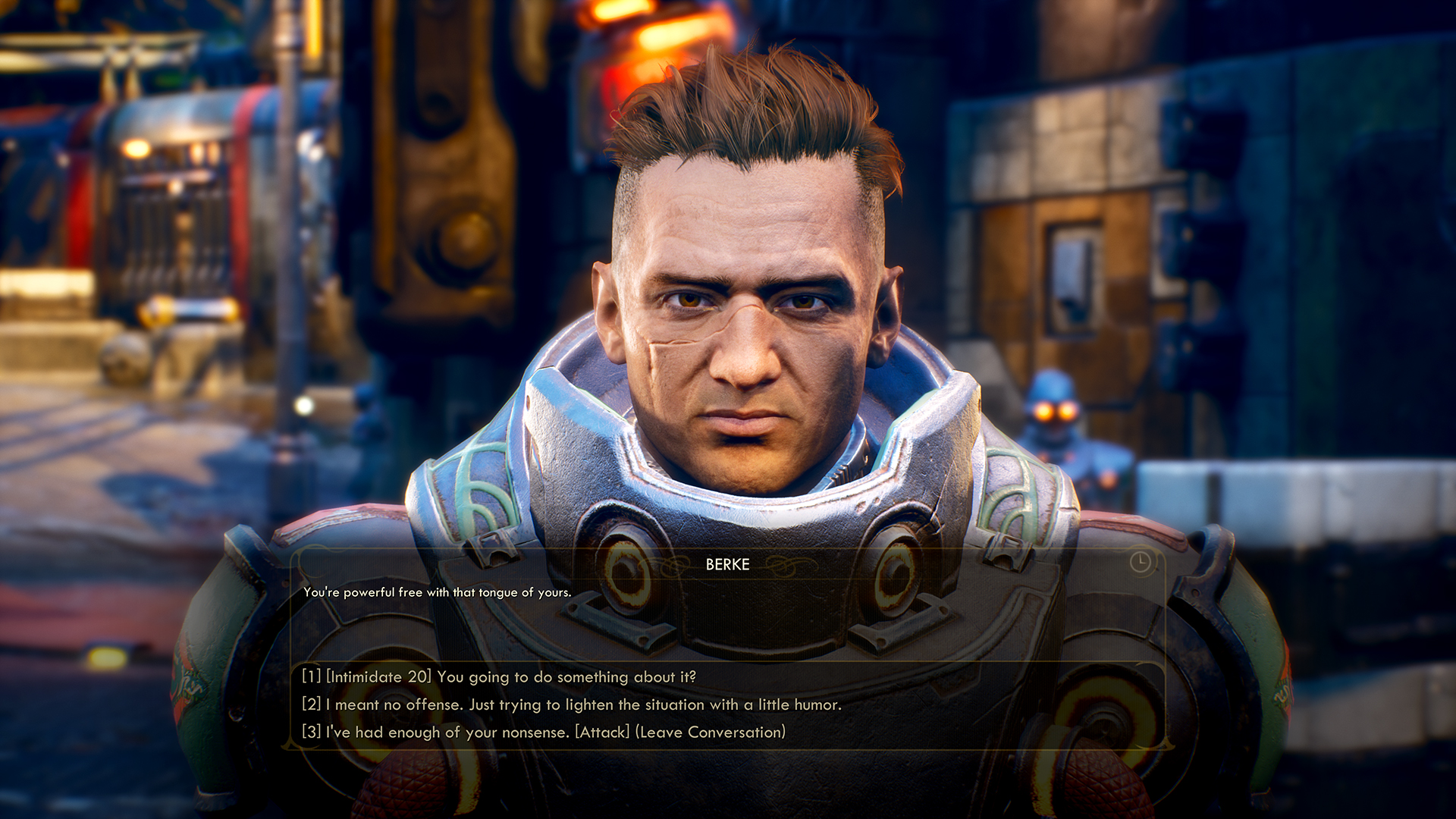
Quests give those local conflicts practical consequences. A request may involve gathering information, reaching a guarded place, recovering an item, confronting a threat, or choosing which side receives help. Dialogue and character skills can create additional ways through a problem: speech checks include persuasion, lies, and intimidation, while other skills support actions such as hacking or stealth. A check can open an alternate route or change how a non-player character responds, so the character build affects more than damage. The same encounter can reward preparation and conversation as well as direct force.
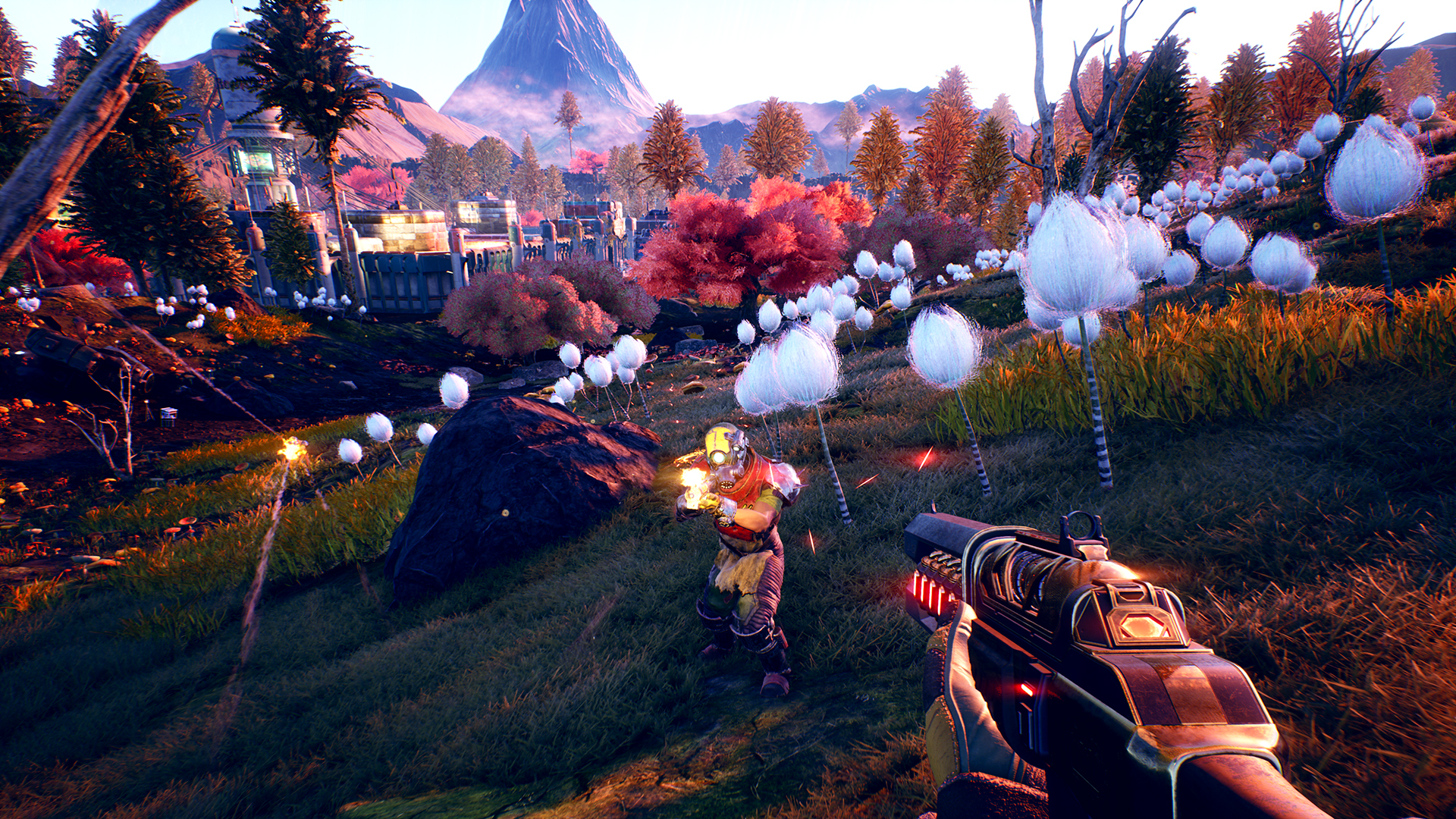
The Stranger’s abilities develop through skills and perks, letting the player emphasize particular approaches rather than relying on one universal solution. Weapons include firearms and melee options, and encounters are fought directly from a first-person view. Tactical Time Dilation, or TTD, slows the action for a limited period so the player can study an opponent and aim more deliberately. Targeting particular areas can cripple or maim enemies, and weapon effects can add further consequences. Blocking, parrying, and dodging also matter at close range, meaning that a combat build still asks the player to watch an enemy’s position and respond to attacks.
Companions can join the crew and travel with the Stranger, bringing their own equipment, skills, and combat abilities. Their special actions can be commanded during a fight, adding another tactical decision while the player manages their own weapons. Companions also participate in conversations and react to events; their personal views can conflict with the player’s decisions, so the party is not simply a collection of interchangeable combat bonuses. The ship serves as a place to return to between excursions, giving the crew a shared home while the player moves among Halcyon’s destinations and assignments.
Equipment choices connect exploration to preparation. Weapons and armor can be adjusted with modifications, while consumable items provide temporary benefits. Science weapons stand apart from conventional firearms through unusual effects, giving the player another reason to inspect what becomes available during the campaign. A character who invests in technical or social abilities may handle some obstacles differently from a character focused on fighting, and companions can complement that specialization. The systems overlap: a difficult encounter can be approached through positioning, a skill check, equipment selection, or a companion’s ability rather than through damage alone.
The colony’s people and factions create a shifting context for the main journey. Completing one task can affect how a town treats the Stranger or which group has leverage in a dispute, and conversations can reflect actions already taken. The game leaves room for the player to decide whom to support, what information to share, and when to walk away from a straightforward assignment. Those decisions feed into the story’s resolution and the later account of Halcyon’s communities. Instead of treating each location as a stop on a fixed route, the campaign ties exploration and character choices to the changing relationships among people trying to survive within the colony.
The character system includes optional flaws that arise from repeated encounters with particular dangers. Accepting a flaw means taking a lasting disadvantage in exchange for an additional perk point; declining it preserves the existing build. Another system, the Holographic Shroud, helps the party enter restricted areas using an appropriate disguise. Its limited meter creates a window to reach an objective, and guards may still challenge the Stranger, bringing dialogue skills back into play. Companions benefit from the disguise too. These mechanics make infiltration a combination of exploration, timing and conversation, offering a different sort of preparation from selecting weapons before a fight.
Flaws, companions and factions all feed the same story, and Spacer's Choice Edition folds the expansions into one package. Here is how the systems work and which release to buy.
You can be flawed, on purpose
The Outer Worlds tracks what you are not good at and then offers you a deal about it. Keep getting attacked by Raptidons, and the game will offer the Raptiphobia flaw: a debuff when you are up against those creatures, paid for immediately with an extra character perk. The offer is a response to what has actually been happening to you, and it is always optional.
Because the perk arrives up front rather than at the end of a quest, a flaw is a way to accelerate a build at the cost of one specific vulnerability, which is a good trade when the vulnerability is something you can avoid. Declining every flaw keeps you flexible; taking the right ones buys perks that would otherwise take several levels to reach.
Your choices reach four places at once
The game is explicit that your choices affect the way the story develops, your character build, companion stories and the endgame, which means a decision made for narrative reasons can still change what your character can do. Halcyon is a colony owned and operated by a corporate board, and you meet various factions all competing for power inside it, so siding with anyone is a position on the board as much as a personal choice.
Companions are the part of that worth slowing down for. You meet a host of characters who want to join your crew, each armed with unique abilities and carrying their own missions, motivations and ideals, and the game leaves it to you to help them reach their goals or use them for your own. Either way the choice is yours to make, and it shapes the story you build with them.
What you are actually doing out there
You wake decades late on a colonist ship bound for the furthest edge of the galaxy, in the middle of a conspiracy that threatens to destroy the Halcyon colony. From there the game is exploration with a corporate flavour: you find your ship, build your crew, and work through settlements, space stations and other locations rather than crossing one continuous map.
The setting supplies the conflict. Halcyon is owned and operated by a corporate board, and the terraforming of the colony's two planets did not go to plan, which left alien monsters sitting in the middle of corporate infrastructure. That mismatch, powerful institutions meeting a place that will not cooperate, is the engine behind most of the quests, and it is why the faction you side with is a real answer to a real question rather than a colour swap.
The original and Spacer's Choice Edition
There are two releases of this game on PC, and they are not interchangeable. The original 2019 release is the one this review describes, and its Steam listing no longer sells it: on Steam the page is still up, but it shows no price and no buy option, and it no longer turns up in a store search. The version you can buy is The Outer Worlds: Spacer's Choice Edition, which bundles the base game and all of the add-on content in one remastered package, with an increased level cap, overhauled lighting and environments, a dynamic weather system, and grenades.
For a new purchase on Steam, Spacer's Choice Edition brings the game and both expansions together. Peril on Gorgon and Murder on Eridanos send you to a mysterious asteroid and a set of distilleries respectively. Availability on other storefronts should be checked separately.
One naming trap worth flagging: The Outer Worlds 2 is a different game and a different purchase. This review is about the first one.
Should you play it
Yes, if you want a role-playing game where the interesting decisions are about who you side with and who you keep around, and where those decisions reach into the character sheet. Your choices shape the story, your build, your companions' stories and the endgame, so a call made for narrative reasons can still change what your character can do.
The flaws system is the reason a second run plays differently. Each flaw is offered in response to something you have been doing, and it trades one specific vulnerability for a perk that arrives straight away, so the trades on offer follow how you have played so far. The crew is the other half: every companion arrives with their own abilities, missions and motivations, and helping them or using them for your own ends is left to you. Around all of it, the factions competing under Halcyon's corporate board each want something different from you, so siding with anyone is a position rather than a colour swap.
Go deeper with V4mp
- Developer
- Obsidian Entertainment
- Genre
- First-person RPG
Explore The Outer Worlds further
Explore the wiki for detailed reference pages on the game's world, systems, items and locations.