
About The Night of the Rabbit
The Night of the Rabbit is a story-led point-and-click adventure about Jerry Hazelnut, a boy who dreams of becoming a magician. A white rabbit leads him into Mousewood, a community of talking animals connected to other worlds by portal trees. Exploration, inventory puzzles and new spells carry Jerry through an increasingly uneasy apprenticeship.
The Night of the Rabbit begins with Jerry Hazelnut at the edge of an ordinary summer and an old forest. He wants to become a magician, and the appearance of a peculiar white rabbit gives that wish an unexpected direction. Following him takes Jerry into Mousewood, a settlement inhabited by talking animals and shaped by rules of magic he has not yet learned. The rabbit, the Marquis de Hoto, becomes his mentor, turning the child's curiosity into an apprenticeship. The opening has the texture of an illustrated children's tale: there are small residents to meet, wooded paths to explore and a world that asks to be examined closely. Yet the central story does not remain a simple visit to a whimsical place. An offer of tickets to a grand magic show threatens to draw Mousewood's residents into a bargain involving things they cannot afford to lose. Jerry's efforts to understand the forest and become a magician therefore acquire a more serious purpose. The shift from playfulness toward danger is part of the game's design, though the later revelations behind the show are better encountered through the story itself.
Mousewood is more than a backdrop for a chain of object puzzles. Its inhabitants have routines, relationships and requests that make the settlement a place Jerry repeatedly returns to. Portal trees connect the central woodland to smaller worlds, so a newly accessible route can change what is possible back in a familiar location. That structure asks the player to remember conversations and places as well as inventory objects. A problem that appears to belong to one character may require a clue found in another scene, and a visit to a different realm can introduce a piece of knowledge that makes an old location newly useful. The game does not map its story onto a huge open landscape; it builds density through illustrated rooms, paths and recurring characters. Hand-drawn backgrounds give those scenes different moods, from inviting forest corners to places with a darker, stranger atmosphere. The animal residents were developed from short stories by the game's creator Matthias Kempke, which helps explain why even small figures can suggest lives beyond Jerry's immediate task. The optional stories included with the game offer another route into that setting without replacing the main adventure.
Play follows the familiar language of a point-and-click adventure. Jerry moves between scenes, talks with characters, examines objects and collects items that may become useful elsewhere. A puzzle can depend on combining possessions, changing something in the environment or discovering the order in which several separate problems need to be solved. Some involve riddles or preparations that resemble making a potion; others ask for close attention to a character's dialogue and to a detail in the scenery. This is not an action game where failure depends on fast reactions. Progress comes from recognizing an association between places, objects and people, then trying the interaction that follows from it. The game can make those connections indirect, especially when one task has to be completed before another apparent solution will work. Jerry has a journal to help track his current objectives, and an acquired aid can highlight parts of a scene that may be interacted with. Those supports narrow the search for a missed hotspot, though they do not automatically explain every chain of reasoning. Returning to old rooms after learning something new is consequently part of the normal rhythm of the adventure.
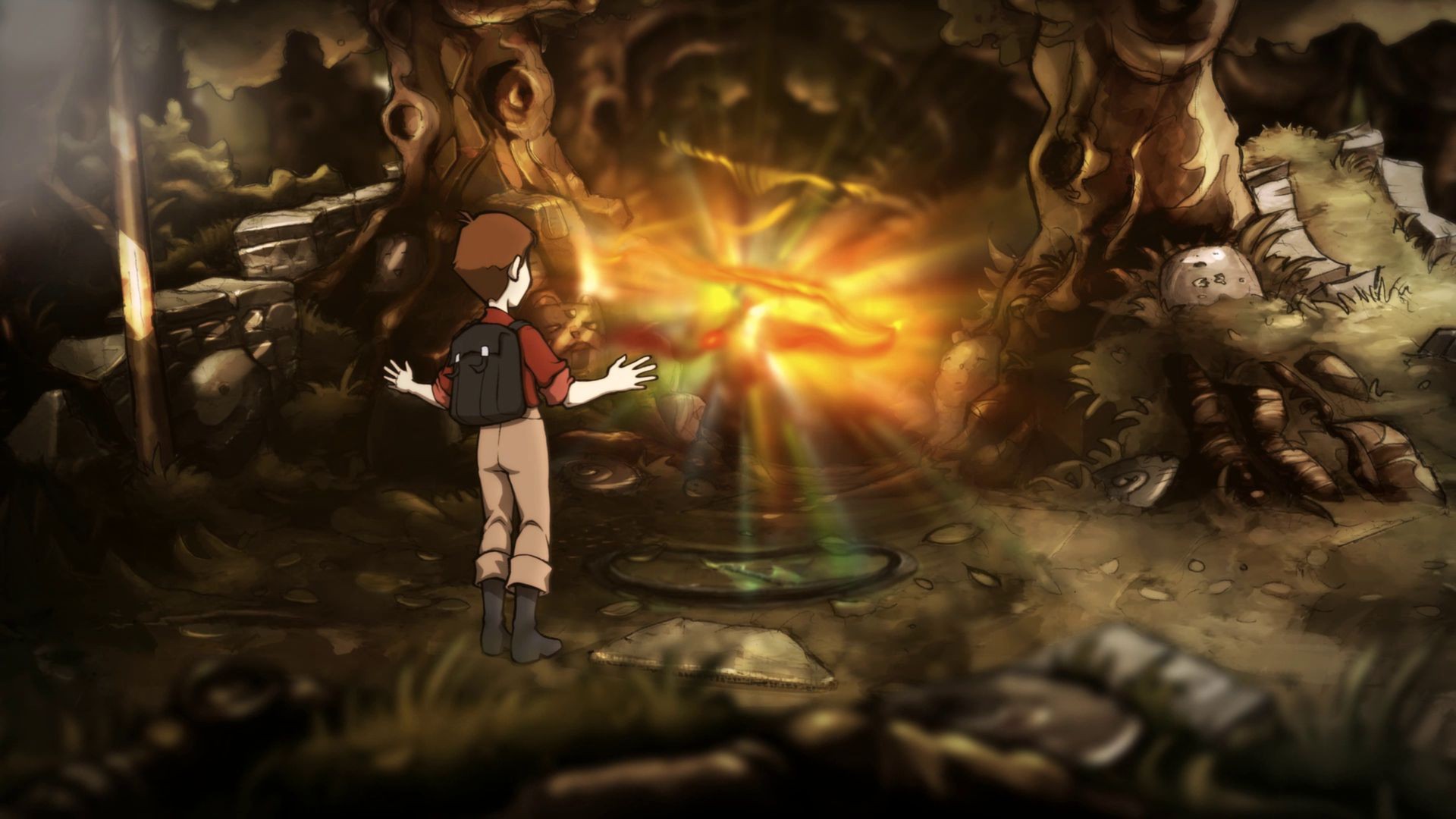
Magic changes the puzzle vocabulary as the apprenticeship develops. Jerry learns spells that let him approach familiar surroundings differently, so a place seen earlier may contain information that was inaccessible the first time. Stone whispering, for instance, allows him to hear stones and statues rather than treating them as silent decoration. Such conversations can supply atmosphere as well as occasional help, building the sense that Mousewood holds stories outside the route of the main mystery. Other magical abilities offer further ways to interact with objects or open routes in the connected worlds. The important distinction is that spells do not replace observation and inventory reasoning; they add another category of possible action. A useful approach to a stubborn scene is therefore to ask what Jerry can now do that he could not do on his previous visit. This makes progress feel tied to becoming a magician instead of merely acquiring an ever larger bag of arbitrary objects. It also lets the forest change in meaning without the artwork itself needing to become a completely different place every time the player returns.
There are optional activities beside the central apprenticeship. Stickers and cards can be found while exploring, and a Quartets card game gives the collected cards a use separate from solving the main plot. Audio stories from the creator's Mousewood fiction extend the setting beyond the scenes Jerry must visit. These extras reward looking carefully through the backgrounds and talking with residents, but they should not be confused with mandatory steps in the story. The adventure's larger structure already gives the player plenty to keep in mind: the inhabitants' problems, the route between Mousewood and its adjoining worlds, and the implications of the magic show all develop over time. Optional discoveries provide pauses in that progression and reveal more of the world that exists around Jerry. They also distinguish a quick effort to follow the central thread from a more thorough inspection of each scene. The player can be drawn into a character's small concern without losing sight of the wider mystery, because the town remains a recurring point of return rather than a location discarded after one completed chapter.
The writing and presentation move with Jerry's changing understanding. Early encounters make room for humor and wonder, while the forest's danger becomes more visible as the bargain surrounding the magic show comes into focus. Voice performances give the animal characters distinct presences, and the score helps bind the shifting moods of the illustrated environments. The art has a storybook quality, but its detail matters to play as well as atmosphere. An object partly hidden in a busy room can be a puzzle component, a visual joke or simply a sign of who lives there. That overlap makes close examination worthwhile even when the next objective seems clear. Jerry is also a particular kind of adventure protagonist: a young would-be magician whose curiosity and openness drive the journey, rather than a detective arriving with a solved theory about Mousewood. His apprenticeship lets the player learn the setting's rules as he does. The story's later darkness gains force from that starting point; it arrives within a world the player has first spent time understanding as a place of ordinary conversations, local needs and playful magic.

The game is the original full adventure released by Daedalic Entertainment in 2013, rather than an anthology of disconnected Mousewood episodes. Its route starts in Jerry's home world, expands through the forest and its portal-linked spaces, and follows the cost of his magical education without asking the player to choose a combat class or manage a fighting party. The separately sold Premium Edition on Steam adds material such as a soundtrack, audio books and a comic; those extras should not be mistaken for a new main campaign or assumed to accompany every copy. In the core game, the value of returning to Mousewood lies in its layered scenes and in the way new knowledge changes what Jerry can do there. A conversation can point toward an overlooked object, a spell can give an old landmark a voice, and a path through a portal tree can connect a small local request to a much larger threat. The Night of the Rabbit uses that network of places and problems to tell a long-form coming-of-age fantasy through interaction rather than only through exposition.
- Developer
- Daedalic Entertainment
- Genre
- Fantasy point-and-click adventure