
About The Midnight Walk
The Midnight Walk follows the Burnt One, who awakens in a handmade night world and revives Potboy, a small lantern creature. Together they travel through five tales of fire and darkness, using light to navigate while avoiding monsters drawn to its flame. Sculpted clay models, scanned into the game and animated in stop motion, shape this first-person dark fantasy adventure.
The Midnight Walk begins with the Burnt One climbing out of a makeshift grave and setting off down a winding road. Early on, the traveler learns to use matches to light fires and candles, move quietly past threats, and search for objects that can help. The first-person view puts this routine close to the player: a small flame can make a place navigable, while the dark conceals creatures and routes. Potboy, a lantern creature with a living flame, becomes the Burnt One’s companion. The journey toward the distant Moon Mountain then becomes a shared task, with both characters depending on one another as they cross a night world divided into five tales about fire.
Potboy changes how the player can interact with a space. His small body can fit through openings the Burnt One cannot, and he can reach switches or objects by moving into those tight spots. His flame lights candles, sets objects alight and affects the surrounding landscape: plants can bloom again, while some obstacles retreat or disappear. Puzzles combine these abilities with items and environmental details. In one example shown by the developers, the player lights a candle to draw a hungry creature away, giving Potboy a chance to reach switches. Progress therefore depends on considering where the companion can go and how light might redirect a threat, rather than treating him as a passive lamp.
The world also includes Housy, a living house that walks on insect-like legs. After meeting Housy, the player can return inside to a safer home base and a place to keep collectibles before heading back into danger. That refuge creates a useful pause within the journey, while making the surreal environment feel inhabited by beings with their own roles. On the road, smaller groups of crooked creatures can chase the pair through narrow passages, and larger monsters such as the Molgrim bring a more immediate threat. These encounters ask the player to respond to the shape and urgency of danger, with hiding or running sometimes preferable to confrontation. The game builds tension through short decisions about shelter, route and timing.
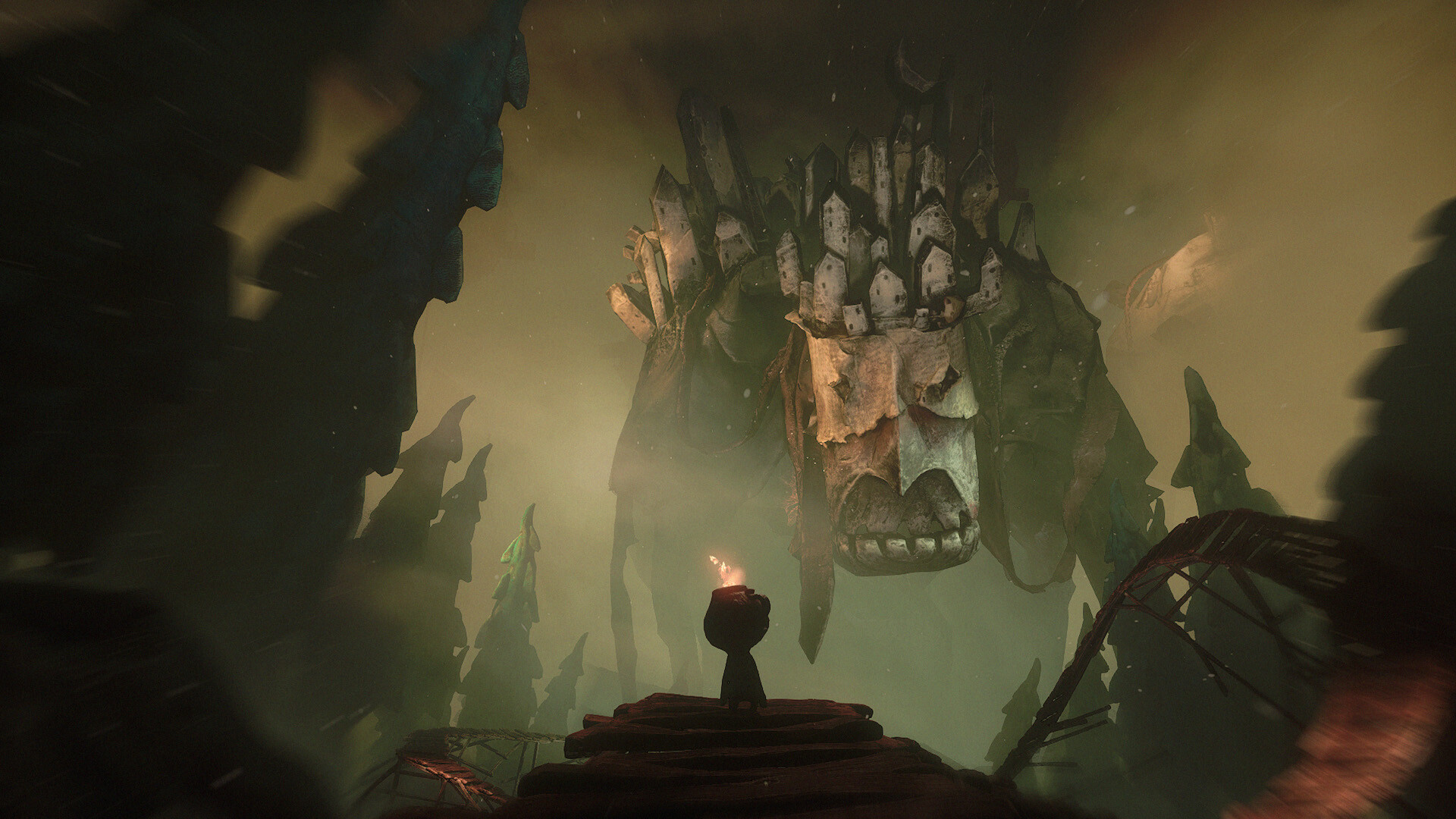
Tools give the Burnt One ways to affect distant objects. A matchlock can fire matches at candles and other contraptions, letting the player activate something across a gap or manipulate the scene from a safer position. The encounter design mixes that practical problem-solving with stealth: the player may slip into a closet to lose a monster, keep moving to escape a pursuit, or use a candle to divert attention from Potboy. The specific examples suggest different responses rather than one combat loop. The road is hazardous, but observation matters as much as speed. Finding a workable object, identifying where a threat is looking, and using the environment to create an opening all contribute to getting the pair through a dangerous stretch.
Another unusual action is closing the Burnt One’s eyes to listen for sounds that would otherwise be hard to hear. In the flat-screen version, holding a button raises the volume of nearby important objects and dangers; the same perceptual shift can also change parts of the environment when the eyes open again. Hidden eye symbols offer a related interaction: focusing on them can transform the surroundings and sometimes affect monsters. This gives the player a way to investigate what is present without relying only on visible clues. The mechanic also has a distinct VR expression, but the Steam edition supports both flat-screen and headset play; the physical eye-closing and DualSense feedback described for PlayStation are platform-specific details rather than universal controls.
The inhabitants and objects give the landscape a history beyond the immediate threat. Shellphones scattered through the world suggest a place once deliberately arranged and now deteriorating. In Nobodyville, some characters have been reduced to heads and distrust the limbed figures they call Somebodys. These details make the setting strange in a social as well as visual sense: not every unusual figure is simply a monster to evade, and not every object exists only as a puzzle tool. The Burnt One and Potboy meet companions as well as dangers, and the journey moves through five distinct tales. That mix leaves room for curiosity between tense encounters, as the player tries to understand how this world works and who belongs in it.
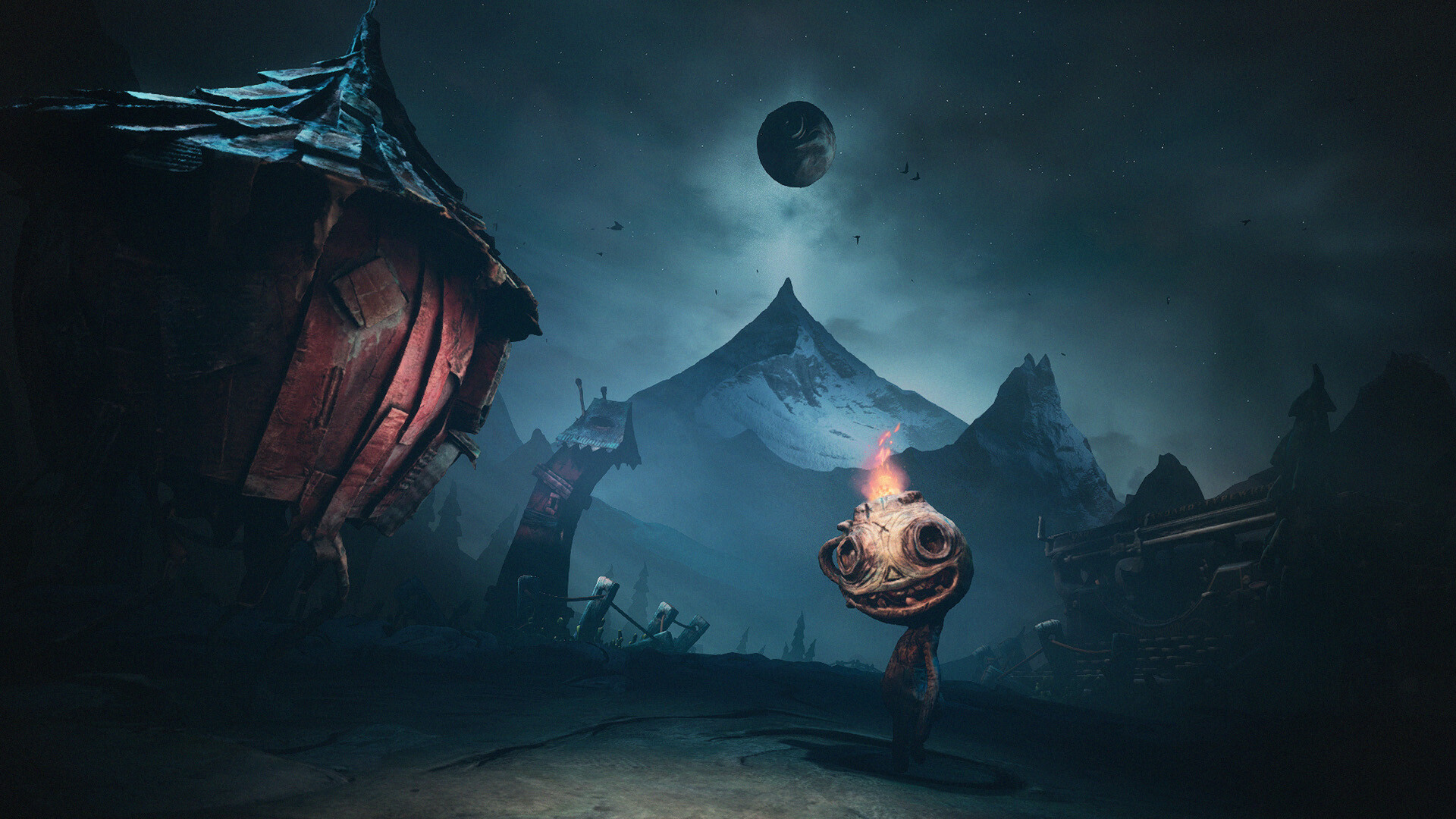
MoonHood built the world from physical clay sculptures, scanned them into three dimensions and animated the resulting forms in a stop-motion style. The approach applies to terrain, plants, objects and creatures, preserving handmade irregularities across environments that can otherwise feel uncanny or abandoned. First-person movement lets the player examine those textures up close while following the road ahead. In combination with the sound-focused perception mechanic, the crafted visuals give the world several ways to hold attention: looking for a usable object, listening for a nearby danger or noticing how a flame changes the landscape. The central relationship remains simple and clear. The Burnt One offers direction and care; Potboy offers light and access to places the traveler cannot reach alone.
- Developer
- MoonHood
- Genre
- First-person dark fantasy adventure