
About THE LONGING
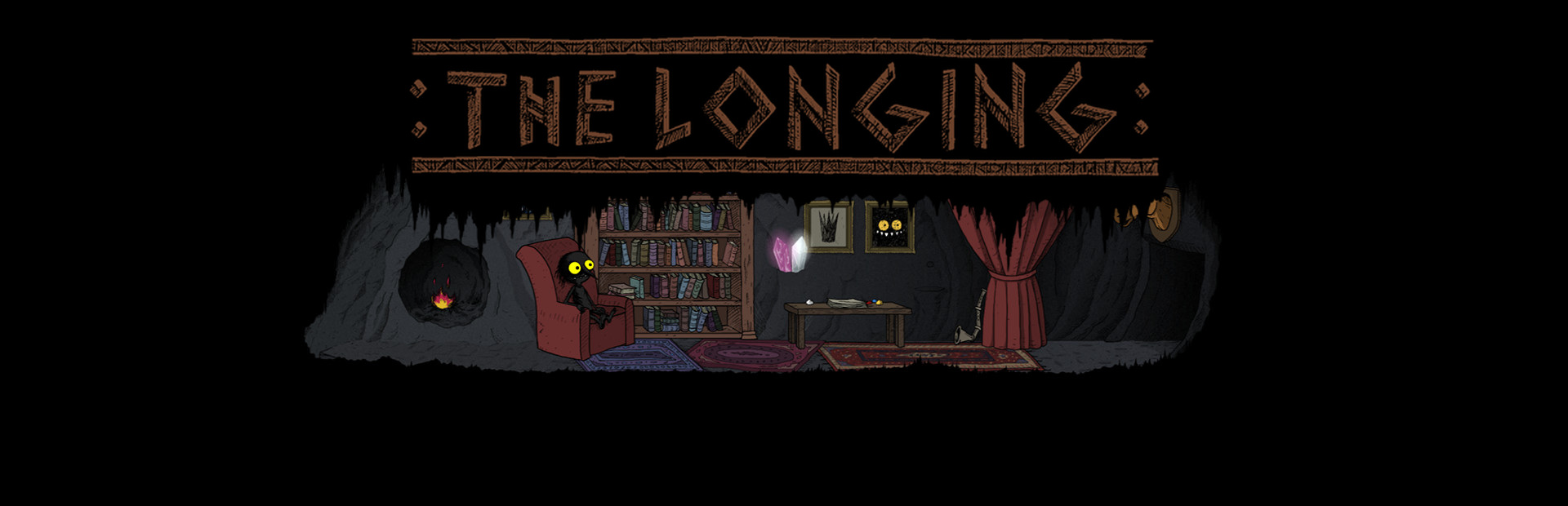
A small servant called the Shade is ordered to wait beneath the earth while a sleeping king recovers for 400 real days. THE LONGING lets that countdown continue when the game is closed. Exploring the caves, gathering things for a home, reading and finding another way forward all give the waiting a different meaning.
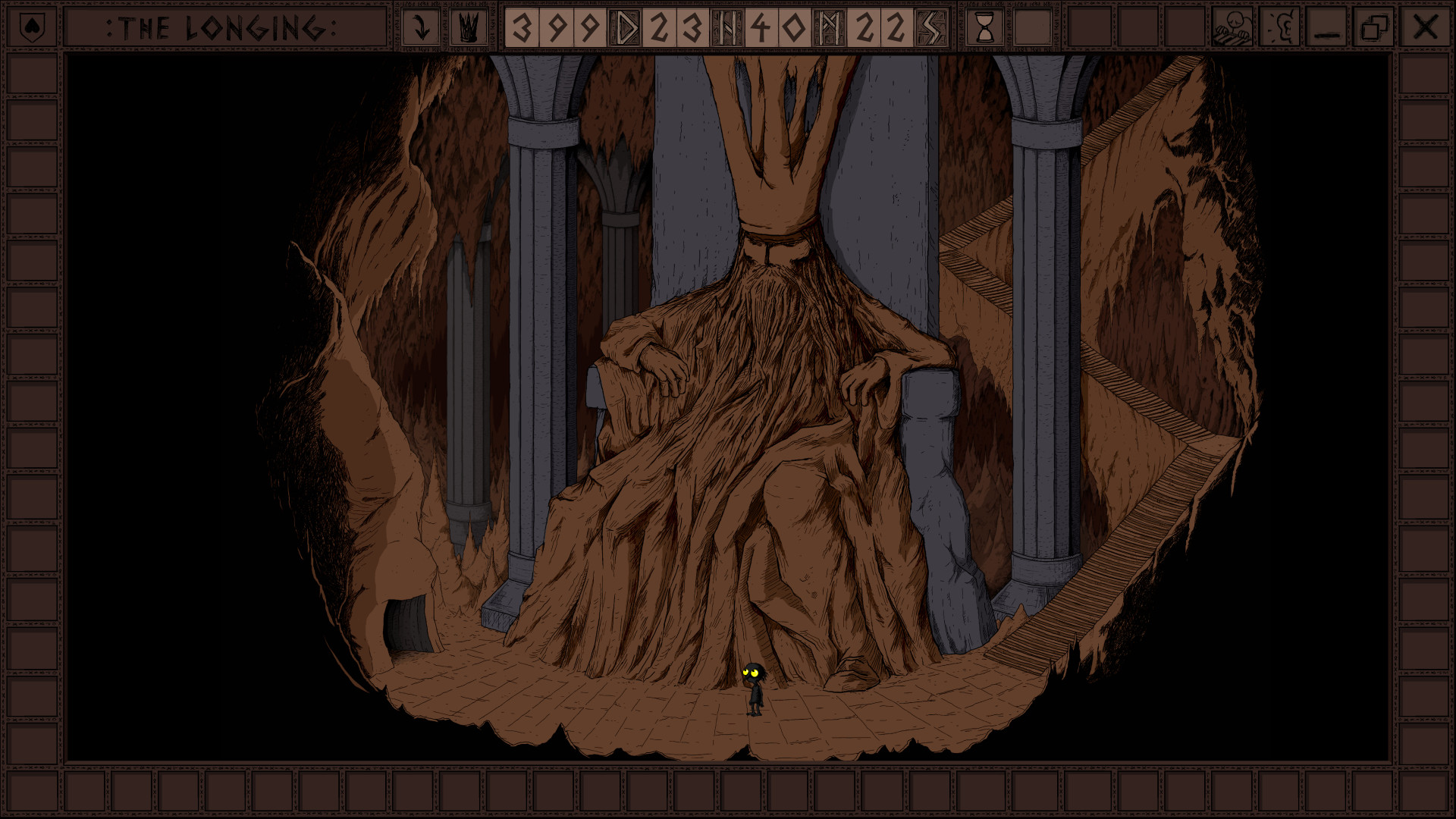
The king of a vast underground realm has lost his power and needs 400 days of sleep to recover it. He gives his last servant, a small figure known as the Shade, an instruction that sounds almost empty: remain below and wait for his awakening. Once THE LONGING begins, its clock counts down in real time, including while the game is closed. A day away from the computer is a day of the Shade's appointment. That central rule changes how an adventure game's familiar spaces feel. A closed passage might require actual time, and the promise that something will eventually happen cannot be rushed by completing a conventional quest list. The Shade is alone in a realm of monumental stone halls, winding tunnels and old, quiet rooms. The player may obey and return when the 400 days have passed, but the length of that wait almost invites curiosity about the caves around the king. Their silence is not empty. There are routes to learn, objects to bring back and decisions about how the servant should spend a life apparently defined by someone else's sleep. The question becomes less how to finish a task quickly than what waiting itself can contain.
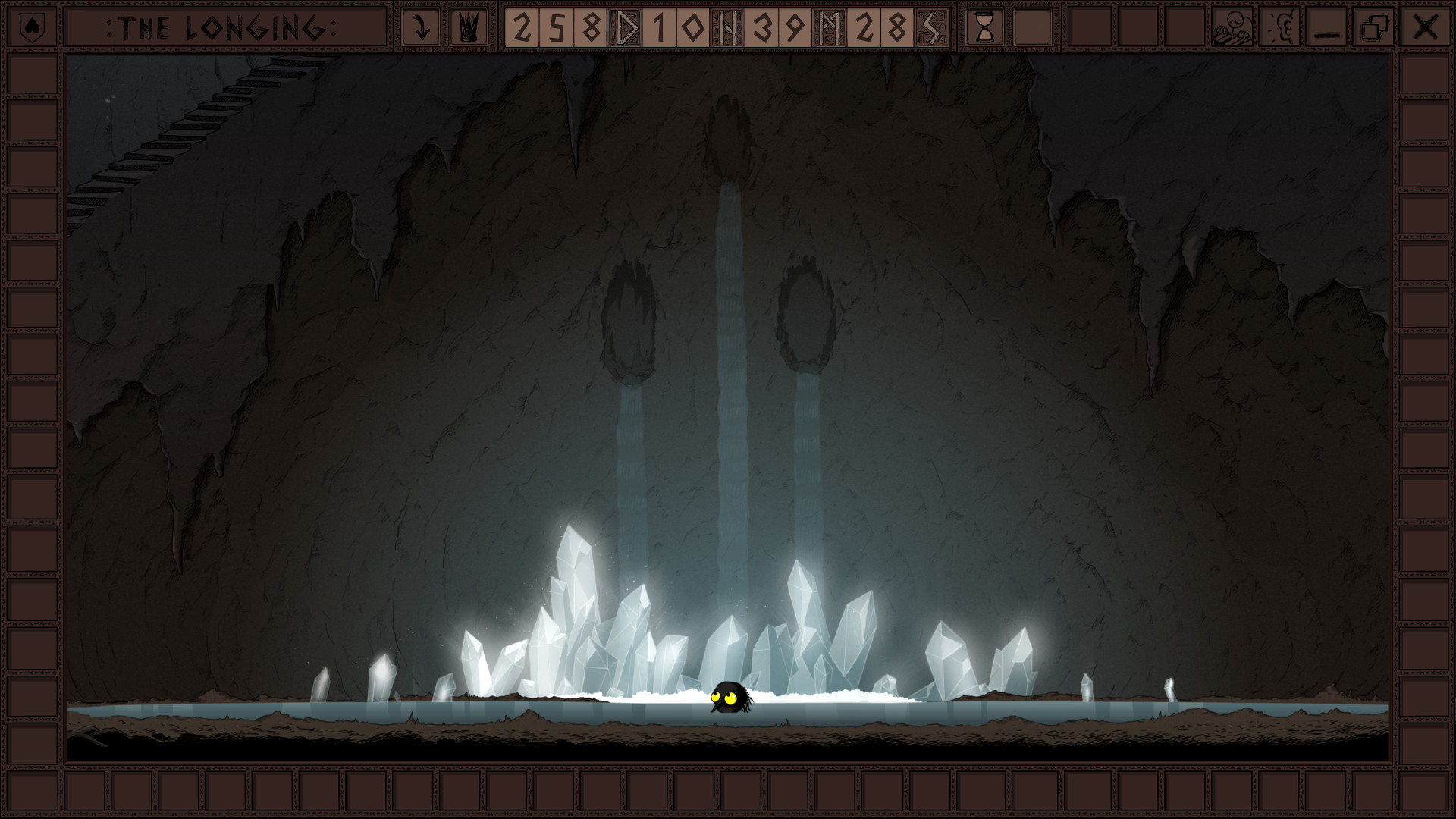
Exploration takes place at the Shade's deliberately slow walking pace. Tunnels branch through an extensive, interconnected underground kingdom, with new places gradually becoming accessible as time changes the environment. The developer's press material names growing moss and mushrooms, spiders building webs, dripping water and falling stalactites as examples of change that cannot be collapsed into a button press. A web needed for a route may take days to appear; a plant may need time to grow. Moving to another part of the cave and coming back later is therefore an intentional part of navigation. The route upward suggests a possible escape from the king's instruction, but it is dark, dangerous and obstructed. Exploring it asks the player to notice which barriers are spatial and which are temporal. Even a familiar corridor may look different after an absence. The game gives no reason to assume that more hurried clicking will make the Shade move like a typical action hero. Patience is a mechanical condition of travel, and the winding shape of the cave means remembering a place can matter as much as reaching it the first time.
The Shade has a small home near the king, and it can become more than a place to stand while the clock runs. Objects gathered around the caverns can furnish and decorate the room; drawings and other comforts turn a bare recess into a space that reflects the time spent there. The studio explains that making this underground living room more comfortable can make the countdown pass faster while the Shade is at home. That is a striking reversal of most idle games. The player does not simply purchase an abstract multiplier and watch a number climb. They search a lonely world for something to live with, then see that care alter the experience of waiting. Pyta described finding coal to make a fire and coloured stones for drawing pictures; such small materials matter because they give the isolated servant activities with visible results. Books found in the caves can be read within the game, including complete public-domain works such as Moby Dick and The Count of Monte Cristo. The developer explained that reading pages can also grant a modest time bonus, linking the act of occupying the Shade's mind to the clock's pace. Reading gives the Shade a way to fill hours that the player may share directly or leave behind. A collection of furniture, pictures and books can make one visit home feel unlike the last. It is still possible to take a sparse approach and let the clock do its work, but the room makes waiting something the player can shape rather than merely endure.
THE LONGING is described by its creators as a meeting of adventure and idle game, and neither half explains it alone. There are objects to discover, routes to investigate and obstacles whose solutions depend on an understanding of the cave. Yet the central countdown continues independently of active play. A person can spend an evening looking for a new passage, leave the game for several days and return to a world that has continued without that attention. This makes absence part of the design rather than a failure to keep up. It also changes the emotional force of a small discovery. A mushroom growth or newly reachable ledge may represent days of anticipation. The Shade's slow movements leave room to look at the scale of the halls and listen to the ambient sound. The cave is a place to inhabit over an extended span, not simply a maze to clear in a single sitting. How actively to explore, how comfortably to make the home and whether to keep faith with the king are choices about the shape of those 400 days.
The imagery owes part of its origin to the German Kyffhäuser legend, in which a king sleeps beneath a mountain until a future awakening. Anselm Pyta, the game's principal artist and designer, drew on a visit to the real caves as well as the legend. That inspiration gives the huge stone king and his solitary attendant the feeling of a fairy tale remembered long after its storytellers have gone. The hand-drawn cave passages, small Shade and monumental chambers hold the character at a particular scale: he is tiny against the structures built for another ruler's purpose. The music and sound take cues from dungeon synth and dark ambient traditions, deepening the sensation of an underground space that may be ancient, beautiful and inhospitable at once. This is not a demand that the player decode folklore before entering. The opening relationship is clear enough: one figure sleeps, another has been ordered to wait, and the space between them is large enough to become a world. The legend provides a foundation for the game's treatment of solitude and time without dictating a single interpretation of what the Shade should want.
Studio Seufz released THE LONGING for computers in 2020, with Application Systems Heidelberg as publisher; a Nintendo Switch version followed. The studio's own description explicitly allows different ways to approach the long assignment: stay and wait, make a home, or look for a path out. Those directions are not promises that every option will be equally easy or lead to the same outcome. The game has routes and conclusions worth discovering without an overview naming them in advance. Its unusual schedule also requires care when describing its length. The 400-day counter is a rule inside the experience, not a claim that every player must sit at a screen for 400 days or that there is no other possible resolution. Time can pass while the application is closed, and some choices change how the wait feels and how it advances. The Shade's situation remains the important constant. He has been given a purpose by a sleeping king, but he is awake for the whole interval. Every journey into the caves and every object placed in his room asks what he might make of that awake time for himself.
- Developer
- Studio Seufz
- Genre
- Real-time idle adventure