
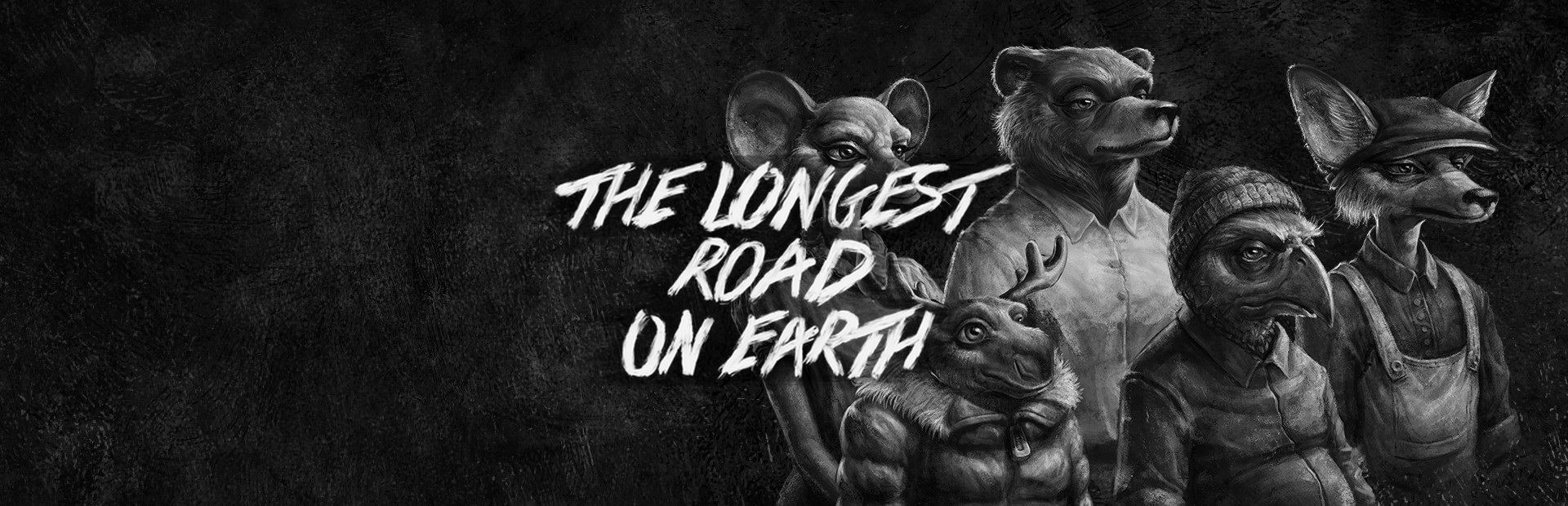
About The Longest Road on Earth
The Longest Road on Earth follows four short, wordless stories through ordinary moments such as a bike ride, a winter outing and time spent by the sea. Its simple interactions, monochrome pixel art and more than twenty-four original songs invite players to make their own sense of each character's life rather than solve a conventional challenge.
The Longest Road on Earth begins with the premise that a small moment can carry an entire story without anybody explaining it. Across four short chapters, its characters move through ordinary spaces and do ordinary things: they travel, remember, spend time outdoors and continue with the routines that give a day its shape. The game does not provide spoken dialogue or blocks of text to define their relationships. Instead it asks the player to notice a gesture, a pause, a room or a change in the rhythm of a scene, then decide what these details may mean together. The characters are depicted as animals, but their situations are recognisably human. That distance from a literal portrait makes the stories open rather than abstract; a brief encounter can suggest affection, habit or loss without forcing one reading onto it. The four-part structure matters because each chapter gives the player a fresh person and context to understand. There is no single mystery to solve across them. The connecting thread is an interest in how everyday life becomes memorable after time has passed.
The player participates through simple movement and small interactions rather than through combat, dialogue choices or a branching quest log. A scene may allow a character to ride a bicycle on a summer day, collect shells by the water, blow dandelion seeds or go sledding in winter. These are not framed as skill tests. They are physical actions that make the player dwell in the same stretch of time as the character, however briefly. The controls are deliberately restrained and there are no fail states to punish an attempt. This changes what an interaction is for: it does not prove mastery or earn a better ending, but encourages attention to a setting and to the person moving through it. The game can therefore be approached by players who would rather observe and reflect than learn a demanding control system. It also asks for a different kind of patience. When nothing flashes up to announce the significance of a bicycle ride, meaning has to emerge from the image, the music and the connections a player draws between scenes.
Music is not a layer placed behind an otherwise conventional adventure. The four chapters are built to be experienced inside a sequence of more than twenty-four original songs, with the sung lyrics carrying a voice that the on-screen characters do not use themselves. The contrast is central to the design. Words arrive through music, while the scenes remain free of conversation and written exposition, leaving room for the song to colour an action without definitively explaining it. A quiet task can take on another emotional weight when its accompanying melody changes, and a lyric can feel like memory rather than direct narration. The score is associated with Beícoli, one of the developers, whose vocal performances give the soundtrack a consistent personal presence across the short stories. Players who usually rely on subtitles or conversations to establish a plot instead need to follow the relationship between sound and image. The music makes the game's two-hour scale feel purposeful: each chapter has enough time for a song and an image to settle before the next moment arrives. Because the songs have lyrics while the characters do not speak, a player can listen to the words as a possible emotional parallel, then return attention to what the image actually shows. This creates a productive distance between the voice on the soundtrack and the lives on screen. A song can make a familiar action seem wistful without requiring the character to explain why.
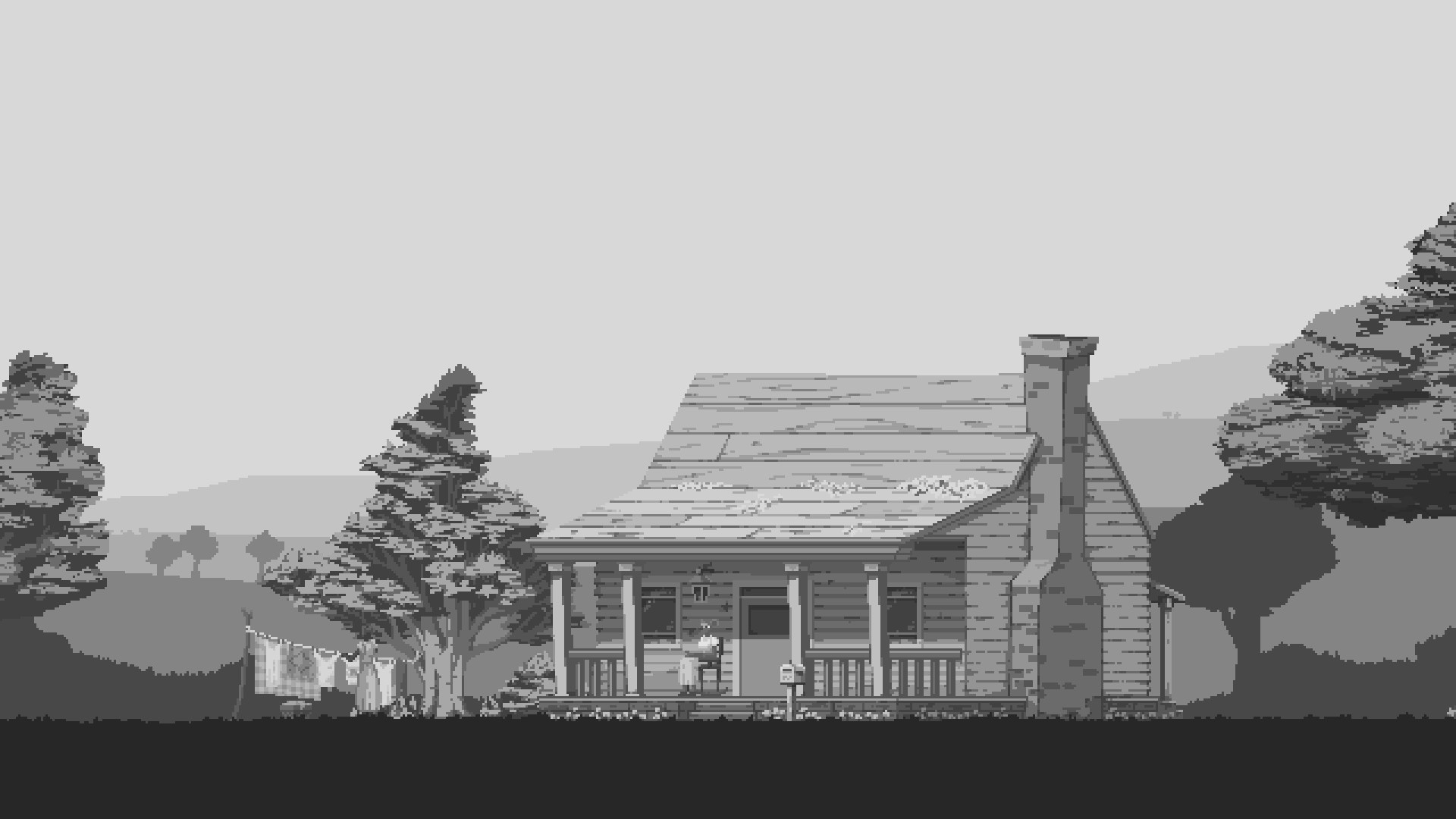
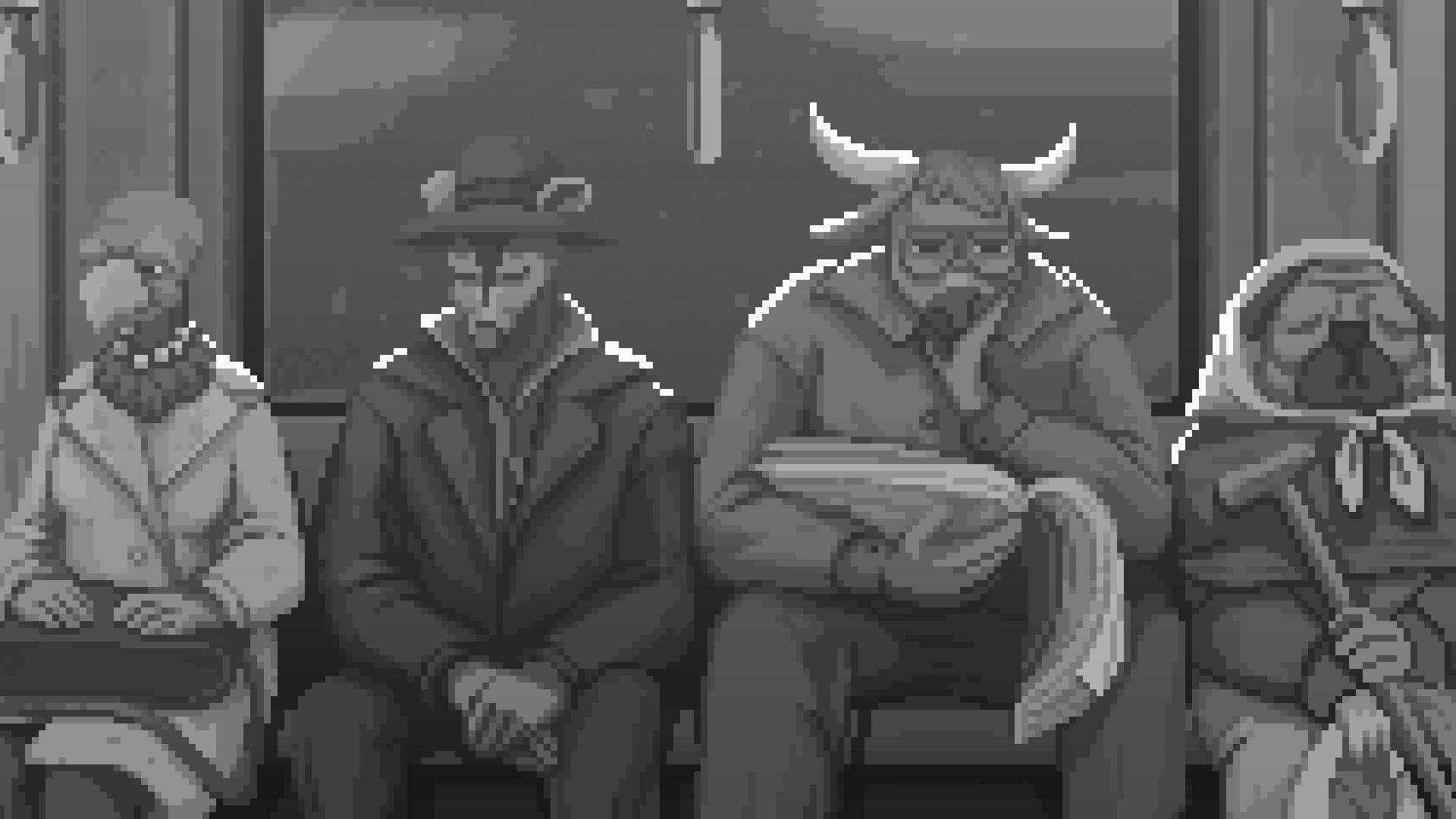
The monochrome pixel art also does more work than its limited palette initially suggests. Without bright colour to separate every object, silhouettes, lighting and movement make the locations legible. A roadside space, a home interior or an outdoor gathering can all be understood quickly, then examined for the quieter details of who is present and how the character responds. The animal designs avoid the expression of a realistic face, so posture and timing become especially important. A figure that remains still while the world continues around them says something different from one moving steadily toward the next place. This is a reason the absence of dialogue does not leave the screen empty. The player watches for small visual clues while listening to music that may pull the mood in another direction. Pixel art and subtle signs of how the characters relate to their surroundings form the game's narrative vocabulary. The art does not ask to be decoded into one fixed answer. It gives enough shape to each scene that several plausible memories and emotions can coexist. The monochrome style also keeps the four separate chapters visually connected. When a new figure appears, the player is learning another life within a recognisable and carefully limited, clearly readable visual world, rather than starting from an entirely new set of symbols. That continuity lets the game move quickly between stories without turning their brevity into confusion.
The game's pace follows from its lack of conventional obstacles. There is no combat encounter to reset the mood, and no score at the end of a scene to declare a correct interpretation. A player can move through a chapter and still be unsure exactly what a relationship or an event means. That uncertainty is deliberate space for the player, not a missing rulebook. In a longer story-driven game, a character's history might arrive in dialogue or a collectible note; here it is suggested through an action repeated or a place revisited. The four short stories make the approach manageable: each has a distinct beginning and end, while their shared visual language and soundtrack let them speak to one another. Ordinary pleasures, from seashells to winter sledding, are useful examples of the scale. The game looks closely at experiences that may seem too minor for a dramatic plot, and lets passing time change how they are perceived. That is also why the short running time matters more than a feature count. It is a complete, concentrated work designed around particular moods rather than a world of optional tasks.
Brainwash Gang and TLR Games developed The Longest Road on Earth, with Raw Fury publishing its original PC release in 2021 and subsequent console editions. Its four-chapter wordless structure carries across platforms; the PlayStation listing identifies a PS4 game playable on PS5, while Nintendo lists its own Switch release. Those platform details are separate from the story itself, but they help set expectations for a game built to be experienced in a single sitting or in a few short visits. There is no character builder, equipment ladder or map full of objectives to prepare for. The point is to spend time with four lives whose most important events may be almost indistinguishable from their everyday routines while they are happening. The player supplies some of the connection between scenes, the pixel art supplies a readable world, and the songs give otherwise silent moments an emotional current. Someone coming to it for mechanical challenge will find little of that structure; someone curious about how an interactive scene can evoke a memory without stating its meaning will find that question at the centre of every chapter.
- Developer
- Brainwash Gang and TLR Games
- Genre
- Wordless, music-led narrative adventure