
About The Lonesome Guild
A failed rite leaves Etere under a mist that turns isolation into a spreading danger. Amnesiac spirit Ghost gathers six unlikely companions to confront it. The Lonesome Guild combines real-time party combat, character-switching puzzles and five-region exploration with relationships that unlock new quests, abilities and stronger teamwork.
Every century in Etere, a Champion from each kin is chosen to ascend before a divine being called the Only One. The rite is meant to grant powers that can improve the world. This time it fails, and what follows is not a simple monster invasion. A creeping mist draws out loneliness, despair and anger in people across the land. Ghost awakens amid that crisis with no memory of who they are and no ordinary body with which to set things right. Their unusual gift is connection: by joining with others, Ghost can draw out hidden strength. The first person they meet is Davinci, a cheerful Bumblebun whose broken wings have not quite extinguished his ambitions. Together they begin gathering people who have their own wounds and reasons for keeping others at a distance. The Lonesome Guild gives its world-threatening problem an intimate scale. Etere's fate is at stake, but progress also means convincing one wary person to trust another, hearing what they have lost and helping a temporary alliance become something more durable. The story follows six companions rather than treating a growing party as a list of interchangeable combat classes.
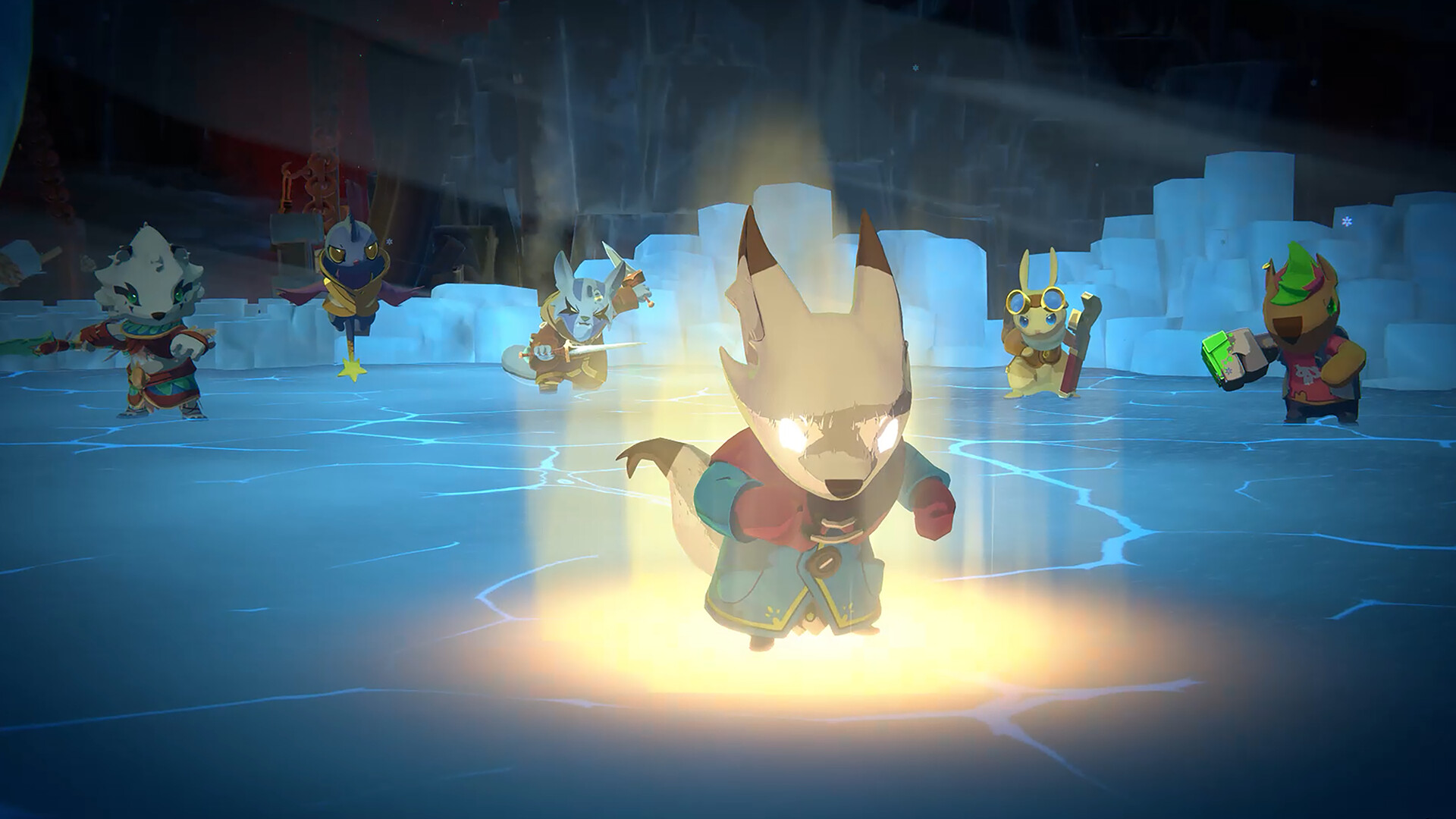
Those companions have specific personalities and practical roles. Davinci can contribute physical and magical damage while supporting the group with healing. Mr. Fox is a cynical fighter marked by the loss of his son; in battle he favours damage from range or close up and can increase the team's attack speed. Ran Tran Trum presents a hard, protective exterior and backs it up by drawing an enemy's attention and shielding allies. Mauhen keeps others away with pranks and fights from a magical distance, healing friends while weakening enemies. Chaska, searching for somewhere to belong after being punished for leaving home, attacks aggressively and can grant the party lifesteal. The older witch Sarangalyn uses poison and magic while helping allies act more often by reducing their skill cooldowns. These roles are not a claim that each person should remain in one fixed formation. They give the player different ways to respond when a fight asks for survival, speed, control or sustained pressure. They also make a choice to spend time with a less familiar character meaningful in both the story and the battle system.
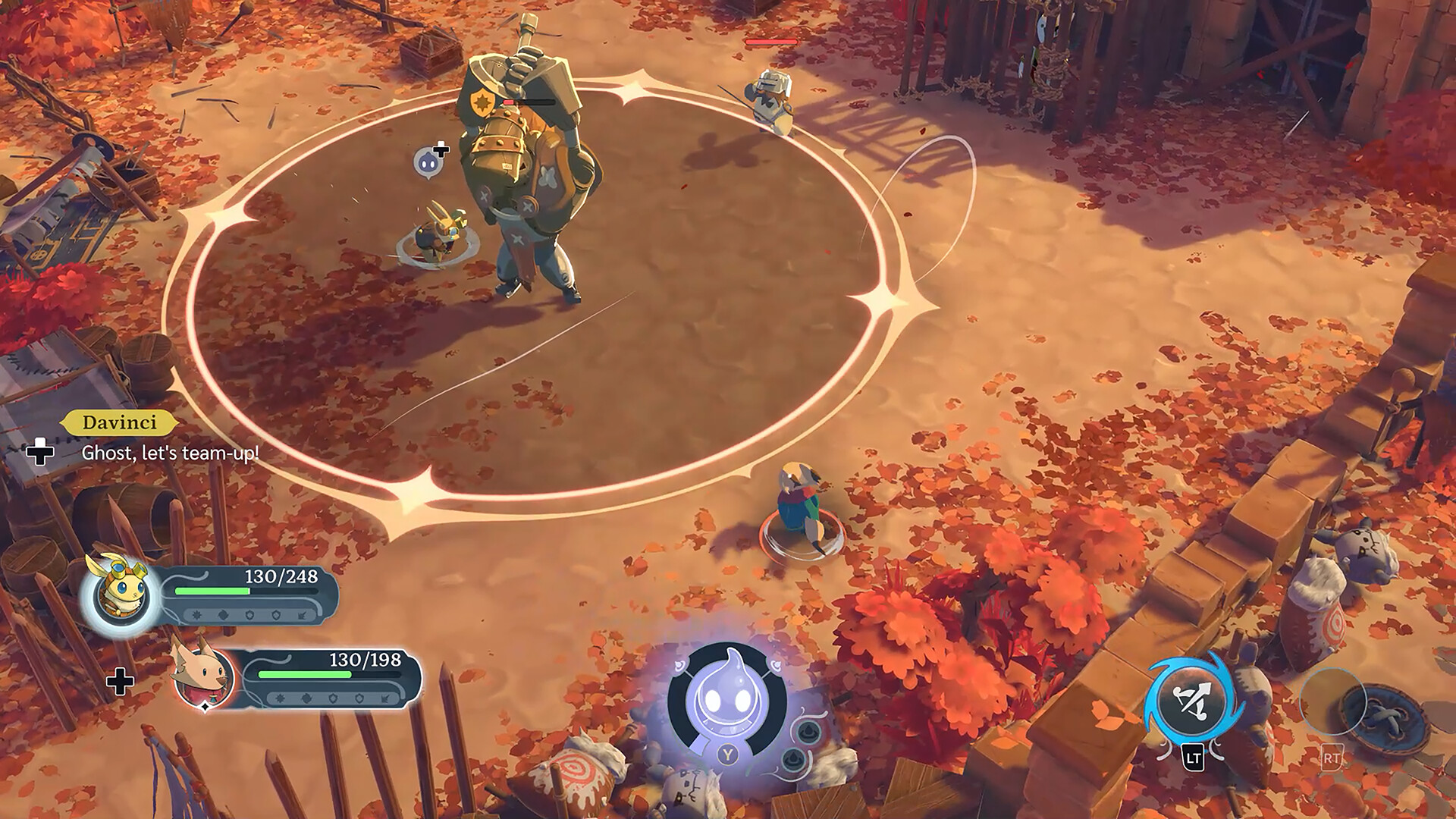
Combat happens in real time with three active heroes selected from the six, and the player can switch the controlled character while fighting. Each member has two equipped skills chosen from four available abilities, alongside a support ability and a personal Relationship Tree. That means a formation contains more than three basic attacks: its active skills and supports can reinforce one another. Chaska's lifesteal and Mr. Fox's speed boost, for instance, favour a burst of aggressive healing through damage; Davinci's recovery and Ran Tran Trum's shield support a steadier defensive approach. Ghost adds another layer. As the spirit joins the fighters, a Ghost Bar fuels support actions and a Ghost Power finisher whose form responds to party composition. A companion may ask to take control mid-fight. Switching to them at that moment can trigger Emblaze, temporarily raising damage, bypassing resistance and generating more Ghost Bar. The switch is therefore a tactical opportunity rather than a cosmetic change of viewpoint. With three party places and six quite different roles, preparation determines which combinations are available, while the timing of a switch or support effect matters once the encounter is underway.
Relationships change what that prepared party can do. Each companion's Relationship Tree spends skill points on a branching set of upgrades, and the strongest branches require a deeper bond with Ghost. Conversation choices, main and side quests, exploration and gifts found in the world can all help develop those bonds. The developer says the tree can be respecced, allowing an experiment with one arrangement without committing to it forever, but even a fully levelled character cannot unlock every branch at once. A player who spends time with every companion can deepen every relationship; one who follows only the main route must decide which people and abilities to prioritise. That makes the campfire conversations and personal problems more than pauses between combat scenes. Helping a character through a struggle can open another quest, alter a relationship and permit a new battle option. The theme of connection has a visible mechanical consequence. A strong party is built by listening, taking optional paths and learning what each member can contribute, not only by collecting points from the next enemy group. A relationship level is not identical to a character level. The former governs access to parts of the tree, while skill points determine which available nodes the player actually selects. This distinction matters when considering a new party member: a promising combat role may need both attention in the world and deliberate investment in its build. The game lets the player rethink a skill allocation, yet a neglected friendship cannot be replaced simply by moving points between abilities.
Etere extends across five distinct, hand-painted regions with old cultures, legends and places obscured by the mist. The journey includes exploration and environmental puzzles as well as fights, and party members can be switched outside combat to use their different abilities. That makes a blocked route a question about whom Ghost has brought and what the group can do together. Side areas can hold treasures and old secrets, while gifts have a second purpose because they can strengthen a particular relationship. Artefacts and other loot can improve the party's fighting capacity, so investigating an unfamiliar corner may help both the immediate search through Etere and the next difficult battle. The game is seen from above, keeping the group and the geometry of a puzzle or encounter in view rather than turning its world into a first-person sightseeing route. There is room to return to places and seek missed relationship material; the developer explicitly allows backtracking for hidden content. Exploration, then, supplies the items, conversations and optional trials that make the party less lonesome and more capable of confronting what lies ahead. On PlayStation 5, the platform listing also identifies adjustable difficulty, basic controller remapping and options for larger, clearer text. These do not alter the core idea that companions solve problems together, but they give players several ways to approach the pace and readability of that journey. The console release is explicitly a one-player experience, despite its constant focus on teamwork within the fictional party.
Tiny Bull Studios developed The Lonesome Guild as a single-player action RPG, with DON'T NOD as publisher and co-producer. Its illustrated environments and animal-like cast can make Etere look gentle at a glance, but the companions' histories include bereavement, exile, fear of intimacy and difficult choices. Studio co-founder Matteo Lana has traced the project's interest in loneliness to an era of isolation and described friendship as something the player should build through actions, not simply hear about in dialogue. The game's structure follows through on that ambition: Ghost cannot physically solve the crisis alone; a party must be assembled, its members understood, and their different talents brought into both puzzles and combat. The full game released on PC, PlayStation 5 and Xbox Series consoles in 2025. An earlier demo introduced only the first two companions, Davinci and Mr. Fox, whereas the complete adventure offers all six and the wider relationship system. From a conversation by the fire to a carefully timed switch during a boss encounter, the same central idea keeps reappearing: these characters become more effective by making space for one another.
- Developer
- Tiny Bull Studios
- Genre
- Single-player party-based action role-playing game