
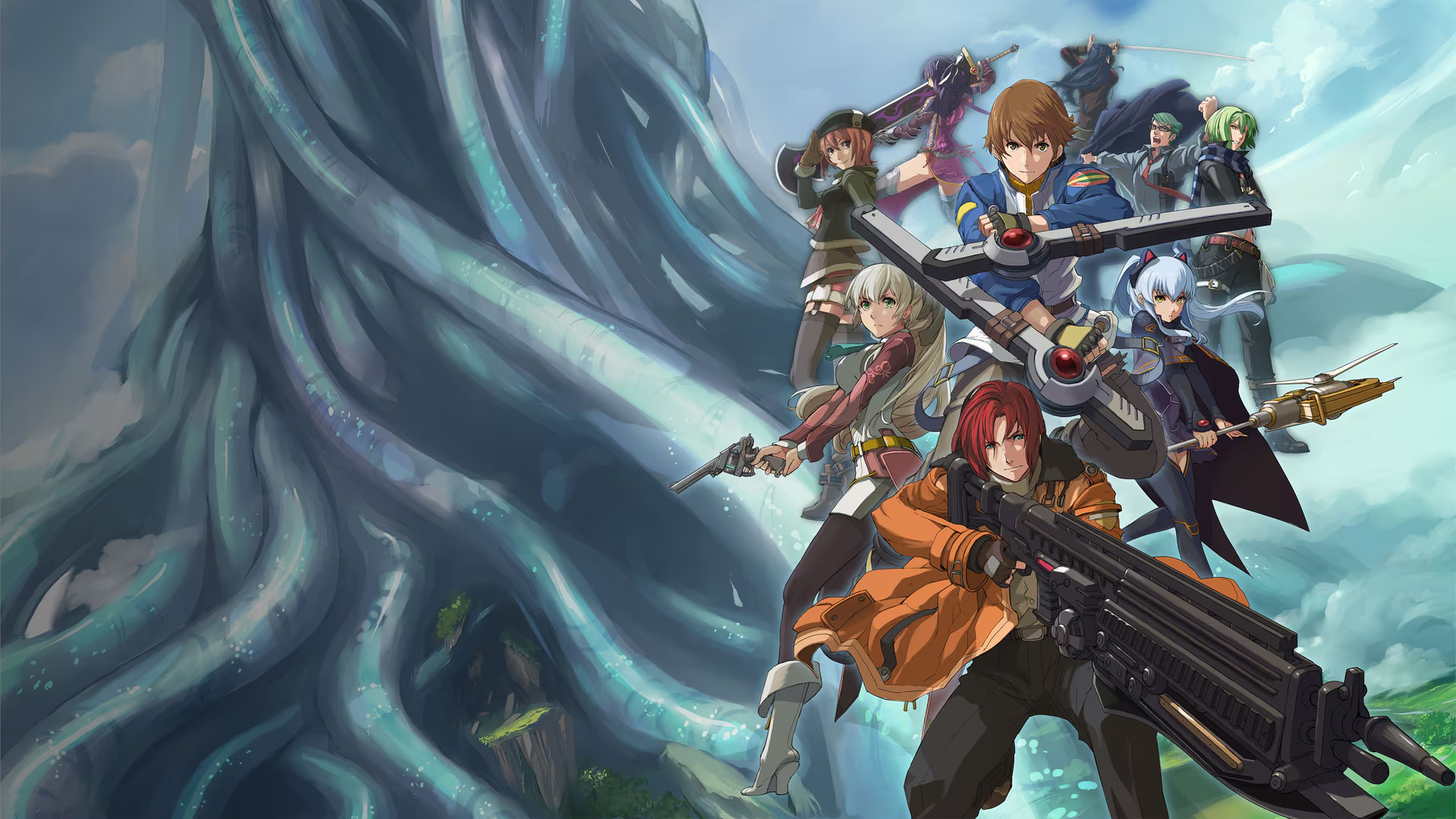
About The Legend of Heroes: Trails to Azure
A few months after Trails from Zero, Lloyd Bannings and the Special Support Section take on new cases as Crossbell’s fragile peace gives way to pressure from Erebonia and Calvard. Explore the city and surrounding region, investigate residents’ problems, and fight through turn-based battles shaped by quartz, Master Quartz, Burst and a larger rotating team.
Trails to Azure resumes the Crossbell story a few months after Trails from Zero. Lloyd Bannings and his colleagues in the Special Support Section have gained public recognition, but their police work still begins with the needs of residents rather than grand authority. Crossbell is a compact city-state positioned between the Erebonian Empire and the Calvard Republic, and both neighbors exert pressure on its political future. That geography gives even routine work a political edge: the SSS is asked to protect its home while navigating institutions and groups whose influence reaches beyond the police department. The opening premise keeps the focus on the team’s responsibilities and its relationship with Crossbell. Returning members Lloyd, Elie, Tio and Randy are joined by Noel Seeker and Wazy Hemisphere, whose different backgrounds broaden the group’s work and internal dynamic. KeA, the young girl adopted by the team in the earlier story, remains part of their personal circle. Rising tensions and new organizations complicate the relative calm, while the SSS must keep its team intact as its duties change. This is the second part of the Crossbell arc, and its character and political threads build directly on the first game’s events.
The chapter structure turns that premise into a cycle of local service, investigation and larger assignments. Residents bring the SSS cases that can involve tracking down a missing person, dealing with dangerous creatures or resolving a neighborhood problem. These requests take the team through Crossbell’s districts and out into the surrounding countryside, so investigating a case also brings conversations with shopkeepers, officials and other recurring residents. Optional jobs sit alongside the main story and expand what is known about the people affected by events. The arrangement makes the city feel like a place where small obligations continue even when national politics are intensifying. Azure revisits familiar parts of Crossbell while adding locations for later story developments. Rather than free-roaming across a seamless open world, players move among connected urban districts, roads and designated areas, returning to the city hub between excursions. This scale suits the SSS’s role: it can respond to nearby residents, then follow evidence or official work toward a much wider conflict.
Travel around Crossbell becomes more flexible as the team’s work expands. The group can use a customizable car to travel between locations, providing a convenient way to revisit districts and access nearby routes. The vehicle is a practical addition to the police unit’s equipment, linking the city streets with the roads beyond its centre. Exploration still uses authored locations rather than continuous driving across a map: players guide the active party through town areas, buildings and field zones, speak with people and inspect paths leading to encounters or objectives. Missions also change the group’s context, as police work can lead from a quiet neighborhood concern to remote routes and sites connected to the main case. The car shortens the back-and-forth between known destinations, while foot exploration remains important inside each area. This combination makes travel a connective system for casework, not a separate driving game, and helps keep the SSS’s home base central even when the plot reaches beyond it.
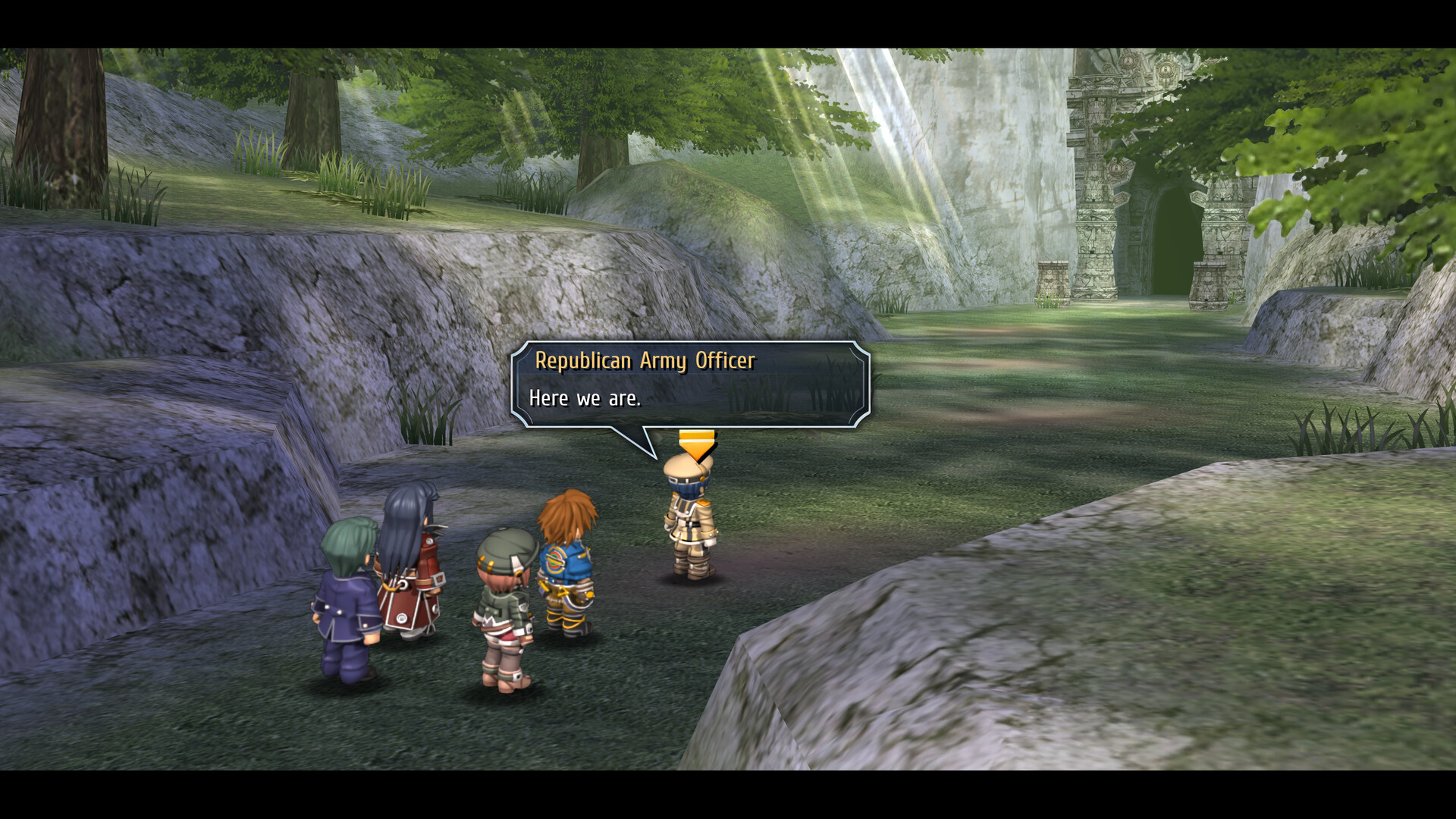
Combat remains a turn-based command system in which party members and enemies act according to a visible order. Positioning matters because attacks, crafts and arts can cover different areas or target particular opponents; delaying an enemy or exploiting an opening can change who acts next. The SSS can usually field a larger group than in the earlier Crossbell game, with six characters present more consistently and temporary guests joining for selected sections. Each member has personal crafts, while arts are cast through equipped quartz and consume EP. Crafts use CP, which rises through battle actions and can be saved for stronger techniques. These options give each turn a practical choice: use a low-cost attack, spend a resource for a defined effect, set up healing or a status ailment, or wait for a more useful moment. Ambushing an enemy from behind can begin an encounter with an advantage, while striking a foe before battle can improve the party’s opening position. These systems reward preparation without removing the tactical decisions made once turn order begins. Boss encounters can add special conditions or demand that players adjust their normal approach, so the same attack sequence does not solve every fight.
Quartz configuration is the main way to shape the party’s arts, statistics and combat roles. Each character’s ENIGMA orbment has slots for quartz, and Azure adds Master Quartz equipped in a central position. A Master Quartz carries an elemental property and develops with use, improving a character’s parameters and granting effects as it levels; reaching its highest level unlocks a Master Art. Ordinary quartz contribute elemental values and can raise statistics, so a character’s setup determines whether they are prepared to heal, attack with elemental magic, resist damage or support the team. The elemental values associated with the orbment also make higher-level arts accessible through combinations, while the Master Quartz gives each character an additional growth path. Customization can therefore be changed to meet a difficult encounter: a setup focused on speed or healing can give way to one built around stronger arts or survival. Burst is a separate gauge introduced for key story sequences and later battles. Attacks and damage fill it; activating it grants a limited run of consecutive party turns and lets arts be cast immediately, alongside faster CP recovery and instant removal of negative status effects. Since it takes time to build again, deciding when to spend Burst is part of the encounter’s resource planning.
Progression connects the case calendar, character development and optional tasks. Battles award experience and materials, while completing requests contributes to the SSS’s standing and can yield useful items or other rewards. Story chapters organize the work into periods, and the team’s requests and travel change as those periods advance. Some optional assignments can be missed once the main operation moves forward, so checking the current requests before committing to a major objective matters for players who want to see more of the chapter. Conversations with the SSS members add a more personal strand to that routine: time away from active cases can reveal how Lloyd’s teammates think about their work and the people around them. Team composition also changes over the story, so a character who joins for a section may offer a different craft or tactical role. Beyond the main missions and requests, the game includes fishing as a recurring side activity; successful catches can be exchanged through the Crossbell fishing association for rewards. These activities offer varied ways to spend time between story operations, while quartz choices and equipment remain the most direct tools for tuning battle performance. The chapter framework lets players alternate investigation, preparation and combat at a steady pace.
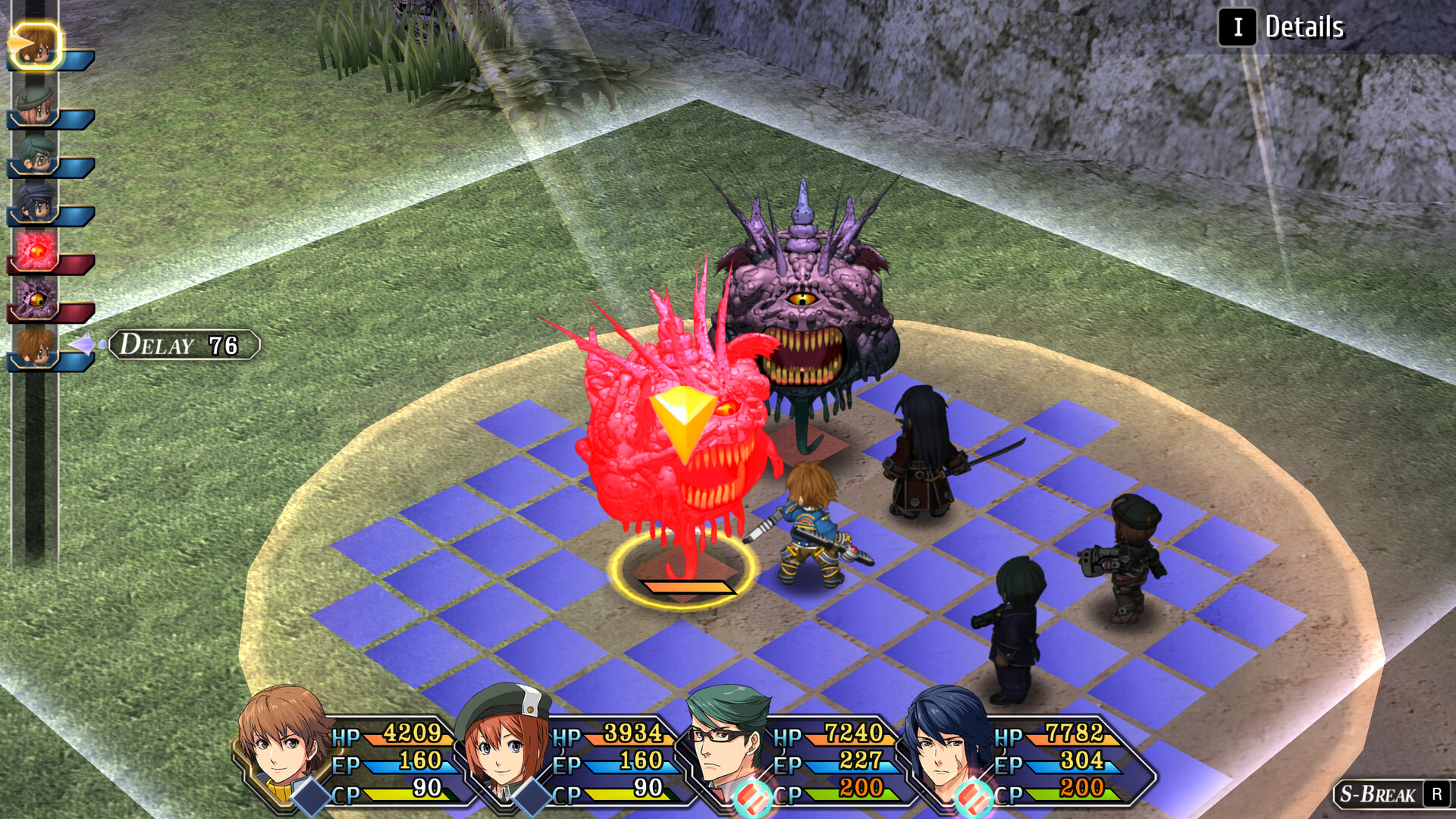
Crossbell’s presentation supports the close scale of the SSS’s work: a city office, familiar streets and public venues sit alongside countryside paths and larger institutional spaces. Dialogue and recurring non-player characters carry much of the world’s texture, as residents can react to changing circumstances and the group’s standing. Character portraits and expressive dialogue scenes keep the team’s relationships visible between turn-based encounters, while music and location backgrounds distinguish the city from outlying routes. The English PC release arrived in 2023, with Nihon Falcom and PH3 GmbH listed as developers and NIS America as publisher. It supports English interface text and subtitles, alongside Japanese audio and subtitles. The earlier Crossbell story can carry forward: imported Trails from Zero save data can add scenes and change details in Azure. The underlying story directly continues Trails from Zero, with the SSS facing a new stage of Crossbell’s political crisis.
- Developer
- Nihon Falcom; PH3 GmbH is also listed as a developer for Steam app 1668520.
- Genre
- Role-playing game; turn-based combat.